A(ir)tmopshere Architecture
|
According to the social life of small urban spaces (William H. Whyte, 1980), human will automatically define individual space once come in to a public space. This is an atmosphere created by any individualso as to best fit for themselves. At the meantime, the atmosphere could be in wide range of definition based on cultural instinct. The self-consciousness in spatial attention of every people will drive the space to alter dynamically. Traditionally, apart from using the decided programme as a generator of architecture in a macro scale, the space is presumed for certain number of people and activities. In other sense, the uses of these spaces are limited. Or in order to cater different uses, the premise will be fade specified.Then this will become multi-function area or waste space. In a micro scale, the architecture for individual human is seldom being specified with the connection to the decided function or space. The programme or decided space is considered to be an accumulative existence of certain numbers of people. Our self-consciousness will drive different distance or coexistence need for different numbers of people. The loose items like chair are created to achieve the temporary comfort responsive to the atmosphere consciousness of people. In other way, mobility and adaptability are essential for highly trendy cities, which are highly dense so as to drive rapid change of human capacity and activity in a small urban space. The boundary of space is blurred. The visible distance and the human body will define the suitable space subtly. How can architecture best suited with the fluctuant change of human context?  Clip from the social life of small urban spaces, William H. Whyte, 1980
A public space could be less generic for catering all needs of people. Specific users shall refine their own comfortable existence. In order to control the boundary of interactive space, the boundary needs to be flexible for immediate atmosphere. No matter within a generic public, they could choose to create individual or accumulative space. In other sense, this idea could be intervened into wide range of social space. The new public space atmosphere could be newly defined. 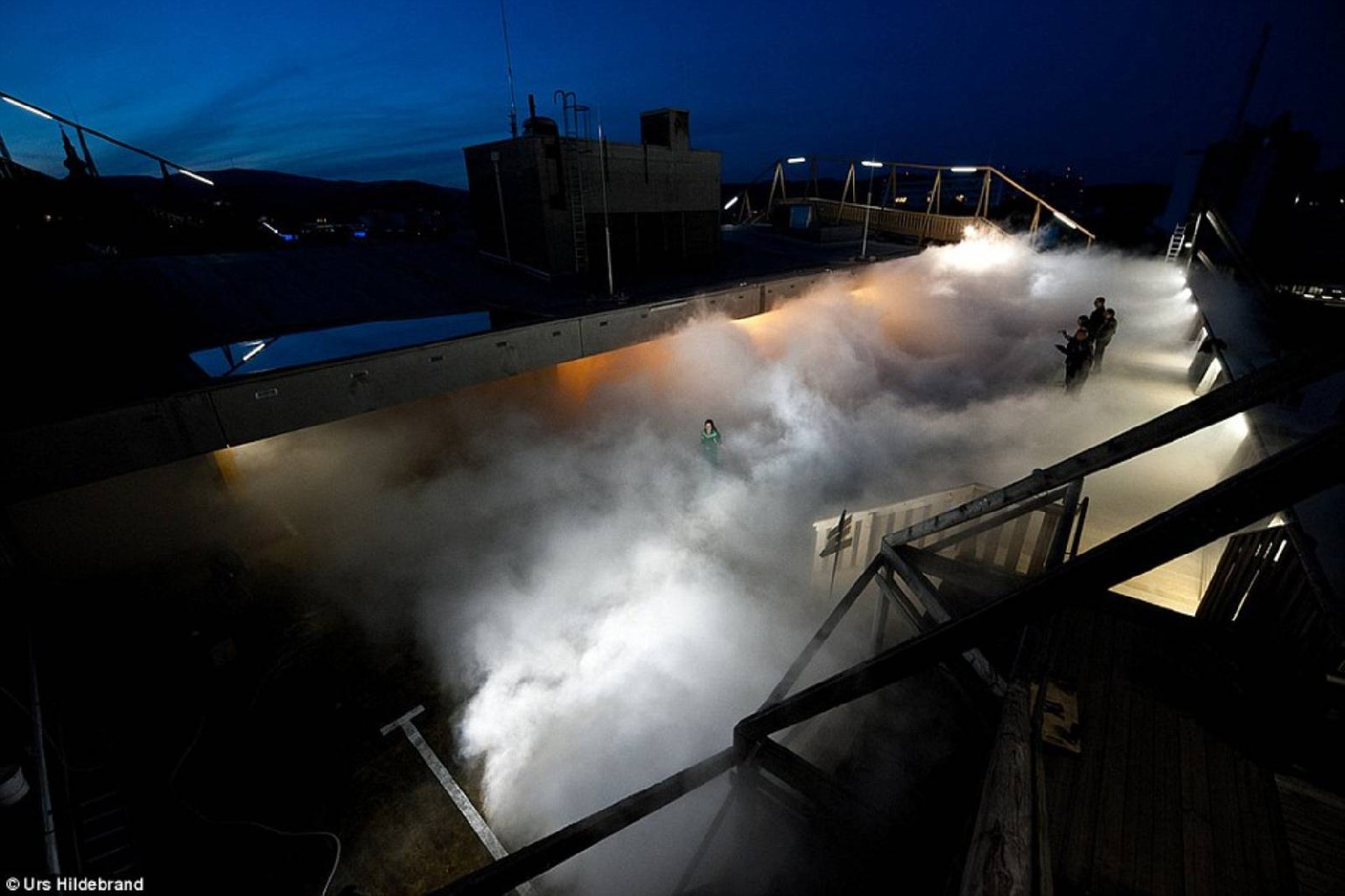 Installation: Cloud Parking, Fujiko Nakaya, 2014
This is a research of the dynamic change of atmosphere. The comparable study of simple human movement in the small social space in selected cities will lead an understanding of current temporary atmosphere generated by local people. This sensible information from observation will carry to different tests by installation or models. The focus of the test would be the accumulative effect or combination towards boundary.Numerous of variable will be transferred from the city observation into the test. The distance and boundary will expand depending on the cultural habit of the people. The test result will drive to design anintervention into social space within highly populated city.Different media of movement in defining visual space may be driven by air, frog, light, visual barrier or any other temporary immediate change matters. The intervention will be injected as a prototype in specific urban site or public space building. The series of simulation for this prototype will be tried out to demonstrate the practical aspects.  Installation: Tube by Žilvinas Kempinas, 2009
|