Dreamna for Dreamna’s Sake
|
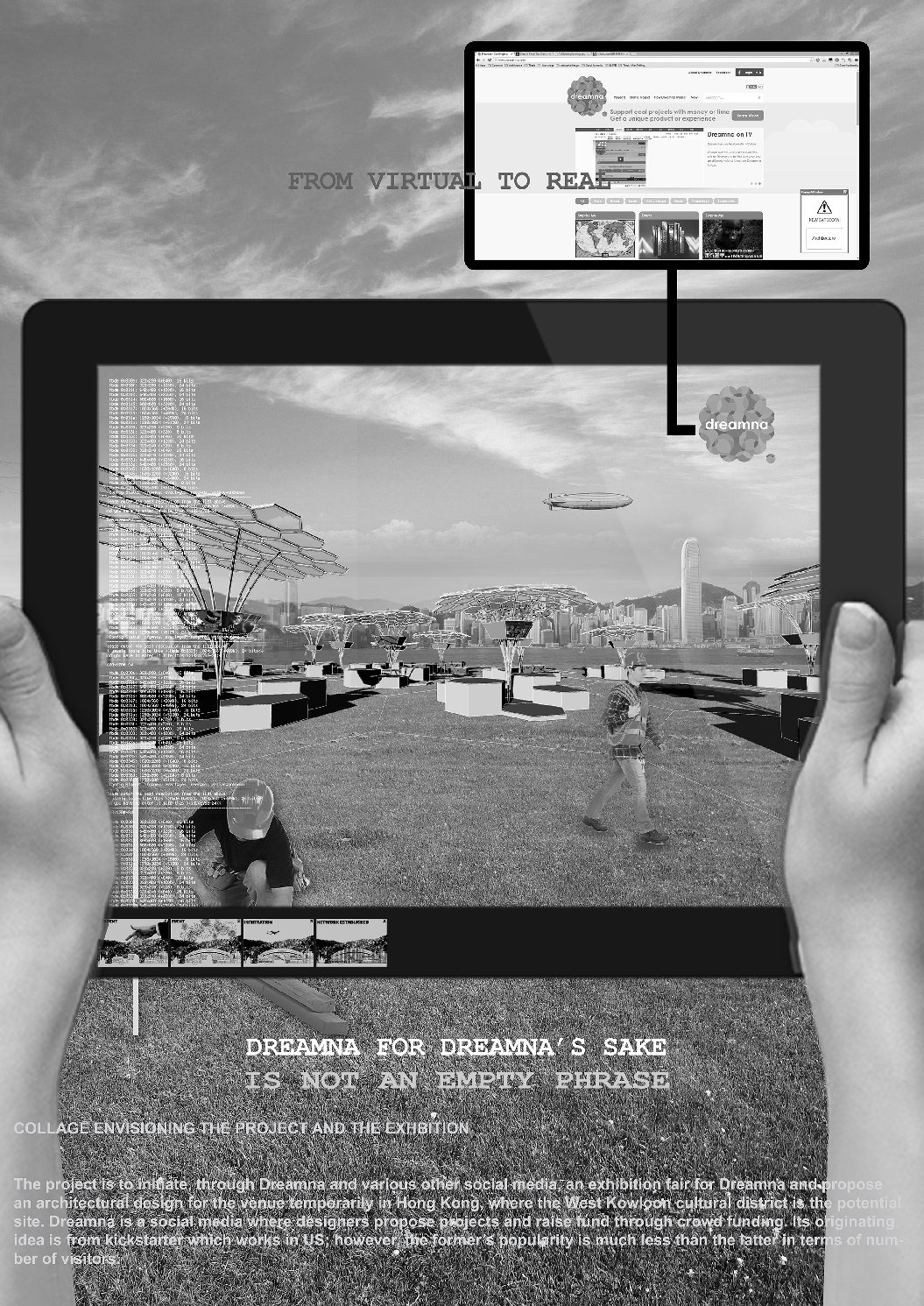
What? Project Description: The thesis seeks to rethink architecture in the new context signified by the emergence of ubiquitous information, which creates a virtual space that parallels the real. Thus, the thesis questions the boundary between the virtual and the real. The project is to kick-start, through Dreamna and various other social media, an exhibition fair for Dreamna featuring an architectural design for the venue temporarily in Hong Kong, where the West Kowloon cultural district is the potential site. Dreamna is a social media where designers propose projects and raise fund through crowd funding. Its originating idea is from kickstarter which started in US; however, the former’s popularity is much less than the latter in terms of number of visitors. The act of initiating the project is primary investigation of the thesis, whilst secondary is the design of the venue – an architecture that can express the channeling from the virtual to the real, while offering a public event space. If it succeeds and results in a built piece of architecture, it of course proves the hypothesis that the virtual can induce the real. Furthermore, it also proves possibility of new alternative for practice nowadays in Hong Kong, which all together lead to the discourse about our position as architects in the era of information. However, if it fails, the failure itself is a statement and could also offer a social critique on today’s architectural practice in Hong Kong. Annotated Bibliography / Precedents: Instant City, Archigram – Rio de Janeiro
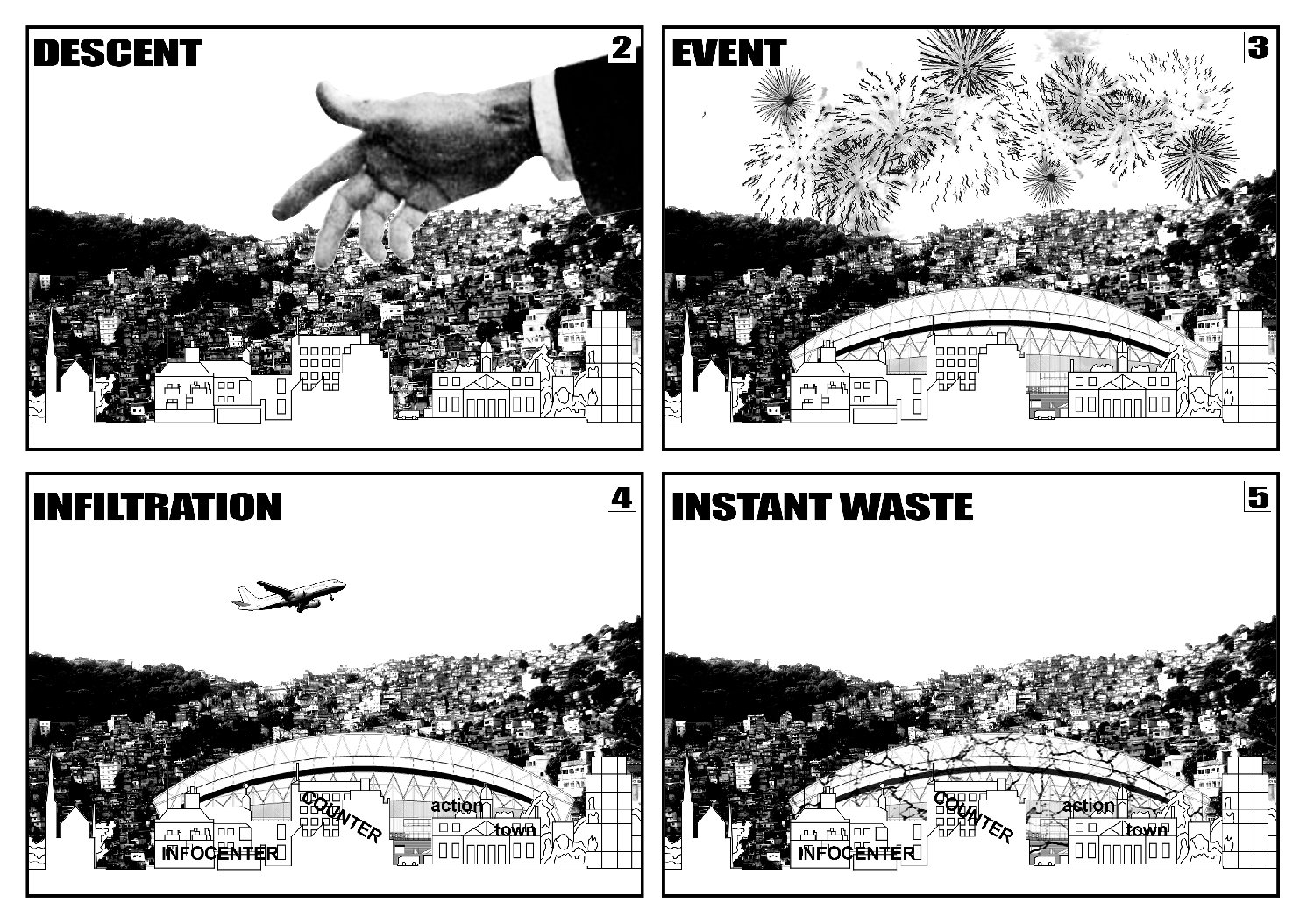
The Instant City from Archigram spoke for the relationship between event, architecture and the city, where a carnival brought by the airship established new social networks, inducing numerous architectural remnants in the city. The stadium for World Cup and Olympics in Rio de Janeiro is contemporary example of the Archigram airship. In this thesis, this relationship is brought to a further new context of the digital age, where the advance of technology is seen as social transcendence in culture. Duck or Decorated Shed (or beyond), Robert Venturi – Occupy Central
Given that the signage board or the form of the building matters to Robert Venturi’s theory and design, the way the project is initiated is equally important to the thesis. This also brings the question to the design of exhibition architecture. Blur (& other works of), Diller Scofidio + Renfro
The Swiss Pavilion is an instance where the virtual gained presence in the real when information becomes visible. The architect manipulates what one can see and, more importantly, what one cannot see, which therefore demonstrated a new way in dealing with the medium of architecture.
Why? Thesis Statement: It is now the age of digital – information roams all over in the intangible domain and intertwines with everyday life through the screen – but then, how do we position ourselves as architects accordingly? The rise of ubiquitous data and the internet of things have called for a new understanding how abstract information gains a physical presence – albeit, a physical presence that does not merely represent the data, but meaningfully channels it. By definition, the architect is the agent of change and in this thesis, the change due to the new social context of the digital environment, which should be claimed and brought in by the architect, is examined. Architecture is the realization of the virtual – it has the ability to channel the social, political, economic and hence ideological forces behind the scene through its materialization; in other words, Architecture is never detached from social changes at all times. The thesis is about how technology could shape and be shaped by architecture and urban design. The theory of Jean Baudrillard suggested social media, being the simulacra of genuine forms of communication is even more appealing to human being than the real, which he called the hyper-reality, resulting in the fact that people are more distant to each other physically. This brings the question of what social changes could technology bring about and what we can do about these changes as architects? What if these social media could lead to physical changes, built entity and events through architecture? Can the virtual induce the real? The emergence of a parallel world of information lead to a crisis for the architect – Are we losing grounds to gadgets? Or, can we claim a stake to the beginning of a new era?
How? 2. Study of the use of Media in Architecture related digital and information 3. The Making of the Prototype 4. Proposal goes online and All Liaise Work – Documentation of the process
Other Alternatives to kick start: S: an Architectural Element (e.g. Sun-shading System) M: a Communal Project L: a Building XL: an Urban Planning Proposal
|