In Touch with Soil – Urban Agriculture
|
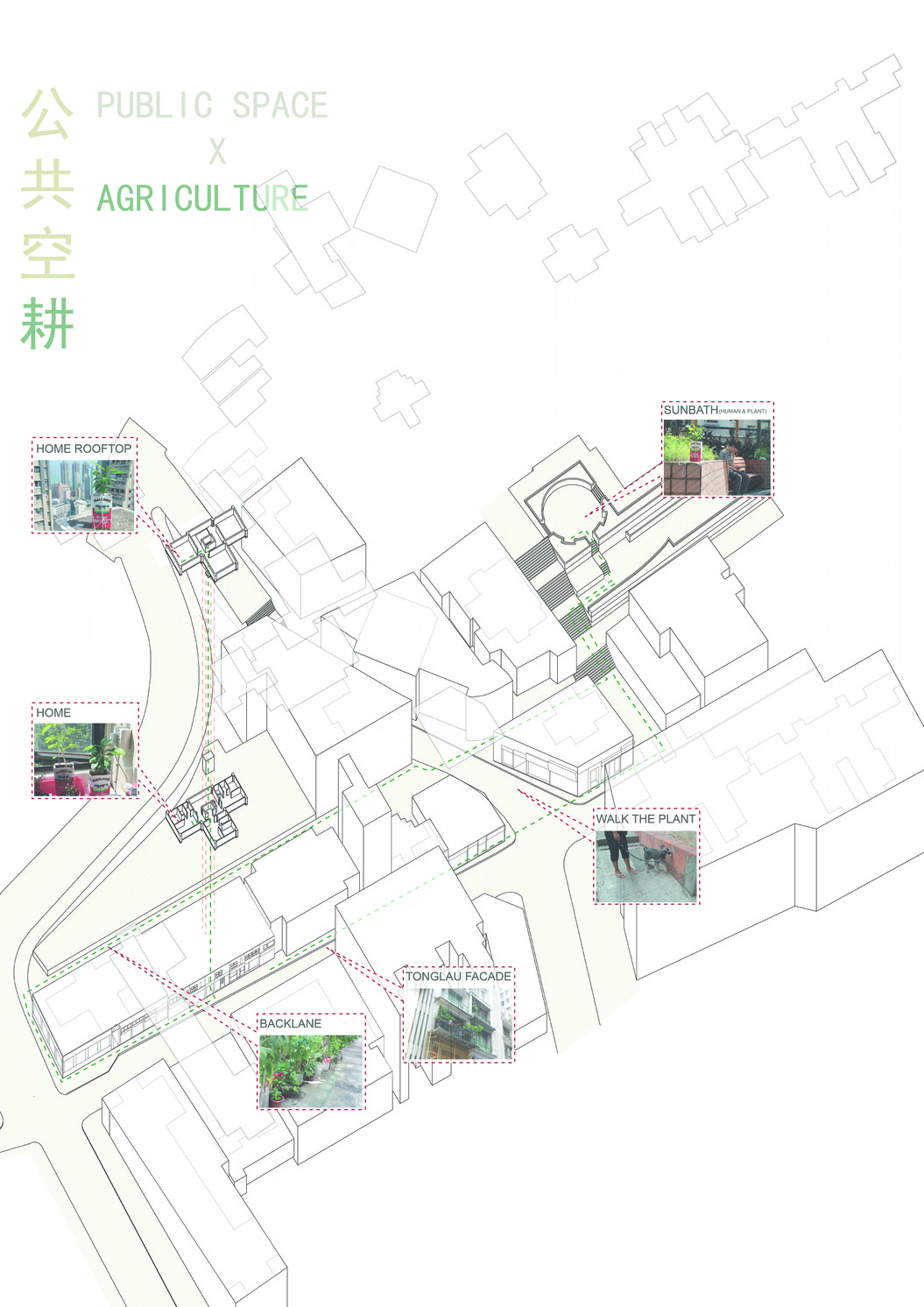
Plant in City A Journey Seeking For the Sun Living in Concrete Jungle like Hong Kong, people inside the city are still finding the place touching the soil and the sunlight. Lacking of sunlight inside theirs flats don’t stop them planting the green, but they bring along their plants and seek for the sunlight in public spaces. Rooftops are mostly owned pirvately. Back lanes are already crowded with plants. The parks designed by government are underuse and contains few types of plants you can find elsewhere in Hong Kong. Why the park cannot be designed as agricultural public spaces promoting local agriculture and sustainable planning?
What? Agriculture in urban development Major land developments in Hong Kong are the expansion of New Territories and the redevelopment of old areas. The North East New Territories development proposal aims to convert a large piece of agriculture land into a residential area, including public housing and individual luxury houses. Only 5% of land is separated and remains as agriculture lands for the ‘habits of local farmers‘. Same as Singapore, the complete reliance of food import would makes a country losing the concern about local sustainability. Also the losing of local agriculture (which has distinctive character) also reduces the food diversity due to the economic concerns. Can agriculture be put into consideration of Urban Planning? Do agriculture got its value in urbanscape which possibly enhances living environment, ecology and styles?
Why? Multiple ground & agriculture in urbanscape Agriculture is no longer be considered in urban planning. It was treated as an abandoned and fruitless choice of land use. However, Citizens never stop planting the green in their flats and neightbourhoods. For example, Rooftops in Hong Kong are ripe enough develope a new type of ground or public space which makes agriculture possible in urban. It is not only about the food production, but also about the quality and style of living. All together with lanes and balconies, people makes use of all surfaces for plants to gain sunlight. Even in the case of flats lacking exposure of sun, public spaces are used to ‘store‘ the plant. Could public space designed in the way that combining the recreation and agriculutre?
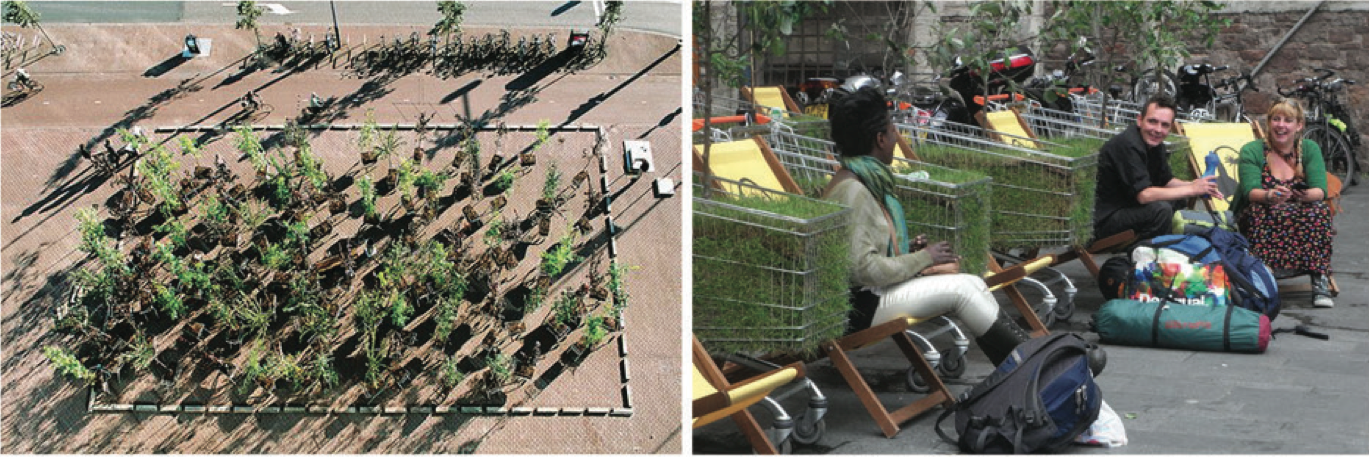
How? Study of urban planning proposal & mapping the informal green By studying the North East New territiories development proposal and also mapping of informal green spaces in neightbourhood, it would be a start to understand the need of planting in urban area and also the new proposal still not satisfying the demand not only in terms of farming but even in terms of planting. I would try to make a new prototype of land use which makes agriculture with an new definition as a public space. It would be a space that people could bring their own plant to there and enjoy the public space as a social space and sunbath of plant and human. Bibliography 1. “Thelivingcity”,FrankLloydRight,NewYork: Horizon Press, 1958. 2. “Theeconomyofcities”,JaneJacobs,Middlesex: Penguin, 1972. 3. “Continuousproductiveurbanlandscapes: designing urban agriculture for sustainable cities”, Andre Viljoen, Oxford : Architectural Press, 2005 4. “A rich spot of earth : Thomas Jefferson’s revolutionary garden at Monticello“, Peter J. Hatch, forwarded by Alice Waters, Yale University Press, 2012 Photos Aerial Photos of Fanling, Hong Kong www.georgianewsday.com/news/regional/262713-aerial-shots-show-hong-kong-in-a-brand-new-light.html Mobile Urban Forest http://www.urbangardensweb.com/2012/07/05/pop-up-mobile-urban-forest-sows-seeds-of-change/ |