In Touch with Soil – Urban Agriculture
|
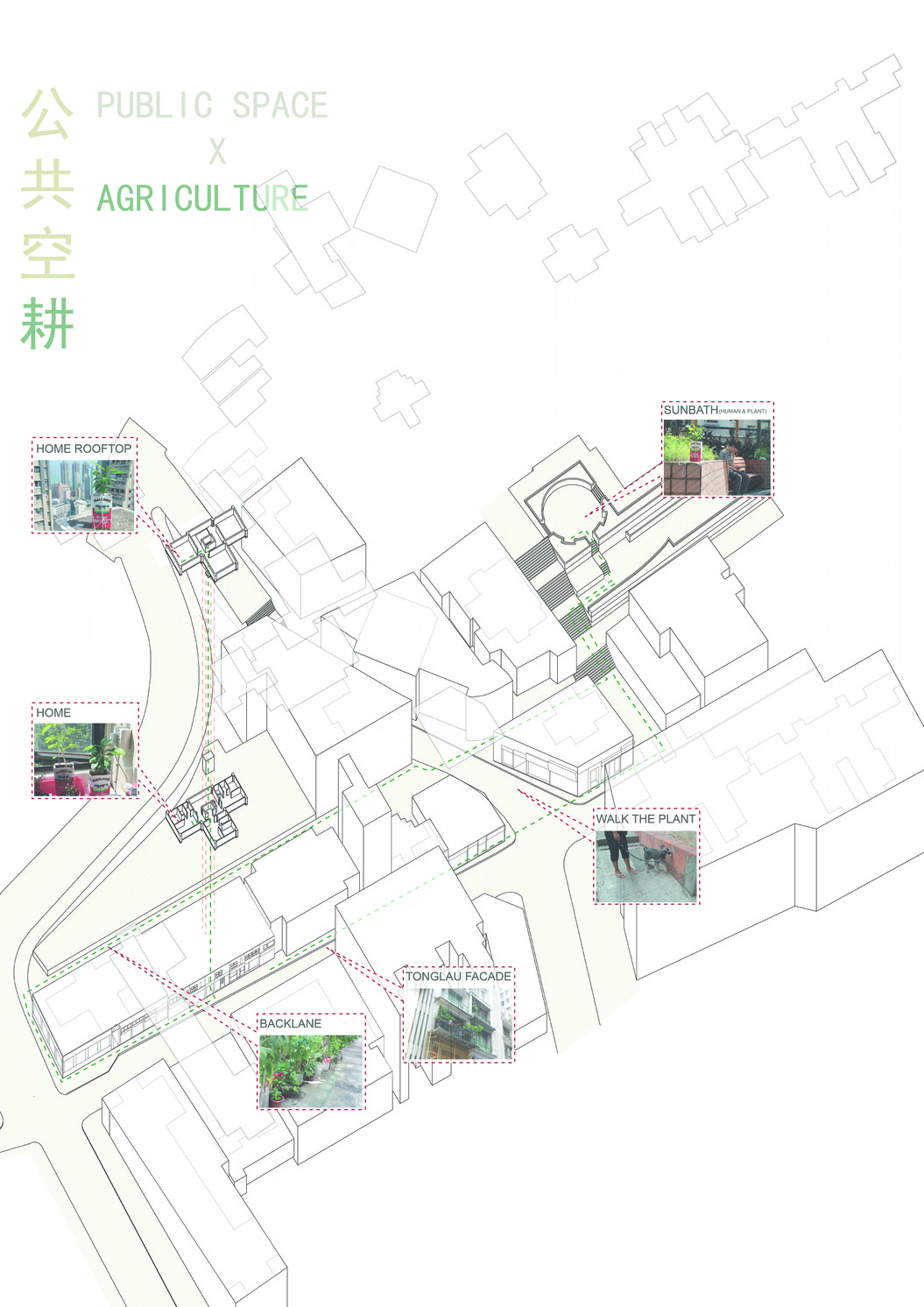
Plant in City A Journey Seeking For the Sun Living in Concrete Jungle like Hong Kong, people inside the city are still finding the place touching the soil and the sunlight. Lacking of sunlight inside theirs flats don’t stop them planting the green, but they bring along their plants and seek for the sunlight in public spaces. Rooftops are mostly owned pirvately. Back lanes are already crowded with plants. The parks designed by government are underuse and contains few types of plants you can find elsewhere in Hong Kong. Why the park cannot be designed as agricultural public spaces promoting local agriculture and sustainable planning?
What? Agriculture in urban development North East Development Proposal in Fanling is turning Huge Farmland into a residential Area, which only 5% separated farmland is left for the residents there. With the change of the City Economy, Agriculture Land seems to be an abandoned and fruitless choice of land use. But Ac- tually Agriculture contains extraordinary value in maintaining Local Economy, Plant diversity and most importantly, the life style. Can Agriculture be put into urban Planning?
Why? Value of Agriculture Land in Urban Living in flats never stops people planting. Dozen of Plants could be found on the balconies on the facades of pencil towers.However, the lacking of space and sunlight limits people plant- ing scales. On the other side, public spaces such as parks and rooftops were designed and developed as decorative green for recreation use. Why don’t we combine farm with park to form a new type of ground which integrate agriculture into recreation? For Citizens, it would be a land they could participate, farm and grow theirs own food and plants. For Neighbours, it creates an active green space, with continu- ous changing of green and recreation space. For restaurants nearby, it provides local, fresh and cheap food. For government, the land would be maintained by the farmers so that reduces the cost of maintenance by giving lease to the applicants.
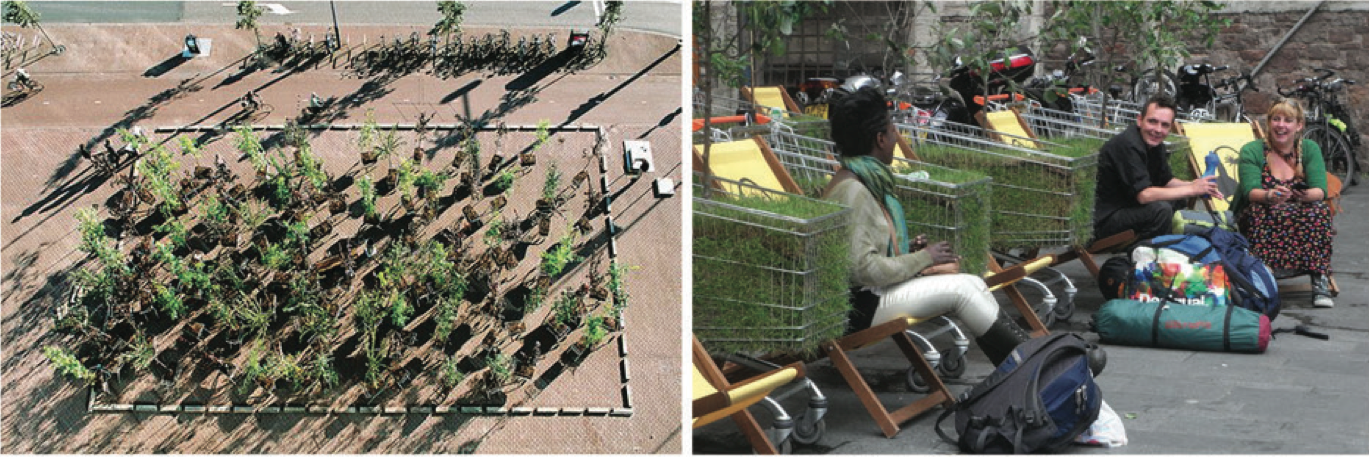
How? Study of urban planning proposal & mapping the informal green The Projects would start from the mapping of public spaces, which is defined as parks in Hong Kong and also the mapping of planter which exists on rooftops, back lanes and also the facade balconies to see the needs and scale of green in urban. With the mapping study of Chicago and Columbia which Public Vegetable Garden is already exists. Study would be carried out to analysis how it affects the lifestyles, urban planning, em- ployment and also the economic flow to see how agriculture can affect the urbanscape and planning once it is included. Bibliography 1. “Thelivingcity”,FrankLloydRight,NewYork: Horizon Press, 1958. 2. “Theeconomyofcities”,JaneJacobs,Middlesex: Penguin, 1972. 3. “Continuousproductiveurbanlandscapes: designing urban agriculture for sustainable cities”, Andre Viljoen, Oxford : Architectural Press, 2005 4. “A rich spot of earth : Thomas Jefferson’s revolutionary garden at Monticello“, Peter J. Hatch, forwarded by Alice Waters, Yale University Press, 2012 Photos Aerial Photos of Fanling, Hong Kong www.georgianewsday.com/news/regional/262713-aerial-shots-show-hong-kong-in-a-brand-new-light.html Mobile Urban Forest http://www.urbangardensweb.com/2012/07/05/pop-up-mobile-urban-forest-sows-seeds-of-change/ |