|

Public Housing x Cultural Heritage
A formal and programmatic analysis on public housing in the sensitive cultural heritage area of Macau, and seek for a new form of architectural language to elevate public housing into the status of future heritage.
WHAT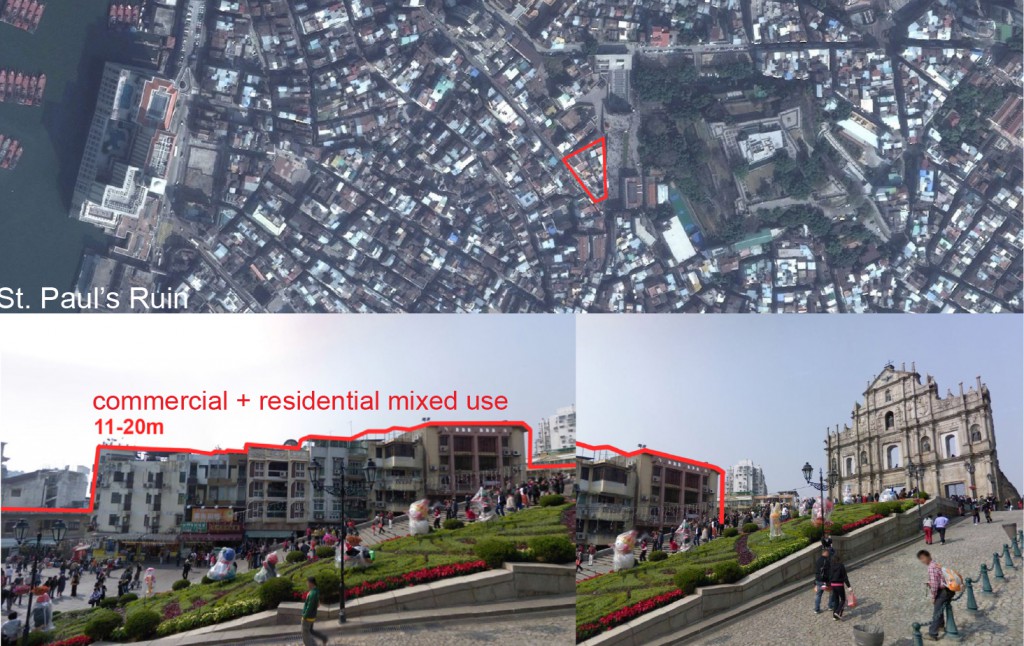
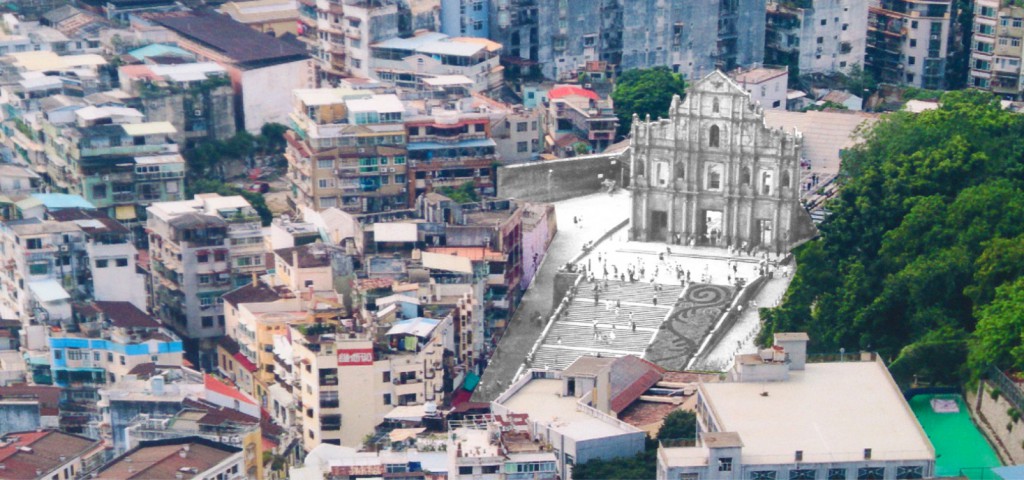
Ruin of St. Paul’s
This thesis will develop new types of public housing in the sensitive areas of Macau’s UNESCO protective buffer zones. A project to balance between heritage preservation and contemporary demands.
WHY
The liberalization of the gaming industry in 2002 brought an abrupt growth in
Macau’s property value. Mainly due to the influx of foreign workers
and opportunistic property investors from Mainland China, the average
price of residential units in 2014 has quadrupled from 2004, recorded as 26,845
patacas per m2.
The urgency for public housing is apparent, but on a finite land of 29.6 km2,
with China’s longest colonial heritage and an accelerating wealth disparity,
the development of public housing becomes a formalistic and programmatic
architectural challenge as well as social and economic.
Unprotected Heritage
On March 1st 2014, a new law was approved by the Legislative Assembly,
omitting the mandatory status of the protective buffer zones surrounding the
128 UNESCO sites in Macau. The government report justified this action as the
increase flexibility for “transformation and evolution” in specific urban fabrics,
while conservation advocates considered this as a conveniences mean for
developers.
Housing for Citizens?
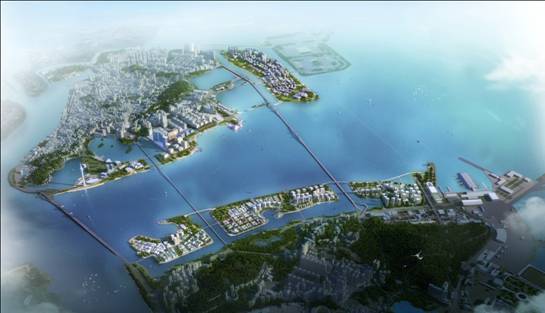
In November 2009, the Central People’s Government of China approved the
reclamation plan of 350 hectares (3.5 km2) for the New Town of Macau, it
comprises of 4 islands geared toward the “overall quality of life for local residents,
while enhancing sustainable development of Macau”. However, the true nature
of these developments have yet to be release. So where can people live?
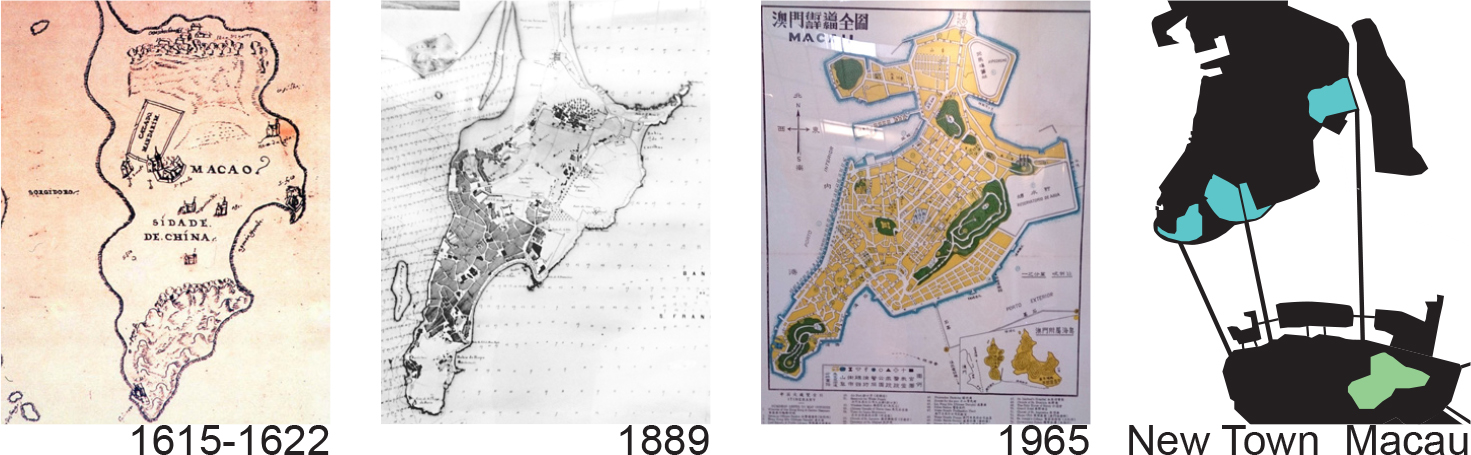
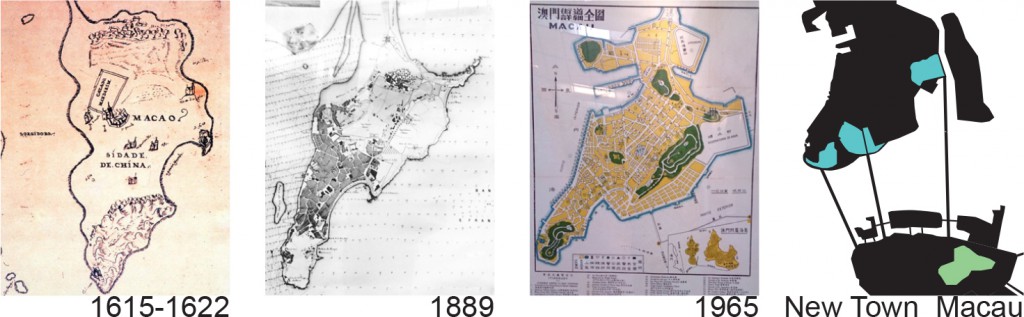 Macau city growth
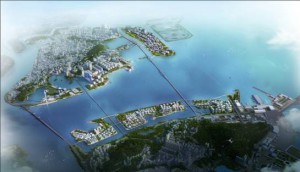 Macau new plan
HOW

-Mapping Macau’s urban development history
– Nollie Map of Macau, to analyze the public space of the tradition and contemporary Macau
– study the colonial history and the integration of Portuguese architecture into China (facade study)
– a critical analysis of the existing public housings in Macau, their forms and programs in relationship to context
– analyze Macau’s civil architectures in order to extract the accepted contemporary architectural language
– Casino’s influence on Macau’s economy
– Using “Learning from Las Vegas” as a precedent for formal analysis
– study the significance of Berlin’s UNESCO public housing and its value
to the urban fabric
|