Living on Edges
|
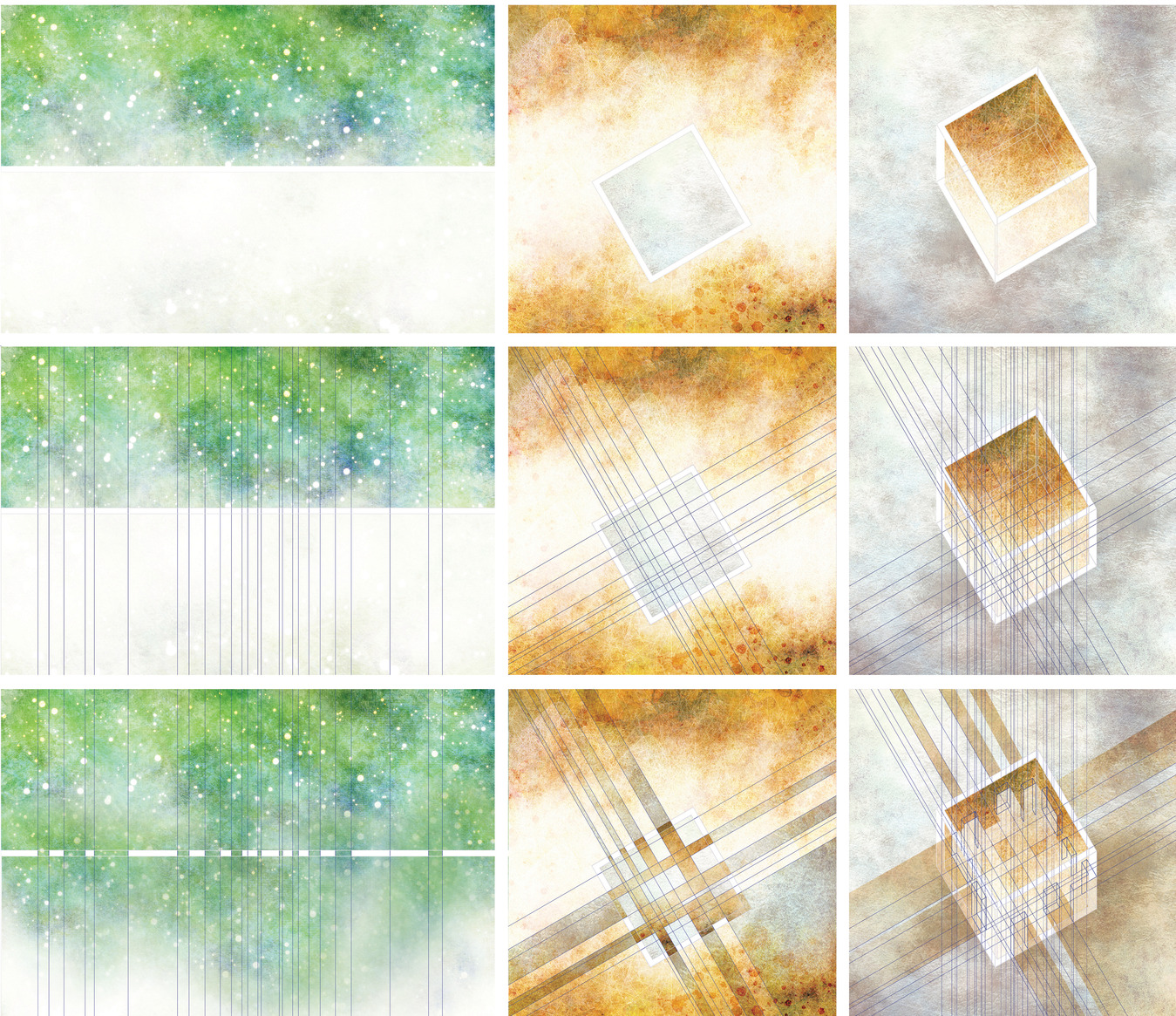
“Edge gives shape to the material rim of a given space through a clear change in substance. In geophysical term, an edge is formed by the divid- ing line of water and earth, earth and air, or air and water, clearly marking spatial relief and landscape.” “…an edge is where an end and a beginning liminally crytallized.” What: Edge And our Experience
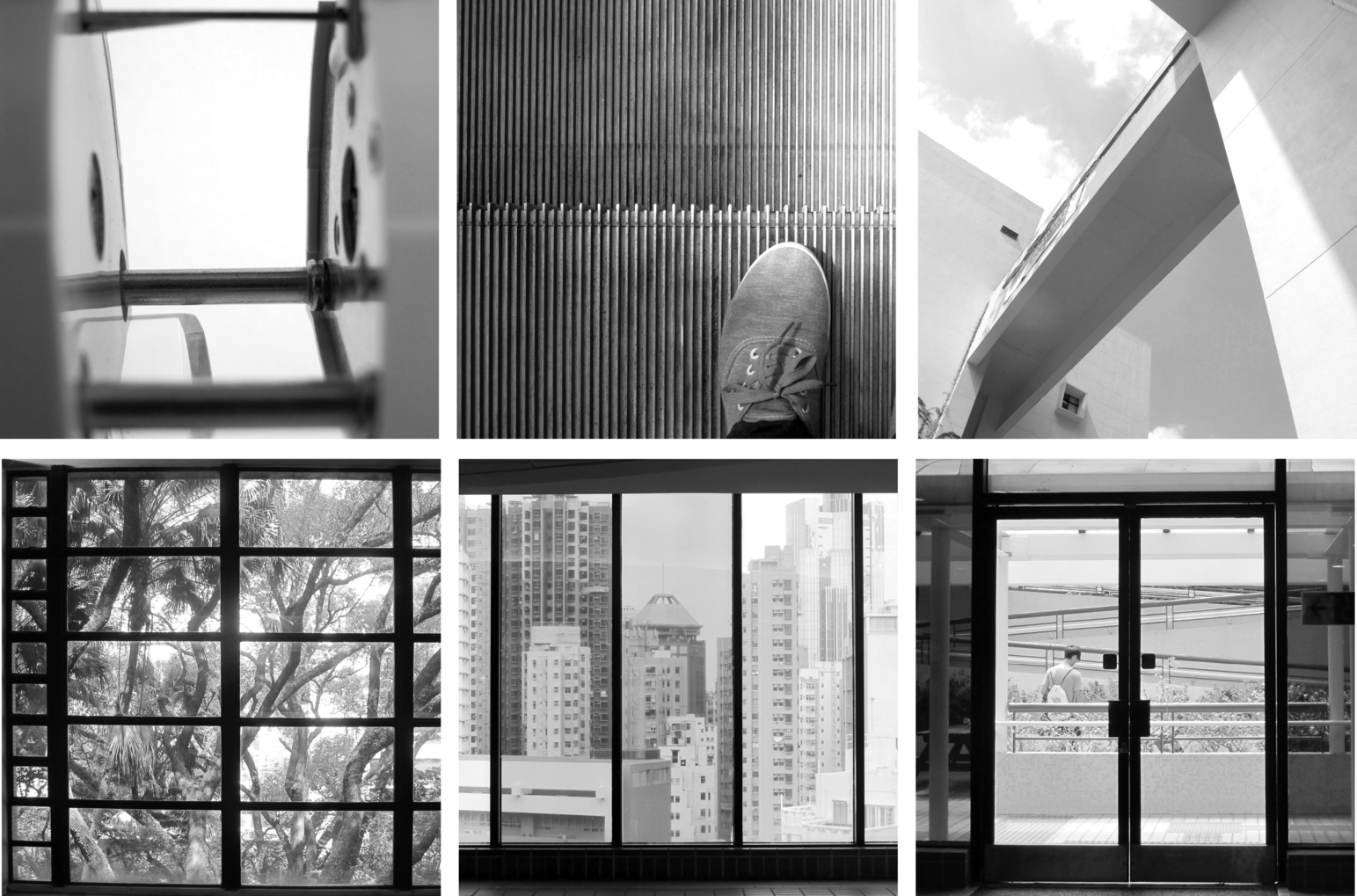
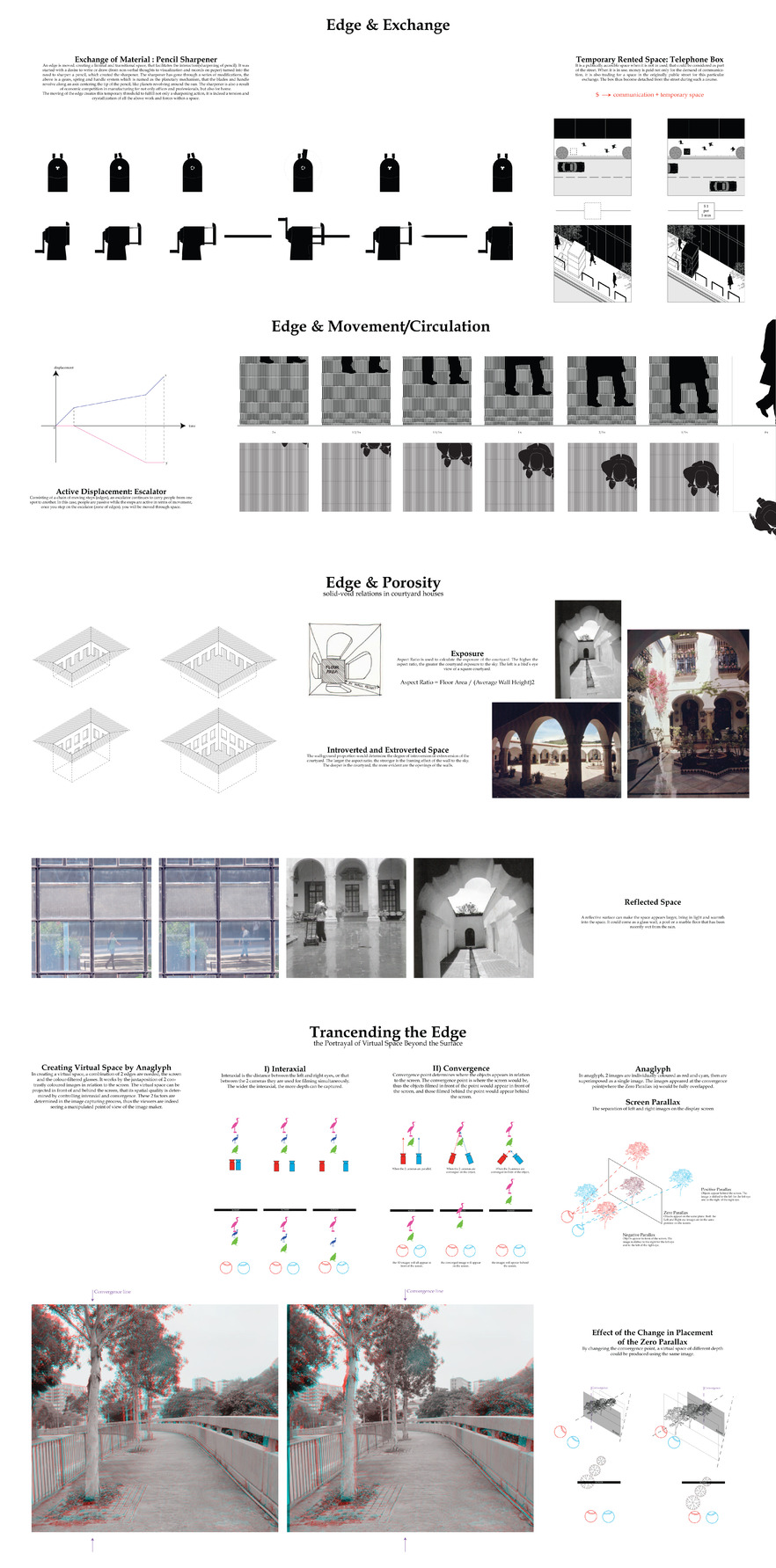
The thesis aims to look into the issue of edges and our experience of them, which the research will establish a vocabulary of edge interventions, be it facade system, walls and openings design, etc. which would be tested out in several locations chosen in the streets in HK. We encounter daily with various edges. Moving near, through, or in the edges would affect our experience, in terms of directionality, lighting, movement, ventilation, etc., depending on the qualities of the edges offer. Edges, or boundaries, imply the existence of another entity, which that other being could be similar or very different. Here the edge is seen as the in-between, ranging from 2-dimensional surfaces, 3-dimensional spaces, the tangibles and intangibles,including facades, walls and elements of openings such as windows and doors. Meanwhile the city is a collage of bits and pieces of these edges. The edge experience is most vigorous and dynamic on streets. If these edges work together, the combined effect would a rich and interesting experience for us as pedestrians or residents. On the other hand, if the edges are not well thought of, our experience through them would be disorientating or worse, boring. Are there desirable typologies of edges for certain activities, and specific for HK culture? Are we living on the edges that can enrich our experience as pedestrians, residents, citizens? Why: Edge And its Transitional Qualities We are experiencing the influence of various edges, no matter consciously or sub-consciously. An edge generates a sense of otherness and self-identity, non-interference and freedom. An edge separates, but no necessarily isolates. A non-porous edge acts like a shield for isolating two beings, on the other hand, a porous one encourages one to diffuse into another, and embraces the other side of the edge as a complementary part. An edge carries the double meaning of an end and a beginning, it is where the paradox being liminally crystallized at the edge. This liminal space created by the meeting or dividing point of objects represents critical transitional and interactive qualities, it is here that locally shared perspectives are created and sustained. The border is also a space of the result of forces and power display. Thus it is worth studying the underlying forces that determine the edge condition, and how it would affect our experience. How: Establishing a Catalogue of Edges as Interventions The thesis would look into the issue of edges and their role in inducing isolation or interaction between programmes, people and the city. The potential of edge conditions is explored in terms of its transitional qualities: The transitional qualities would then address other issues like thermal comfort, political and cultural forces and social behaviour. The research would aim to construct a vocabulary of edges, that could be applied as intervention to existing streets, buildings or a stand-alone architecture. |