|
-

-
Nature Regeneration – Immersive and interactive environment
 My thesis project is to investigate a new typology of cashmere factory, applying Eco-manufacturing system,
not only to improve the existing living environment as well as increase the production rate. The project
consists of a comprehensive supply chain from goat herding, manufacturing cashmere till retail service. It
can be conceived as an typology of anchored point distributed around the forest steppe zone to facilitate
Mongolia cashmere’s production.
The essence of the place is not only showcasing the Nomadic characteristics, which is conceived as collective
societal experience. The project is dedicated to nature while the science plays a key role in complex
system, which demonstrates the technological advancement of Mongolia and promote their manufacturing
and other services. Landform study is a critical approach to evolve Mongolia cultural fabric as well as cultivate
a memorable experience. The proposal is integrating architecture, nature, technology which not only
demonstrates eco-manufacturing principles as well as keeping it as a timeless cultural heritage.
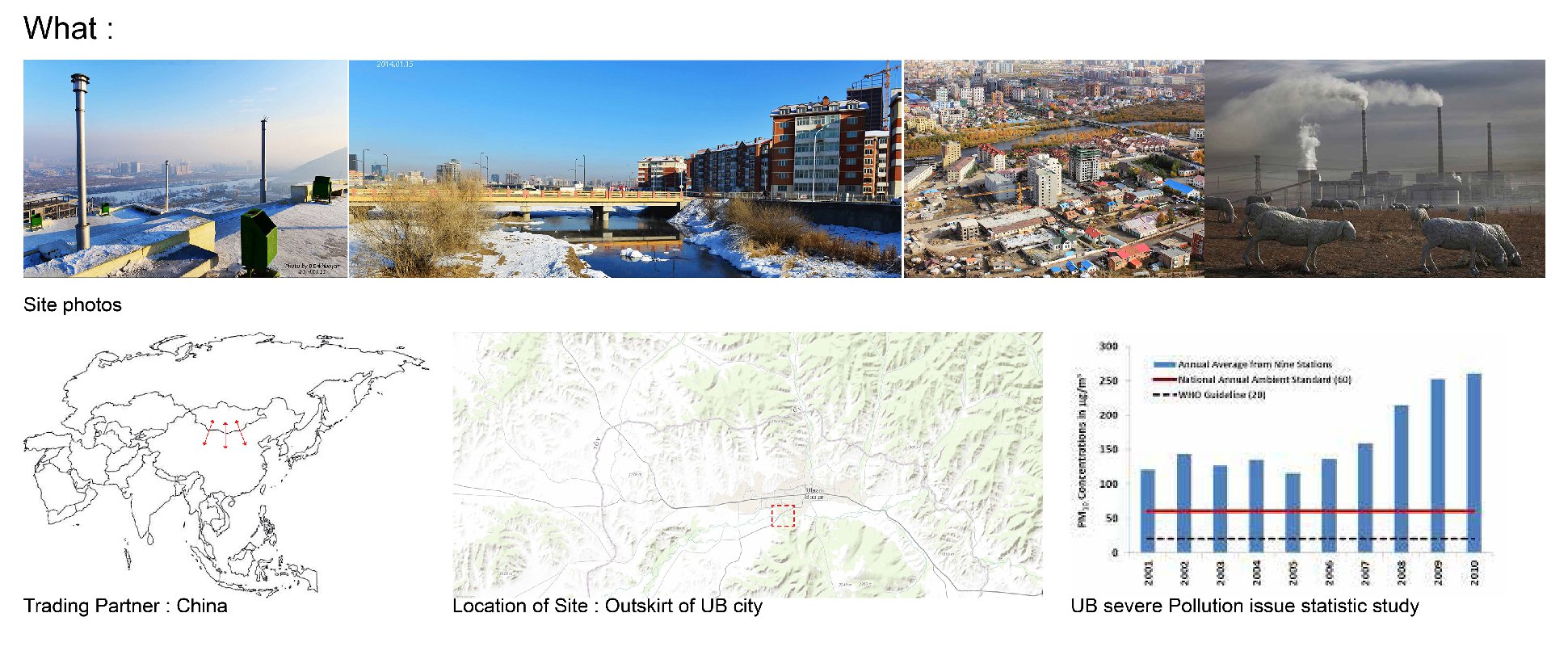
The site is located in between capital city Ulaanbaatar and natural heritage Bogd Khan Uul National Park.
According to the mapping studies, the site is selected at forest steppe zone due its the fertility of the soil,
types of vegetation and number of livestock.
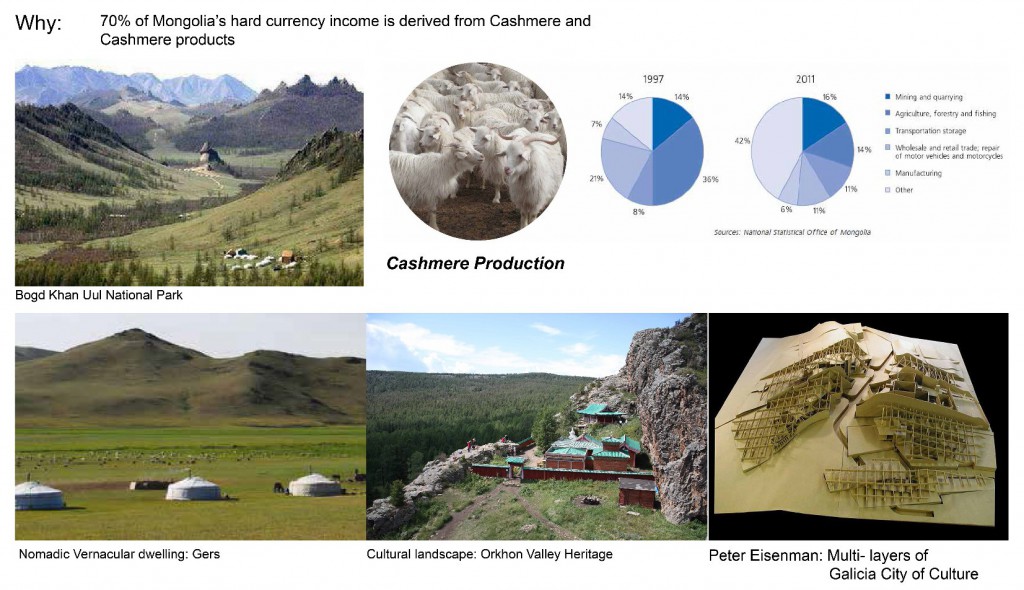 Mongolia’s burgeoning natural resource and mining sector is making Mongolia’s one of the
fastest growing economy worldwide, at the same time the country’s industrialization and
urban consumption puts the city under environmental stress: degradation, air pollution. The
new factory typology is to seek a balance between industrialization and nature reproduction.
As the current factory in Mongolia has produced certain amount of waste water which
affect the hydrology system, as well as the emission of toxic smog and ash. The reason of
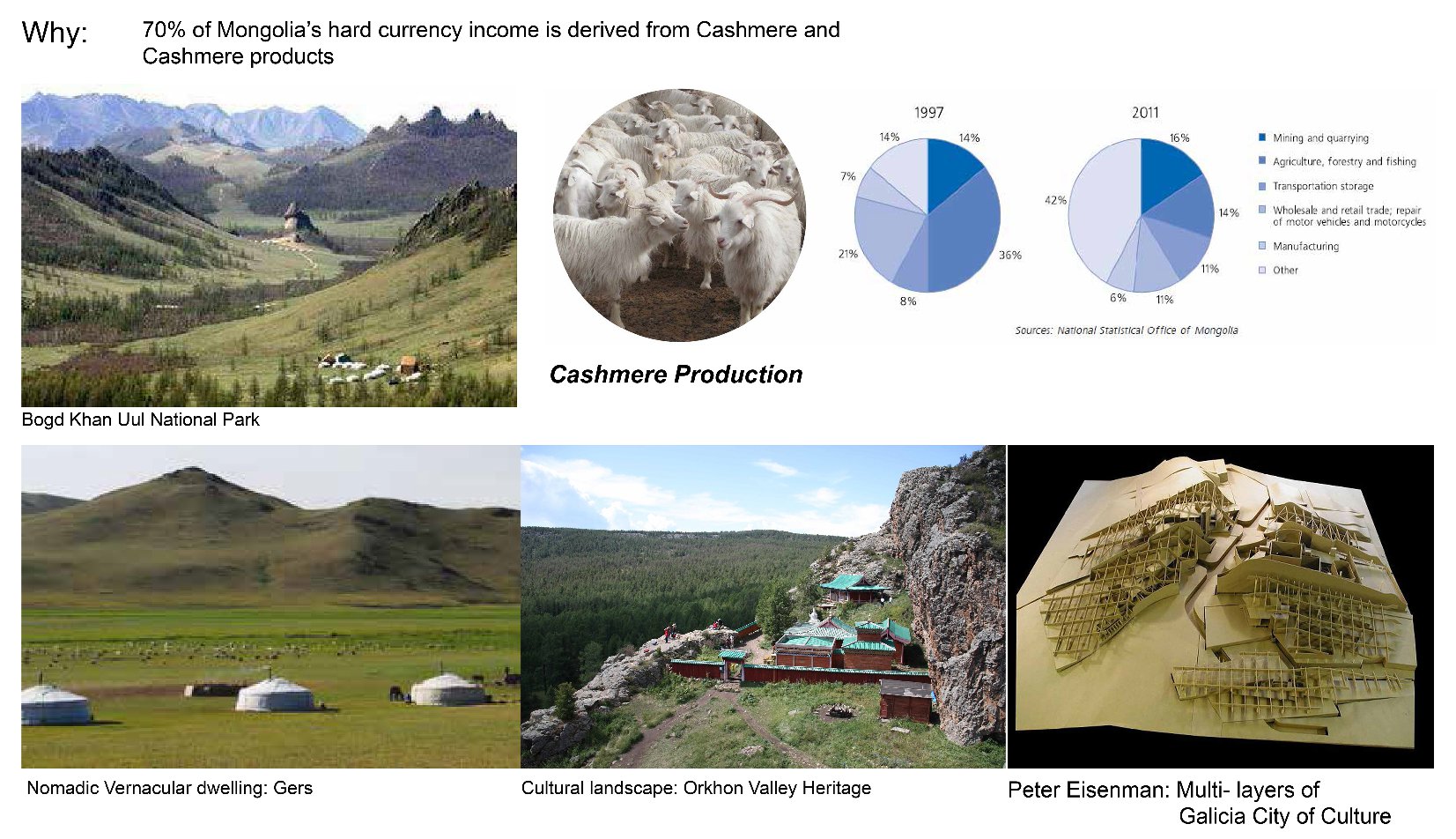
choosing cashmere industry is through the statistic study of Economy of Mongolia that
shows 70% of Mongolia’s hard currency income is derived from Cashmere and Cashmere
products. As a result, the success of cashmere manufacturing service will have a strong impact
on the nation’s growth.
The thesis is going to contribute to a new typology of supply chain with eco-sytem , transforming
the existing factory into an sustainable, high-tech, green environment.
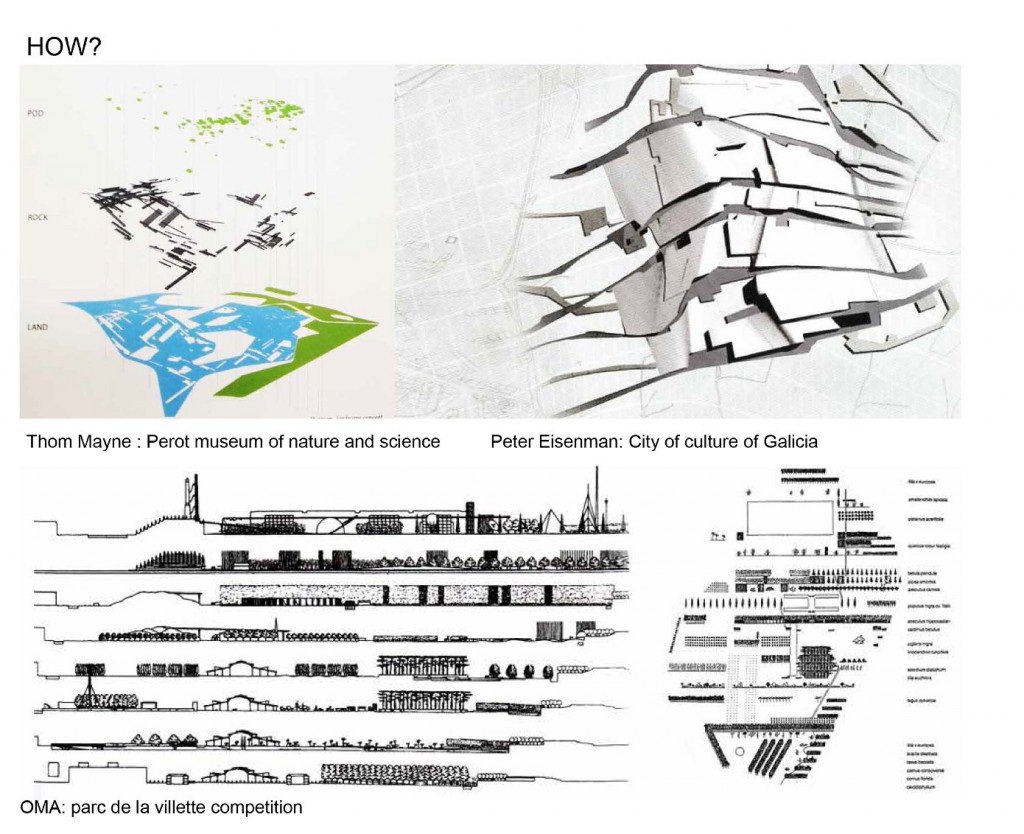 Step1: Mapping
Mapping out the district of cashmere goats adapt to live and the herding routes. Study the ecology and behaviour of
Mongolian goats during different seasons of the year, including the population control by herders.
Step2: Program
The program is the entire supply chain which consist of goat farming, cashmere factory, retail and exhibition district,
residential zone which forms a system to produce and promote their local cashmere products. Residential zone is to
not only serve the staff as well as the visitors.
Step3: circulations
Recyling waste water, heat from factory, convert to the building use. (Refer to axon diagram)
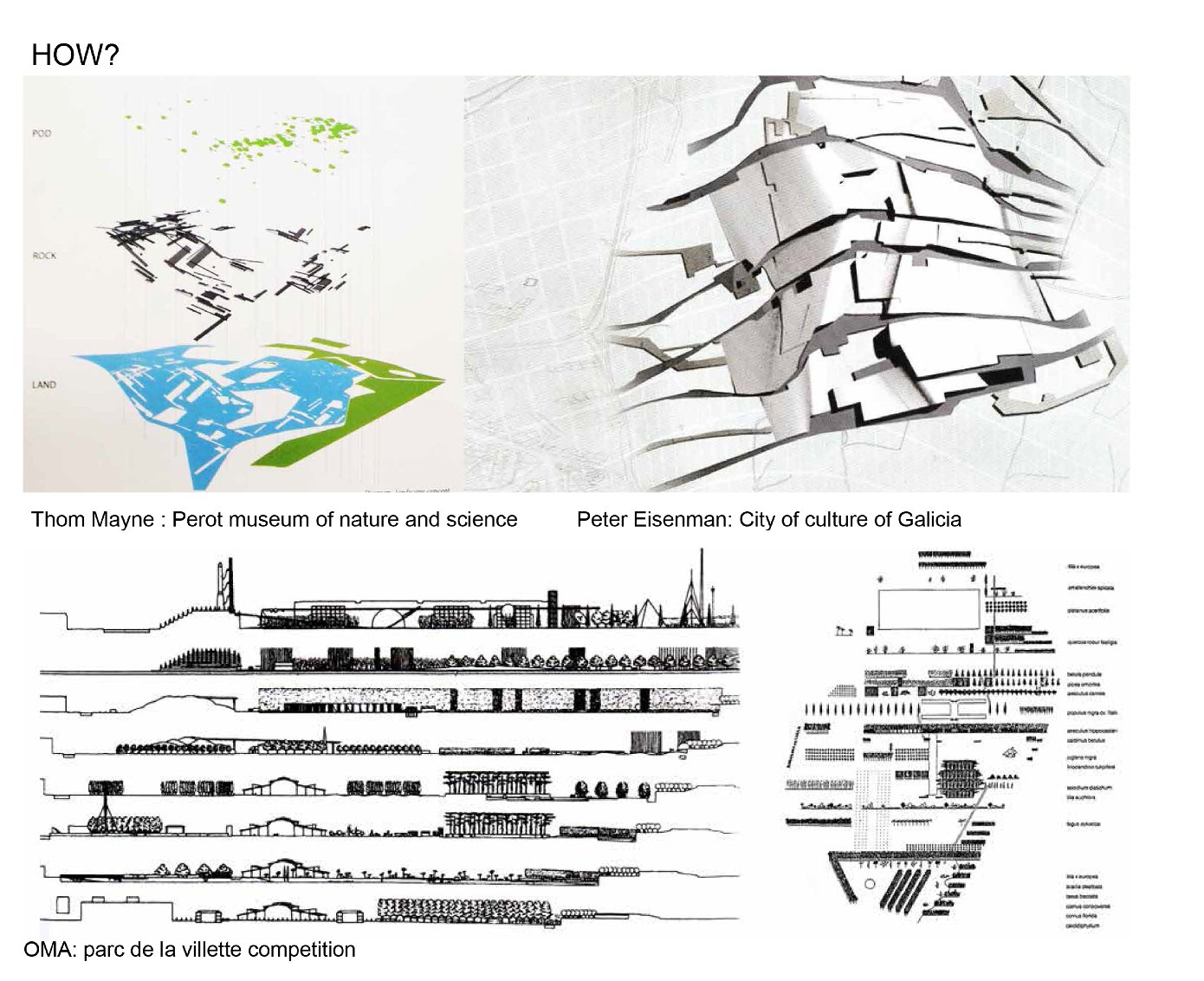
Step4: Landform study
The essence of the place is not only showcasing the Nomadic characteristics, which is conceived as collective societal
experience. The project is dedicated to nature while the science plays a key role in complex system, which demonstrates
the technological advancement of Mongolia and promote their manufacturing and other services. Landform
study is a critical approach to evolve Mongolia cultural fabric as well as cultivate a memorable experience. The proposal
is integrating architecture, nature, technology which not only demonstrates eco-manufacturing principles as well
as keeping it as a timeless cultural heritage.
|