|
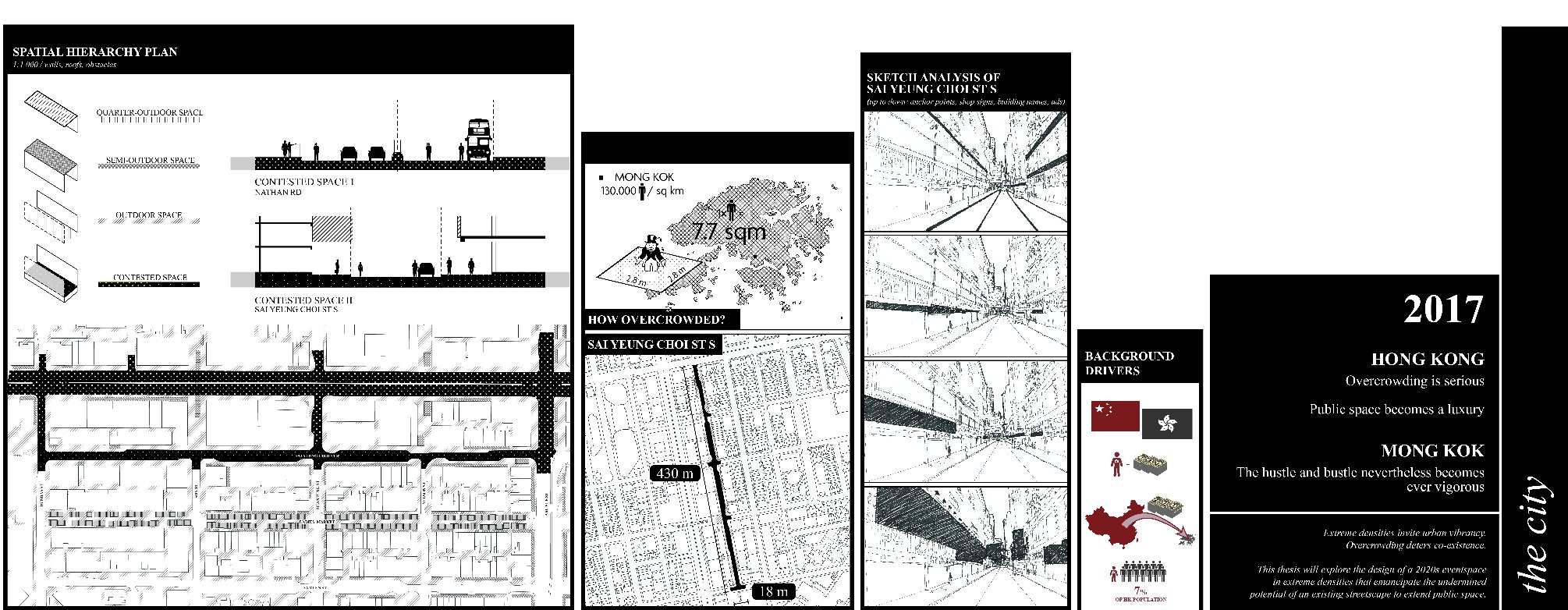
2017
HONG KONG
Overcrowding is serious
Public space becomes a luxury
MONG KOK
The hustle and bustle nevertheless becomes ever vigorous
Extreme densities invite urban vibrancy. Overcrowding deters co-existence.
This thesis will explore the design of a 2020s eventspace in extreme densities
that emancipate the undermined potential of an existing streetscape to extend public space.
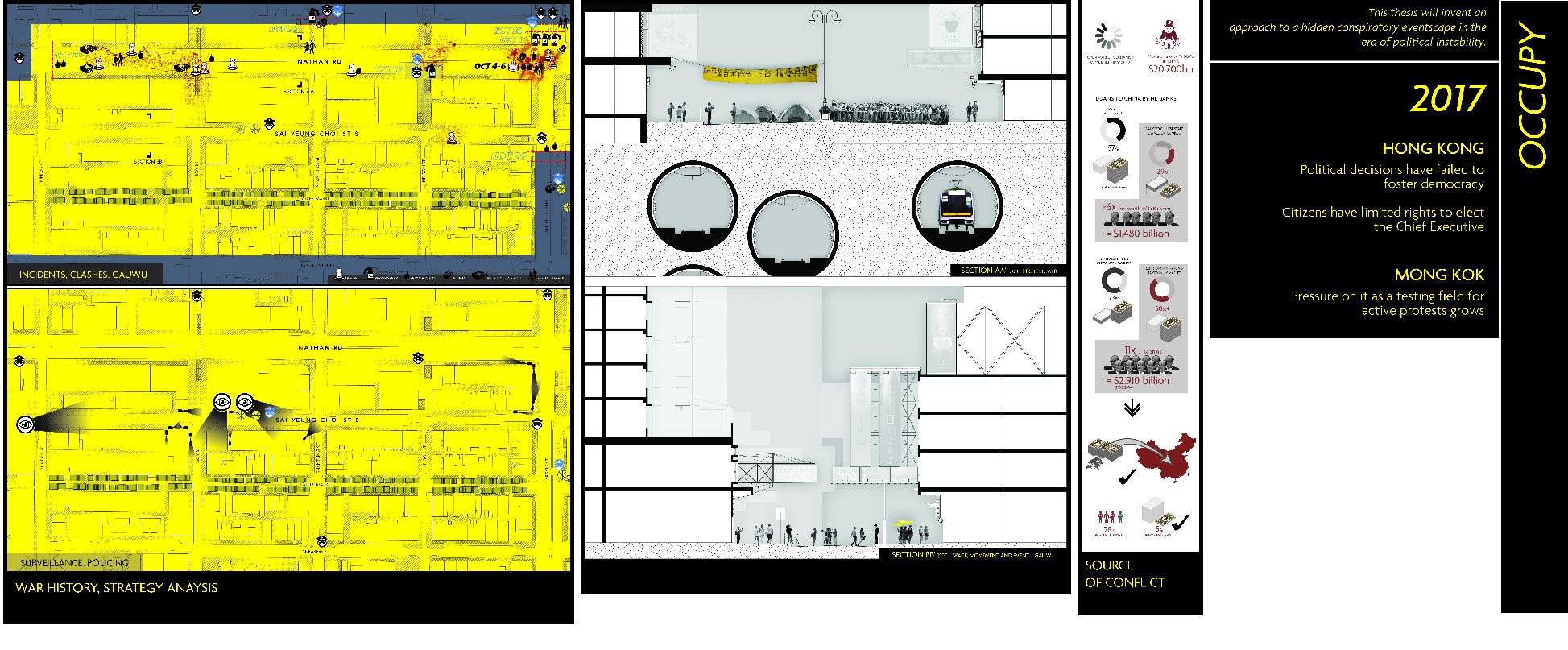
2017
HONG KONG
Political decisions have failed to foster democracy
Citizens have limited rights to elect the Chief Executive
MONG KOK
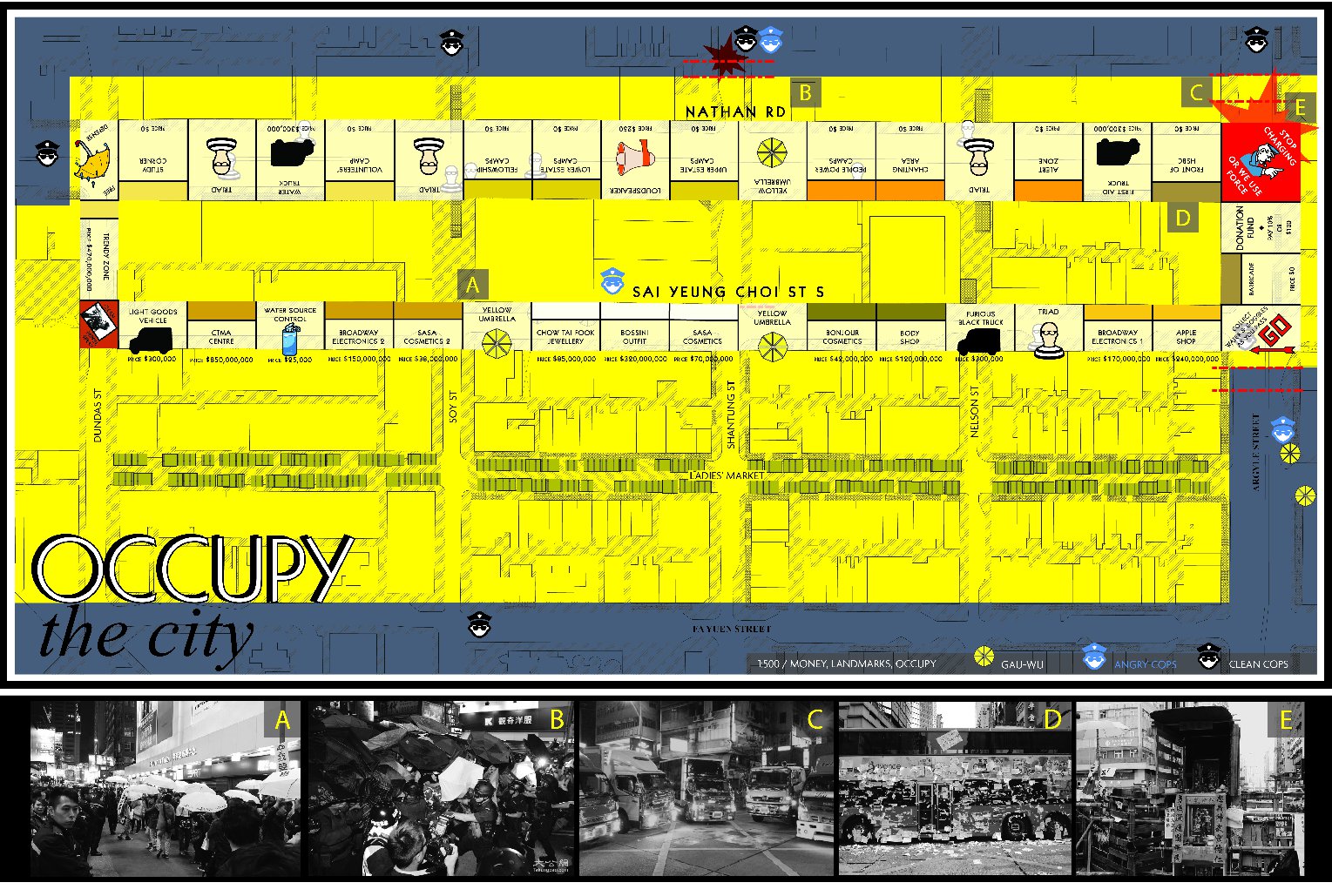
Pressure on it as a testing field for active protests grows
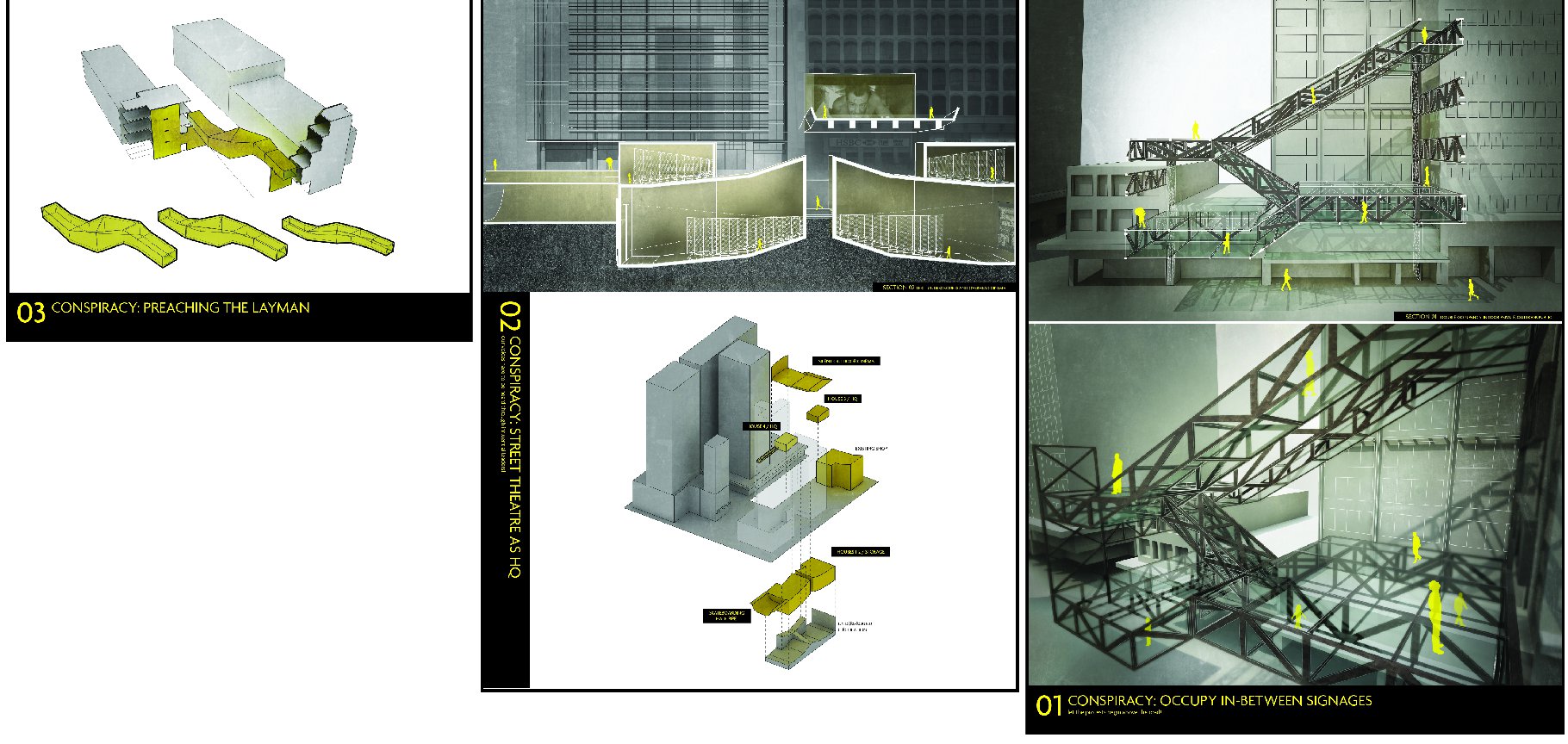
This thesis will invent anapproach to a hidden conspiratory eventscape in theera of political instability.
THESIS BACKGROUND
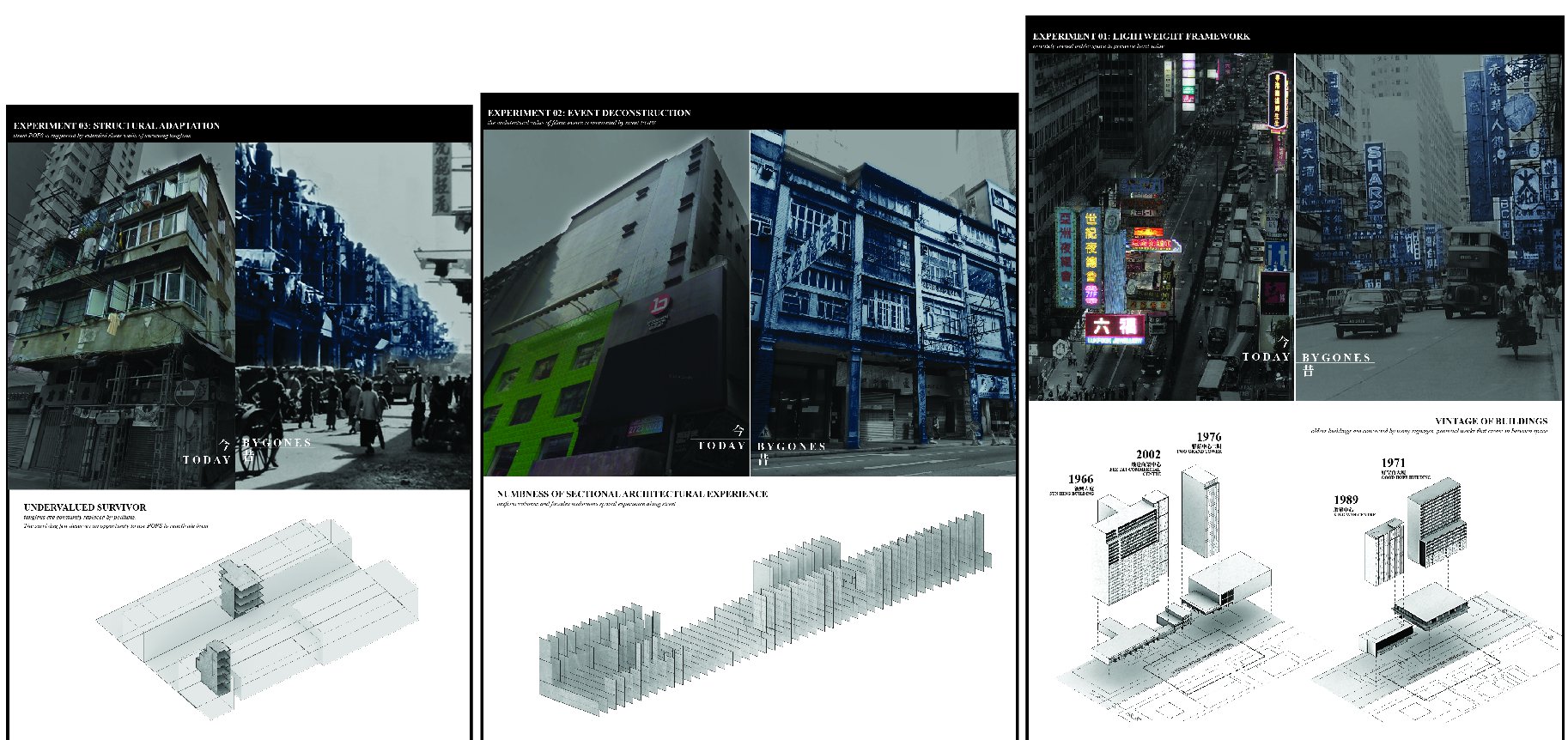
The streetscape in Hong Kong is an extreme two-edged phenomenon.
Complete elevational pedestrian-vehicle segregation is a dominant new town model,
whereas the more traditional urban fabric has shops spilled out that overlap both flows.
The architecture of the street is critical to both regulating possible
future uses as well as facilitating current vernacular and spontaneous
uses. The thesis accounts for the recontextualisation of masterplanning areas with extreme
densities. Pavement dimensions, setbacks, materials and lights all set the stage for the
emergence or degeneration of potential eventscape. Architectures of event-making coined
by William H Whyte have looked to scenographic, notational and cinematic methods to
describe, plan and anticipate the complexities of public spaces and its qualities. The
project is an antithesis of the Delirious New York and the skyscraper model, and the
streetscape will be a vessel to reinvent the high-density negative space, and to catalyse
projected events in time. The thesis builds upon a redefined notion of “ground” with aid of
the Shinjuku Station Project by Otaka Masato and Fumihiko Maki,as the street is
not simply an inherent infrastructure exclusive to the ground. The work of Zhongjie Lin
(2010) about metabolism on the tension between creating order and “the sacrifice of the
fundamental freedom of the individuals making up the society” is parallel to the condition
in Mong Kok, where a huge range of social flux and local conjectures combine and resist.
The thesis attempts to resolve the dilemma between the community and the individual by
restructuring event spaces and amalgamate spatial seclusion and combination.
METHODOLOGY
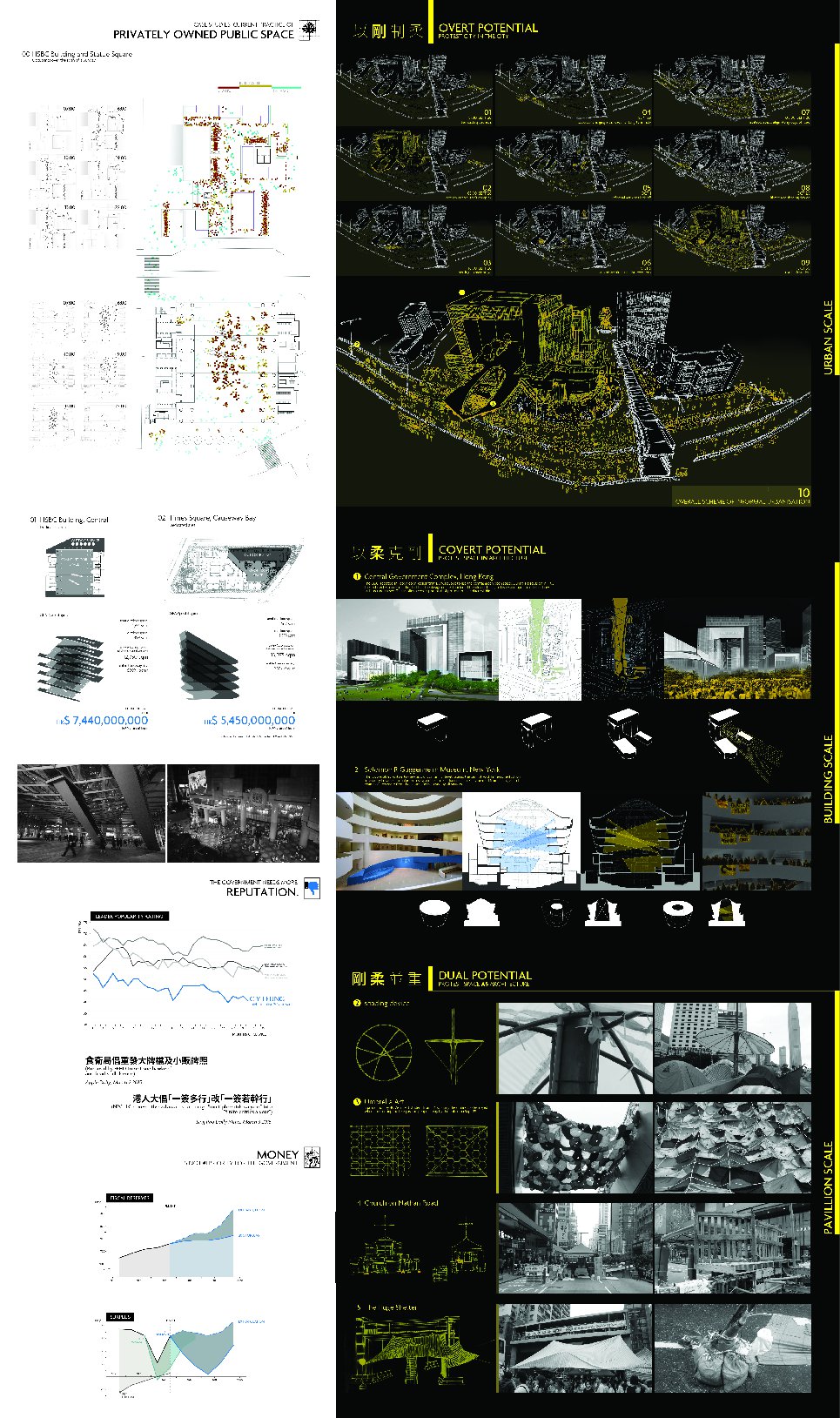
STAGE 01. A. The first exercise of the project will consist of a series of time-lapse
photography that documents the many events on the site. Anecdotes will be presented in
the form of section drawings (1:100) and spatial requirements and configurations will be
analysed. B. Chronological route paths, escape paths and nodal places of the previous
occupied Nathan Road will be analysed. Incidents of outbreak, spillage and clearance will
be mapped (1:500) as design considerations.
STAGE 02. The initial design stage involves the production of site models to explore the
potential of impromptu structures, surfaces and volumes. The phases of the project to
react to density change and political change between 2014 and 2017 will be designed based
on existing urban and microscopic context, and local ideologies. Surgical in-situ testing
models (1:100) are produced to experiment with street activities as conspiratory informal
gathering space.
STAGE 03. The second design stage reiterates the formfinding process to create secluded
spaces for officially BOH purposes but conspiratorily potential control points for
breakouts. A second round of modelling deals with a scenario of protests and
critical civil disobedience activities in the street. Final models of the two scenarios (normal
and conspiratory) (1: 200) will lead to the creation of a 5-minute micro movie.The
headquarters (1:100) and interventions of street activities (1:50) in both scenarios will be
explored and reinform the overall design.
|