ArkeMergenc(y)e
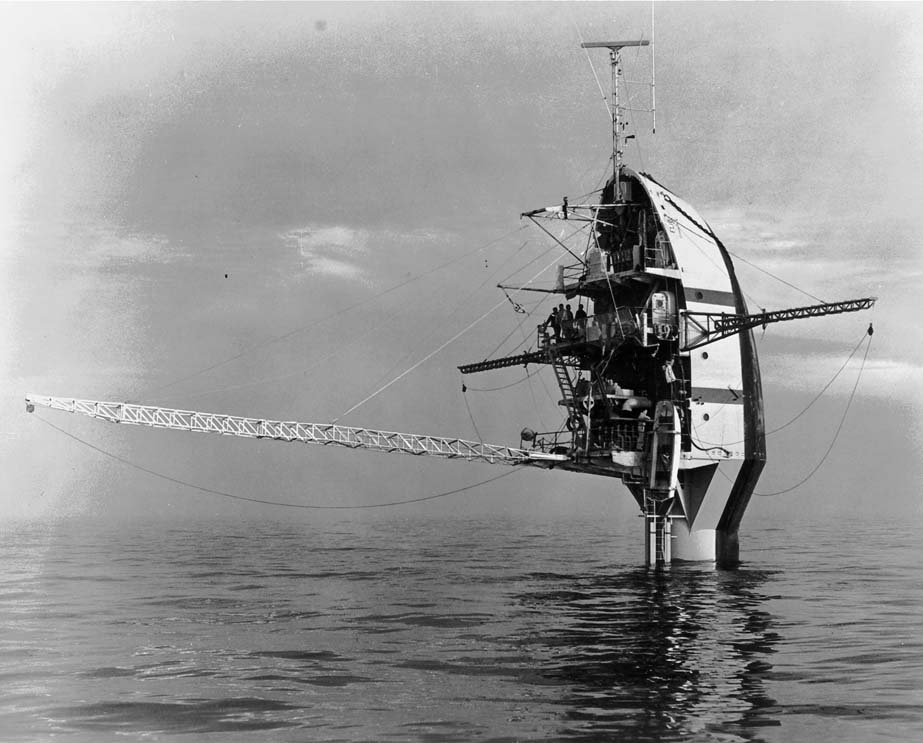 Never doubt that a small group of thoughtful, What? During the past hundreds of years, humans face hundreds and thousands of natural disasters, shipwrecks and air crash accidents. Nowadays we have wars of ocean resource. How architects can support and co-operate with adventures, fishermen, search and rescue (SAR) team, Navy, Engineers, Medical personnel, and scientists to discover and contribute to this unknown field! This thesis focuses on how to use existing global pointing system (GPS), old vessels, existing marine technology and floating lamps to design a few stable permanent and semi permanent platforms. Thus it could form a group of giant community and giant to guard and protect our life and resources in the ocean. Why? As a matter of fact, during the 9 months of fishing season, many fishermen take their life at risk to go to the Southern Indian Ocean to capture one type of fish, called “Tooth fishes” and also called “White Gold”. The fishermen think there is abundant treasure in the ocean because they spend around 70 – 90 days in the ocean. The total value of the fishes caught by fishermen during the period is around USD 2 Million. The fishermen describe it as a “Treasure Island”. But SAR team describes it as an “Angry Ocean”. Firstly, we assume this is a multi nations unit (MNU) operation proposal.Each GPS floating lamp units includes 2 rescue boats on average to locate coastline beyond 50 nautical miles. This project is implemented in disaster prone locations. The thesis will only focus on the most shipwrecks and sea storms happening locations in Southern Indian Ocean. Such French southern and Antarctic lands selected sea zones will be proposed as ArkeMergency for research and development in the filed of this resource ocean. This is the last support station island for the Antarctic adventurers and scientists. Finally the thesis will propose this self-sufficient community zone that will eventually evolve to form an independent ocean mini community for the whole world. How ? Firstly I will provide a series of diagrams to explain my methodological process. User relationship diagram, Marine technology diagram, Arduino SAR system diagram, a community location and function diagram and vessels deploy and interior design diagram. Once the shipwreck happens, the closest floating GPS units will launch an automatic drive rescue boats when the vessels give out save our soul (SOS) to global marine rescue center. After victims are boarded, it automatically drives back to the ocean community (Zero Degree Giant). It can save search and rescue time and save more victims life. Based on the contemporary technology, it can be a case study of reference. We will collect and recycle the discard vessels to be a part of the ocean community spatial components. Different vessels provide different function and deploy different schedule. This community group includes minimum 3 basic vessels to 6 vessels, which are Aircraft carrier, medical vessels, and scientist vessels to be foundation modelers.Also one of vessels takes a self-sufficient community, an important role. The 3D carbon fiber print robotic is located in that vessel and it prints the structural component if crews need such as floating lamps and walkway bridges. Another important role provides pre-event shipwrecks during sea storm season. It is a kind of refuge to protect the fishermen and tourist. Moreover this base setups fishing farm to protect the facing extinct of tooth fishes or deep-sea fishes. Bibliography Marine laboratory http://www.mpl.ucsd.edu/resource/intro.html Floating Platform http://www.mpl.ucsd.edu/resource/history.html RP video https://www.youtube.com/watch?v=3hYafIr1B |