Tracing Beat
| ARTIFACT |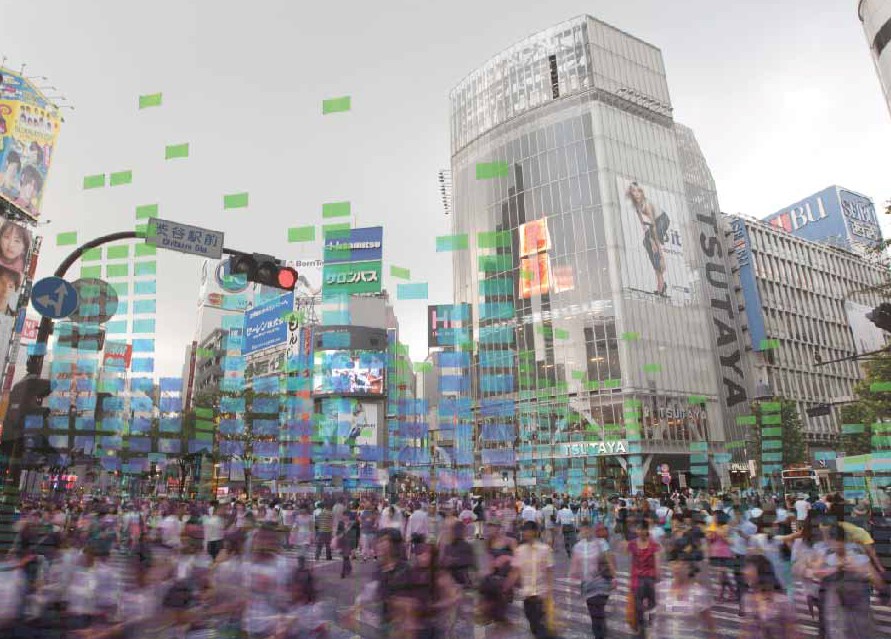 CITY BEAT
TRACING BEATFrom Human Interaction to Urban Formation | WHAT |This thesis is a direct reaction to the way the frequency of beat generated by any of the individual, in performance spaces, be contributed to the formation of a unique city. Beat, in another angle to make it substantially, frequency would be one of the bet representation for the term, it is unique for each individual and can signify one’s identity. However, what media can help expressing this idea out, from frequency to the sense of beat?
Sylvia Lavin, the author of the book Kissing Architecture, gives out an interesting theory of interface between architecture and other mediums. She explains the idea through using the situation of ‘kissing condition’, showing new affective conditions on the surfaces of objects can be created by kissing between mediums, hence, giving out new sensation to the built environment, enriching the architectural spaces through the temporary introduction of new media and relationships from outsiders. Surface, would be one of the media that can help linking both the insiders and outsiders together in terms of architecture. Frequency, therefore, can make use of the ‘surface’ to give out such a message of any of the individual beat inside to the outside, in a reverse situation, the outsider can read how the insiders generate their own beat and how the beats interference with each other to composite a new language of the built environment, from an individual structural scale to a society city scale, signifying the identity of the city. In fact, the layout of the city is created by people and language, it may look developed without any overall design, however, throughout the study of ‘beat’ of the city, this gives evidence on no geometric logic does not mean there will be confusion to the inhabitants to identify the language of a city. | WHY |In the society, human acts individually with oneself behavior which generates a unique frequency representing his ‘life beat’, which records the movement of a certain period of time. Community is the formation of a group of people interacting to each other, which is the moment making interference of ‘beats’ occurs, thus generating new ‘beat form’ representing this unique community which the characteristic of the original individual ‘beat’ can still be traced back from the new ‘beat form’. To concretize such an idea, a symphony would be the best example to explain such a phenomenon. To a further extend to the urban built environment, it would be the place performing orchestral music which is composited by all communities forming by all individual ‘beats’. With the time changing, the ‘beat’ will be interference by the impact of cultural, social, political, geopolitical and economical aspect, which will result in new formation of urban built environment, and this is an interactive process which both the society and individual contribute such a piece of music. In terms of architecture, different scale of cityscape presents its own ‘beat’, metropolitans like Hong Kong and New York are already different in their ‘beat’ representation. The built environment like new buildings and old buildings may create a harmonic ‘beat’ system. Both are interpreted from the individual ‘beat’, which influence the urban built environment. This thesis paper will explore and experiment the formation of ‘beat’ in terms of architecture and how it can contribute from an individual scale to a city scale, and also the relationship of ‘beat’ is being traced back and vice versa. | HOW |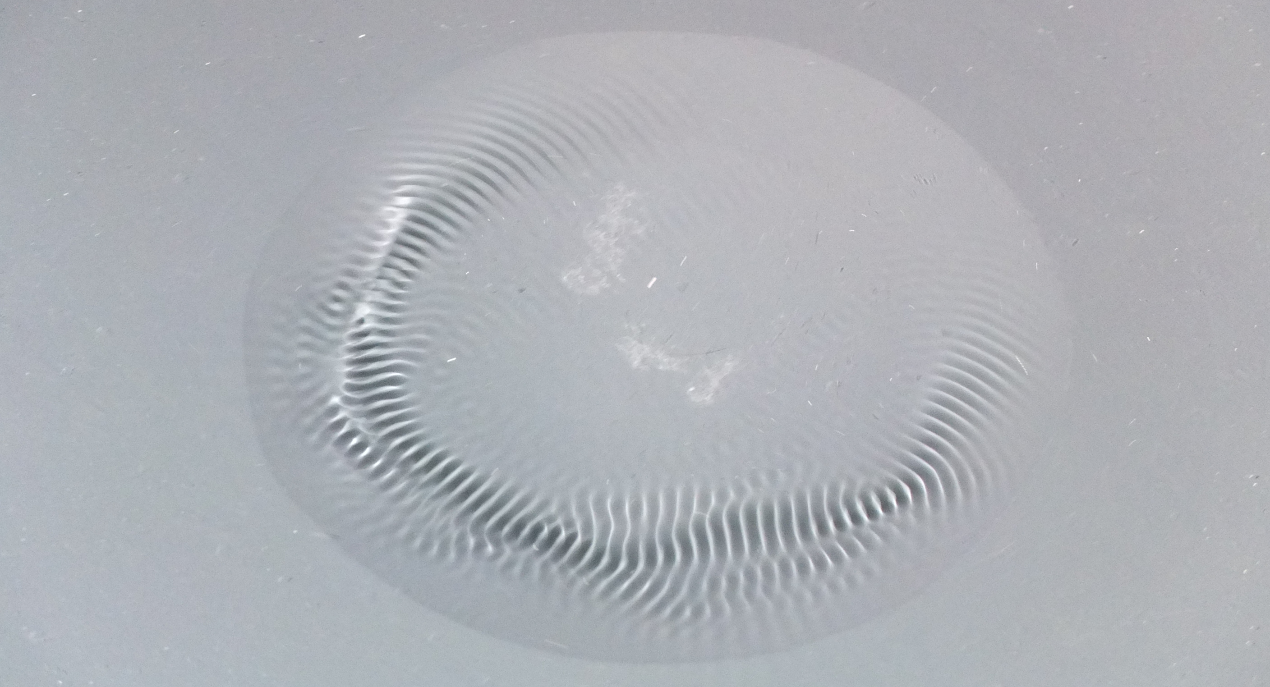 VISIBLE BEAT Frequency, is a form of energy that can be measured, and how this kind of energy is being represented in architectural language will be the goal of this thesis project. The following is the suggested experiment on exploring how frequency be translated to be a space, thus, representing the beat of the city. An installation will be set up with several trays carrying water and there will be loudspeaker mounted underneath, by using contact microphones to collect the internal sound of building structures and amplify it with speakers synchronously. The installation reflects any actions and footsteps by any individual or even a group of people, and then visualizes the vibration of the motions, every motion frequency in the space can make changes on the water patterns, and all the individuals can perceive the motions generated by themselves and the place and observe the change of surrounded motion immediately through the water pattern. The pressurized sensors are installed on the architectural structure including ground, wall and railings. Each source, motion sensor, is connected to the corresponding speakers, and then produces diverse water patterns. By using the projector to project the light source to the trays and produce the reflection of water patterns on the wall. People can then step and touch and hear and observe simultaneously. | BIBLIOGRAPHY |
|