11/2014 Thesis Statement Draft 2.0
|
Rhythmi(city) STATEMENT 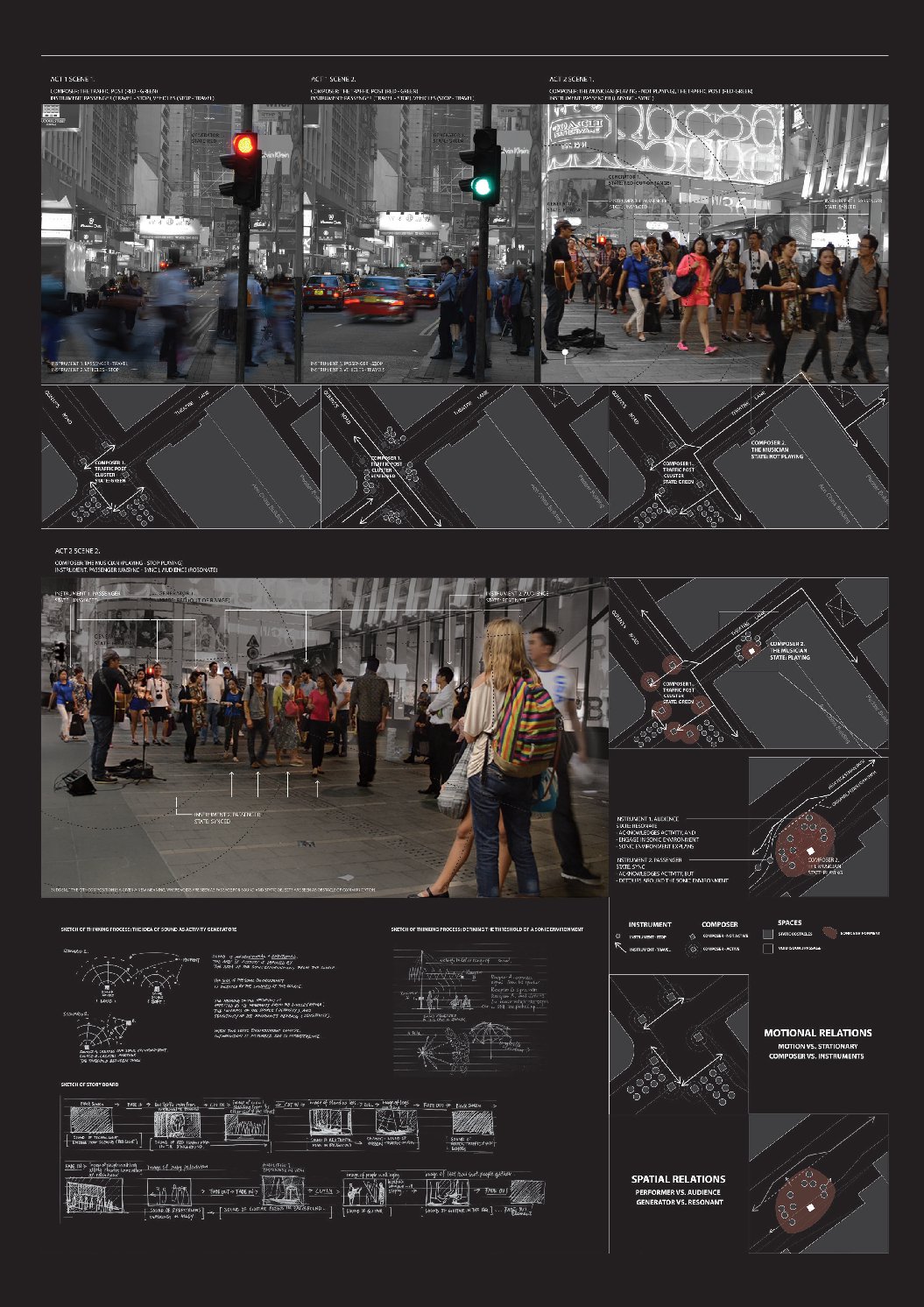 Additional drawing that supports the video artifact
This thesis is interested in the rhythm of the city, which identifies SO UND as the generator of the architectu ral/social dialogue between activity and space. The research acknowledges the work of various accumulated manifesto on spatial acoustics, aural architecture and sound visualisation but sets to focus on the dynamics between sound, motion and architecture with the ambition to, not only further justify sound as an important but often neglected spatial design component in both urban and architectural scale, but
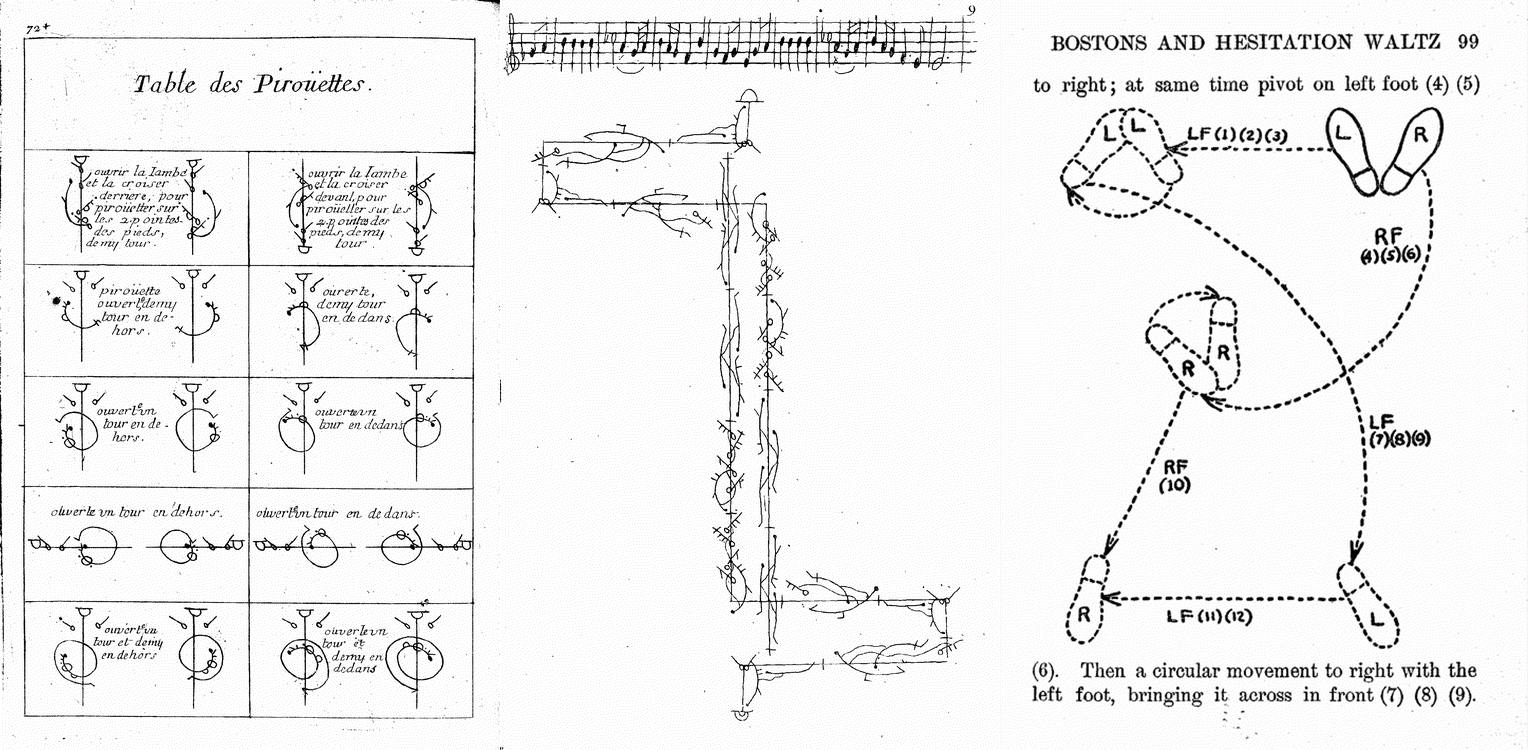
WHAT The Dancing Manual, by Raoul-Auger Feuillet SOUND as a product of motion interconnects men and space, whilst it is an agent that activates our sonic awareness as means to comprehend space through hearing, sound is also an agent of docility. In choreography, music is the framework by which movement and steps are arranged, and dancers are programmed to materialise space in upright postures, engineered steps and structural attitude. Sound is informative and directional. On a living scale, Sound cues the transition of acts in space, e.g. the sound of the traffic post that signals our crossing, sound can also prompt a travelling crowd to stop. On a city scale, our built environment sets stage for these dialogues of event, where architectural intervention is the instrument that compose these spaces. WHY 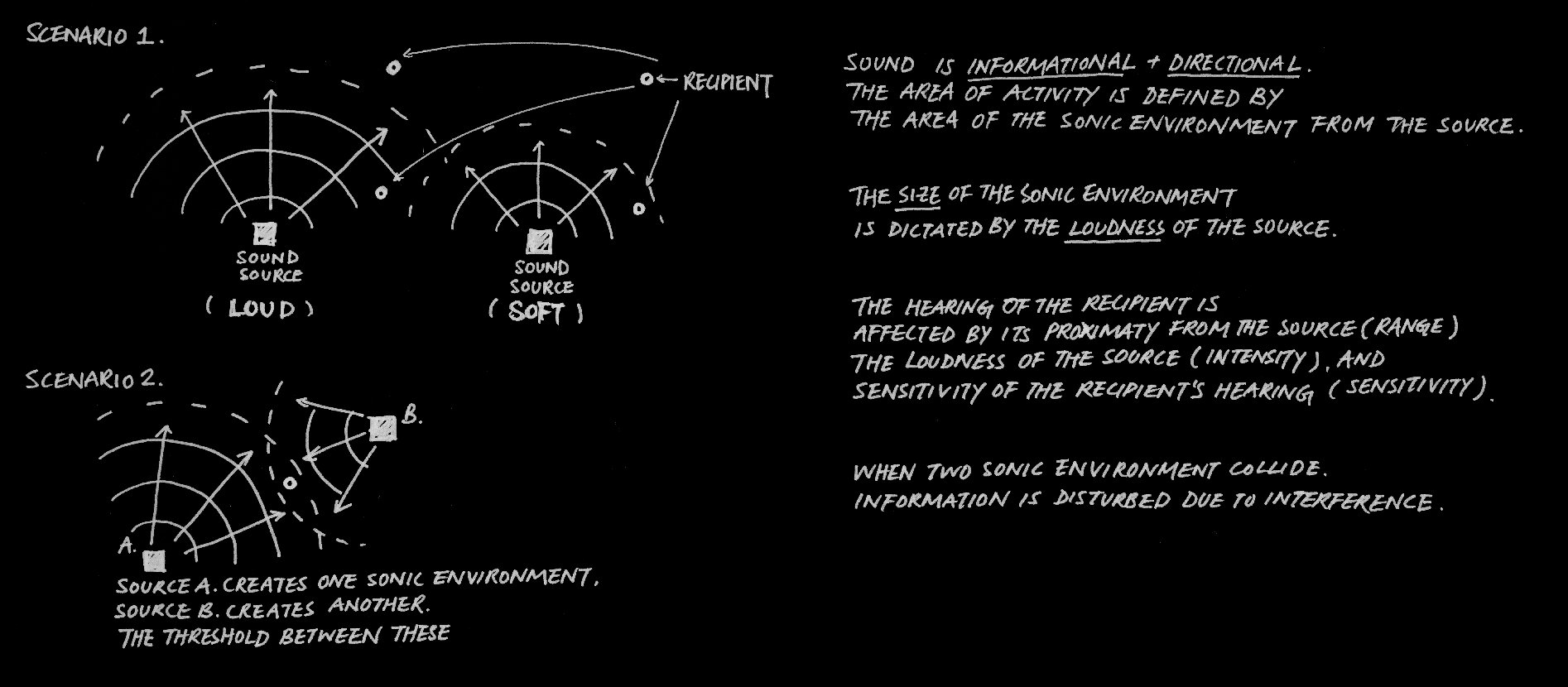 Sketch explaining the concept of visualising sonic space Bernard Tschumi believes that activity materialises space. Sound as a product of activity therefore could be seen to constructs its own environment/space. A collective effort by architects, acousticians and scholars have established that sound as a design component has been neglected in architectural design for too long, this study hopes to dive into the contemporary discourse on the subject with the insertion of introducing Sound as a generator of space that reinforces architecture’s role of facilitating circulation and activities within the city, particularly at its disjunctions. // In form, this study challenges the representational approach of materialising the motion of sound into a static form but rather defines the transitional threshold of sonic space. The threshold of the activity/space is thereby not bound by the physicality of conventional architectural boundaries e.g walls. Our understanding of the city will be transformed if sound is understood as a cue and means of transferring communication, physical structures would then be seen as obstacles and voids as passage for sound and the face of our city will then be transformed. HOW 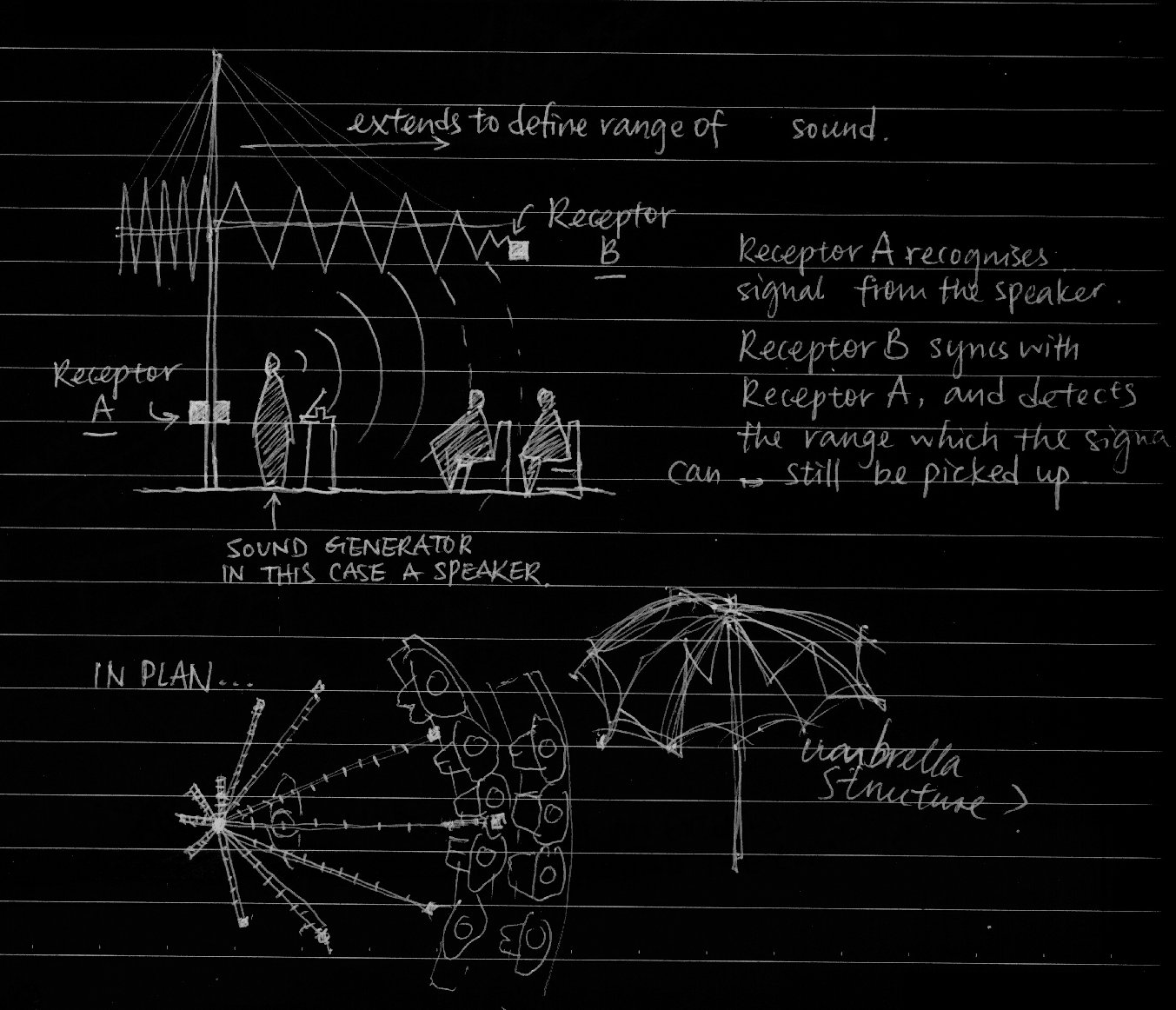 Sketch thoughts of the design By adopting filmology, architectural drawings and real-time data models as the primary mode of research, the investigation aims to discover the properties and limitations of sound as a generator. // The architectural intervention is a human scale, installation device, that is designed to constantly reconfigure as its sonic environment changes. Similar to Tschumi’s follies in Parc de la Villette, these installation are purposed to induce interaction and exploration. // The device, which only responds to sound, activiates upon detecting foreign sound within its radar. The device’s receptor will process the real-time data and the “canopy” extends to the threshold of the particular sonic environment, beyond which the sound from its souce is no longer noticable. // The installation explores the possibility of visualising our uban fabric beyond its current rigidity, as it challenges the conventional concept of spatial threshold. Here the threshold of activity is not bound by the physicality of static walls but rather, it is unfixed and is constantly shaped by the size and direction of the sonic environment generated by the sound source. BIBLIOGRAPHY 1. Tschumi, Bernard. 1994, The Manhattan Transcripts. Academy Editions ed. |