10/2014 3MIN Presentation
|
Rhythmi(city) Sound is a cue that activates space, and the threshold between acts. It is the generator of activity, space and hence the composer of the city’s rhythm, by which our daily social movement and behavior are bound by. 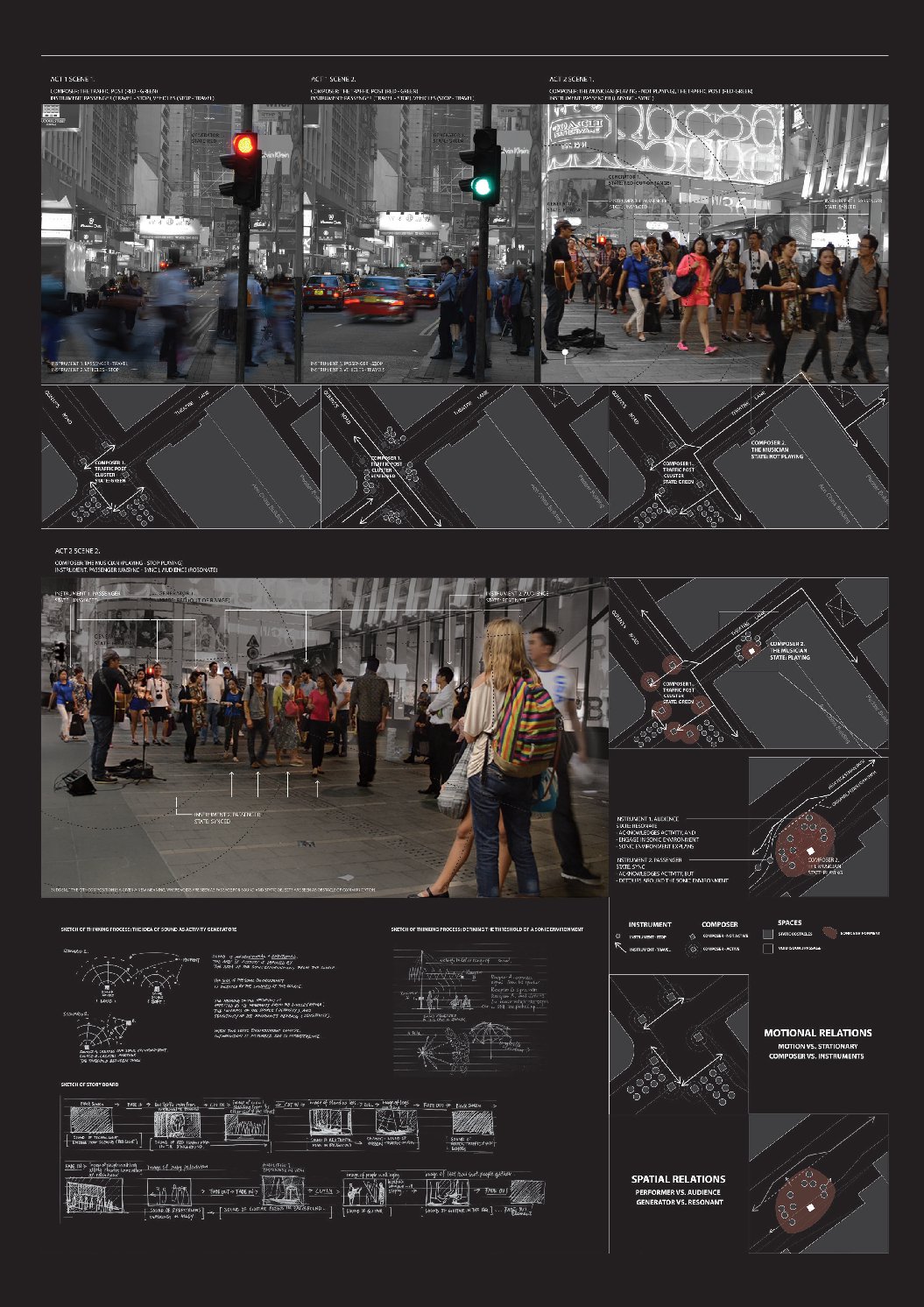 Refence drawing that supports my artifact, which is short video clip
The research acknowledges the work of various accumulated manifesto on spatial acoustics, aural architecture and sound visualisation but sets to focus on the dynamics between sound, motion and architecture with the ambition to, not only further justify sound as an important but often neglected spatial design component in both urban and architectural scale, but as an generative agent that shapes and constructs our built environment.
WHAT 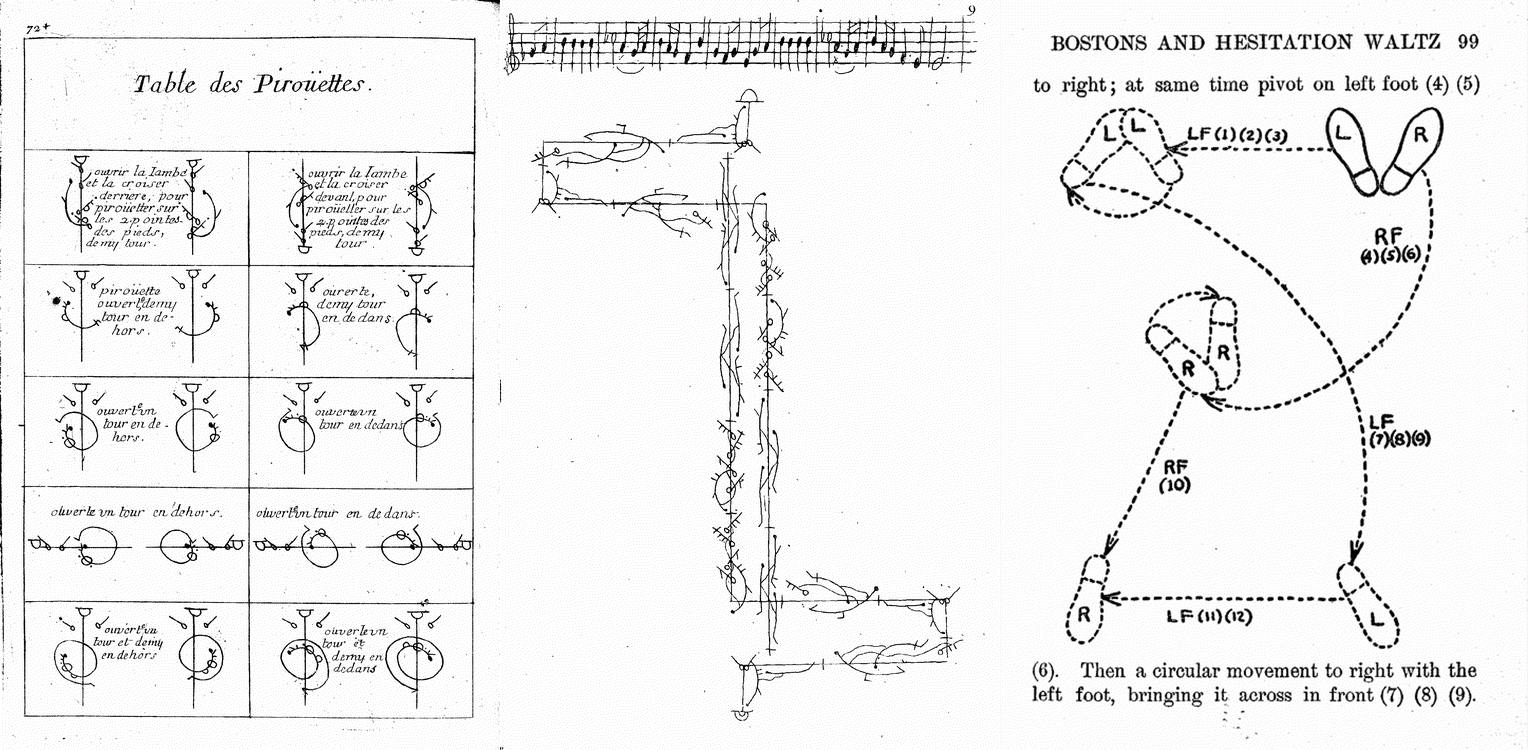 The Dancing Manual, by Raoul-Auger Feuillet
SOUND as a product of motion interconnects men and space, whilst it is an agent that activates our sonic awareness as means to comprehend space through hearing, sound is also an agent of docility. In choreography, music is the framework by which movement and steps are arranged, and dancers are programmed to materialise space in upright postures, engineered steps and structural attitude. Similarly sound is not a redundant product of motion in space but rather a function that sets pace for our daily lives; it is the alarm that wakes us in the morning, the buzz at the door, it is the sound of the traffic post that signals our crossing. Sound is a cue that activates space, and the threshold between acts. It is the generator of activity, space and hence the composer of the city’s rhythm, by which our daily social movement and behavior are bound by. WHY 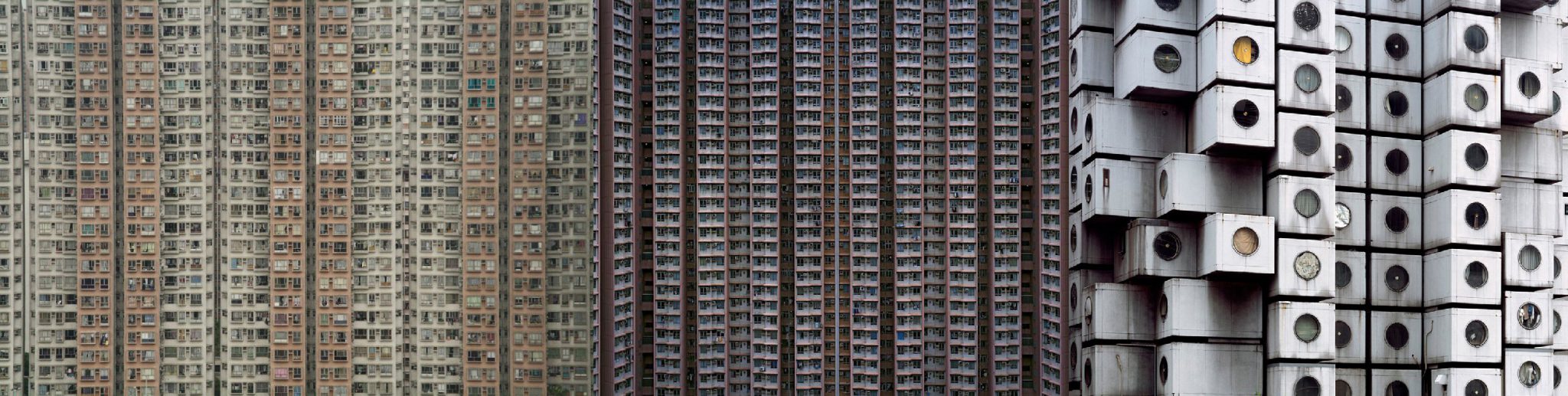 The Architecture of Density, Michael Wolf (left & middle), Nakagin Capsule Tower, Kisho Kurokawa (right) In a TED talk (Feb 2010) David Byrne said that the invention of audio equipments threatens the interrelationship between sound and space, as audio amplifier and projection device gives music the mobility and flexibility that frees it from spatial restraints. These inventions along with urban development under capitalism gave birth to standardised spaces that form our generic city today. This thesis sees the opportunity to transform the face of our generic city by reintroducing SOUND as a spatial design component. HOW 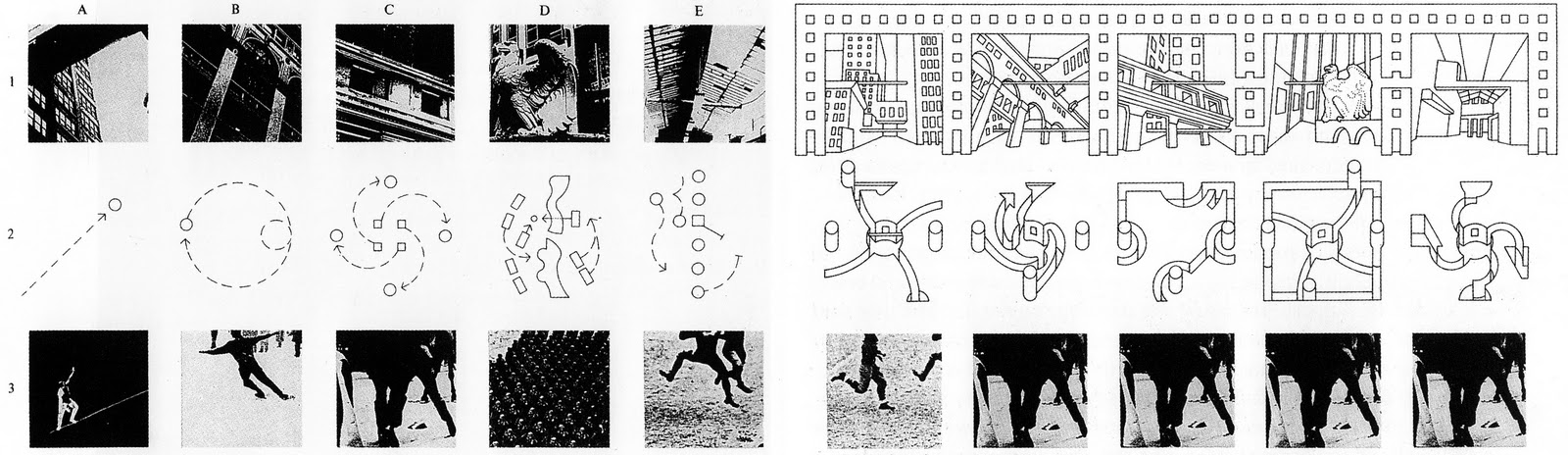 The Manhatt an Transcripts, by Bernard Tschumi By adopting filmology, architectural drawings and real-time data mode ls as the primary mode of research, the investigation aims to discover the properties and limitations of sound as a generator, that would later inform the application of sound as a design component. The basis of this thesis builds upon rethinking sound as a generator of space, through studying the existing rhythm of the city. The first part of the study aims to denote the invisible dynamics at work. The rhythm of the city is understood in terms of motion and space, the relationship between the built environment and its occupant is understood as composer and instruments, further concepts such as (unsynced/syced) passengers and audience in resonance are established to understanding the dynamics within our built environment. The anticipated output of the first part of this study is a device that measures the threshold of sound and therefore the threshold between individual sonic environments. The device is the beginning of visualising our uban fabric beyond its current rigidity. BIBLIOGRAPHY |