Architecture beyond the Sign
|
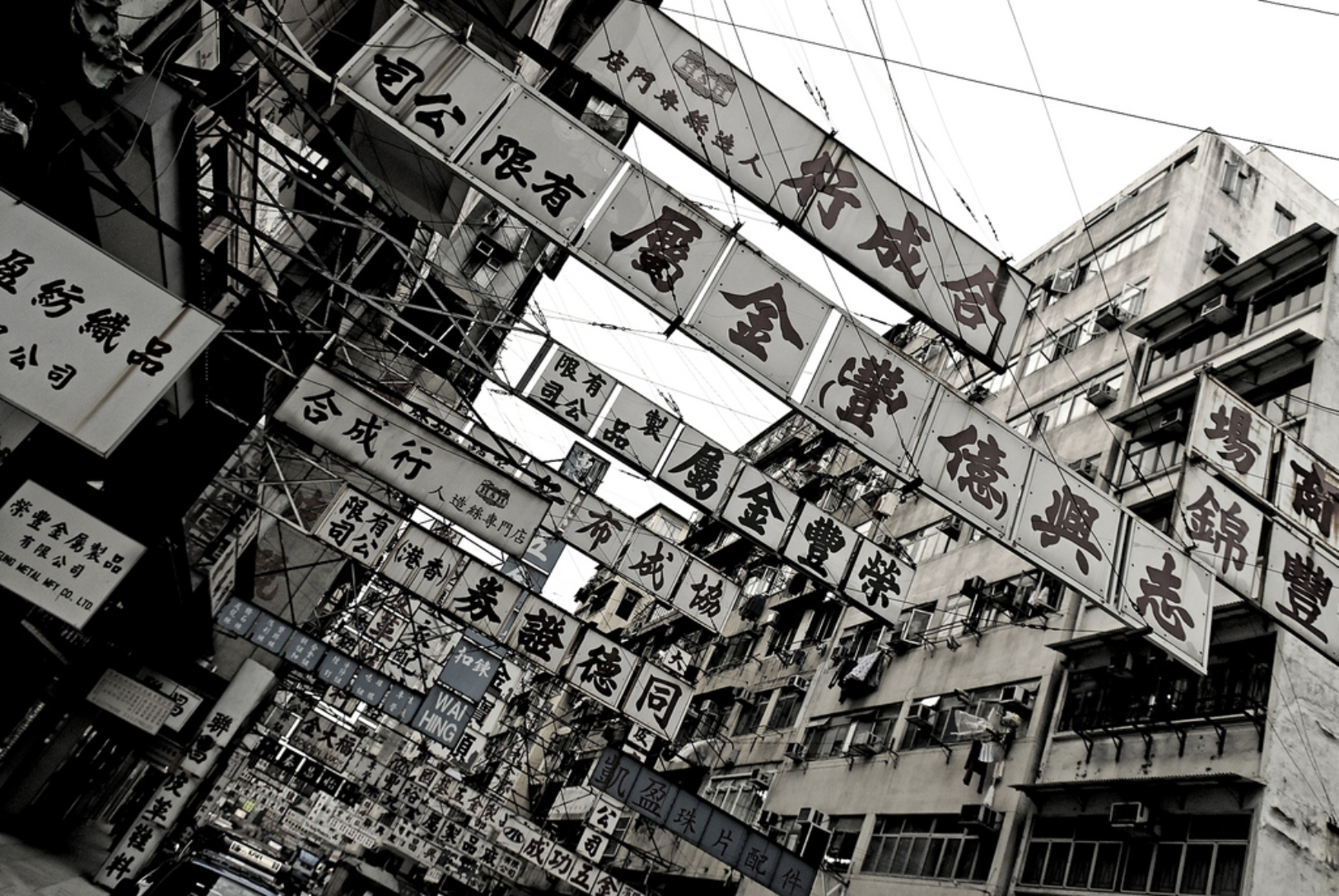
Within a world of myriad forms of persuasions, our society is greatly dependent on the means of advertising communications. While the methods of persuasion were based on sight and smell of the 5 senses in the past, the majority of these methods are now shifting towards visualization- Graphic Signs. The signs and its symbols have gradually constituted to the urban context- “It is an architecture of communication over space; communication dominates space as an element in the architecture and in the landscape.”- Robert Venturi. In Hong Kong, narrow streets of urban context are overwhelmed by different scales of communicating signs, some cantilevering outwards to the street; some occupying the façade of our built environment. These elements are ambiguous within their territories as they are neither the public space nor a part of the built environment, crisscrossing above the constant changing rhythms and movements of pedestrians and vehicles. They intertwine along the streetscape, each attempts to communicate, provokes and challenges a response and reaction. These Communicating signs, each being autonomous on its own, conveys a messages beneath the 2-dimensional layer. Nonetheless, are these 2-dimensional graphics adequate in the stimulation of response? It is observed that when these 2-dimensional layers imbricate along different axis- horizontal, vertical and in depth, begin to form a 3-dimensional way of connection and communication. Then how do these elements of space communicates through the relationship between the built environment and the public space? On a 2-dimensional graphical aspect, humans receive information through visual stimulation of mainly words and symbols; when shaping the graphics into layers of 3-dimensional perspectives, what elements other than words and symbols be added and how do we as humans- interpret, visualize and conceptualize the information? In the 21st century, a society that embraces the ease of multi-media, with technologies formulating multi-stimulations of all human senses, how can the use of such technologies assisted to improve the communication of architecture, leading architecture beyond the sign? Through the study of human responses towards different means of architectural communication, this thesis examines the effects of the communicating signs to the human senses, and seeks an alternative method of communicating information within the urban landscape by exploring different methods of technologies that brings about a revolution in the communicating signs of HK. |