|
Cultivate – Conserve – Community
This thesis aims to put Agriculture into the consideration of urban planning. Learnt from the community farm examples, through designing a New Prototype of Public housing in Singapore as a testing ground to prove that agriculture has its value in Urbanscape specially in creating a self-sustainable community and better quality of living. 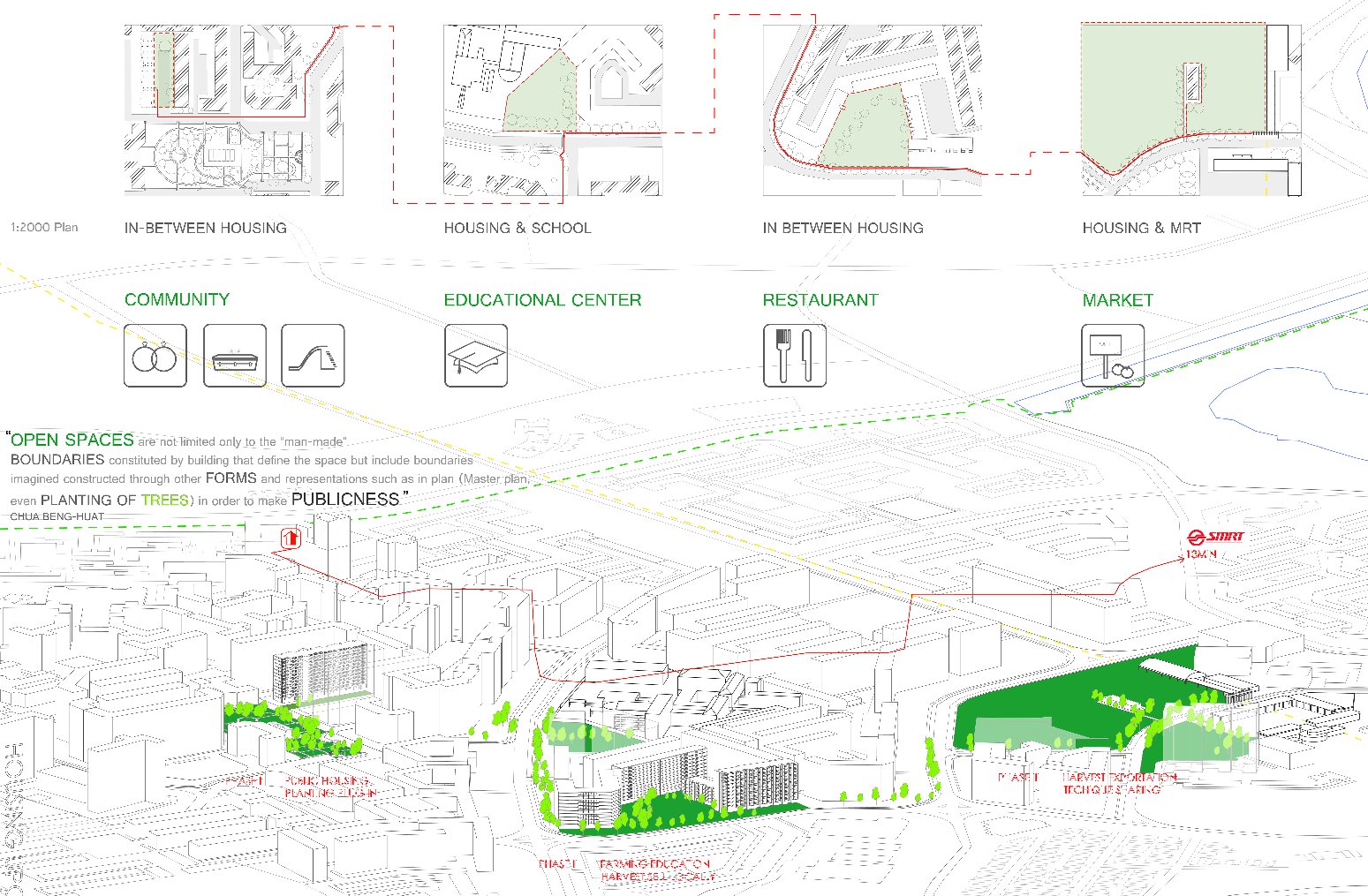 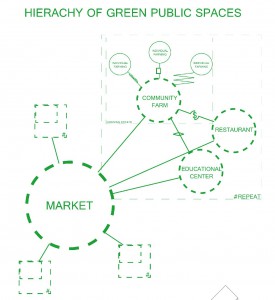 Can Agriculture be put into the consideration of Urban Planning? Can Agriculture be put into the consideration of Urban Planning?
Even Urban Farming is definitely not a new thing, why this issue can never get into practice but only an utopia labeled as an unachievable dream of ‘green’? Is it because we, architect, only proposing large scale of farming and production, but not looking into the detail on how to farm and how it affect the life style?
Farming is a cultivation of relation between human and nature.
Not decorative only giving an political image of green, but interactive and productive gives people right and responsibility to maintain their environment and living quality.
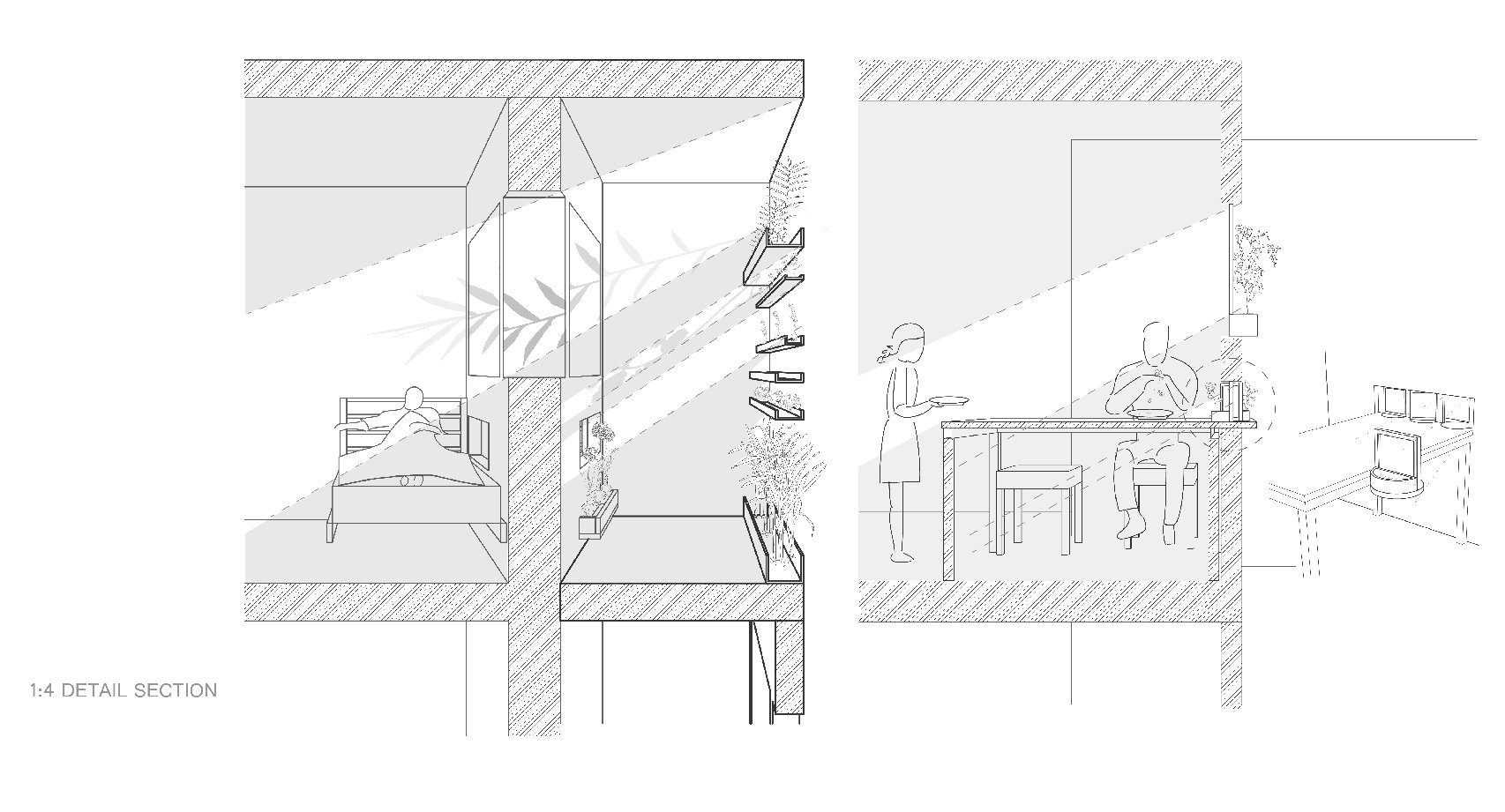
Not inaccessible, but require people a touch with soil in return for fruit from earth. Pots of flowers and herbs were grown in lanes, rooftops and corridors within the city. The pursuit of planting and farming would never be restrained by the separation from land because of high rise.
Not expensive, but just require little money and care to cultivate the crop. Thousands of money is used as maintenance of the ‘green’ theme park and the name of ‘City in Garden’. It may be benefiting the economy of city but not really benefiting the living environment of Citizens.
Rather than the ‘decorative, inaccessible and expensive park’ built by the Singapore government claiming itself as a ‘City in Garden’, a ‘productive, interactive and popular farm’ should be the true direction not only towards self-sustainable but towards regeneration and biophilia, which architecture should allow people reconnecting to the nature.
Why Singapore?
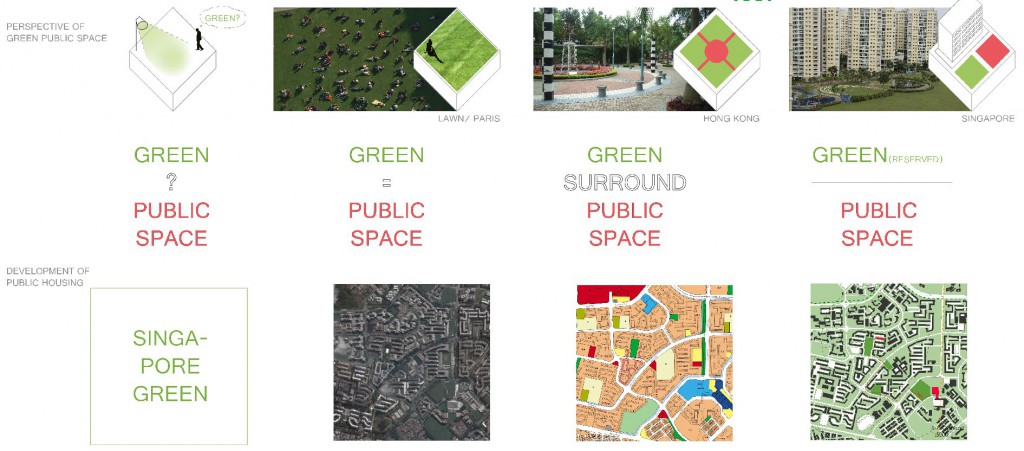 
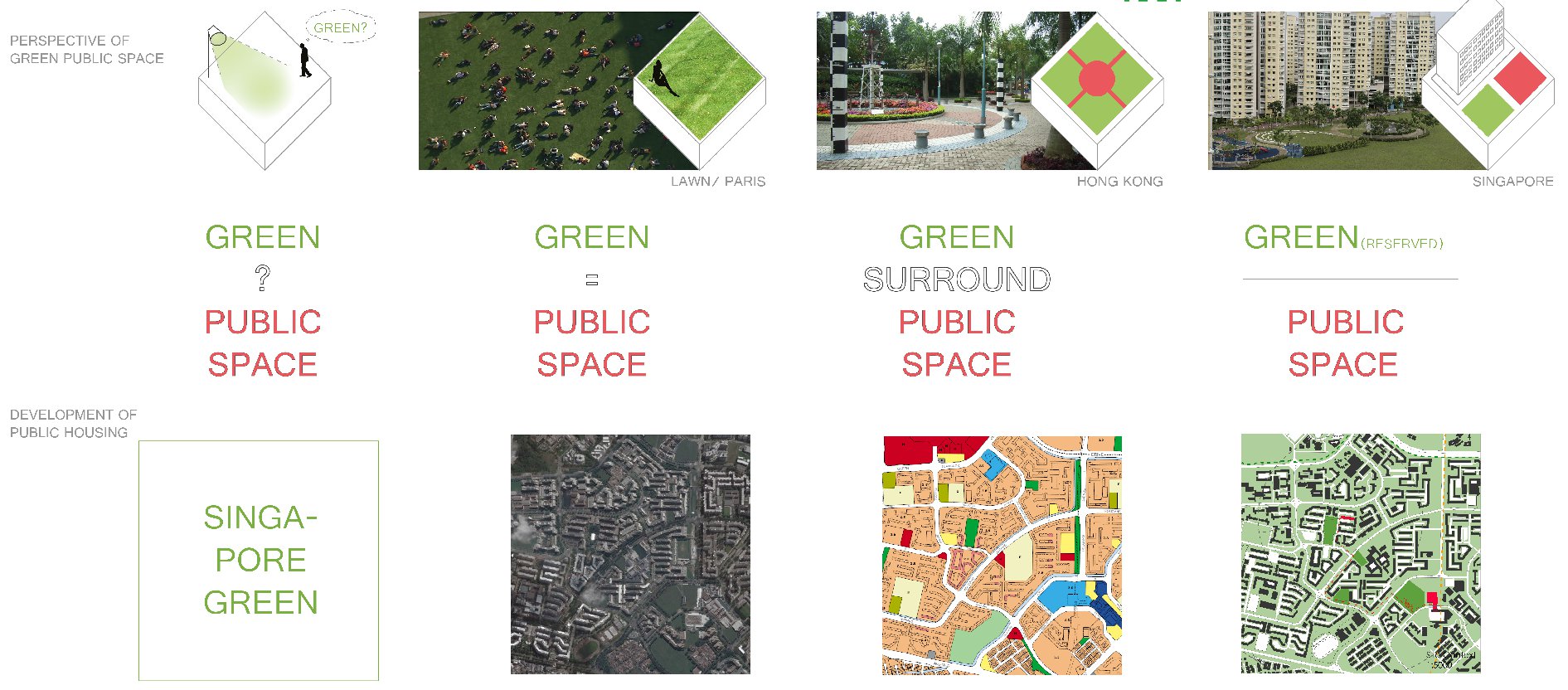
Singapore’s unique social condition allows the collision between Agriculture and Public Housing. Large population of public housing owners and Respect of Green in City make government focus on the public involvement to green.
While government was developing the urban planning and also wanted the green become the global image, nature green and agriculture land were destroyed in order to build those artificial green. Why don’t we conserve the original one?
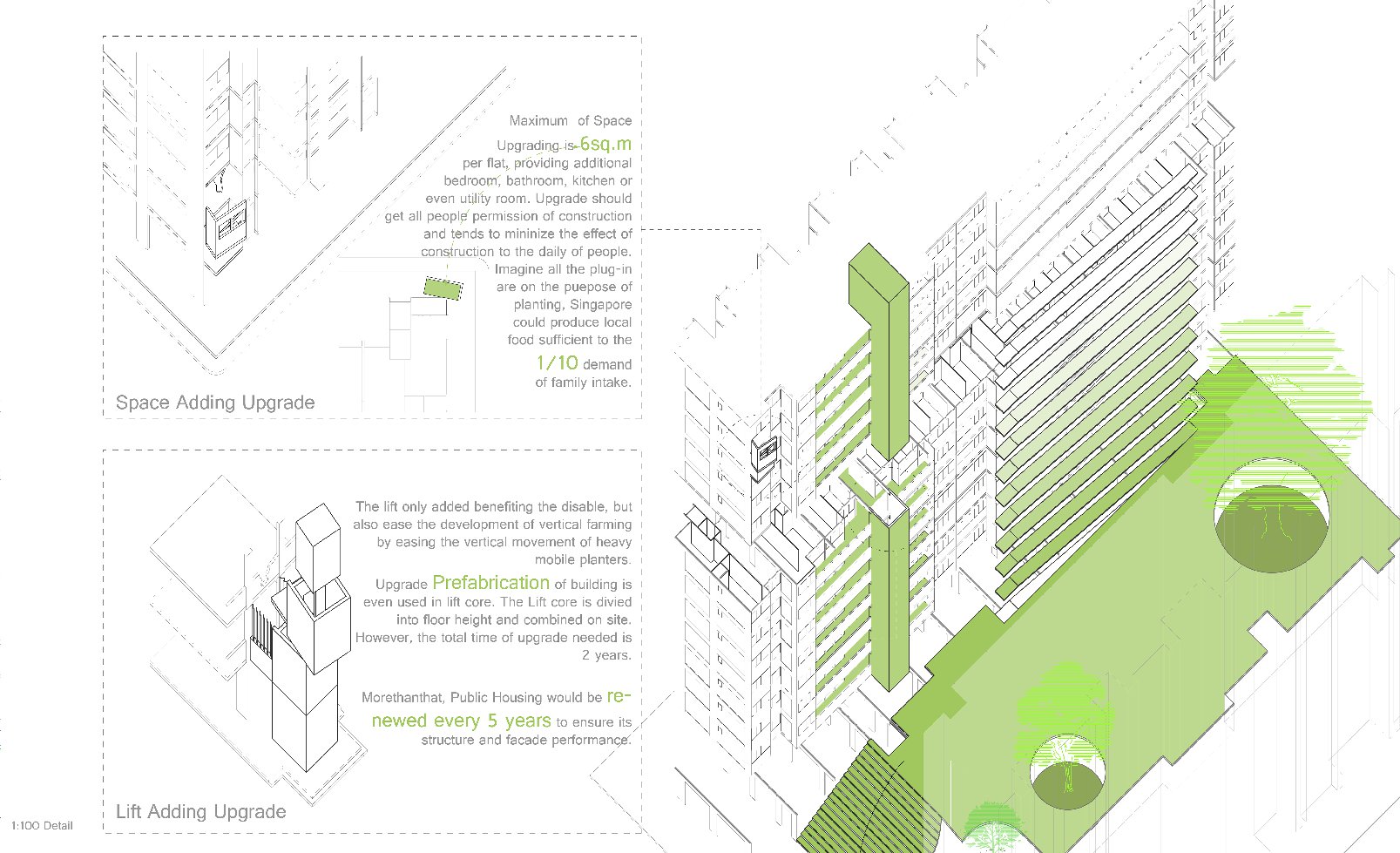
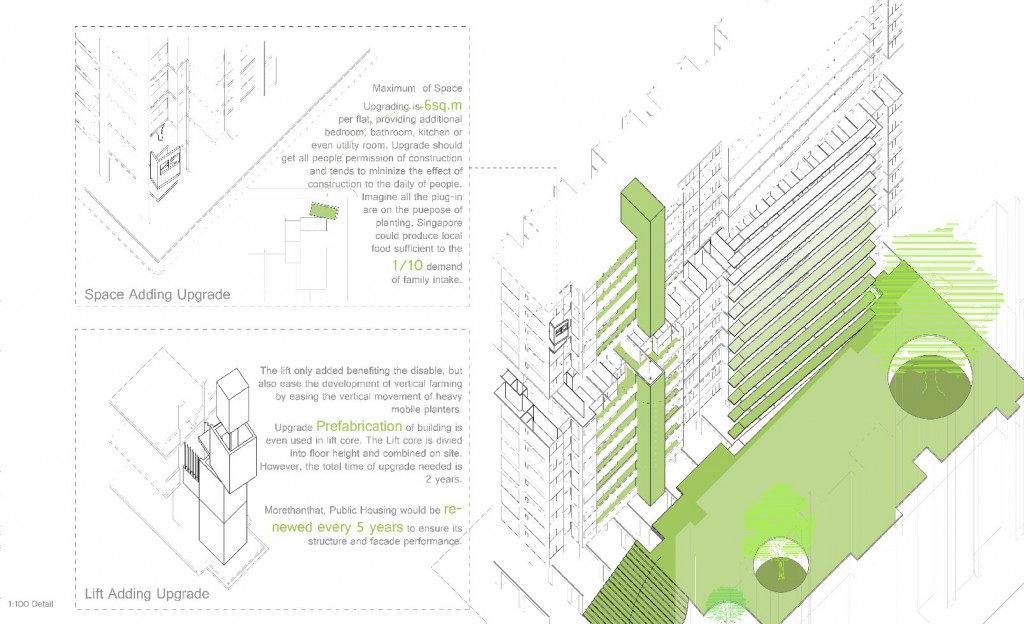
Singapore’s old public housing would not be demolished, but only repairs and upgrades would be made to maintain its value and compete with the new buildings. Including the issue of over supply and culture mixing of public housing, the conservation could be made to improve those issues.
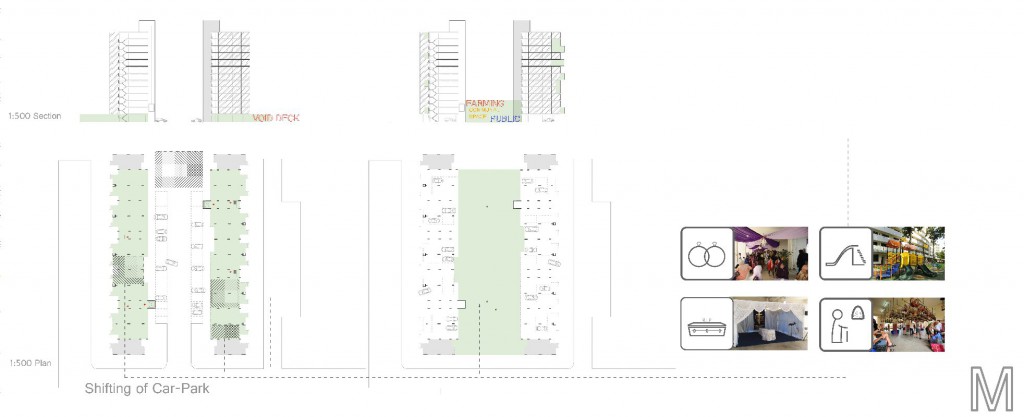
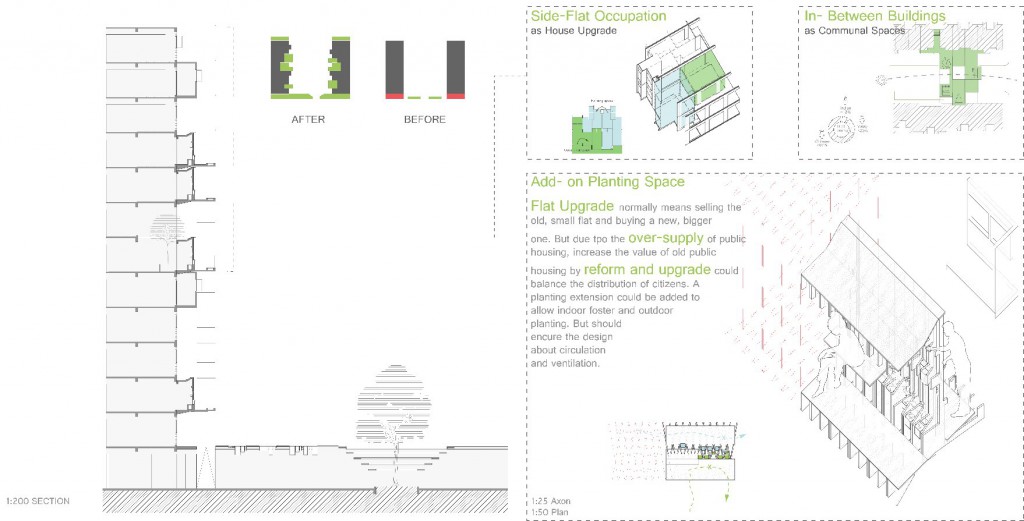 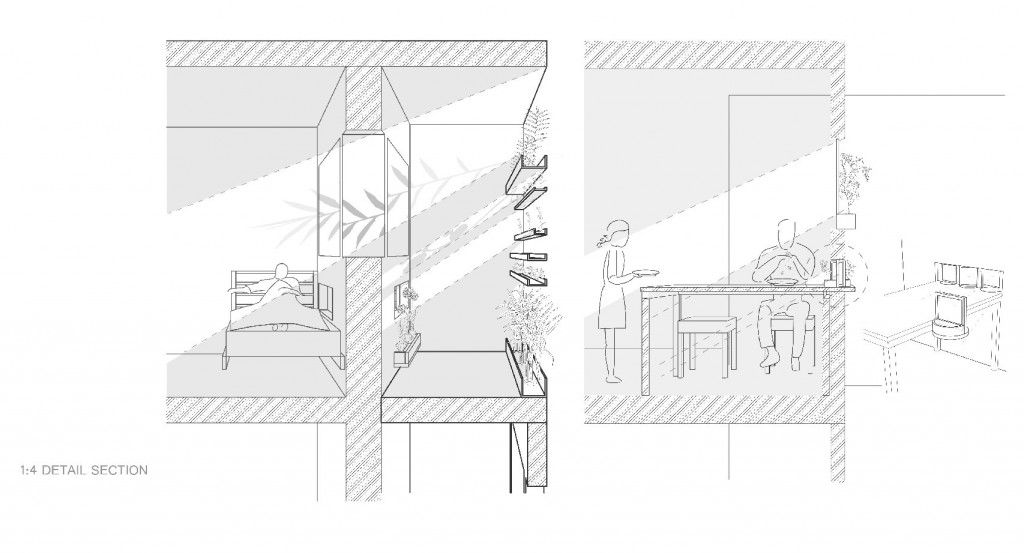 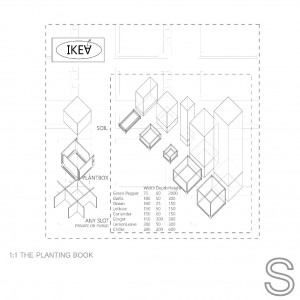
Focusing on existing structure of Singapore’s public housing, upgrading would be made not only to increase the living area, but also inserting agriculture with other programs, like playgrounds, restaurants and so on to form a new type of ground giving Singapore a new prototype of public housing, giving people a new style of living and giving the nation a new definition of green.
Add or remove; only two actions would be made to the public housing estate to improve its existing condition. By mapping its urban condition, like programs, circulation, infrastructure and solid void, programs could be designed according to places. Also, by ‘mapping’ the daily of different ethnics, the new mixture of programs would also provide opportunities to form a real community and understand another ethnicities.
The goal of thesis is to set up a set of upgrade strategies in different phases to convert an old public housing estate into a network of agriculture-system linking individual and community, small and large scale, living style and productive, flat and urban society to criticize the hypocritical green image shaped by government.
BIBLIOGRAPHY
1. Frank Lloyd Right, 1958, The Living City, Horizon Press
2. Jane Jacobs, 1972, The economy of cities, Middlesex: Pen guin
3. Andre Viljoen, 2005, Continuous productive urban landscapes: designing urban agriculture for sustainable cities, Oxforf: Architectural Press
4. Petre J.Hatch, 2012, A rich spot of earth: Thomas Jefferson’s revolutionary garden at Monticello, Yale University Press
5. Clare Matthews, 2010, The low maintenance vegetable garden, London: New Holland
6. Belinda Yuen, 2011, Climate change and sustainable urban development in Africa and Asia, Dordrecht: Springer
7. R.J. Ruppenthal, 2008, Fresh food from small spaces: the square inch gardener’s guide to year-round growing, fermenting and sprouting, White River Junction
8. Stephen H. K. Yeh., 1975, Public housing in Singapore: a multidisciplinary study, Singapore University Press for Housing and Development Board.
WEB
1. Asian Urban Epicenters
http://www.asianurbanepicenters.com/?p=2200
2. Remember Singapore
http://remembersingapore.org/2014/09/28/a-flashback-to-singapore-1982- part-2/
|