Medical Nemesis Review 2.0
|
MEDICAL NEMESIS REVIEW 2.0
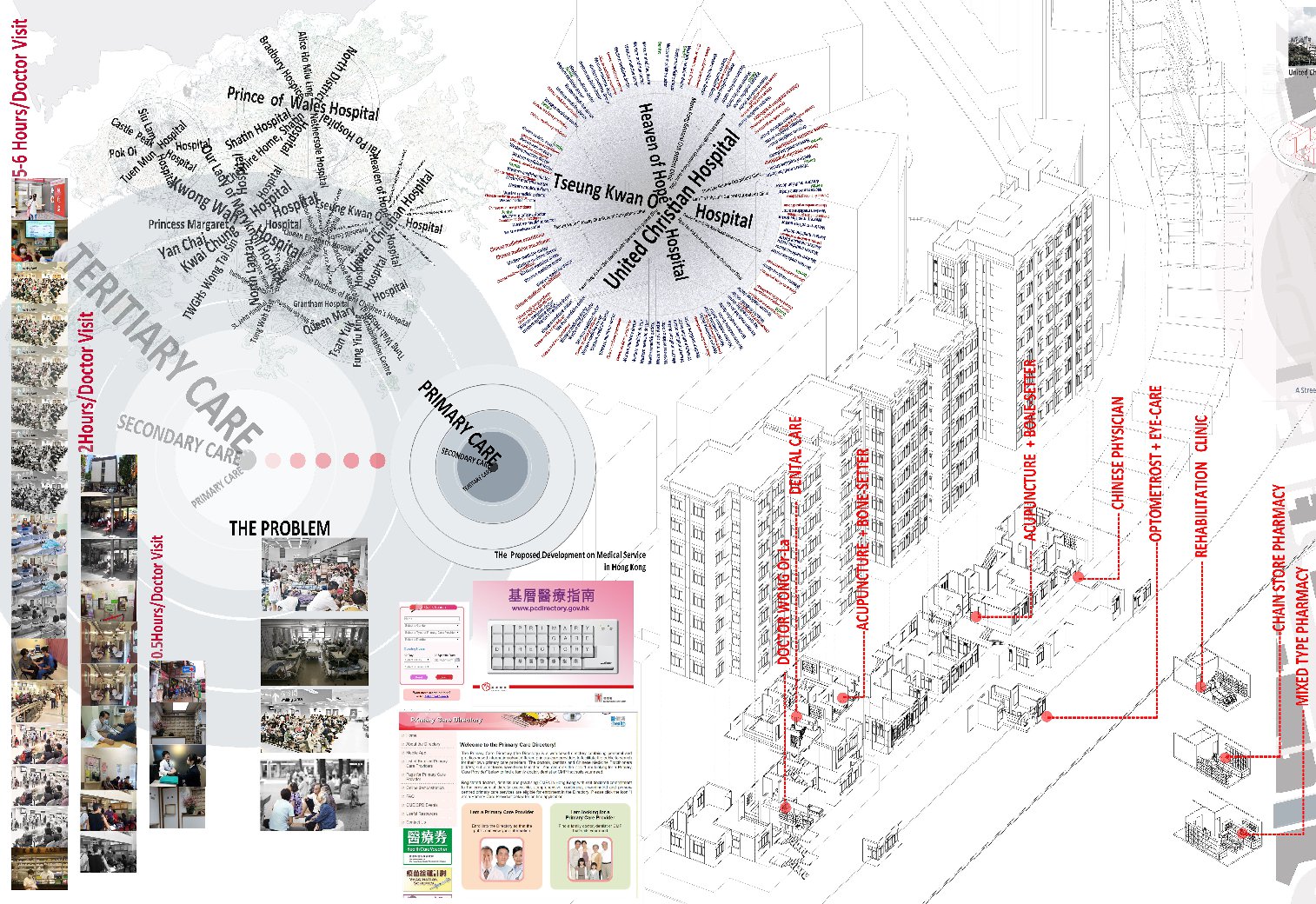
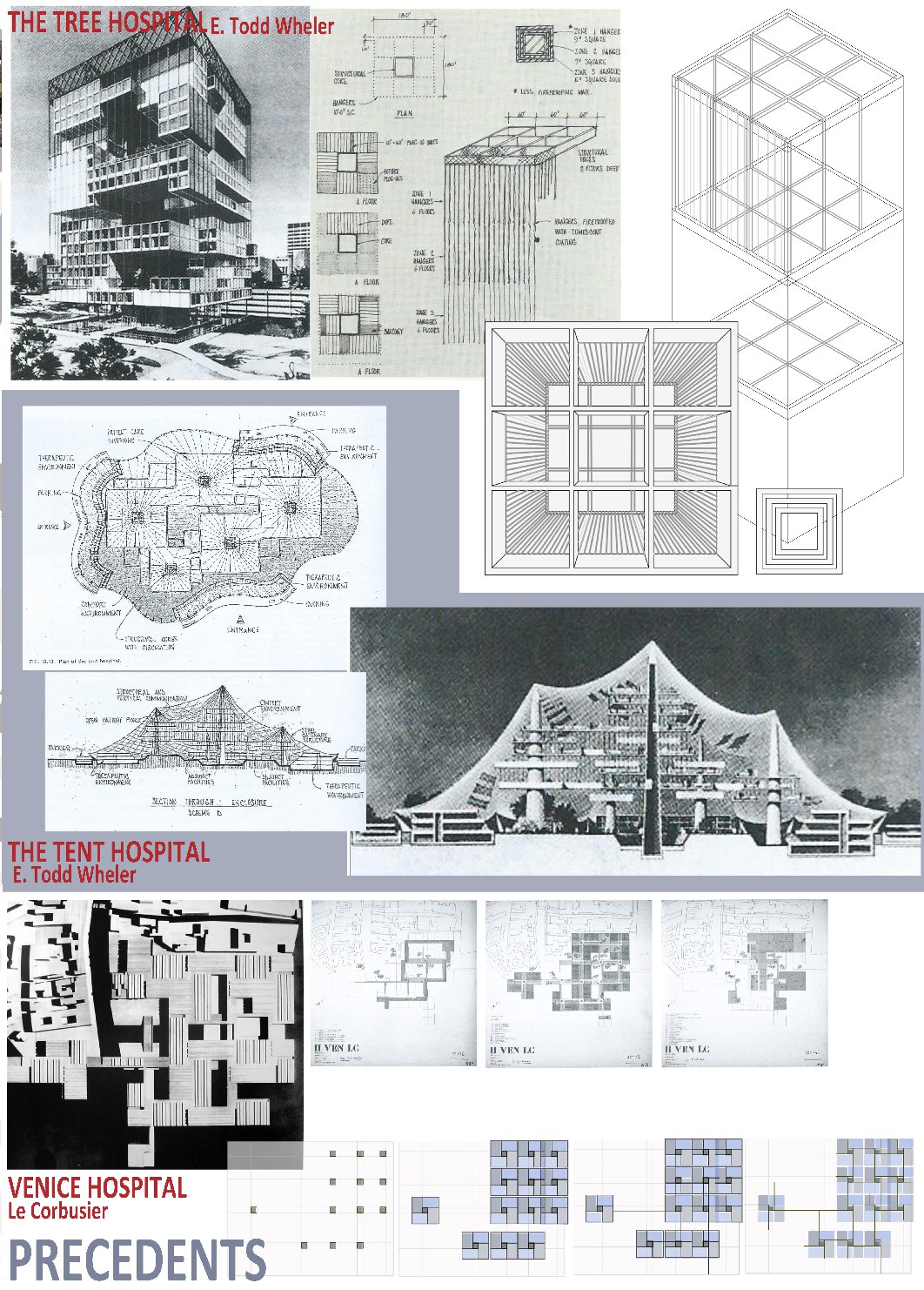
The Statement|The Medicalization in HONG KONG With the reality of epidemic based cultures and the necessity for preventative care to its ever growing population, Hong Kong is a place in the hot spot highly demanding for medical and health care services. Over the century, our public medical and health care services have been heavily reliable on the governmental provision of the general out-patient clinics and integrated public hospitals. Despite there is an expanding expenditure on technology regarding the medical and health care services, the reality is that the tremendous demands still far exceeds the limited supply of the medical services and spaces. The medical and health care service provision has always been the biggest challenge in the society. Though rapid advancement in technology is no doubts driving the progress of medicalization in Hong Kong, the spatial organization and structure of care providers has frozen to their first emergence in 20th century, which are out of date and highly saturated in today’s Hong Kong. With the fact that every care provider is an attribute of two disciplines, Medicine and Architecture, perhaps the problem is seemingly not about the technology; rather, it is about the space. This thesis attempts to criticize the constraints of the existing architectural embodiments of medical and health care services in Hong Kong and offer new spatial definitions to rethink and retie the relationship of Medicine and Architecture. THE PROJECT| Challenges regarding Architecture of Medicalization in Hong Kong Public health care services are always referring to hospitals and its subordinating outpatient clinics and health-care centers. The health care policy in last century has made a lopsided development and over reliance on hospital and clinical services by the public sector. It leads to an excessive demand on health care service and encounter saturation. As both the clinical and hospital service is highly saturated leaving little room for expansion, it is necessary to look for alternative to relieve the huge stress on the public health care service provision Since 2010, there is a new proposal considering the medical and health care service as a brand new multi-tiered system, which primary care is firstly recognized formally into the public service. Primary Care refers to the services provided by the profession like Western Medicine Doctors, Chinese Medicine Practitioners and the Dentists who own an individual clinic and license. The vision of the bureau is to create a network of primary care providers. However, similar to history of Hong Kong medical development, there is a rapid advancement in the medical technology employed, but the spatial organization and structure of care providers lacks corresponding progress to meet the needs. In fact, invisible and intangible linkages among primary care providers have been equipped in the Internet; whereas they are all spatially and geographically scattered and the physical network is undefined. For every care provider is an attribute of two disciplines, Medicine and Architecture, perhaps the bad notation about the care providers in Hong Kong is seemingly not because of technology; but the space. This project aims at turning this primary care network into a tangible and visible spatial embodiment. This project attempts to project the future scenes of the architecture of medicalization in Hong Kong, which connects the flexible sole units of health care services into a cluster, yet not a single entity.
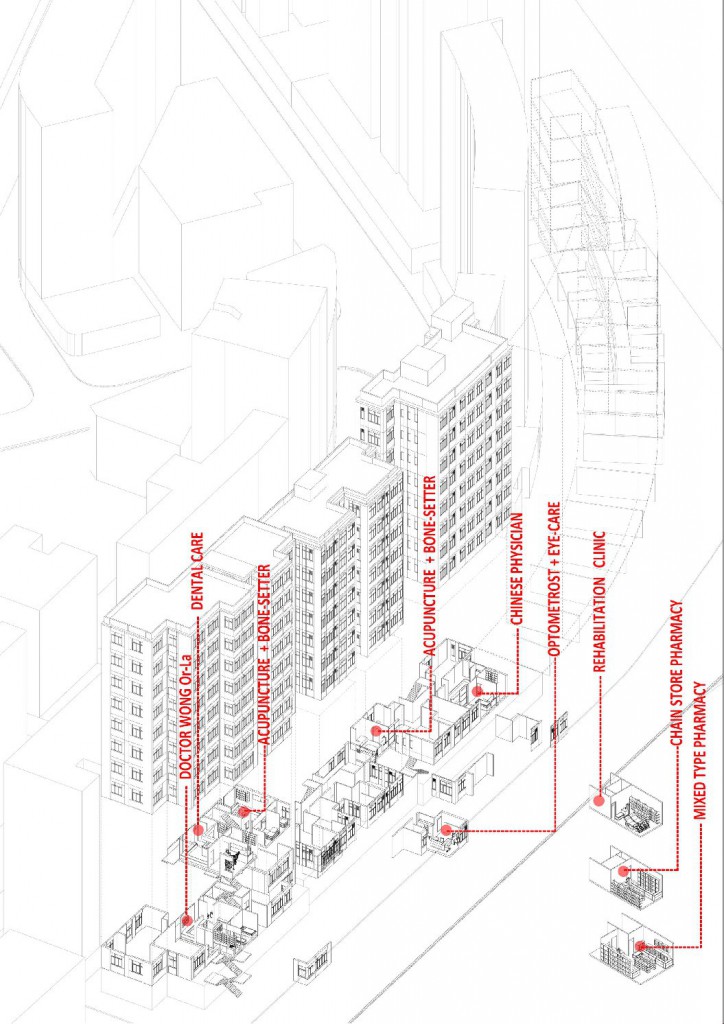
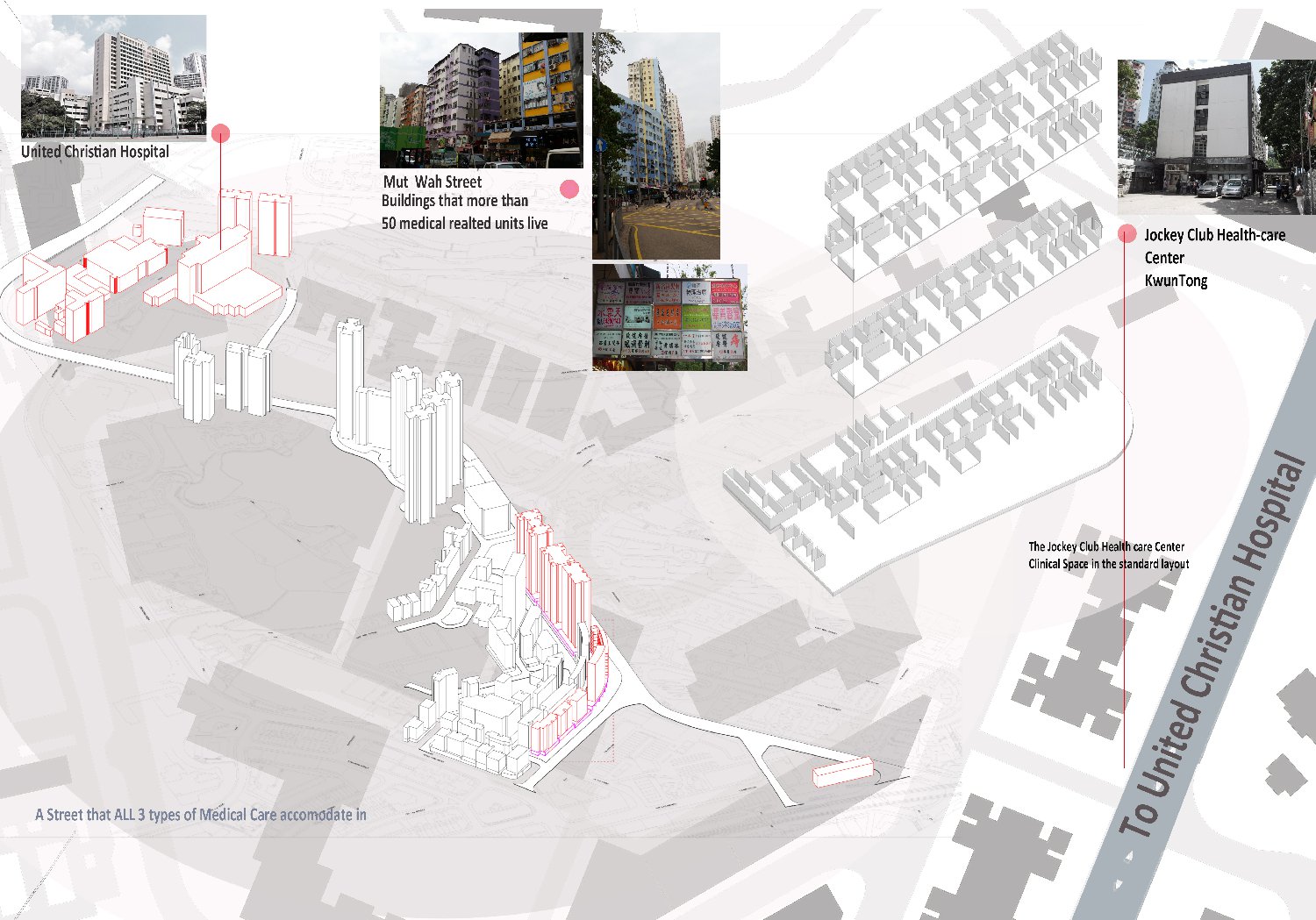
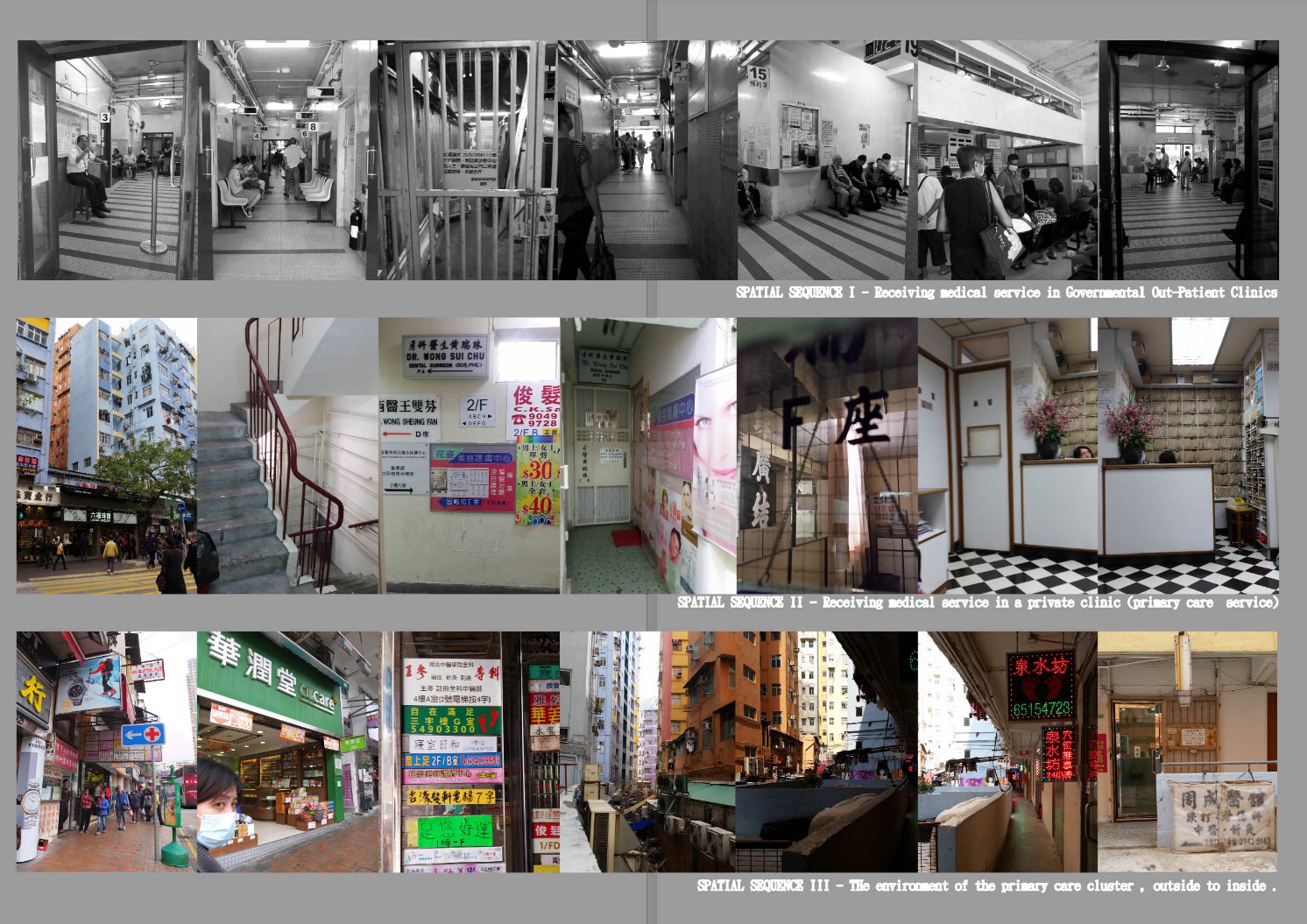
Site for Experiment The site chosen for experiment is Kwun Tong, in particular, the Hip Woh Street and Mut Wah Street. Lying with all three levels of public service along the street, this street are located with an integrated hospital at the top end and a out-patient clinic at its lowest end. Filling in-between the two major medical service providers are rows of Tong Lau buildings, which form the grey area of primary care providers. It is a grey zone as the use of building is designed as residential, yet it is filled with a wide range of health-care related service. As a complementary support to the secondary and tertiary level of health care service, this grey zone is crucial as the first point of contact for the general public in a continuing healthcare process. And this project take this site as a pioneer experiment to protrait the future trend of medicalization in architecture.
Reference on History & Theory: Reference on Modern Technology, Methodology and Critics |