|
|
 The Revitalization of Wuhan Yangtze River Bridge The Revitalization of Wuhan Yangtze River Bridge
What?
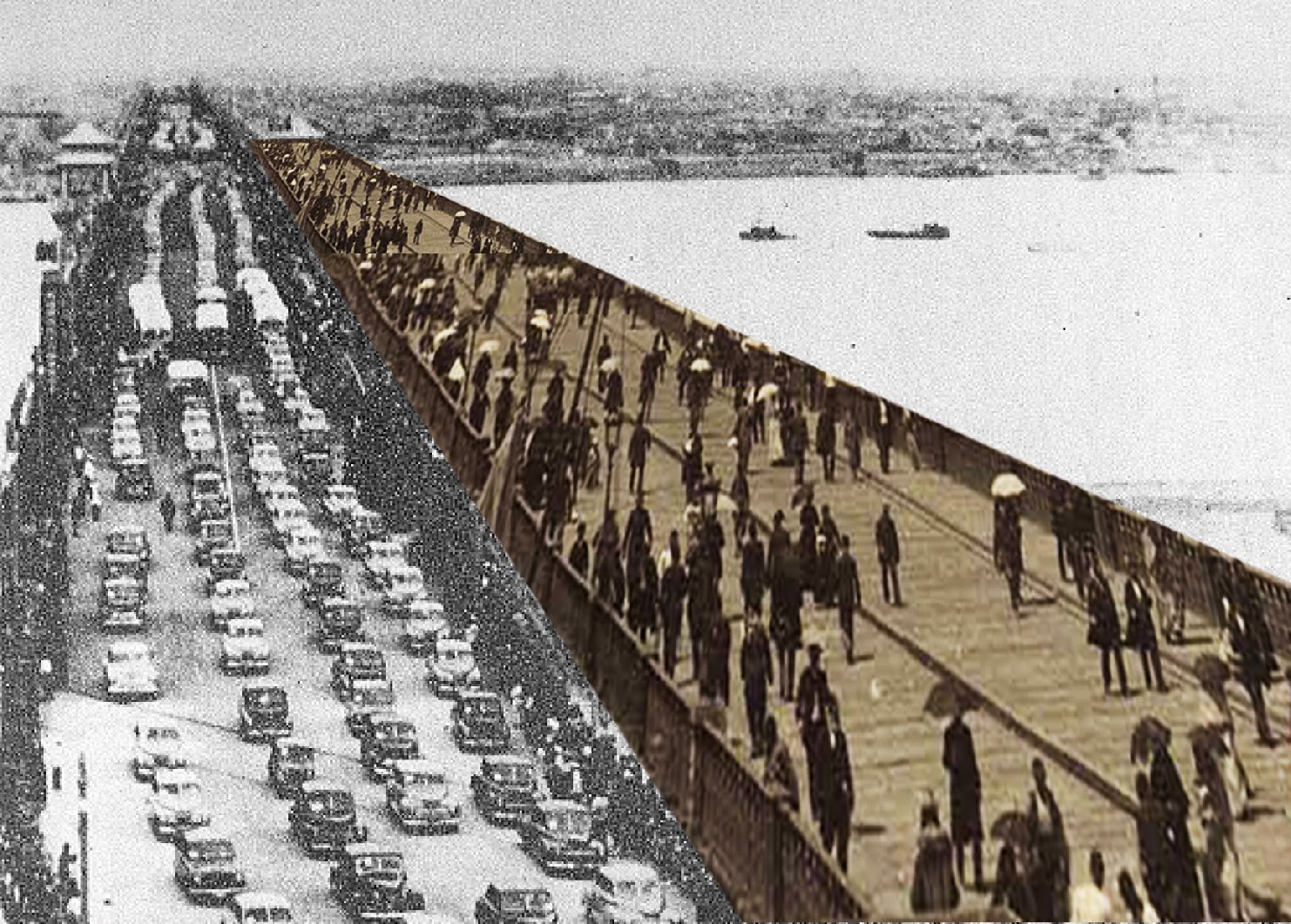
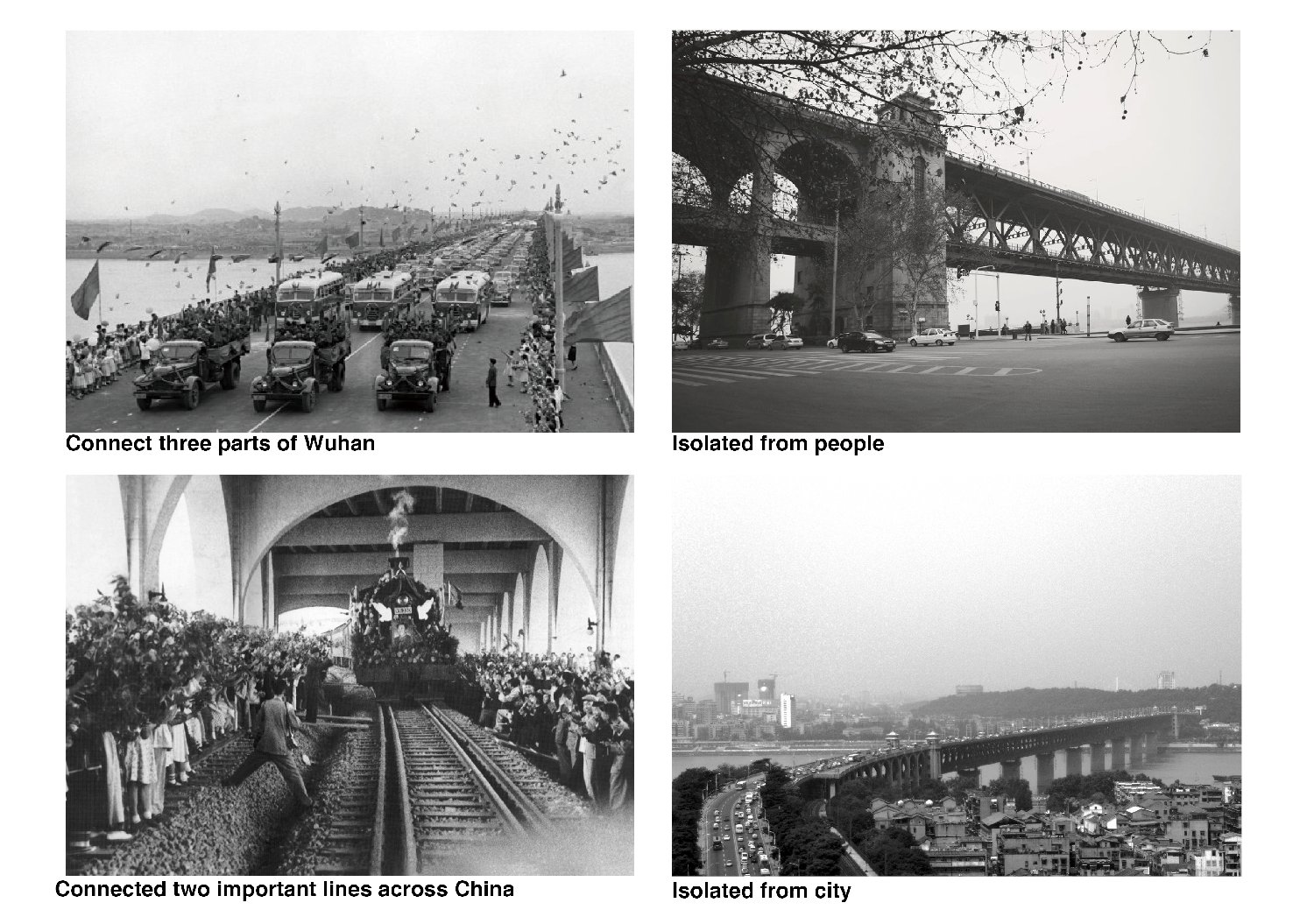
Wuhan lies at the heart of Central China and is a transportation hub between the heartland in northern China and the trading ports in southern China. Yangtze River seemed an obstacle set by nature, separating the three towns of Wuhan. Moreover, it blocked the transportation between the north and the south China. Only ship can be used. However, the natural obstacle became accessible for various vehicles due to the Wuhan Yangtze River Bridge.
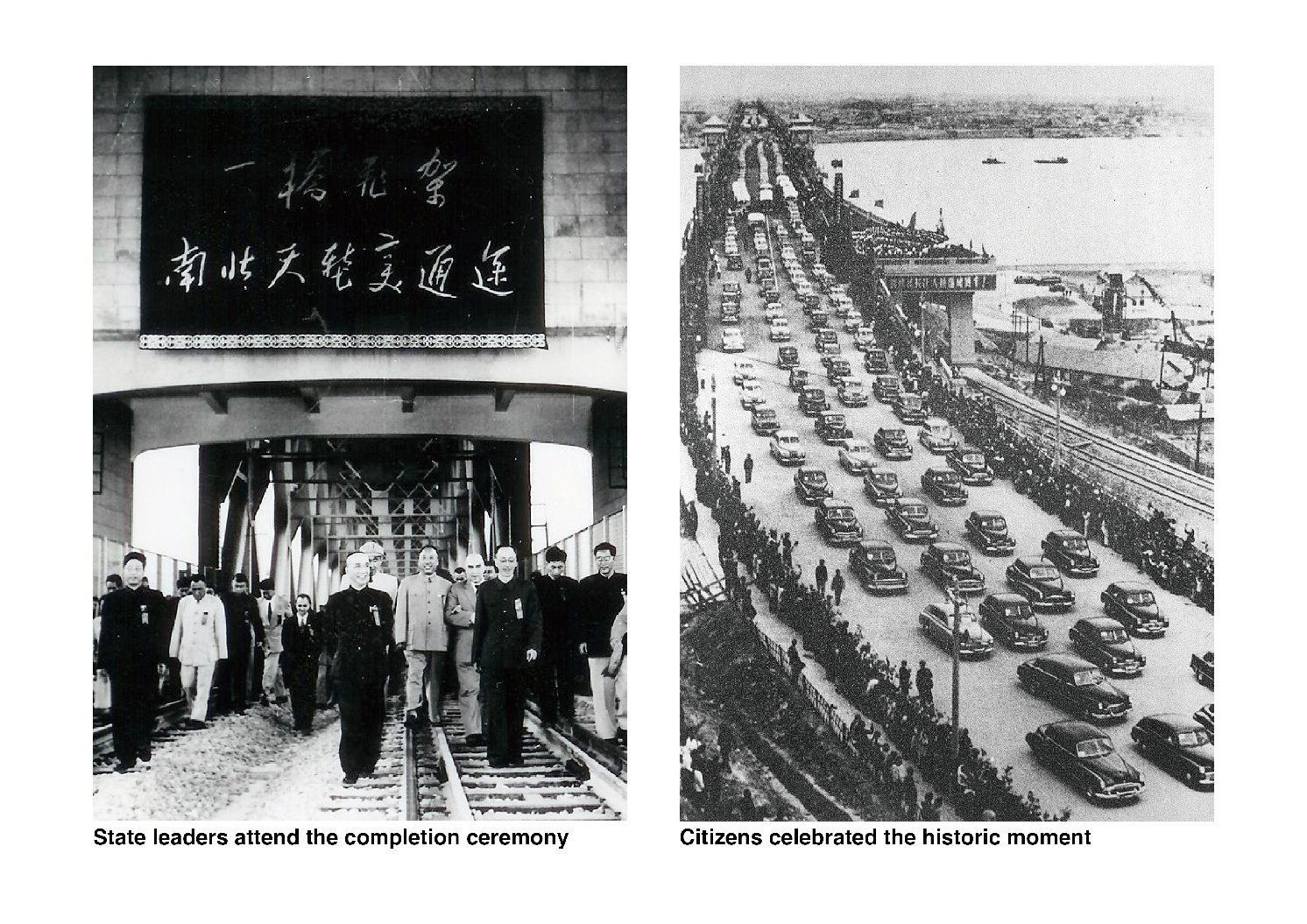
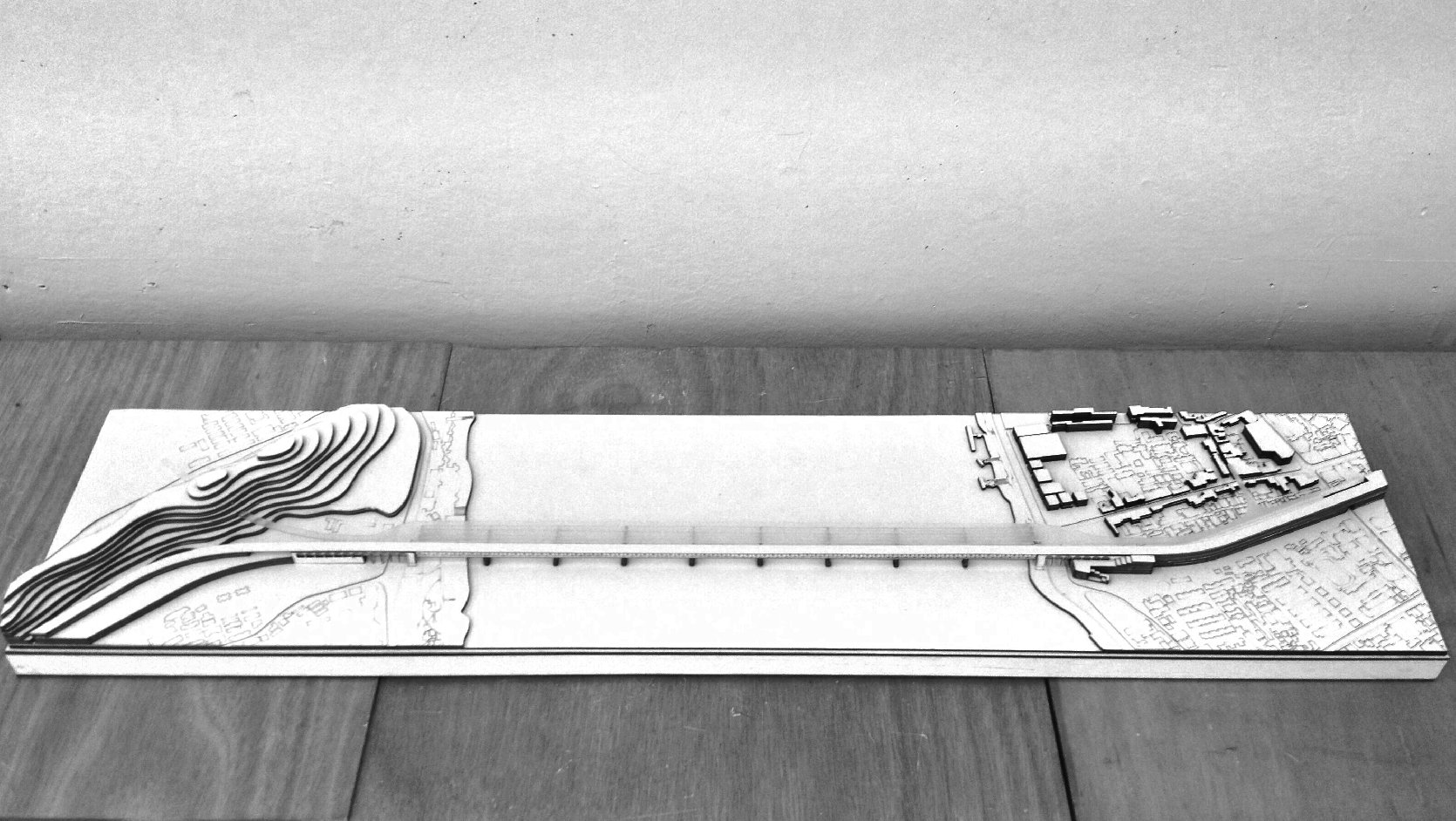
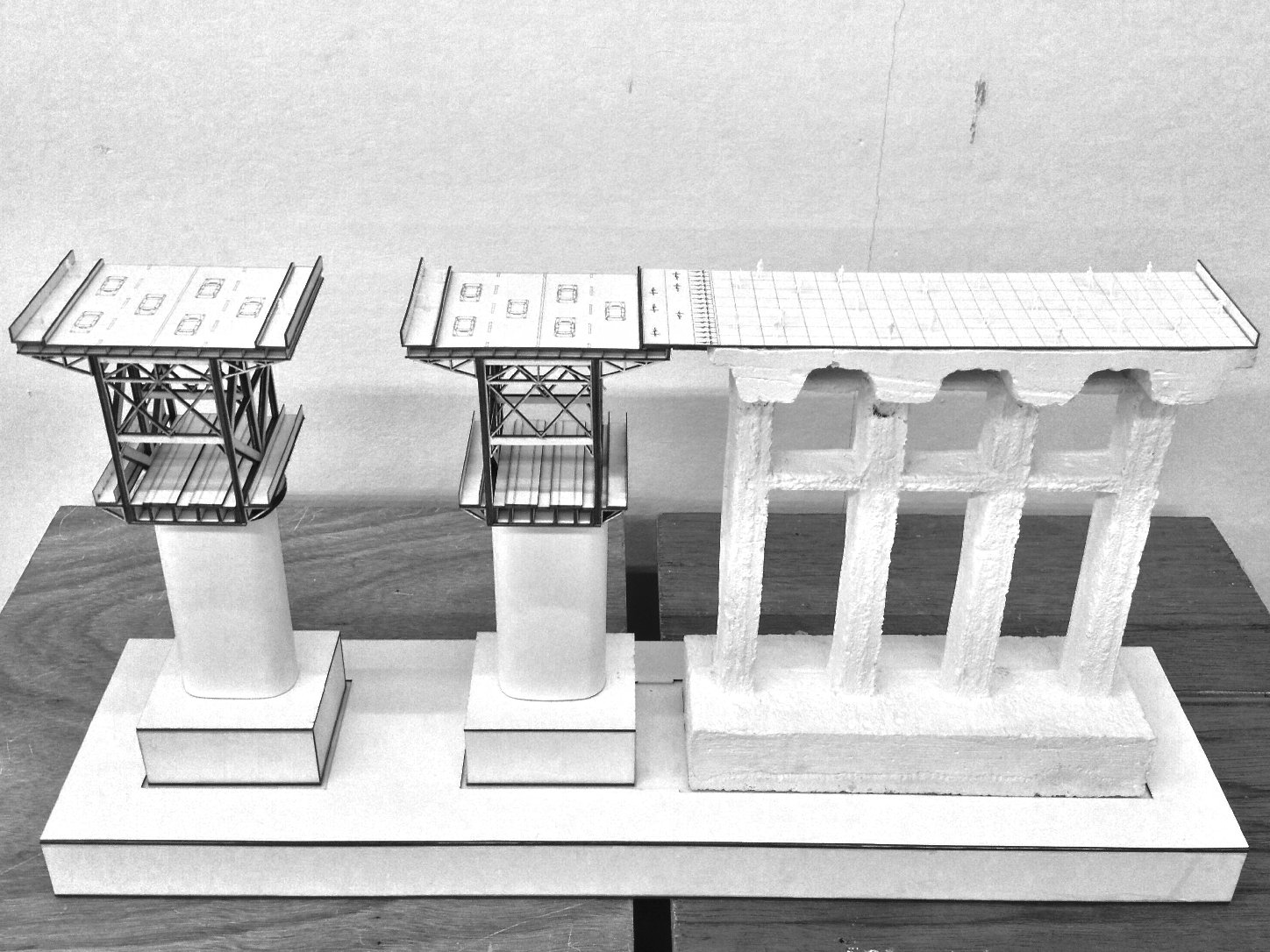
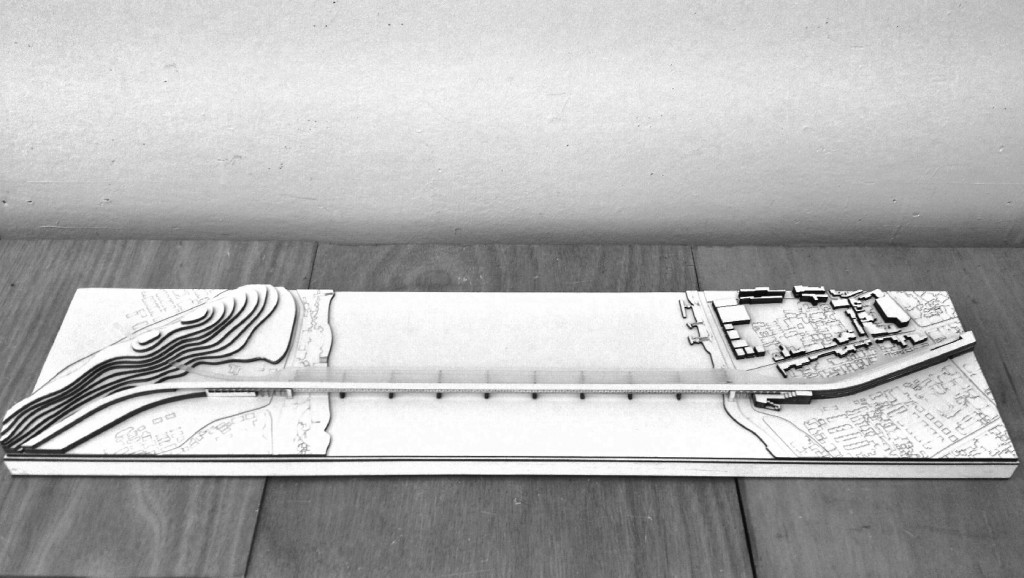
The Wuhan Yangtze River Bridge, commonly known as the “First Bridge of the Yangtze” in China, is a double-deck road and rail bridge. At its completion in 1957, it extends 1,670 meters long with the main body of 1,156 meters. The upper level is a 22.5 meters two-way, four-lane automobile highway. Carriage-way is 18 meters and each sidewalk is 2.25 meters. The lower level is a 14.5 meters double-track railway on the Beijing-Guangzhou railway line. It has 8 piers and 9 holes, from Turtle Hill in Hanyang to Snake Hill in Wuchang.
It is the most monumental bridge and landmark in Wuhan. However, because of the improved and changed requirements from people and city, it is only like a huge sculpture exist here and isolated from city space.
Why?
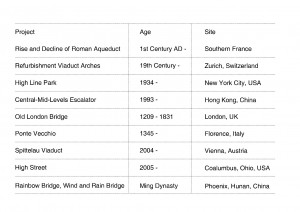
 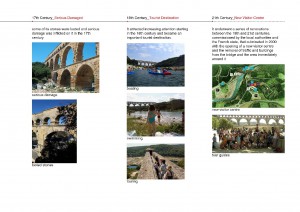 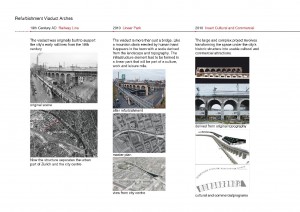 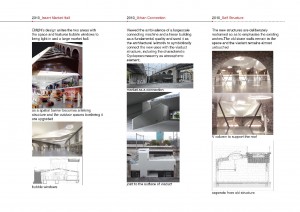 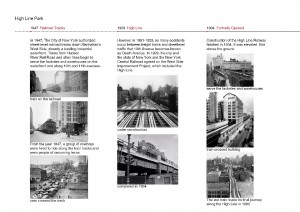  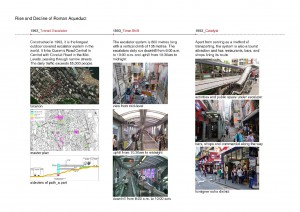 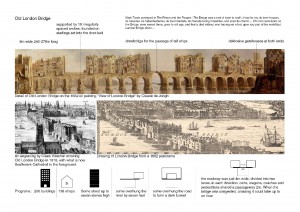   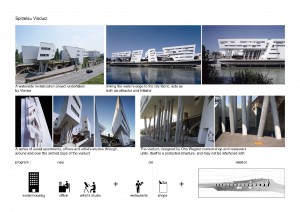 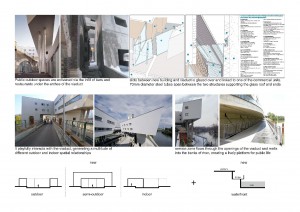 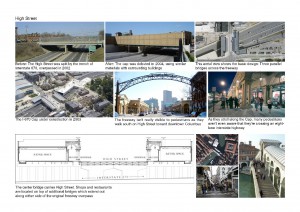 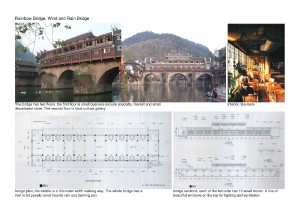
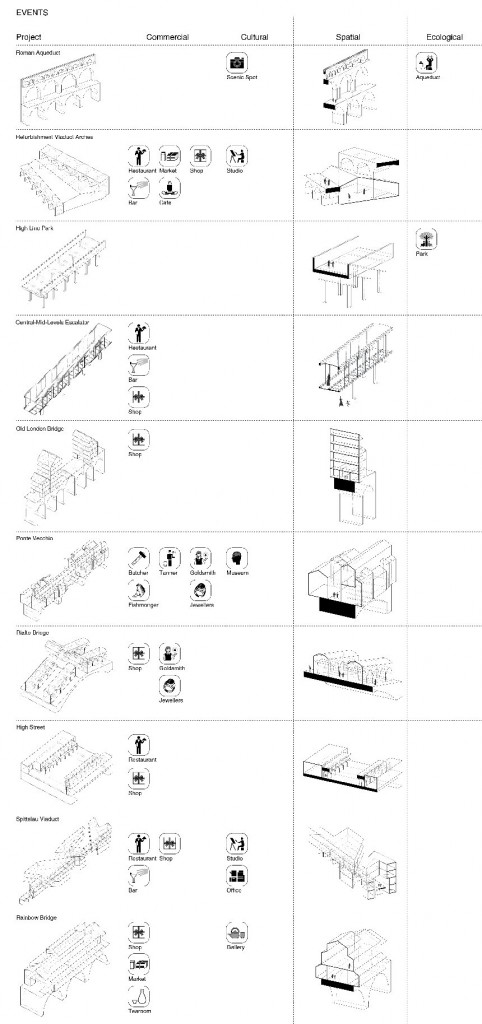
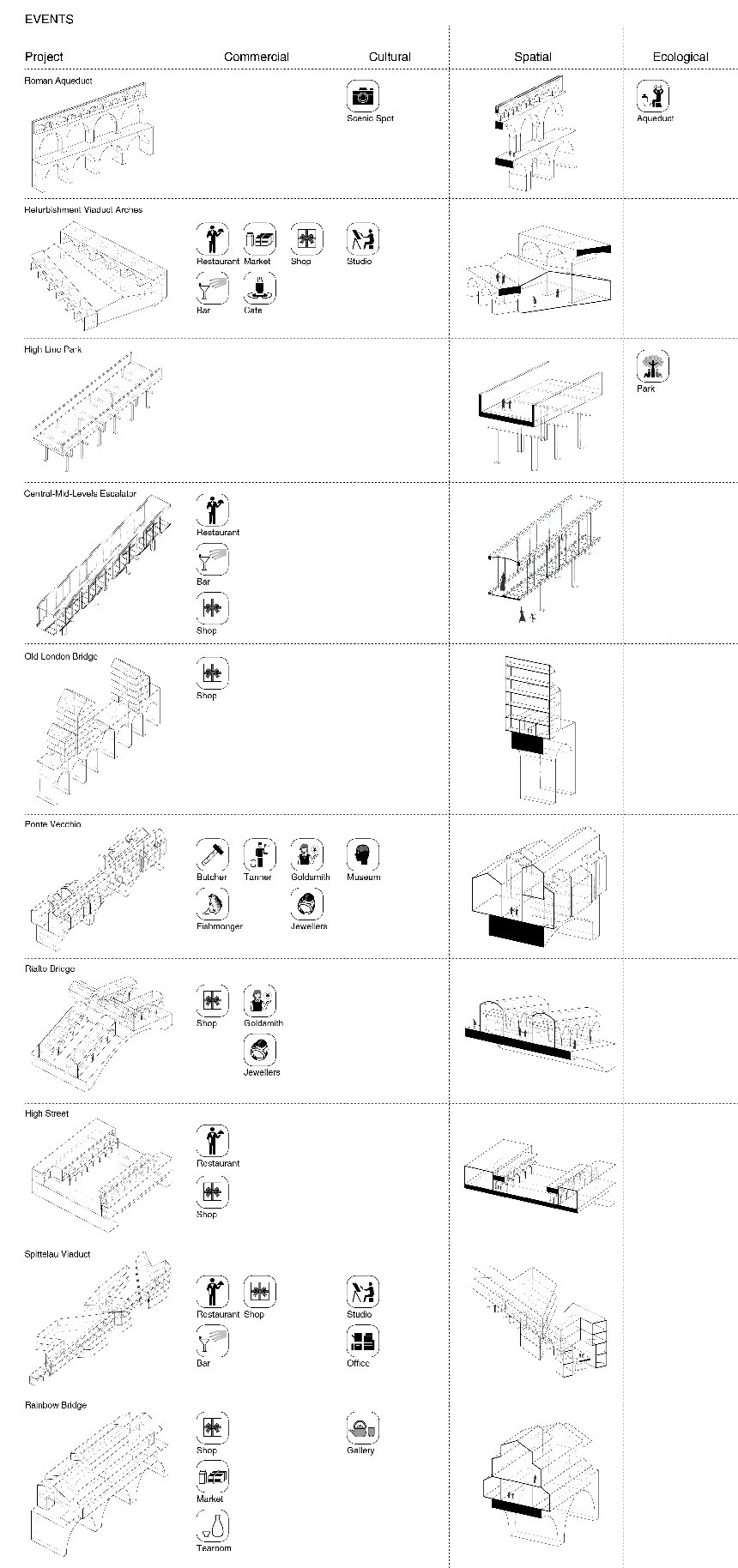
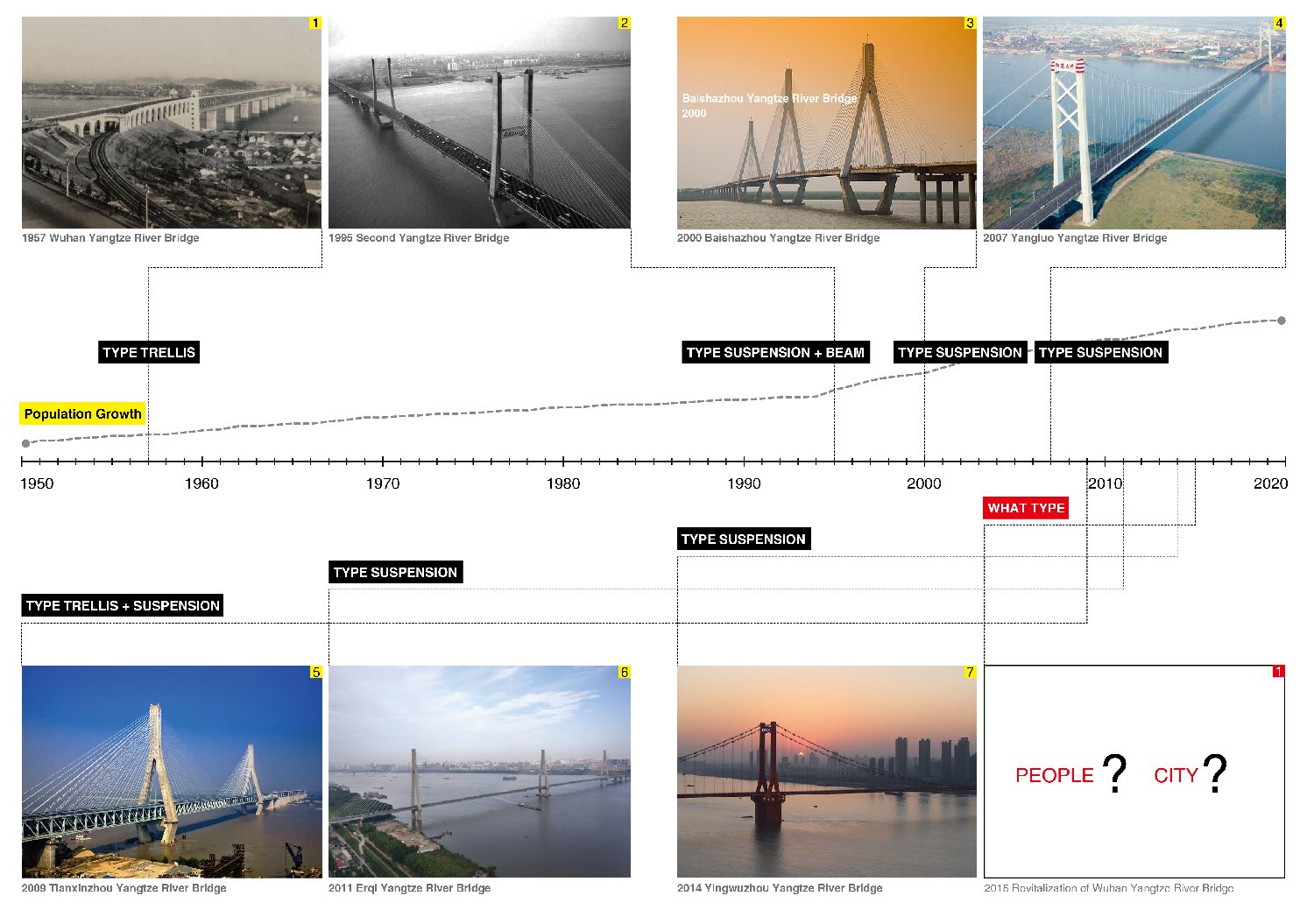
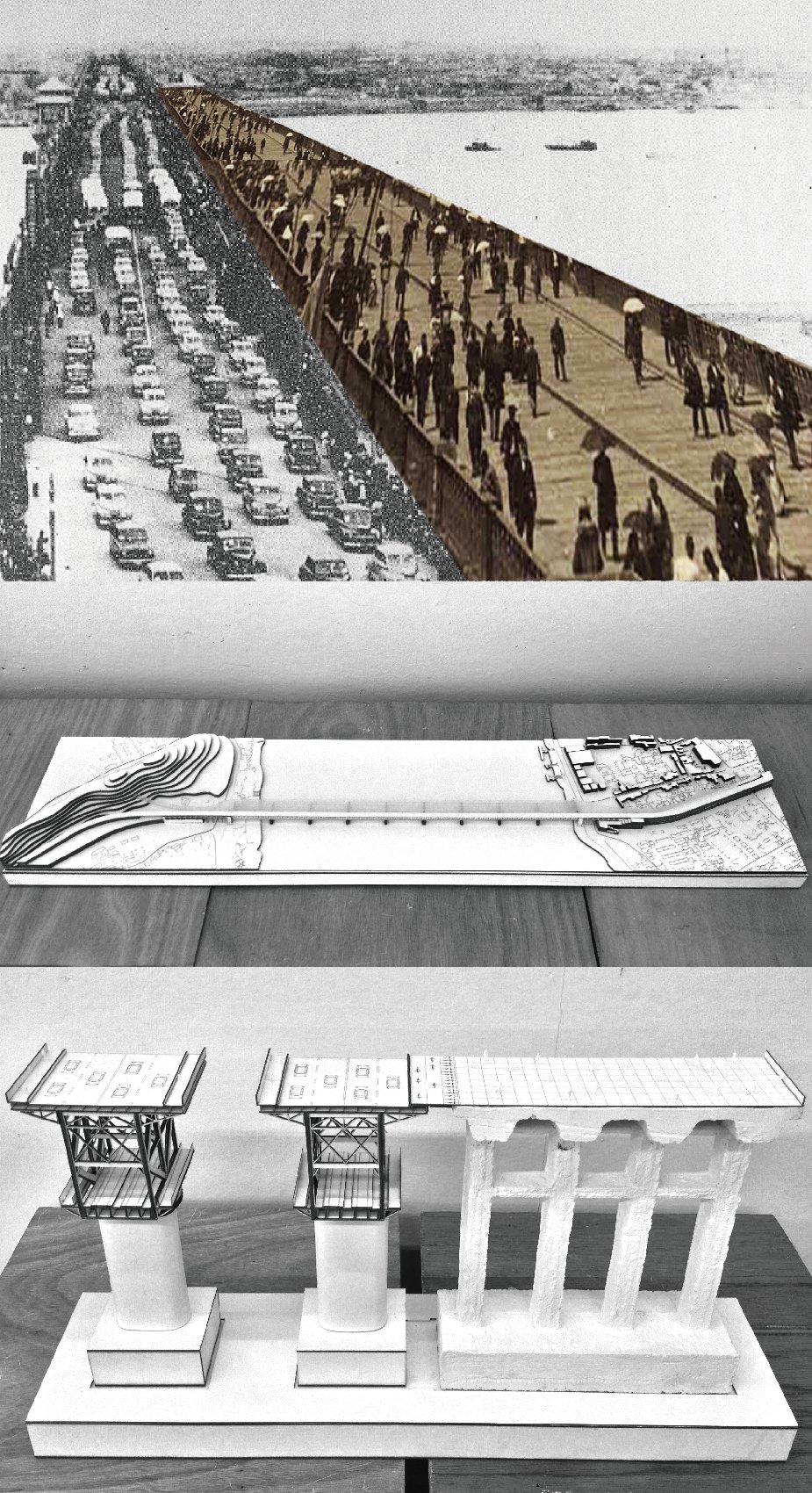
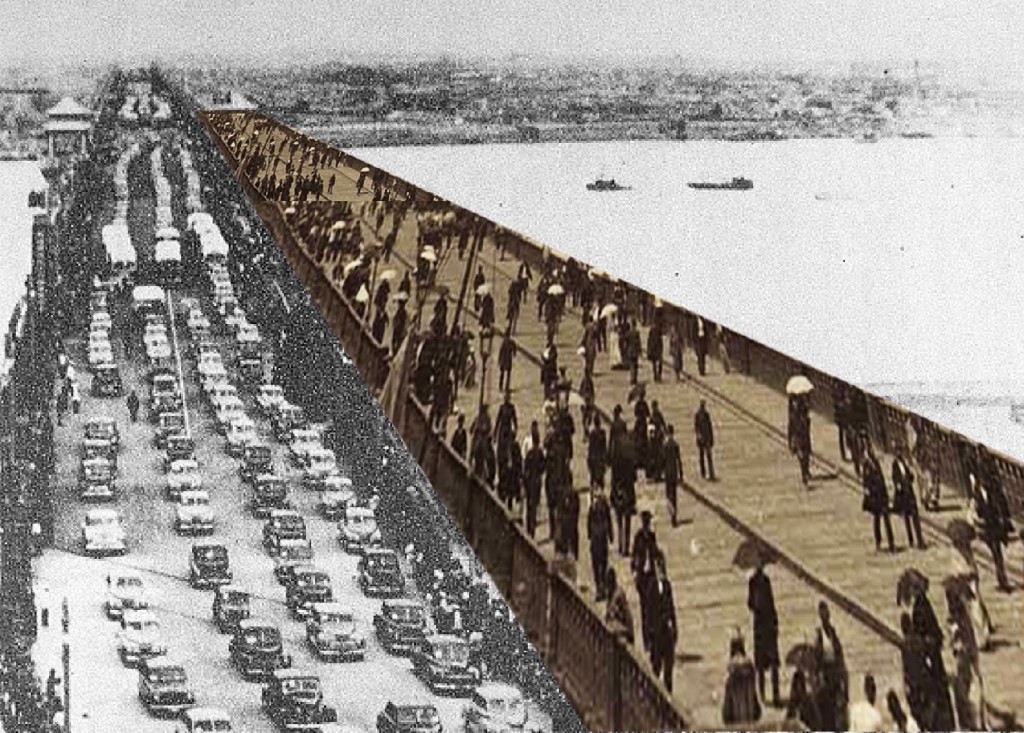
Start from infrastructure as architecture and bridge as architecture in history, it is like a active media or a method of acupuncture to driven the development of city in terms of commercial, cultural, spatial and ecological. Then, how to revitalize Wuhan Yangtze River Bridge? EVENT
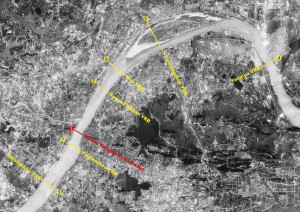 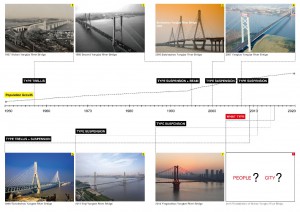
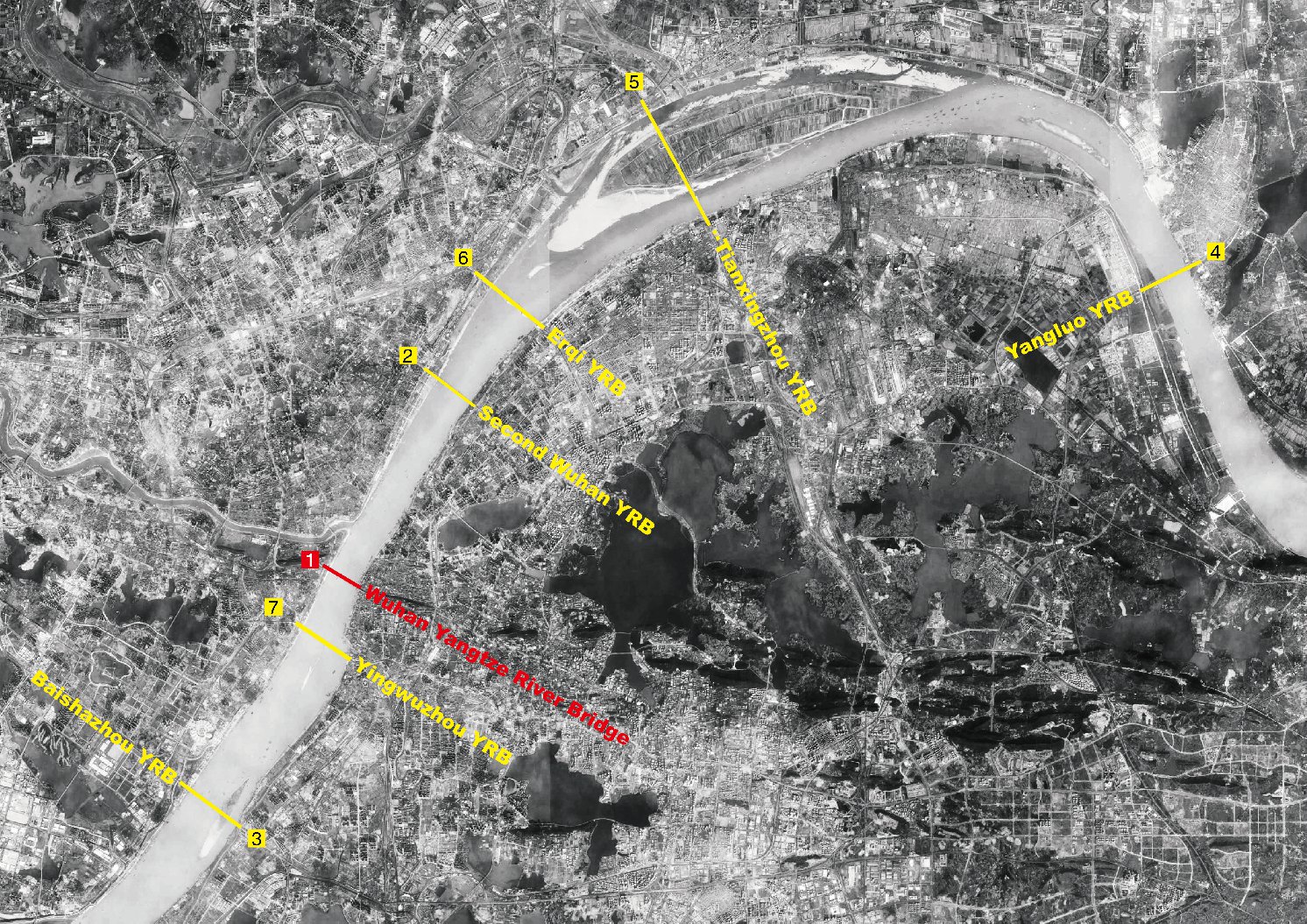
Bridges over Yangtze River in Wuhan
Issue:
1.Duplicated type, need a new symbolism.
2.With the increase in population, no consideration for people.
How?

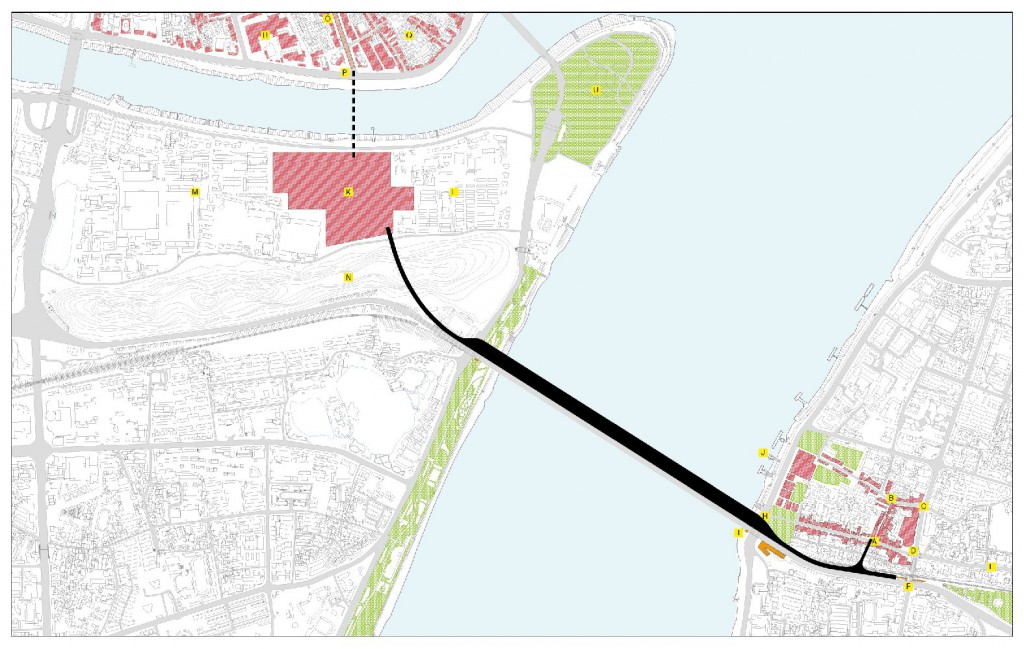
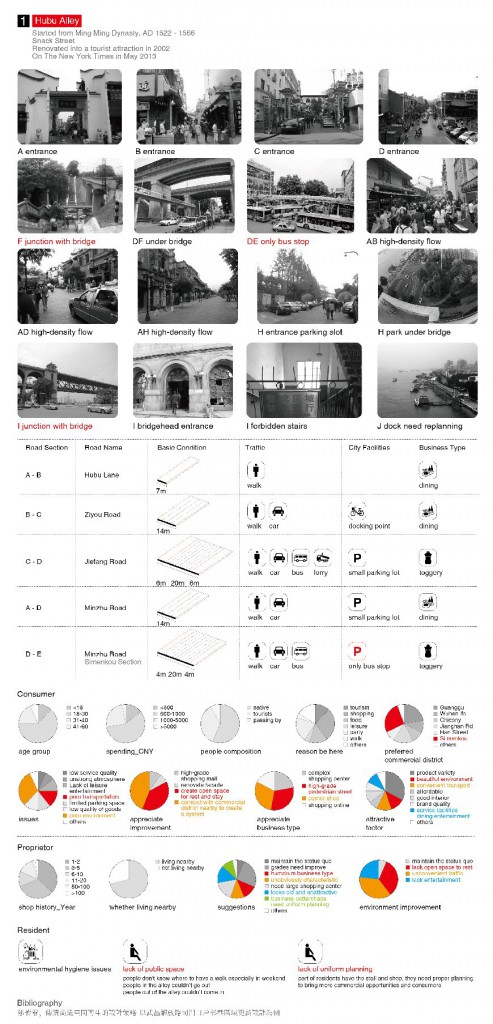 
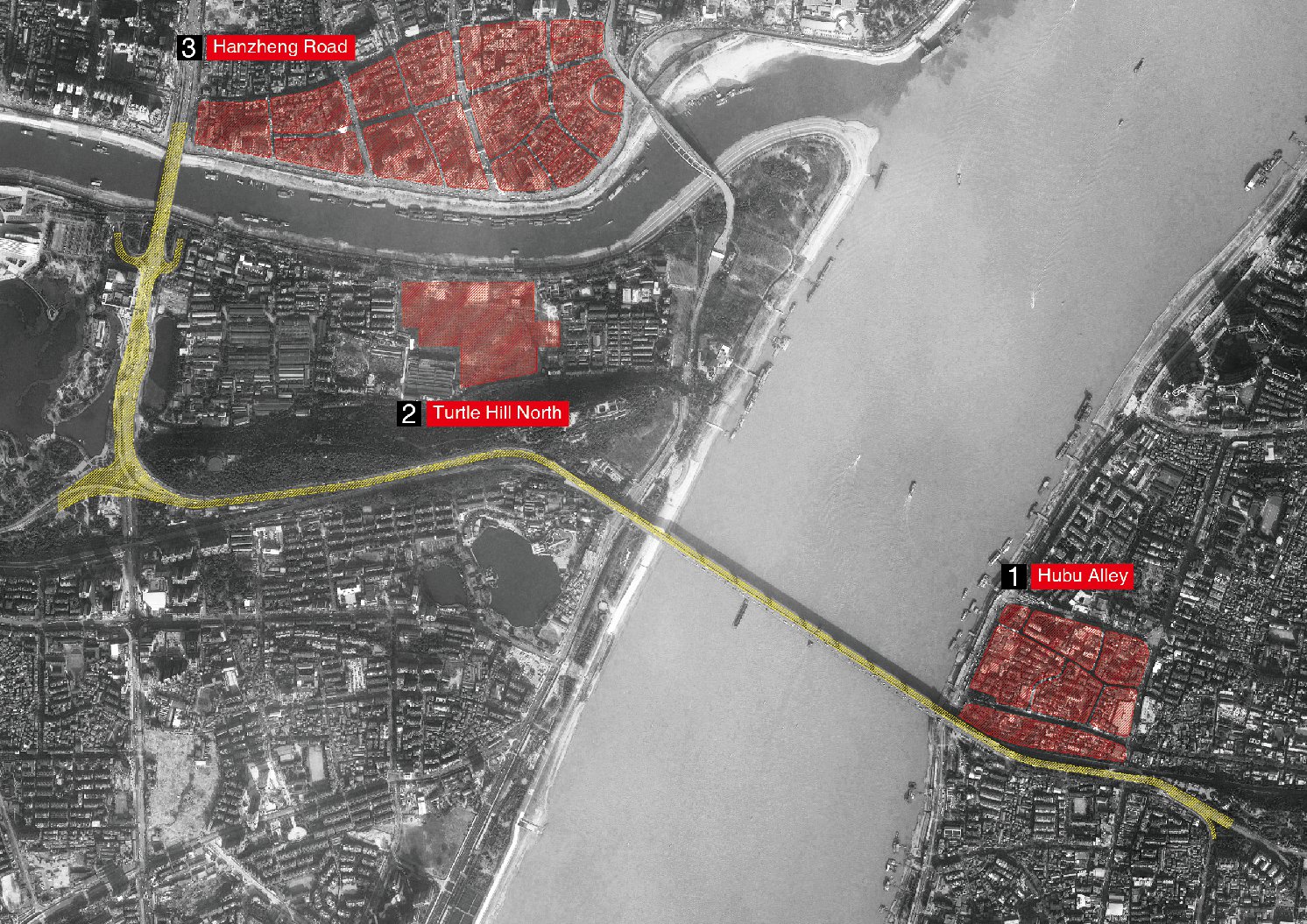
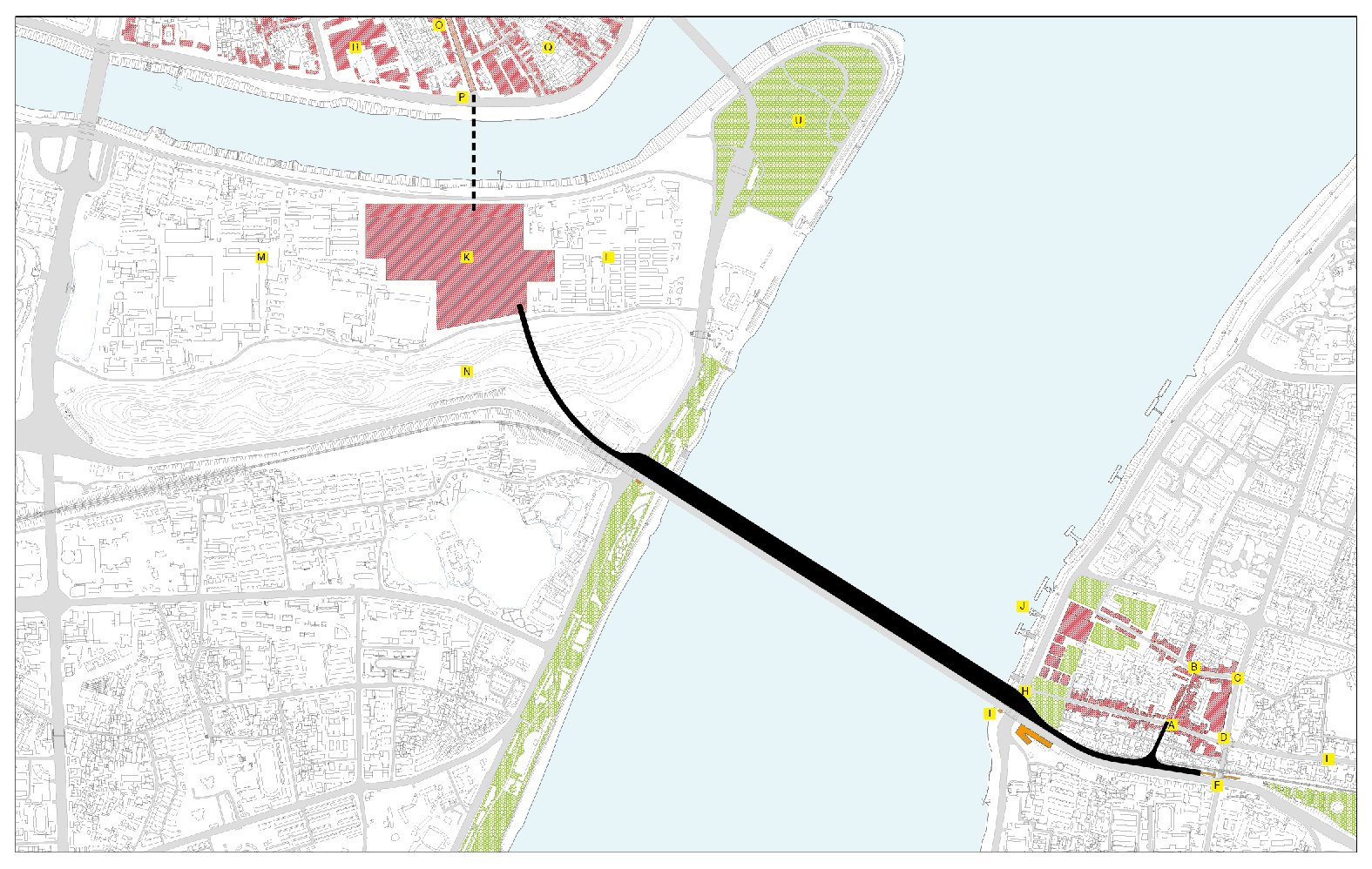
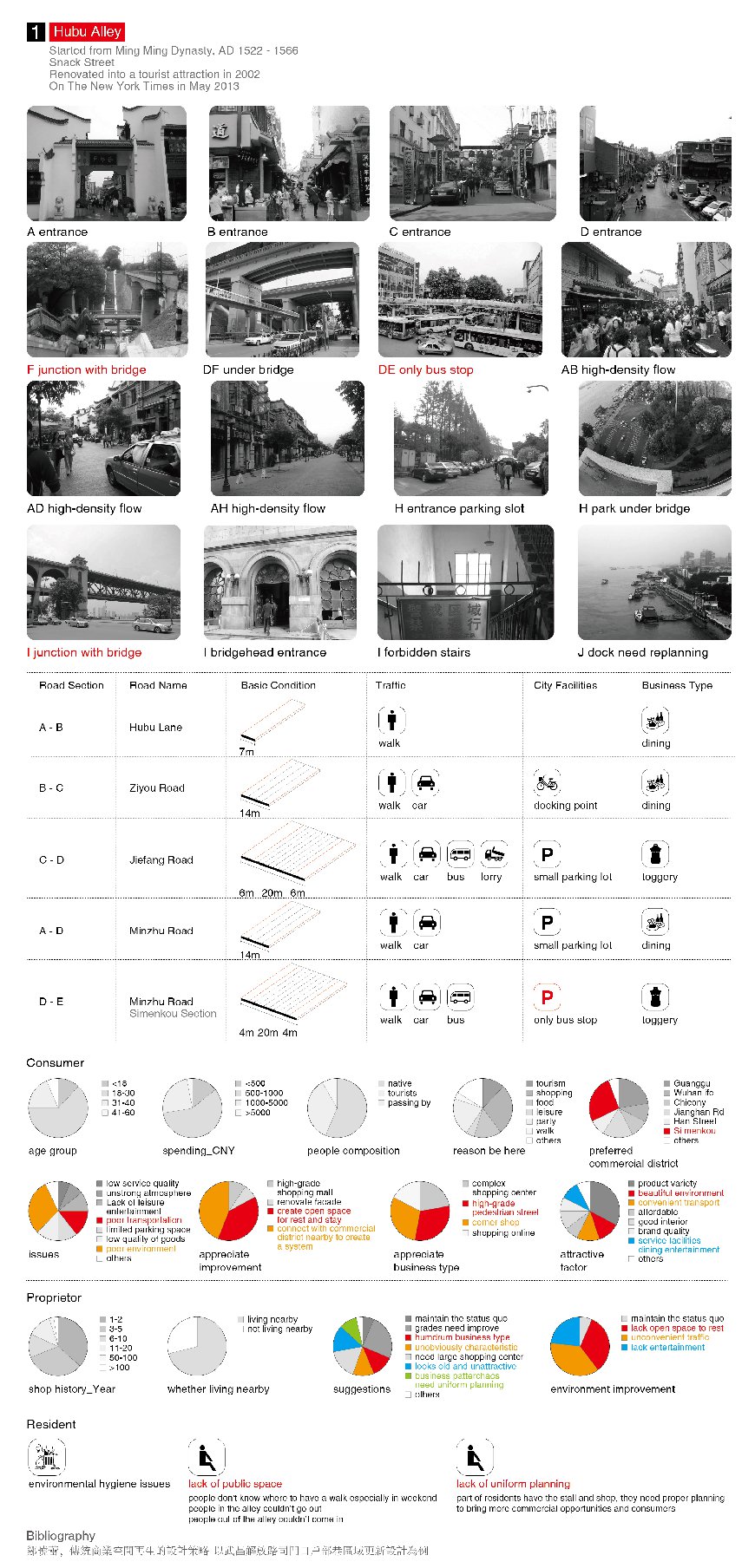
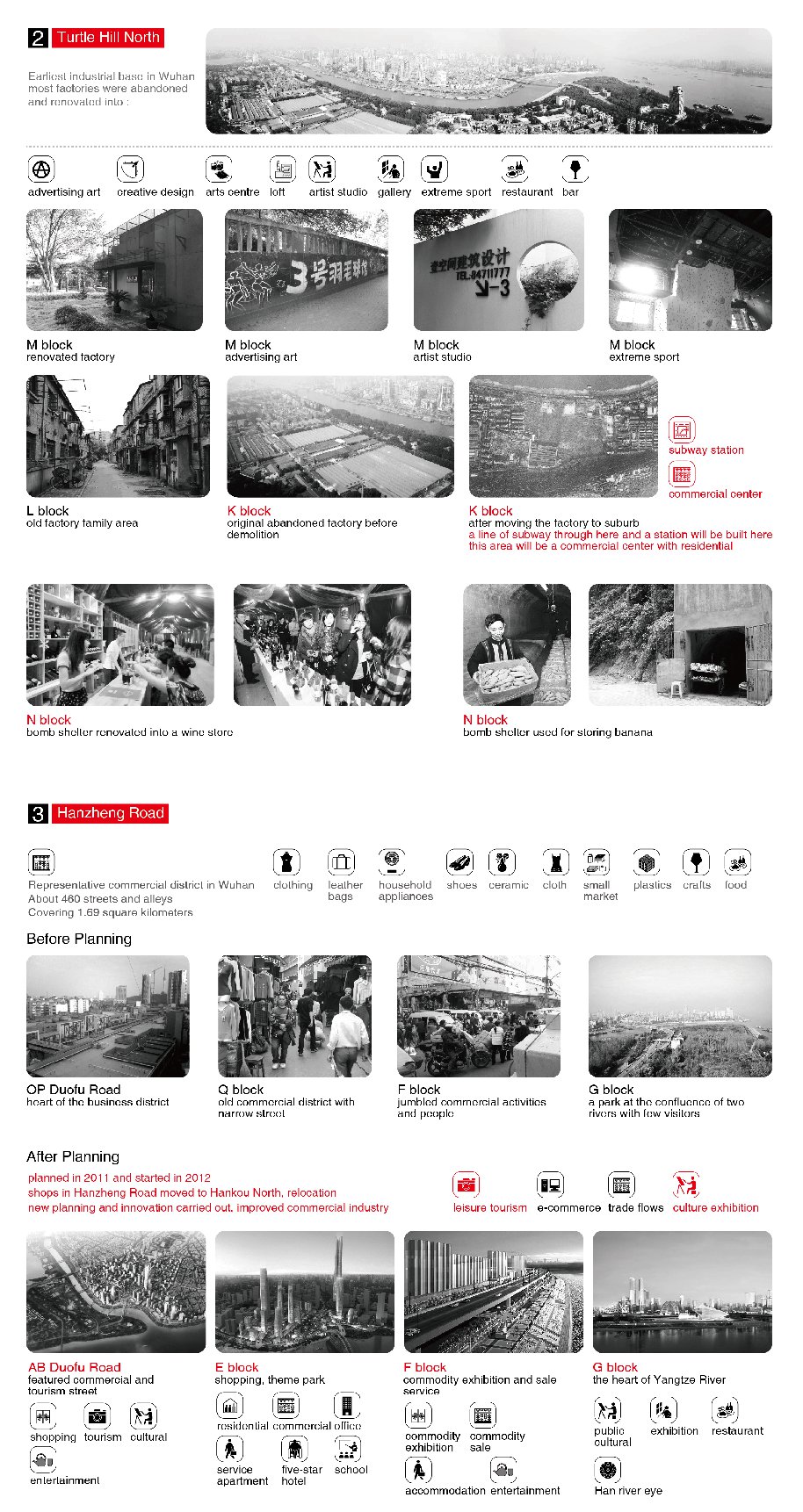
Site Analysis : Centers of Events Along Bridge
Hubu Alley, Turtle Hill North, Hanzheng Road
Conclusion:
1. Need to create open space for rest and stay.
2. Need to connect with commercial district nearby to create a system.
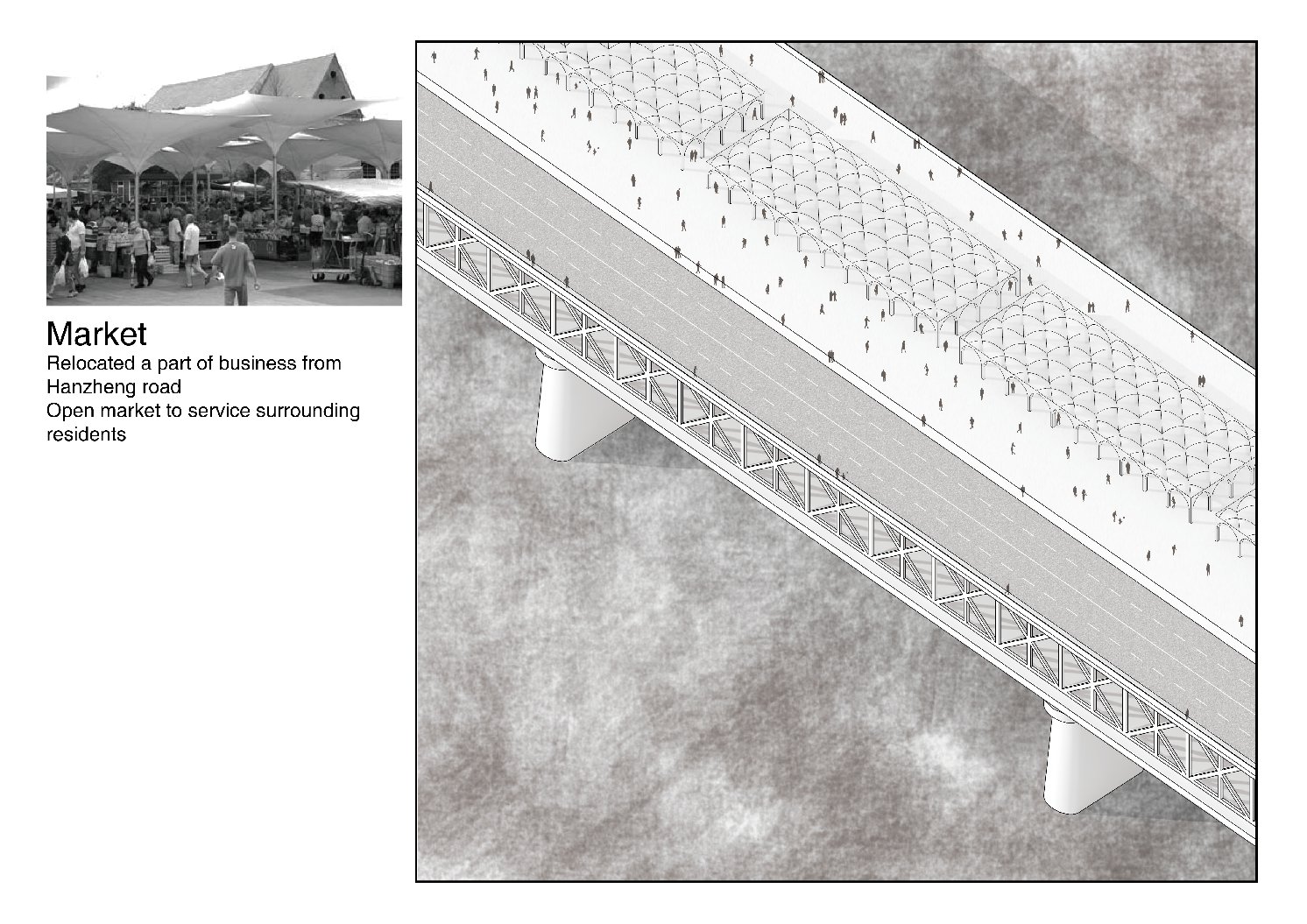
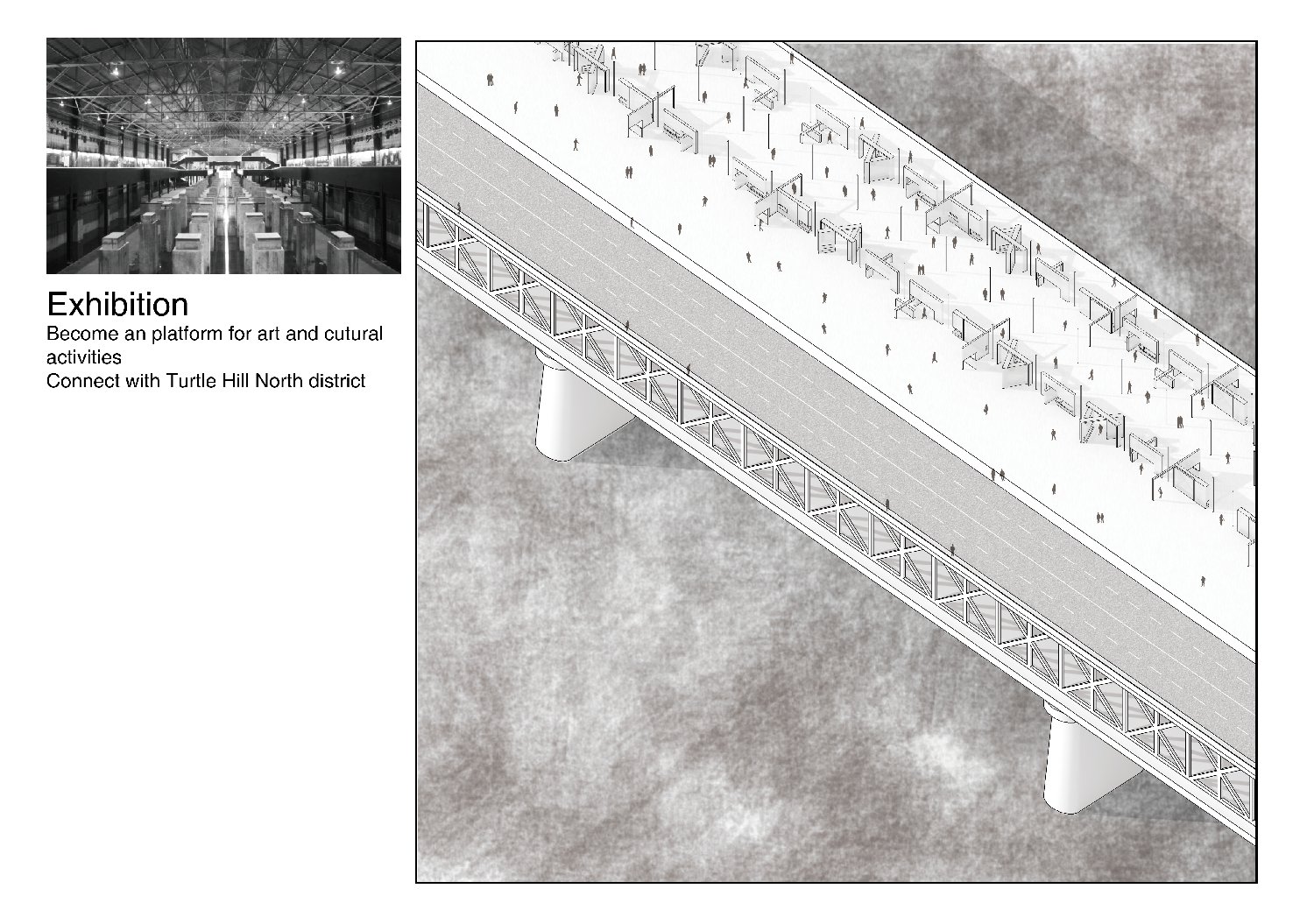
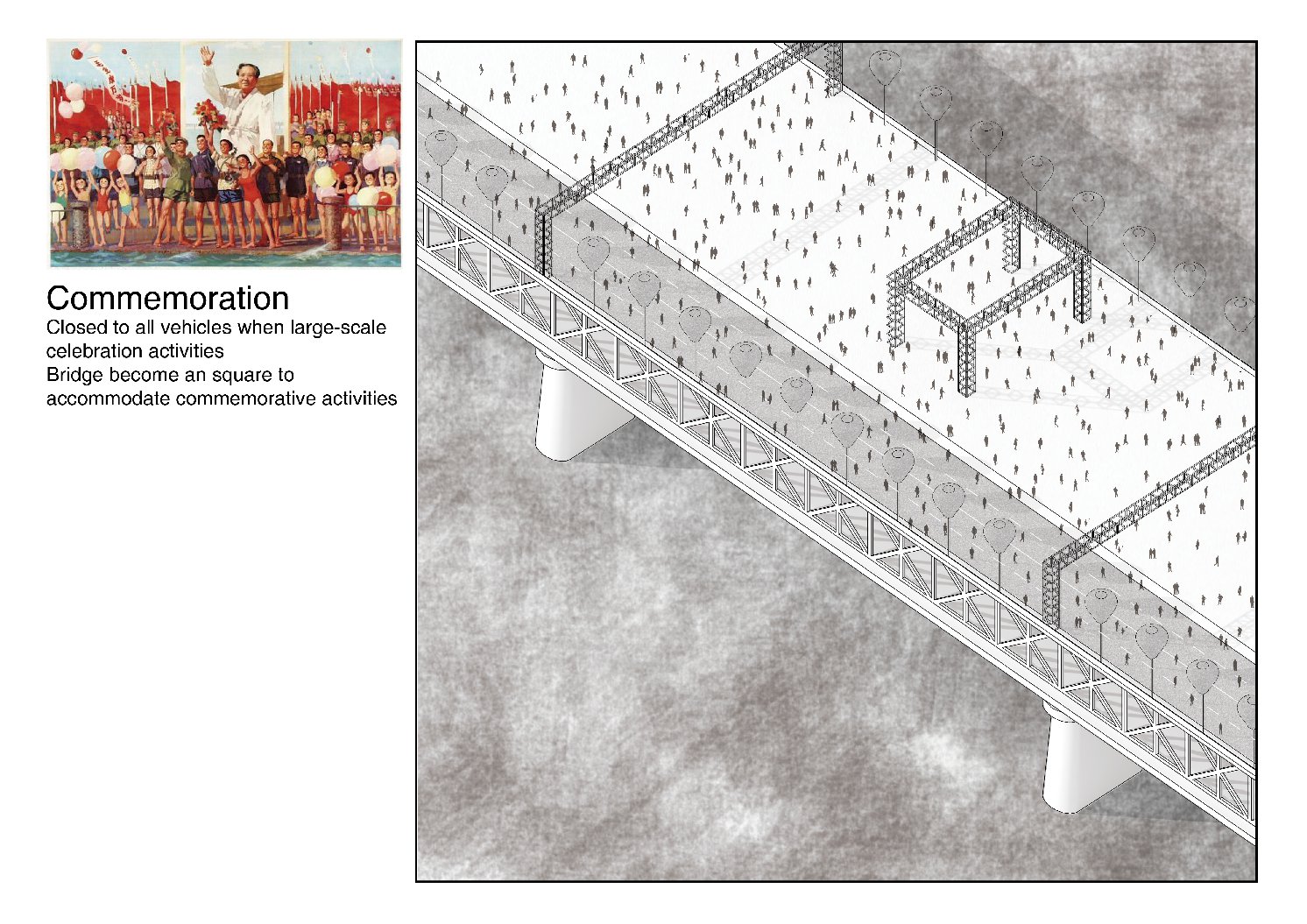
Therefore, the revitalization become an issue that infrastructure as public space to accommodate events. If combined with bridge, it becomes a linear public space.
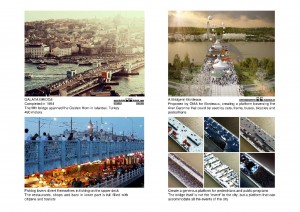 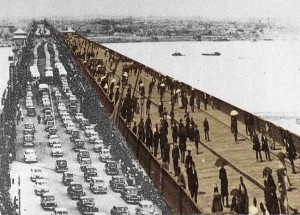
Need a generous platform as a public space to accommodate events.
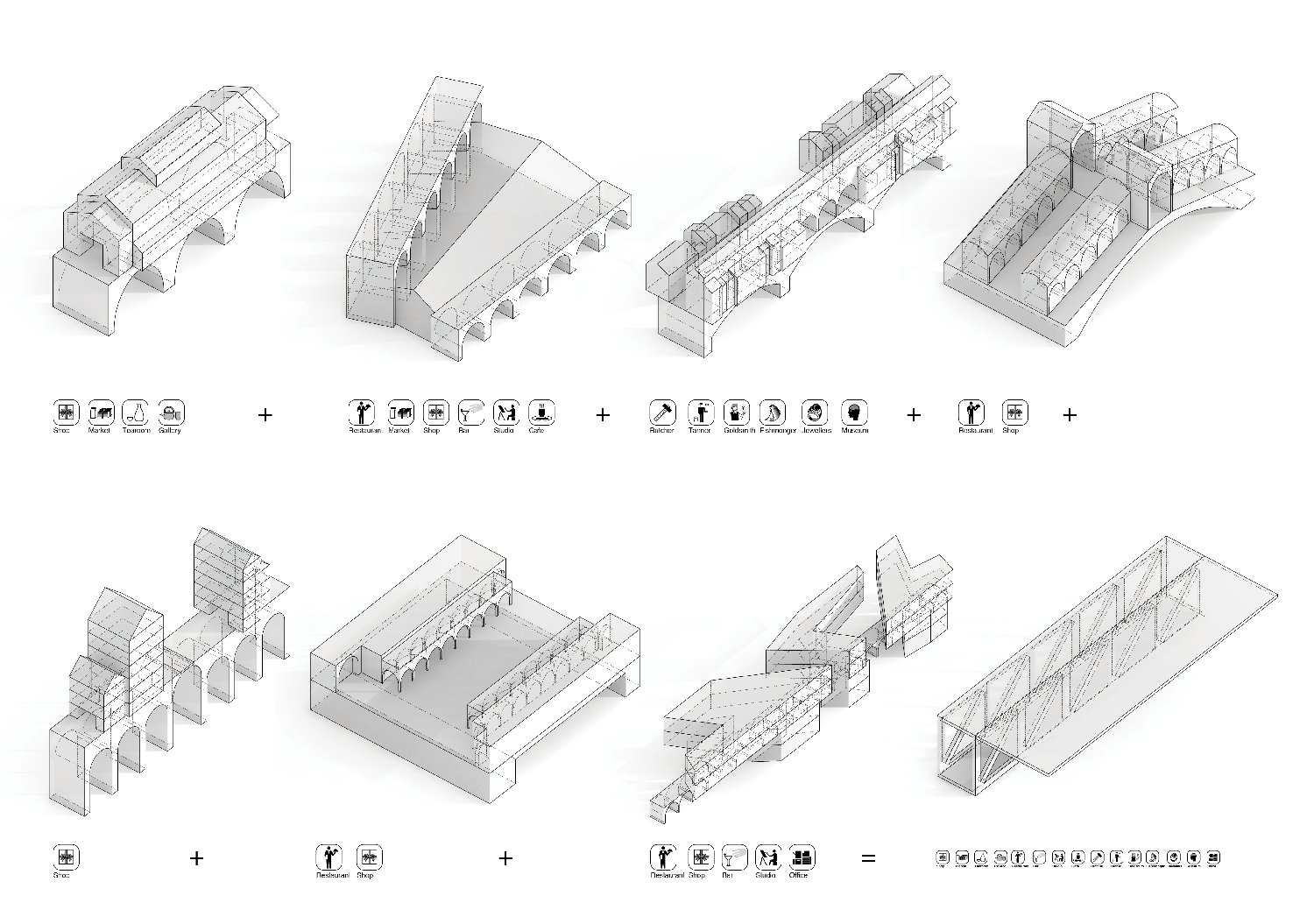
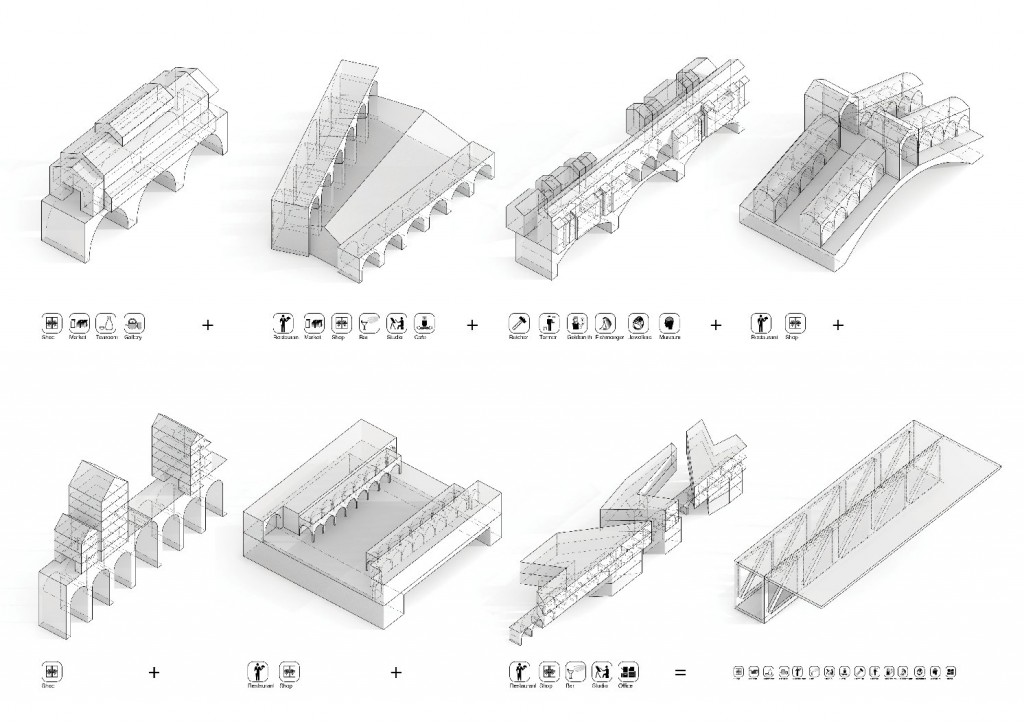 The Wuhan Yangtze River Bridge will be a collection of all the bridge in terms of all kinds of events. The Wuhan Yangtze River Bridge will be a collection of all the bridge in terms of all kinds of events.
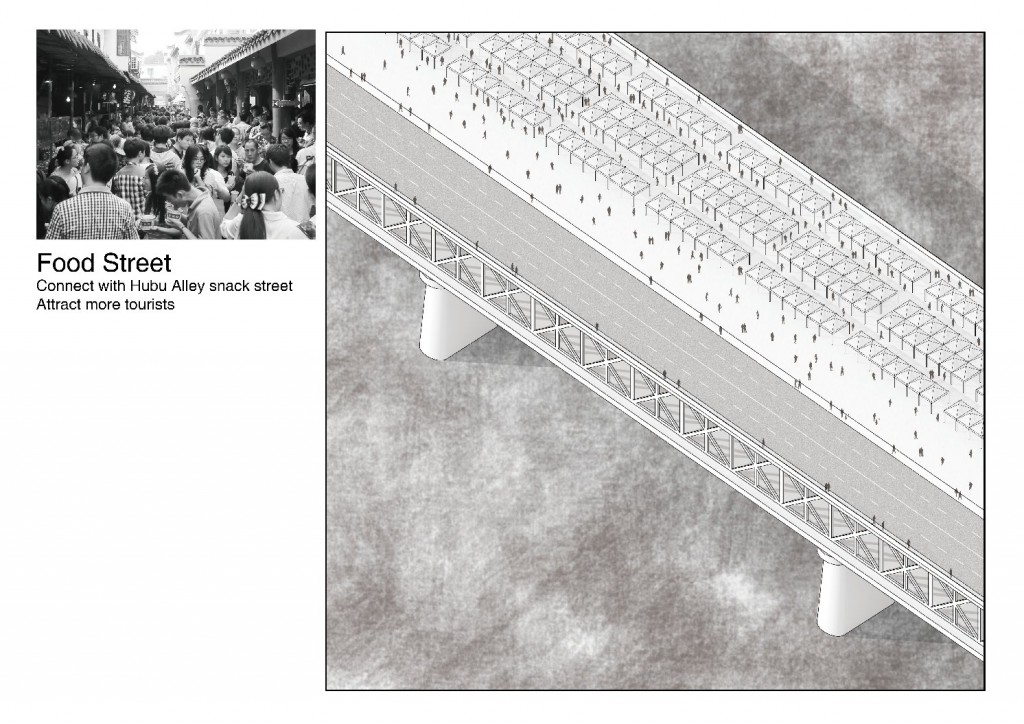
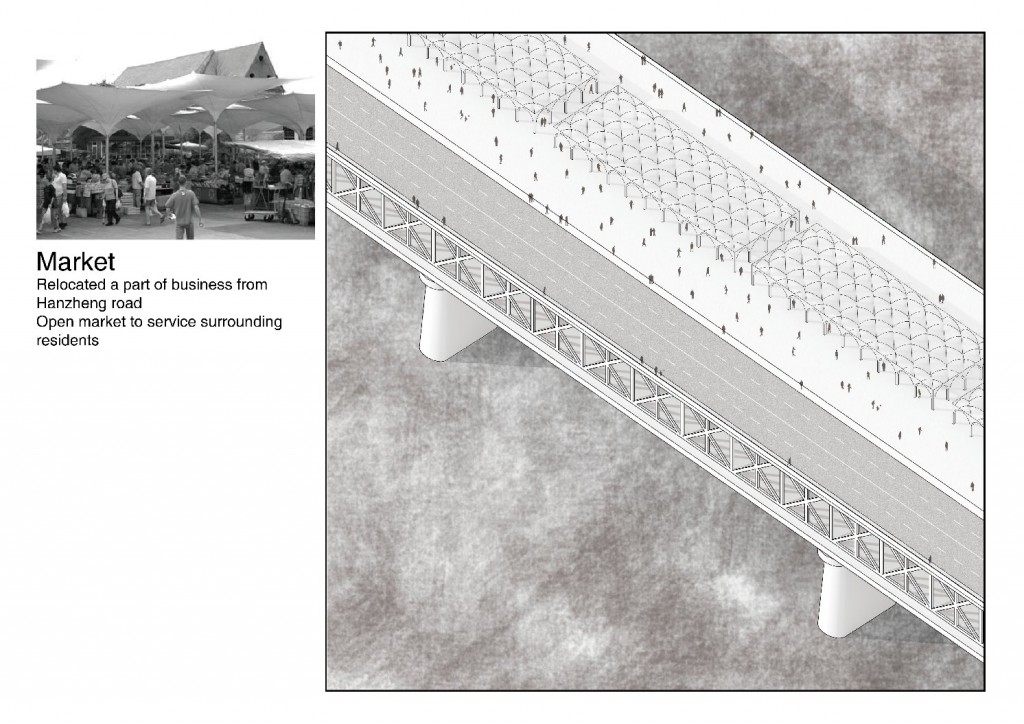 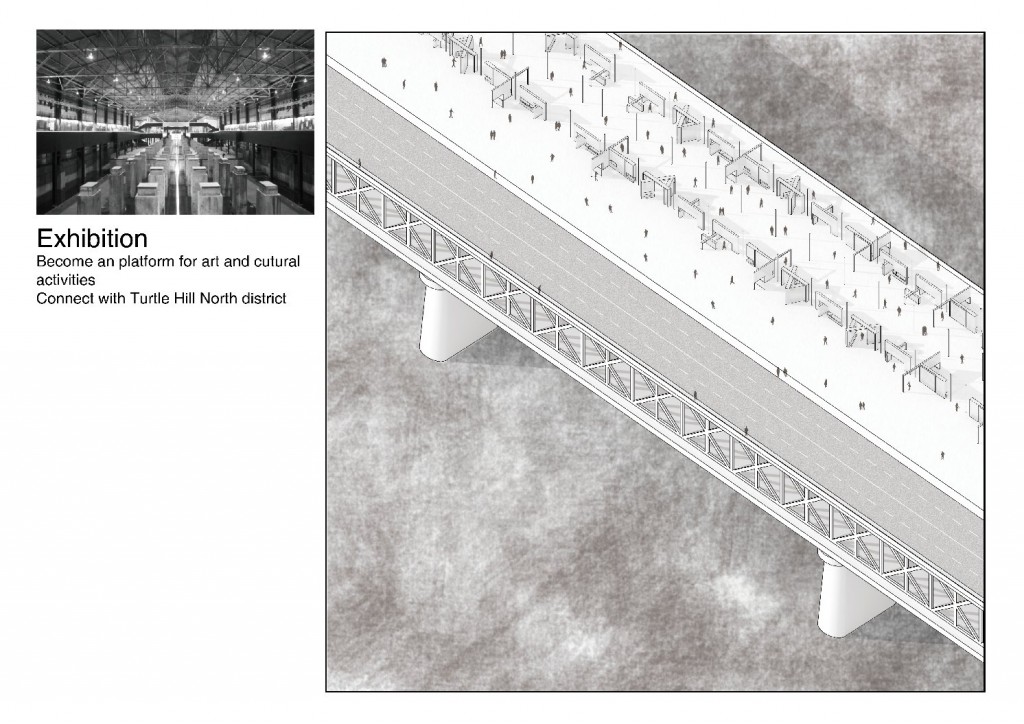 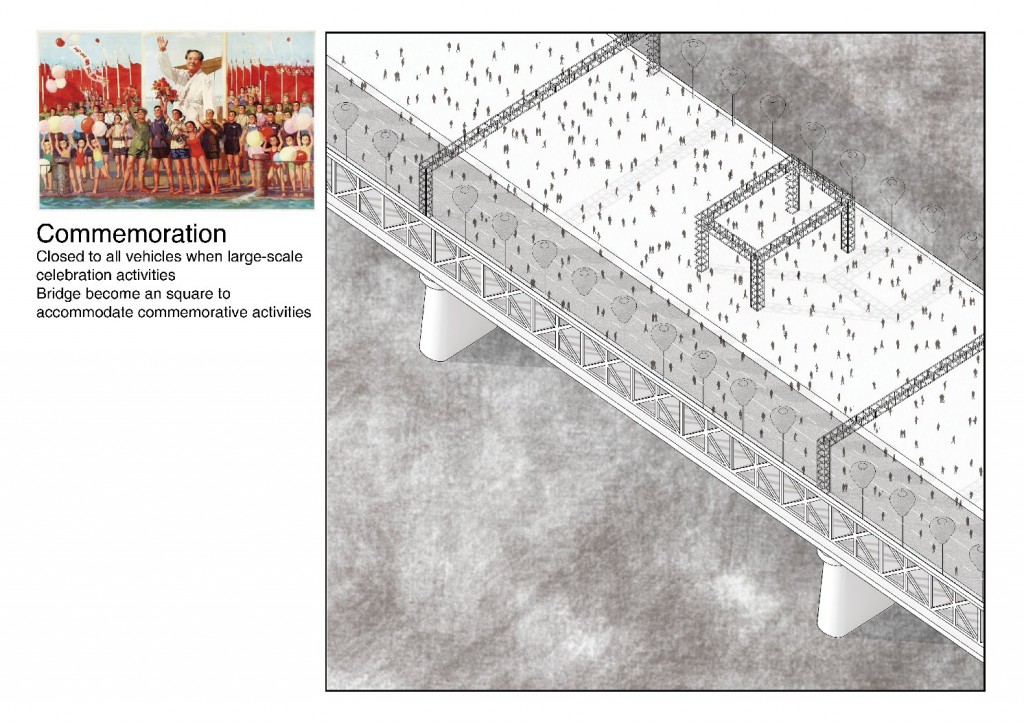
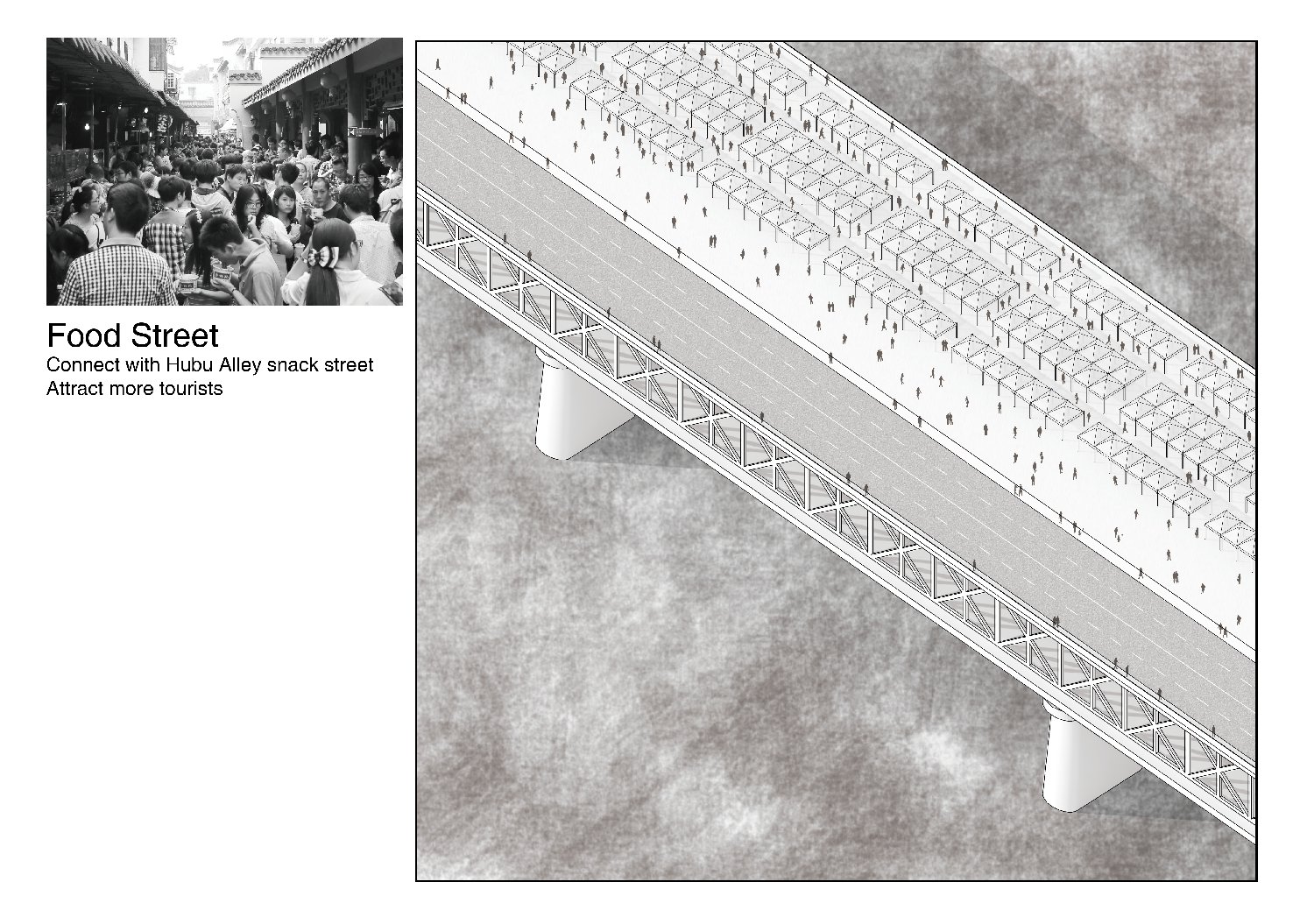
Based on popular business district nearby to accommodate different kind of events to satisfy the needs from people and city.
Bibliography
Texts
- Koolhaas, Rem, 1995, SMLXL: Generic City, The Monacelli Press
- Bernard Tschumi, 1994, The Manhattan Transcripts, Wiley
- Katrina Stoll and Scott Lloyd, 2011, Infrastructure as architecture : designing composite networks, Berlin : Jovis
- 武漢地方志編纂委員會,1989,武漢市誌 :城市建設誌,武漢大學出版社
- 武漢大橋工程局,1956,武漢長江大橋,人民鐵道出版社
Projects
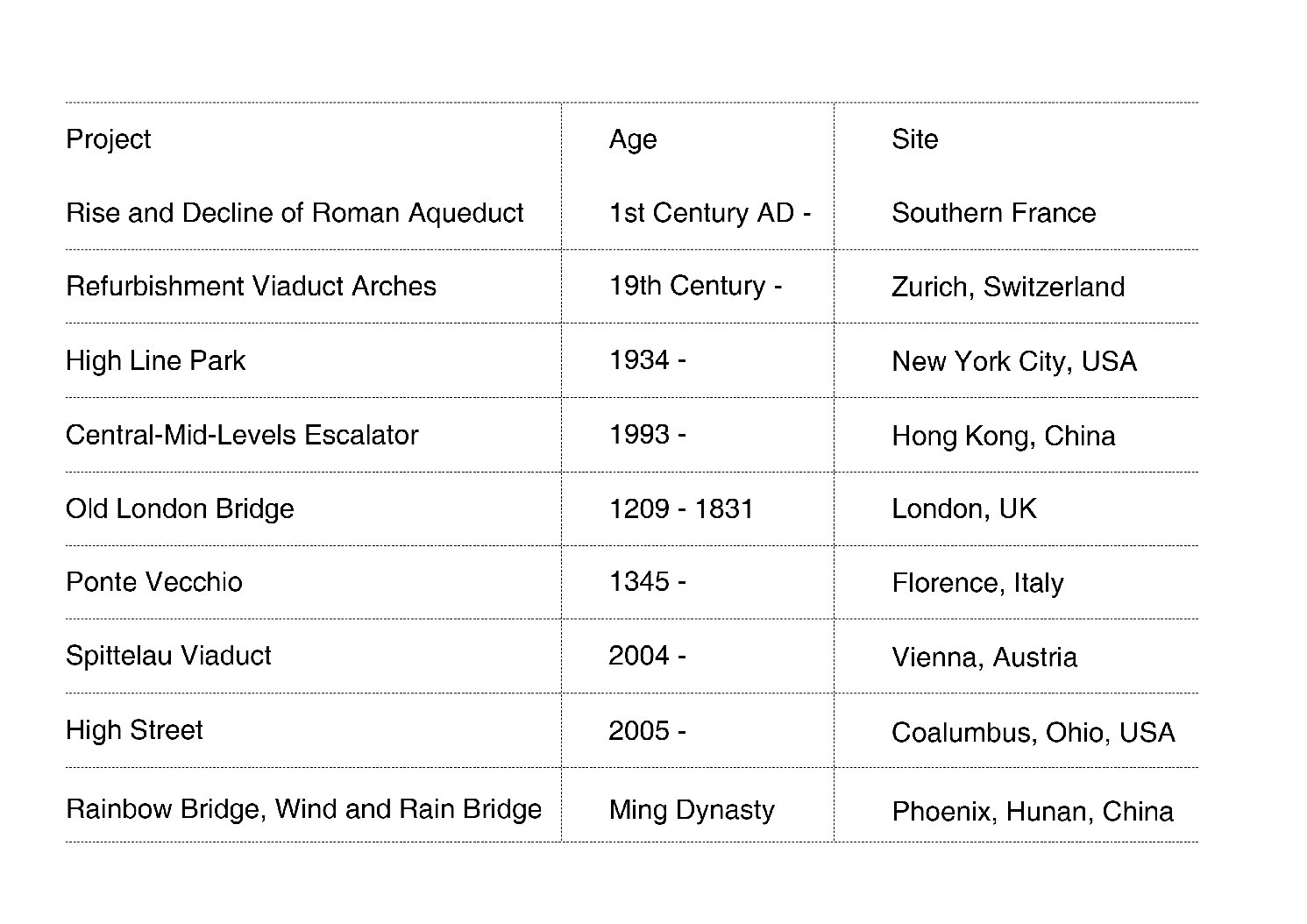
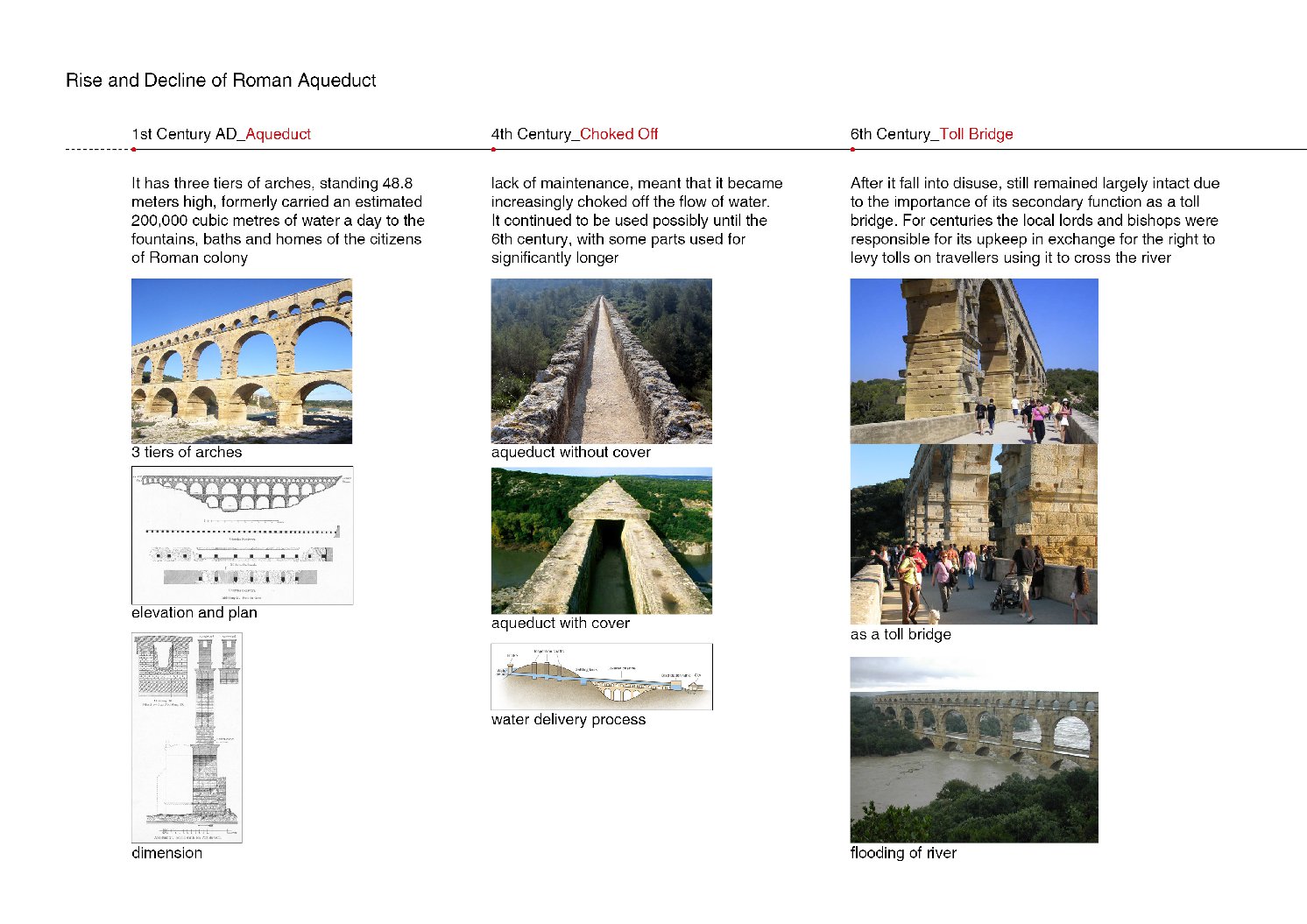
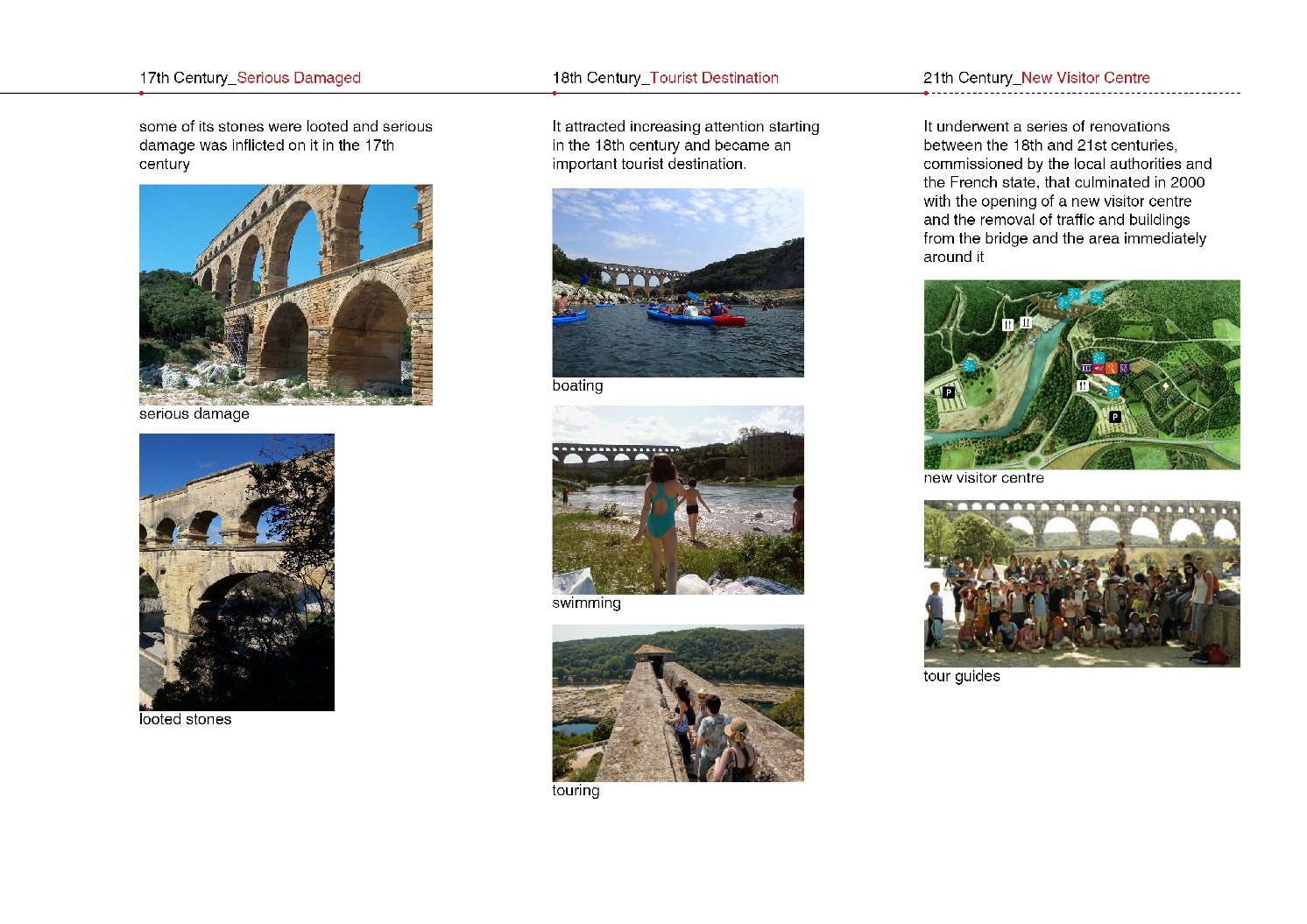
- Marcus Vipsanius Agrippa, Pont du Gard, Vers-Pont-du-Gard, 1st Century
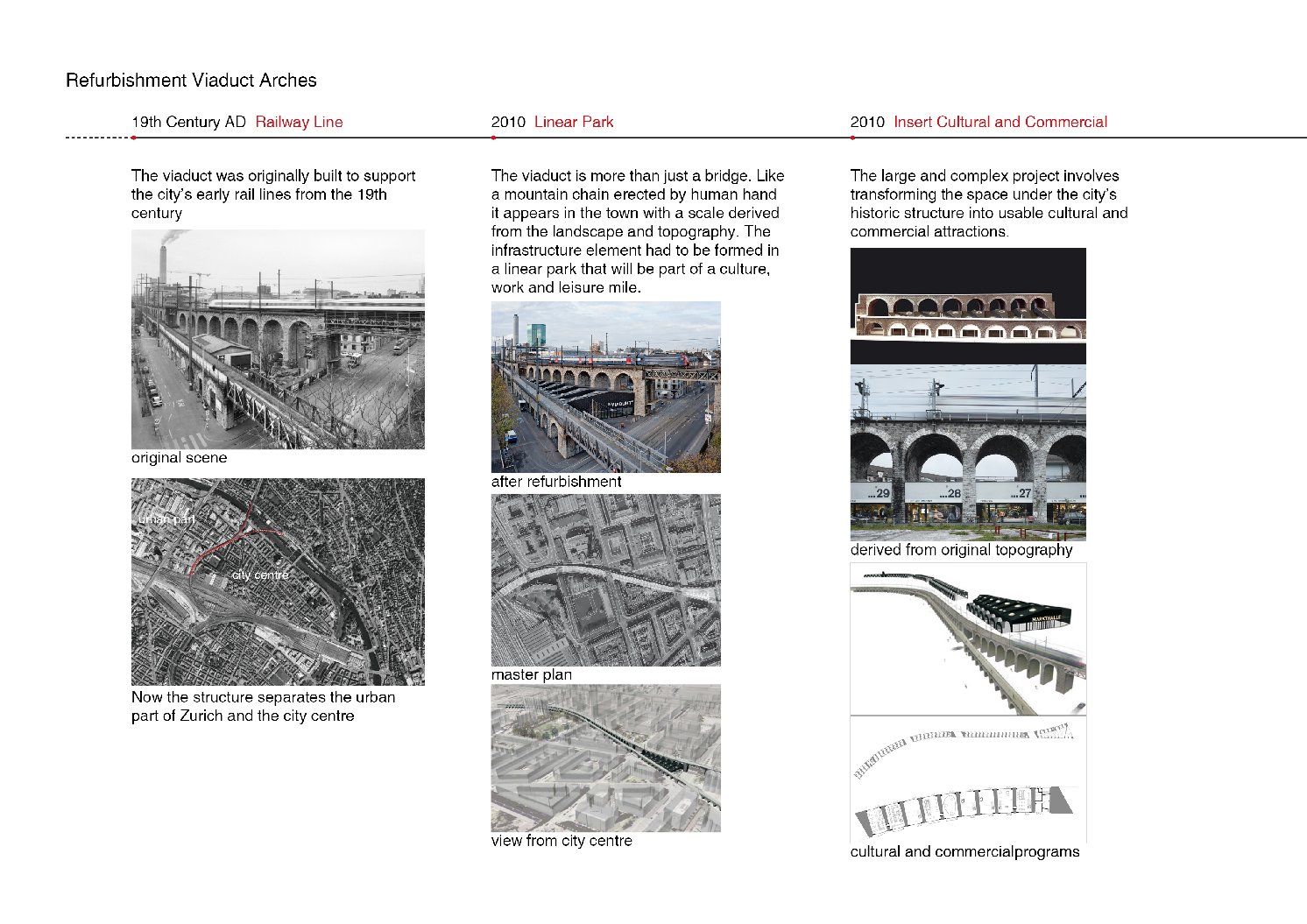
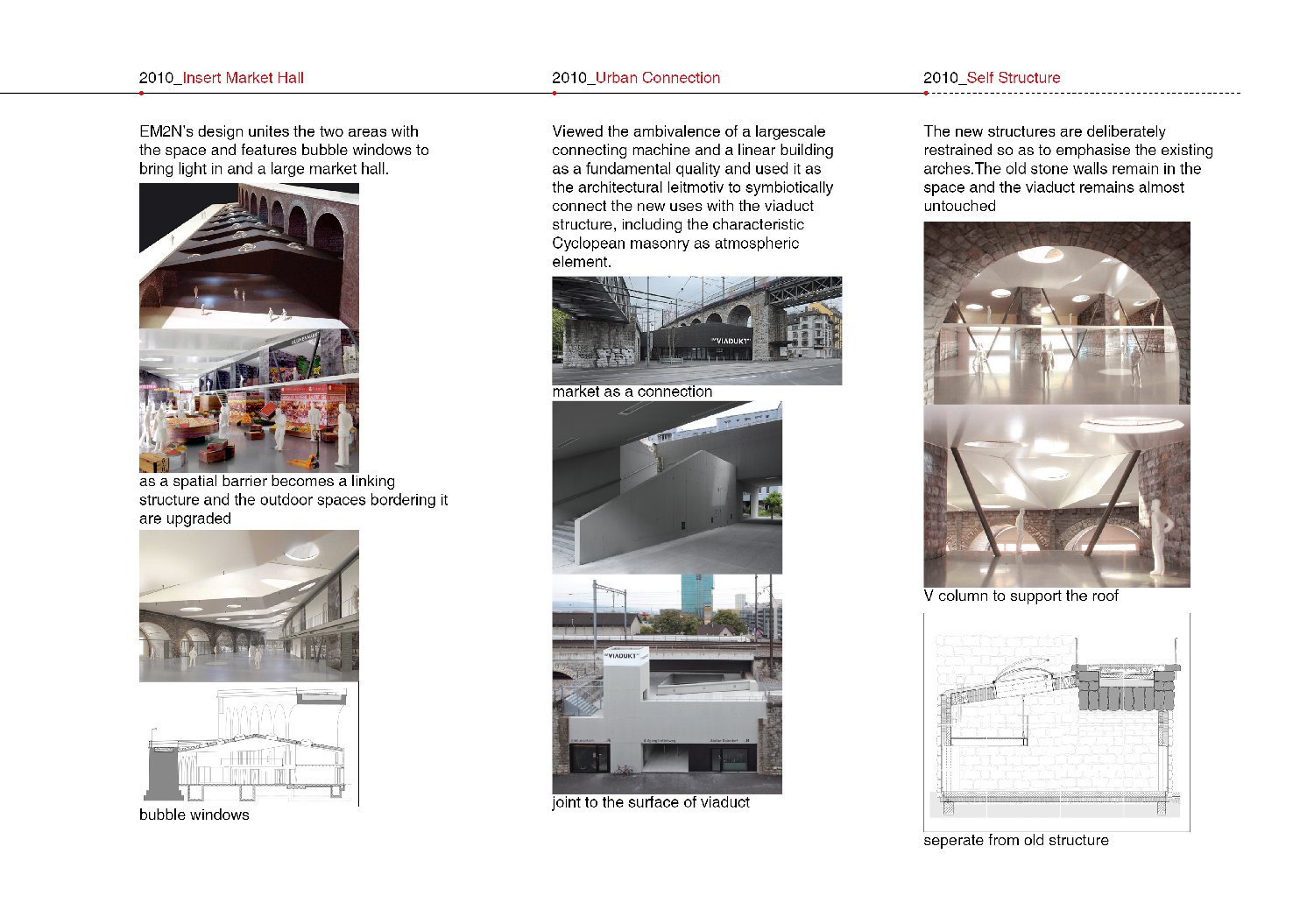
- EM2N, Refurbishment Viaduct Arches, Zurich, 2010
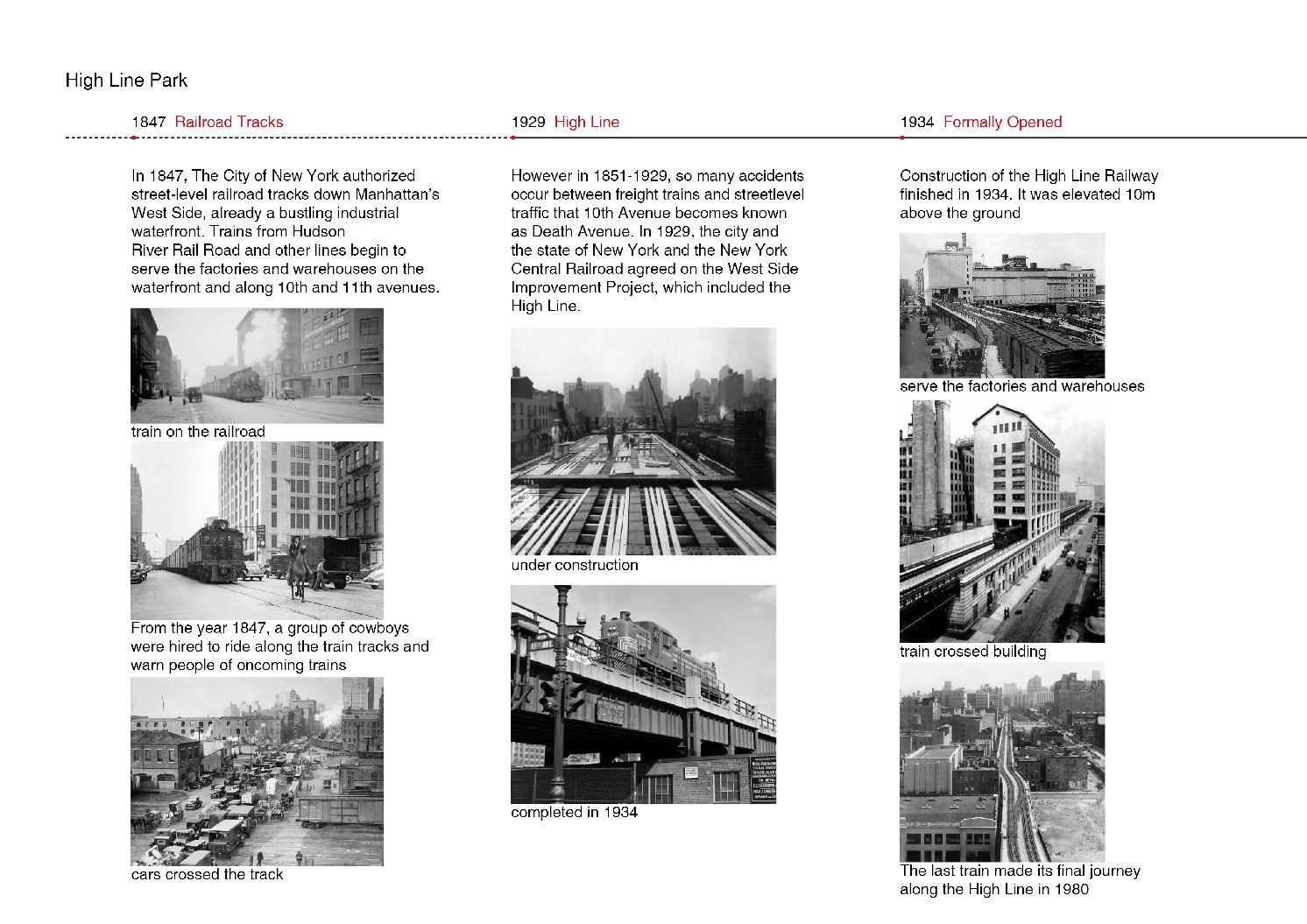
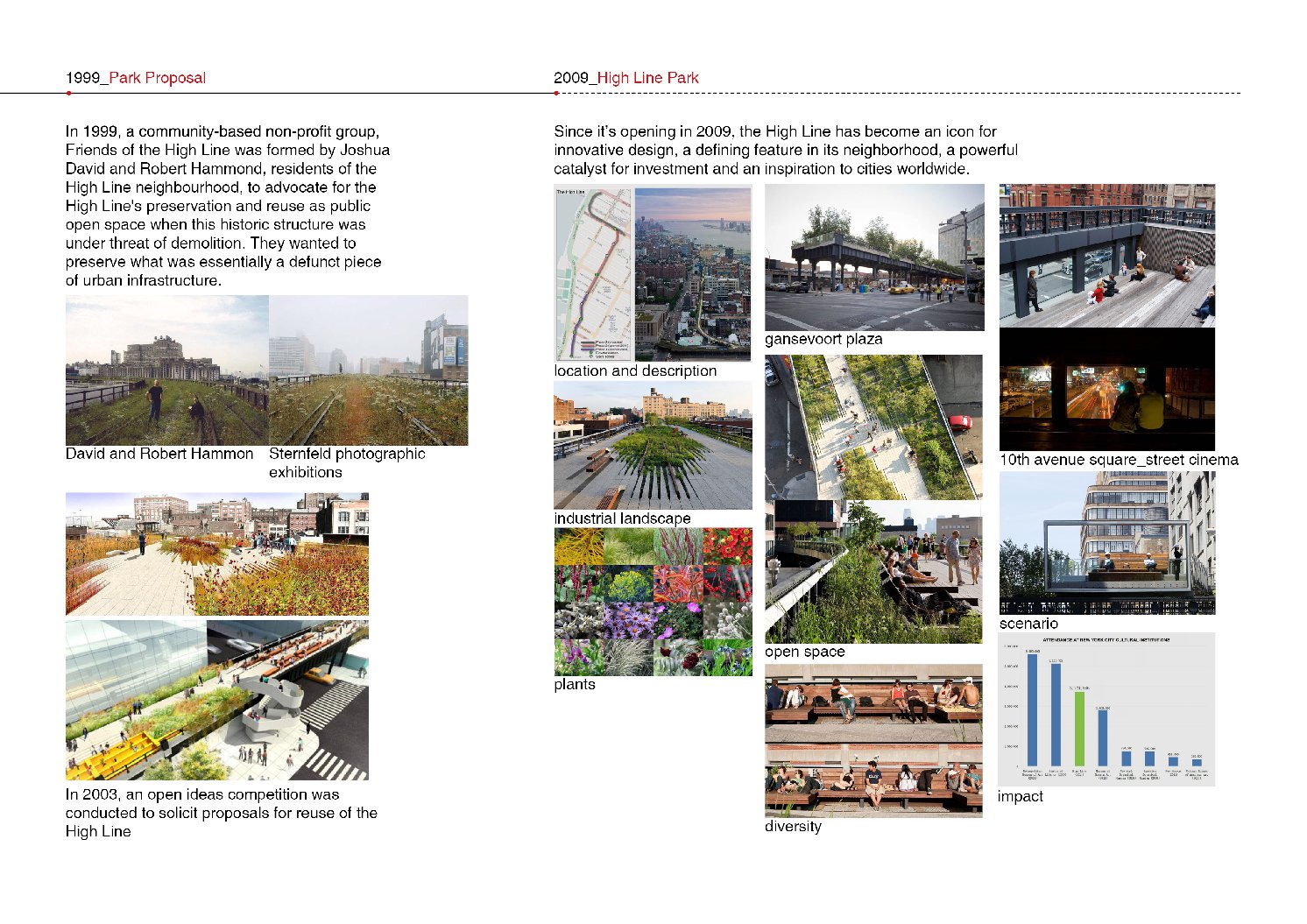
- James Corner, NYC’s High Line Park, USA, 1993
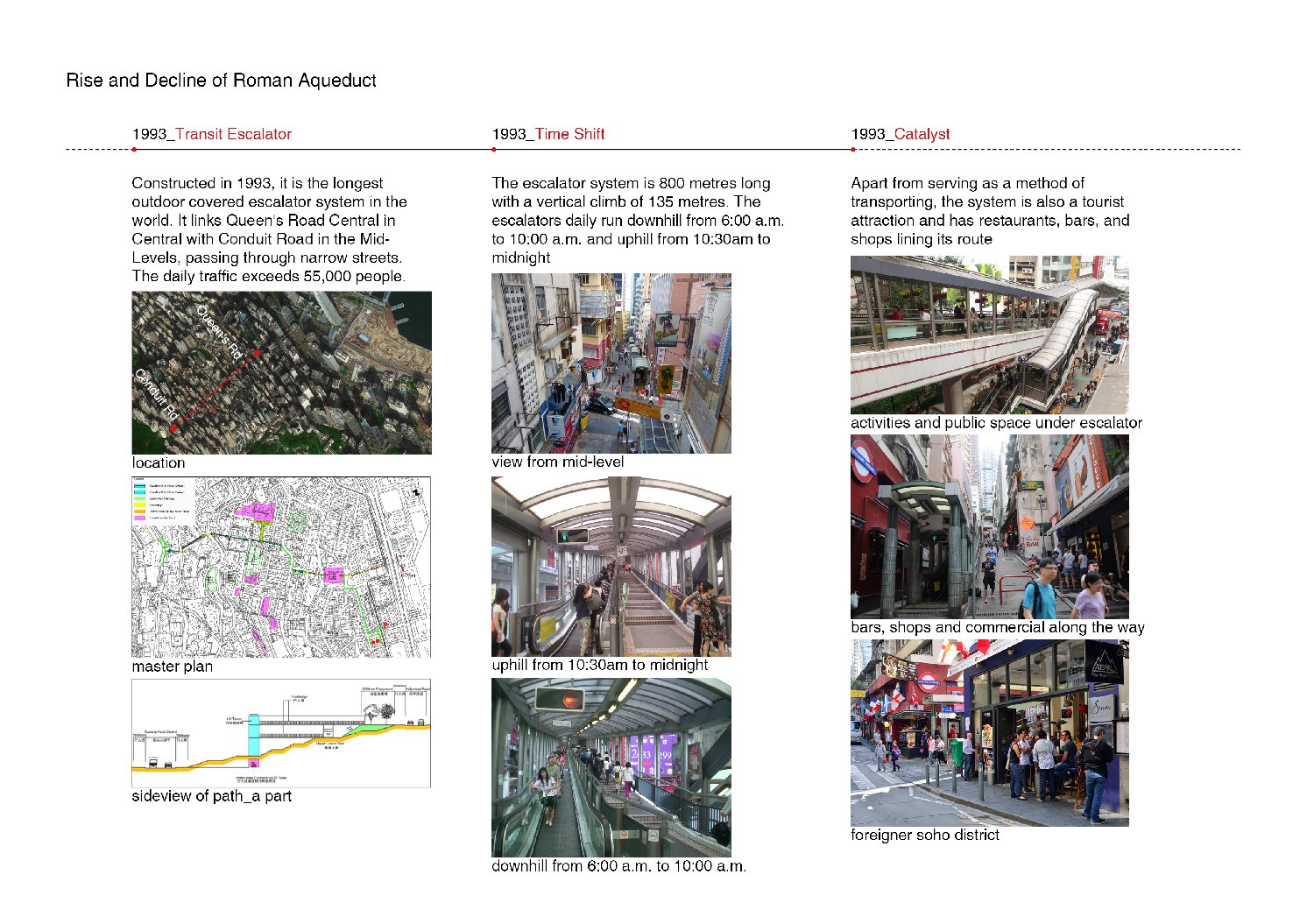
- P&T Architects & Engineers Ltd, Central–Mid-Levels escalator and walkway system, Hong Kong, 1993
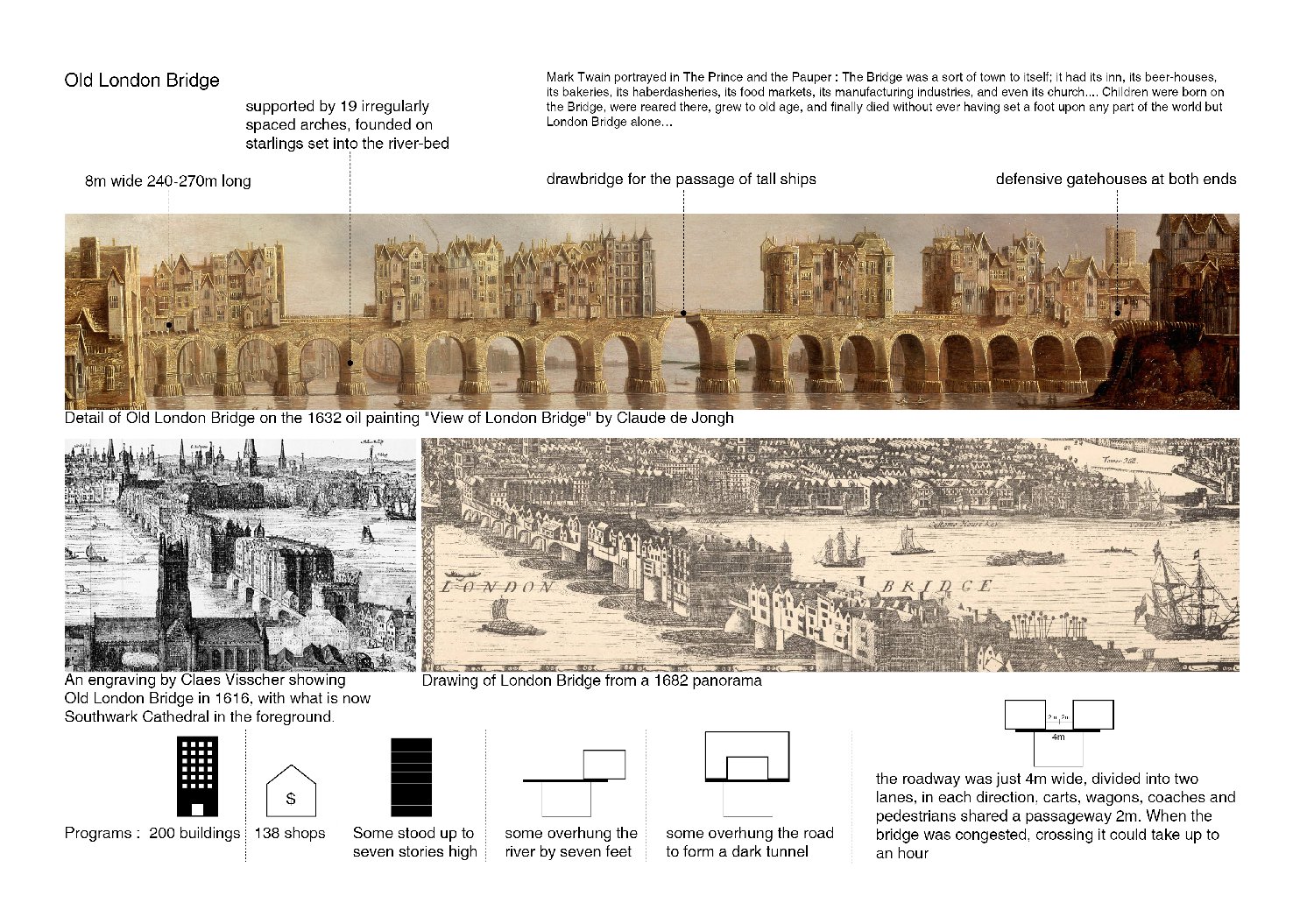
- Claude de Jongh, View of London Bridge, London, UK, 1632
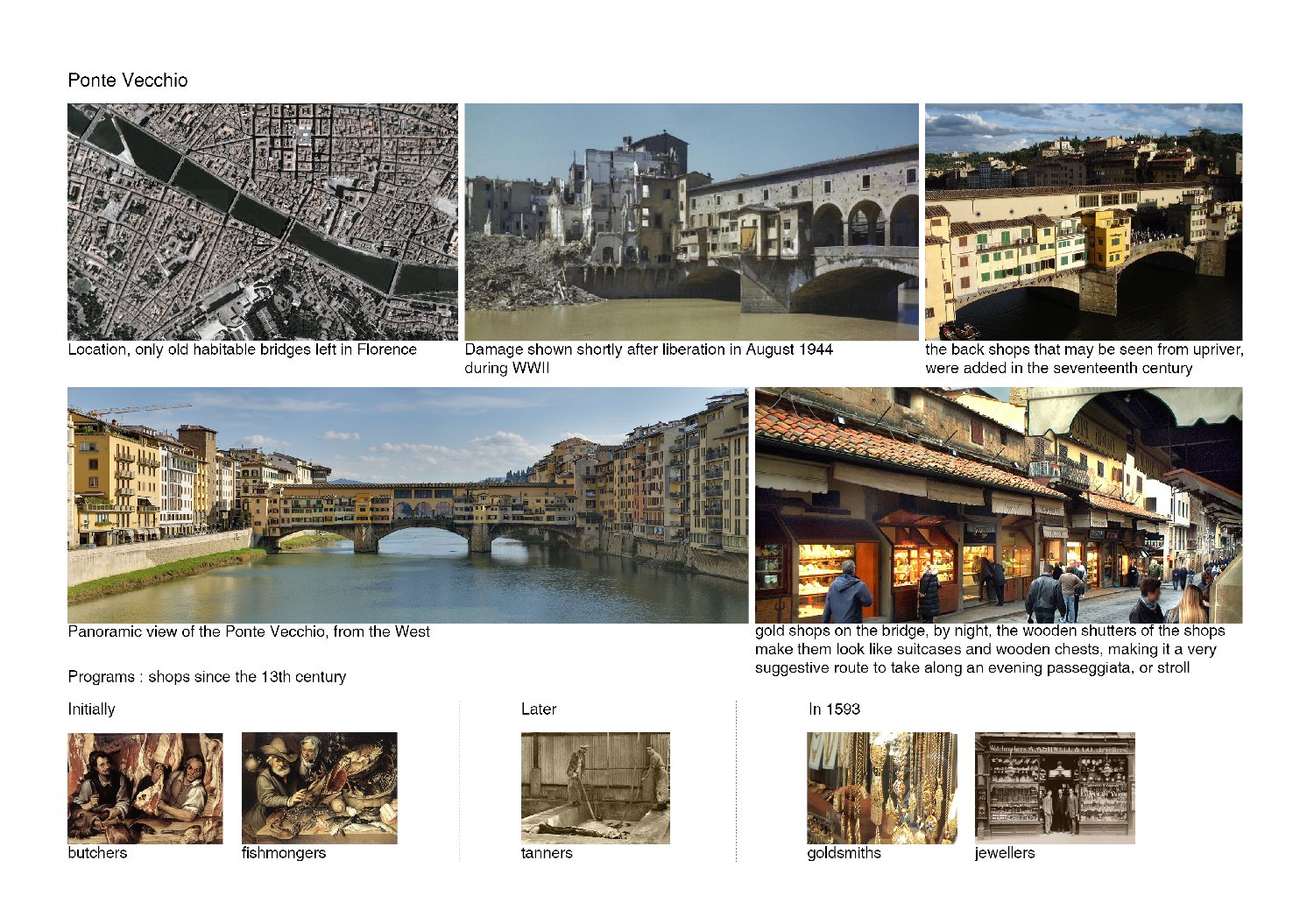
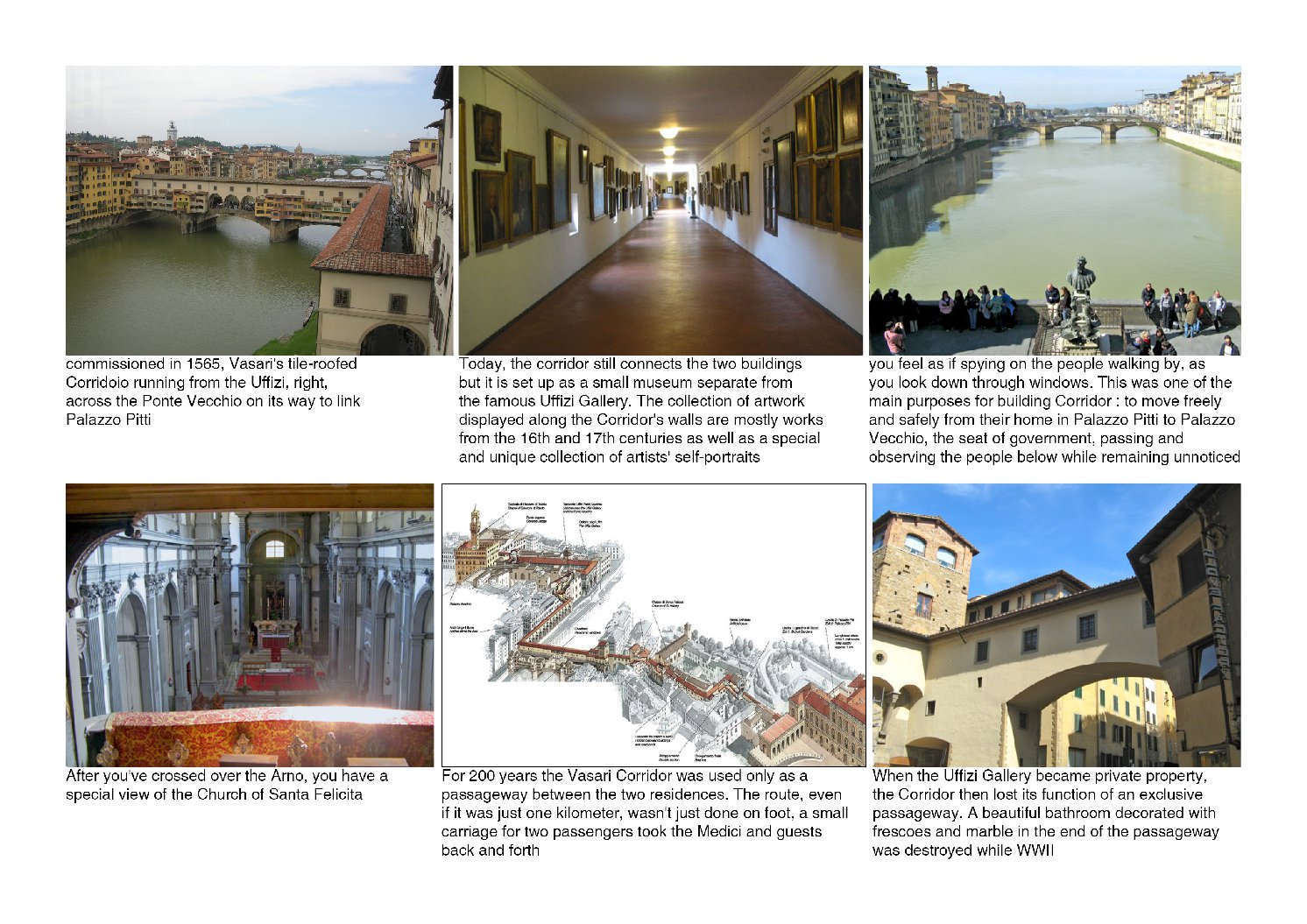
- Ponte Vecchio, Florence, Italy, 1345
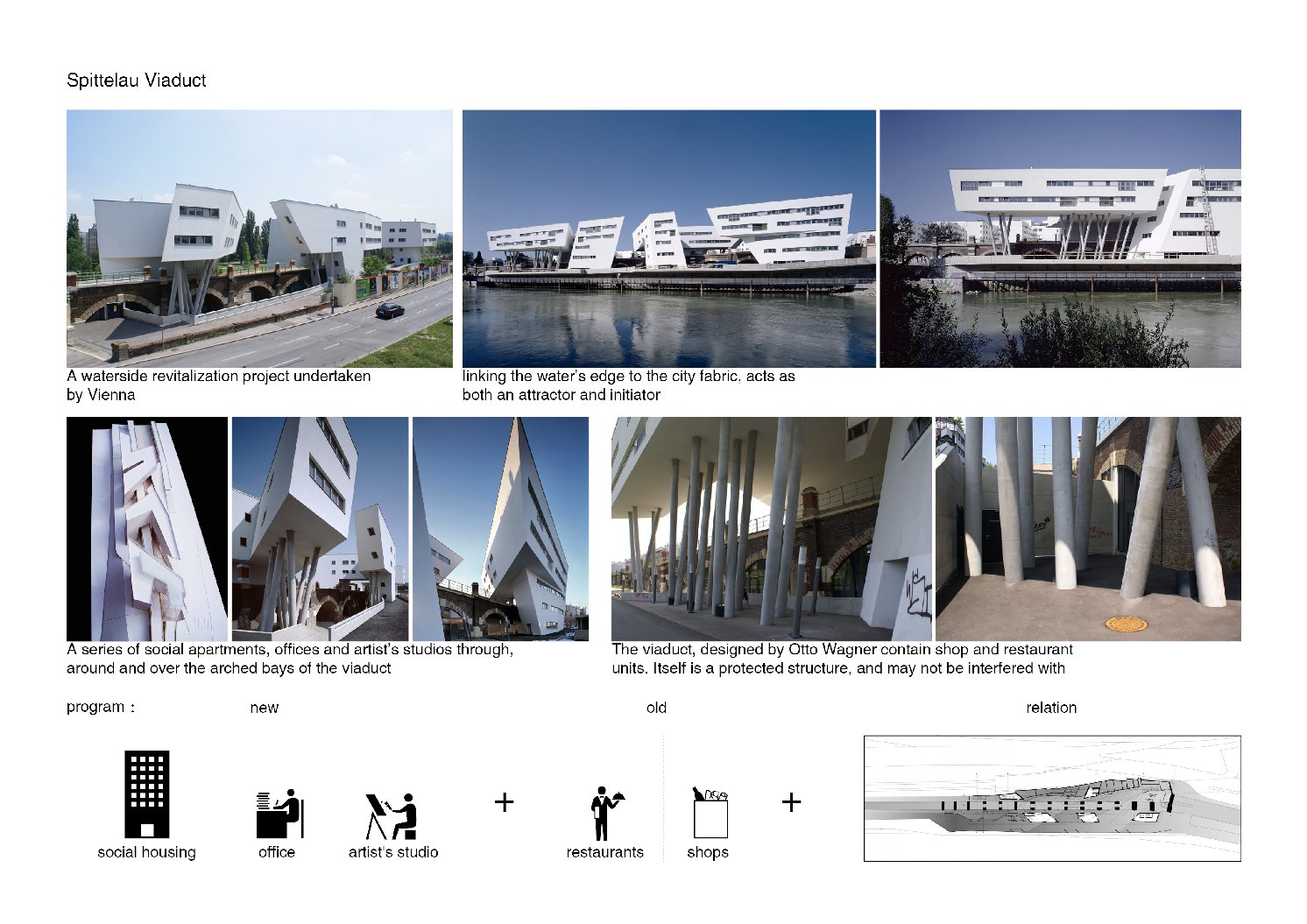
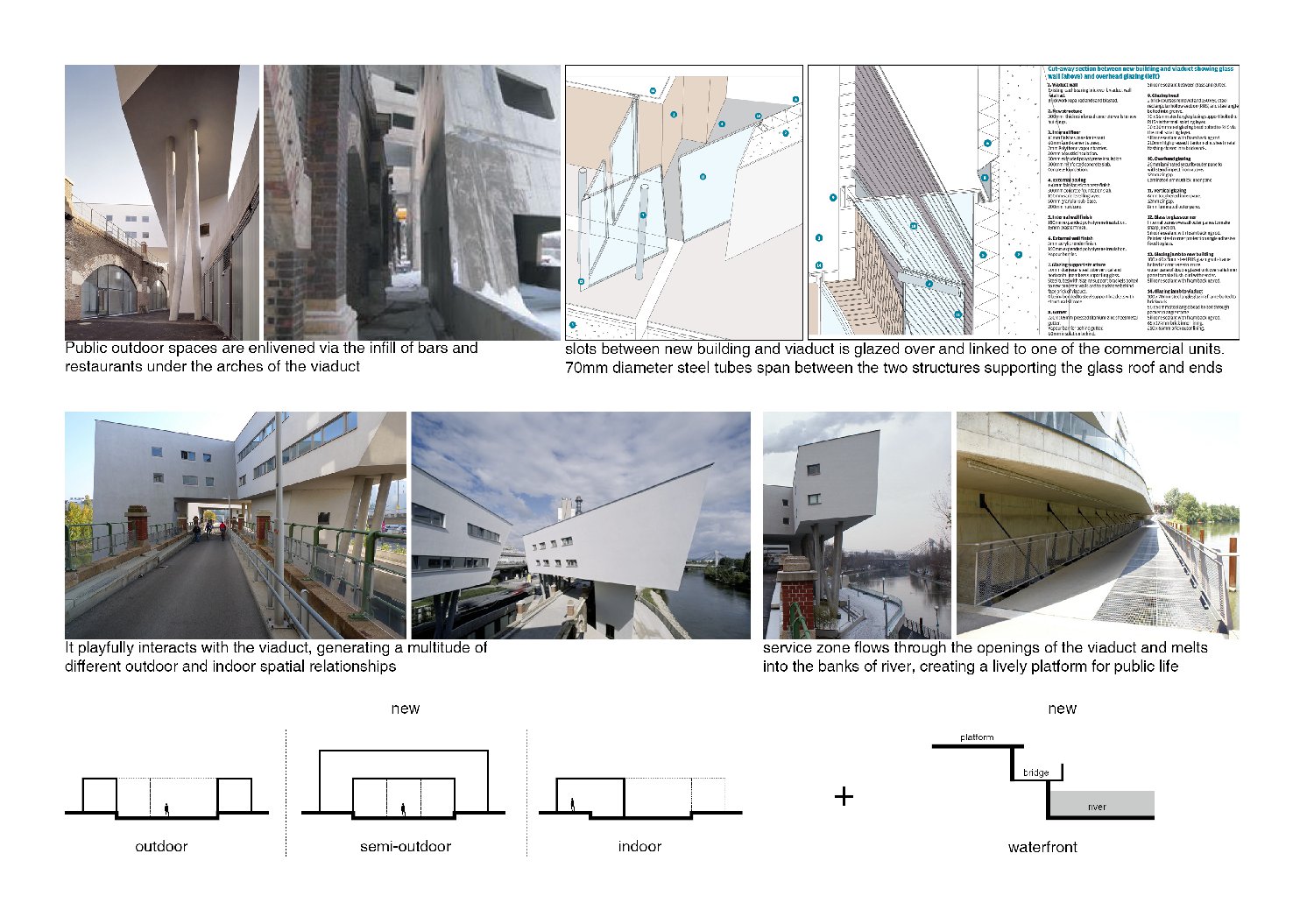
- Zaha Hadid Architects, Spittelau Viaduct, Vienna, Austria, 2004
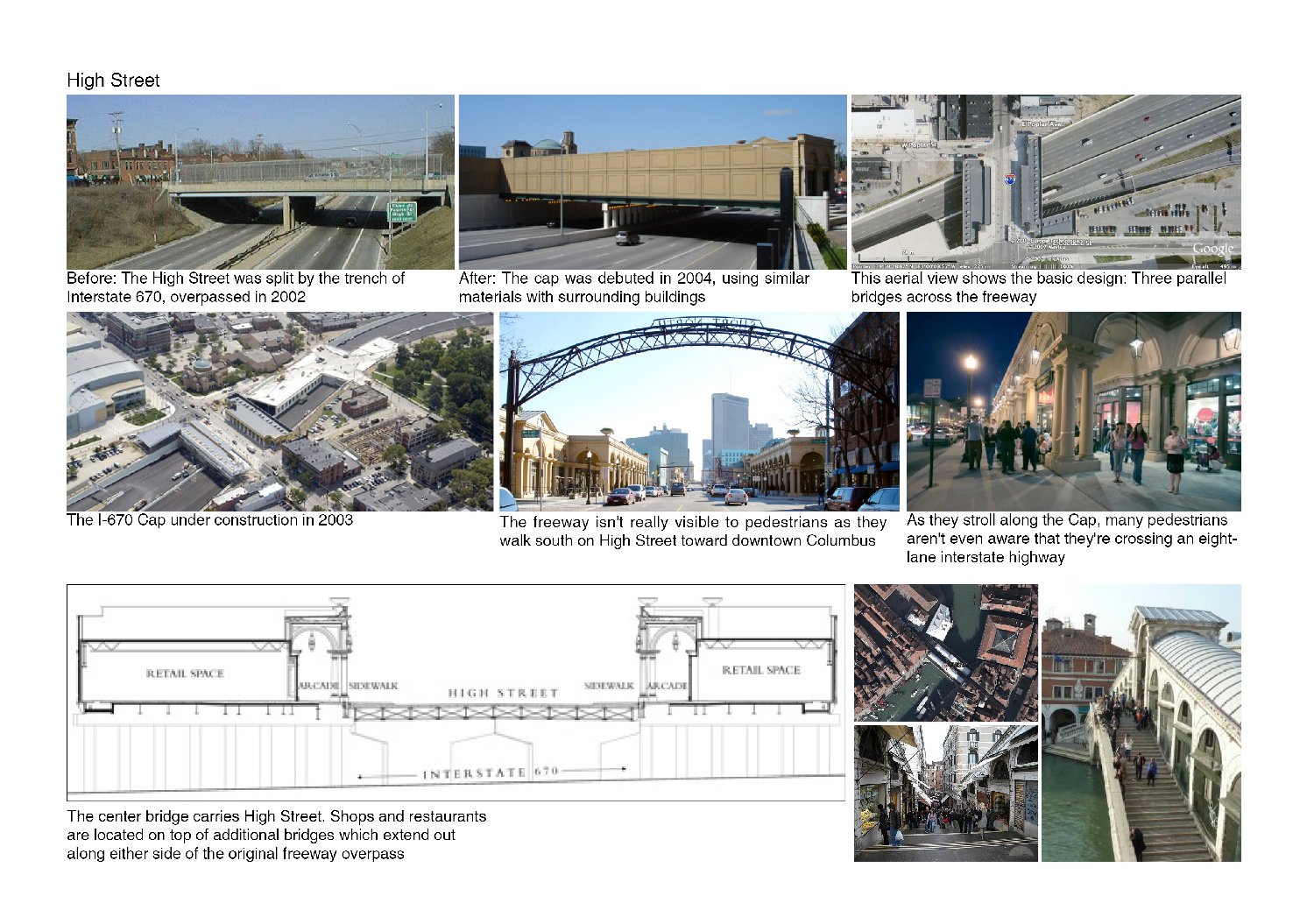
- Meleca Architecture, High Street I-670 Cap, Ohio, USA
- Antonio da Ponte, Rialto Bridge, Venice, Italy, 1591
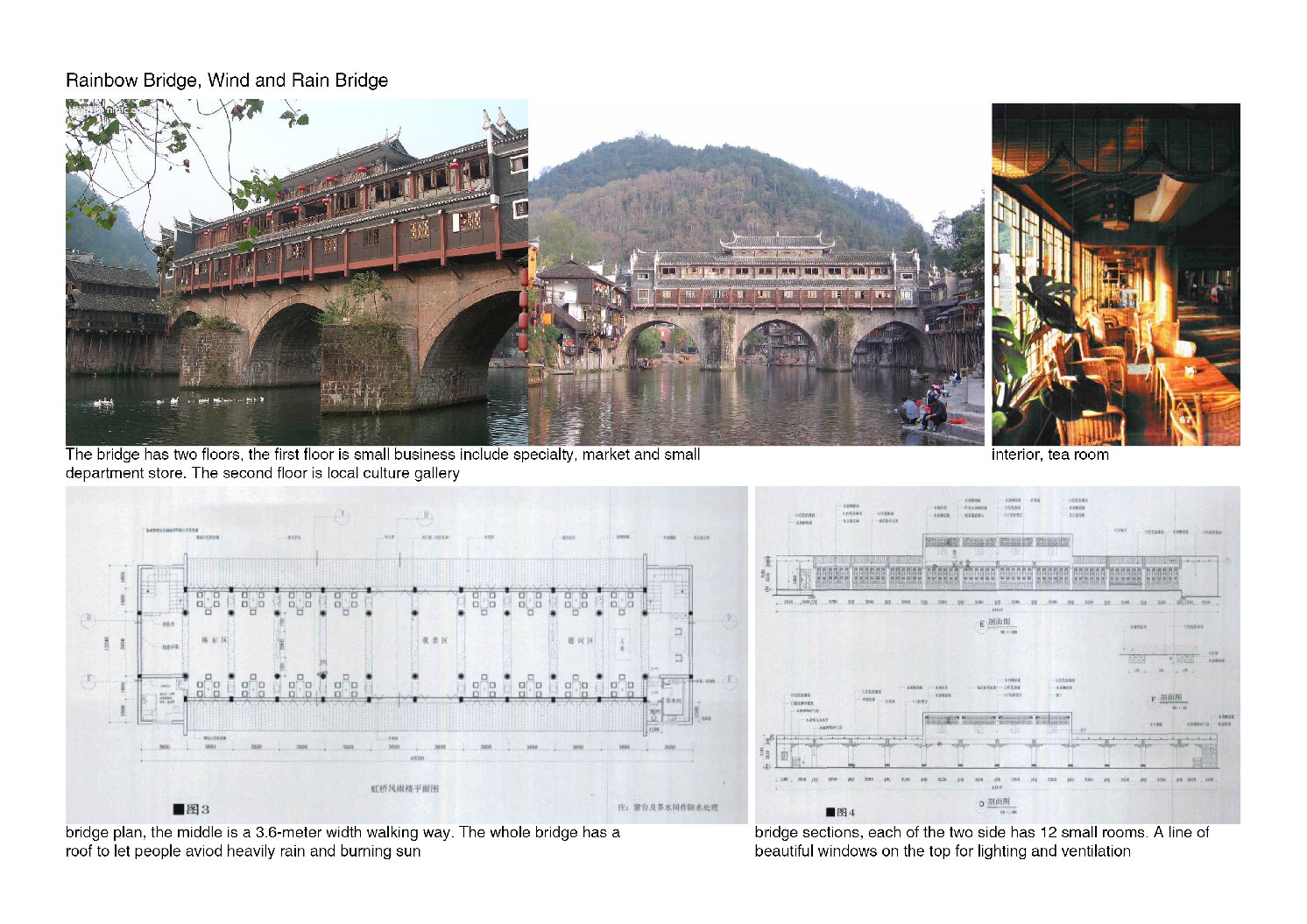
- Wind and Rain Bridge, Phoenix, Hunan Province, China, Ming Dynasty
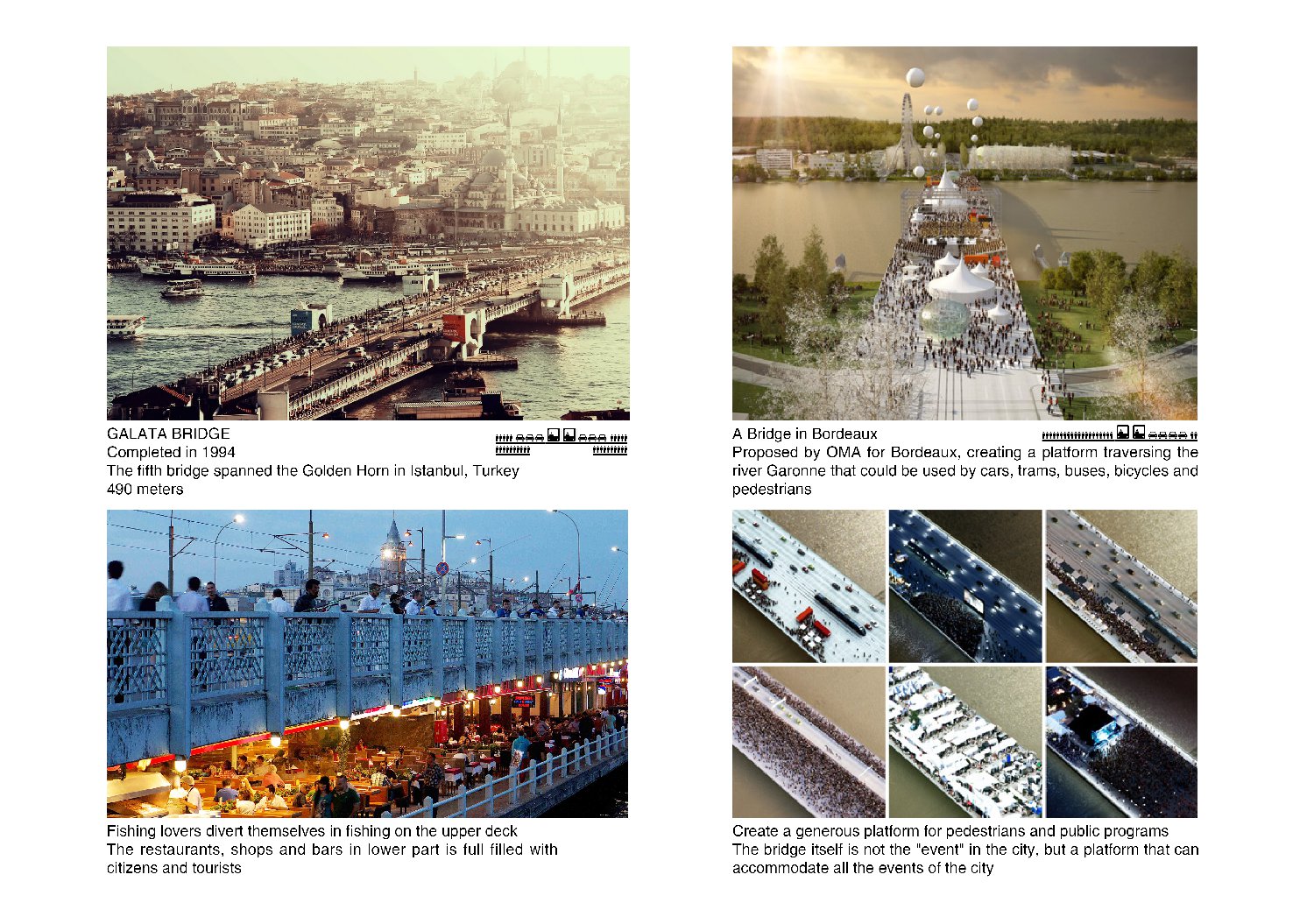
- OMA, Competition to Design Pont Jean-Jacques Bosc in Bordeaux, 2013
- STFA, Galata Bridge in Istanbul, Turkey, 1994
|