Media Forest
|
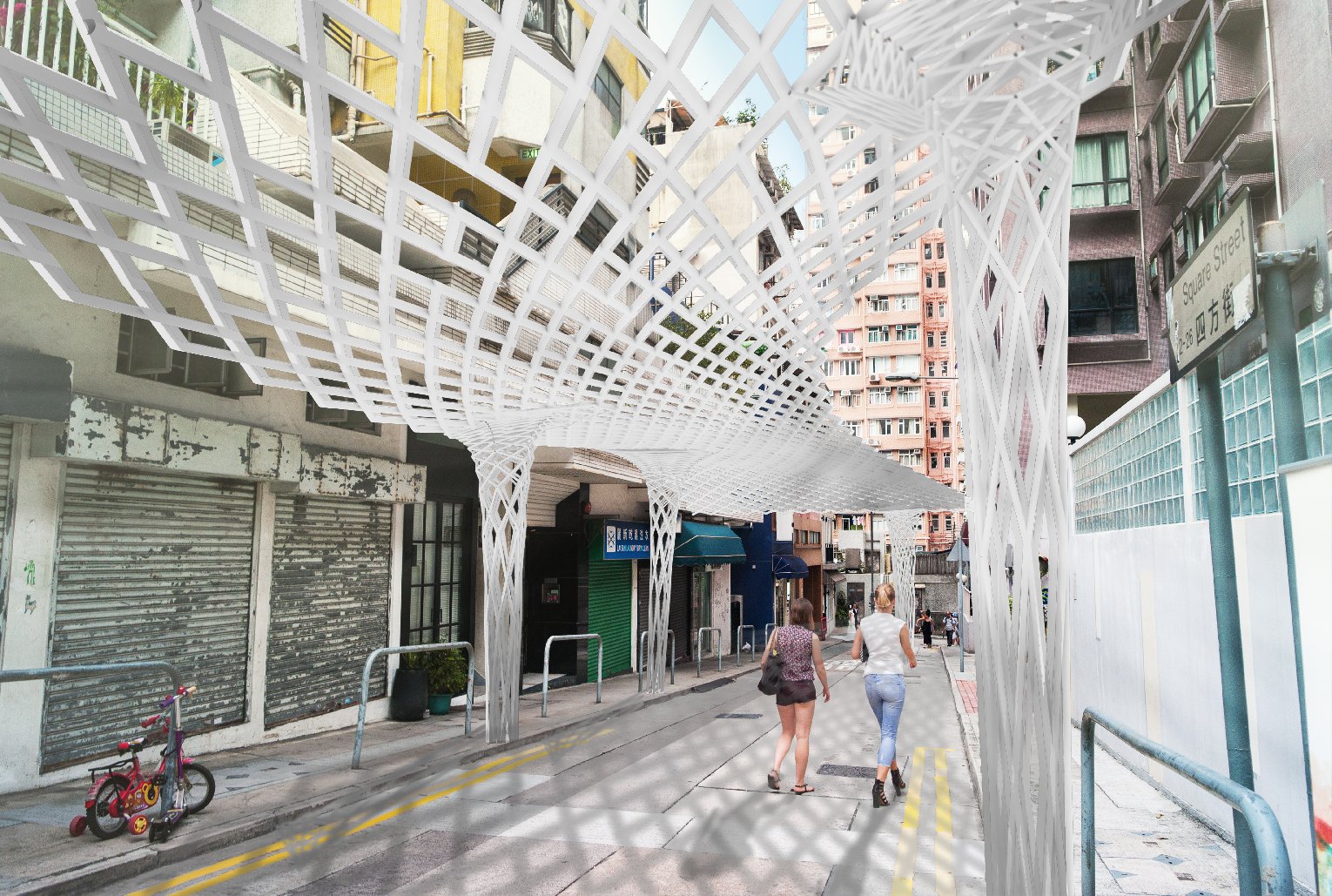
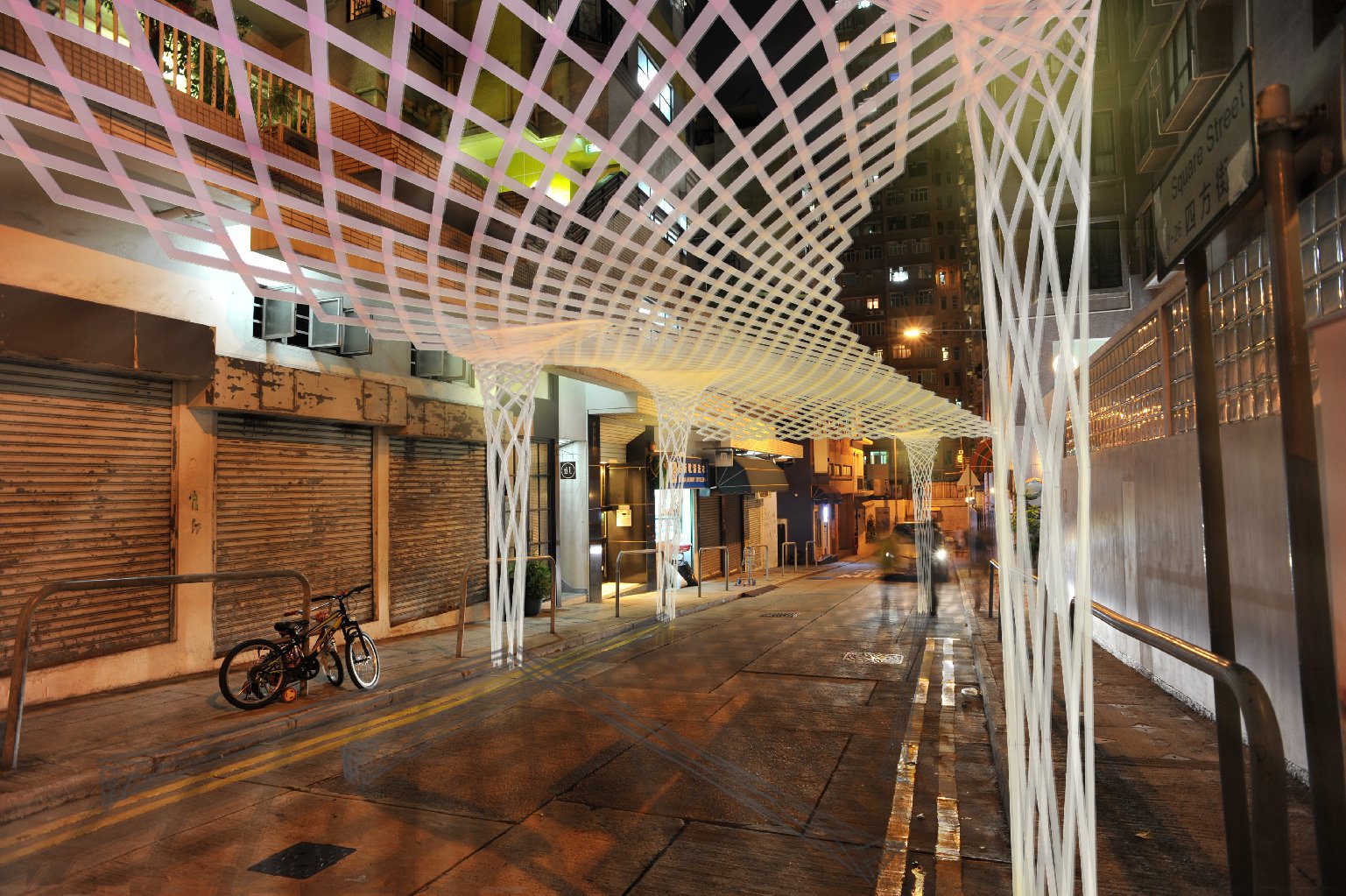
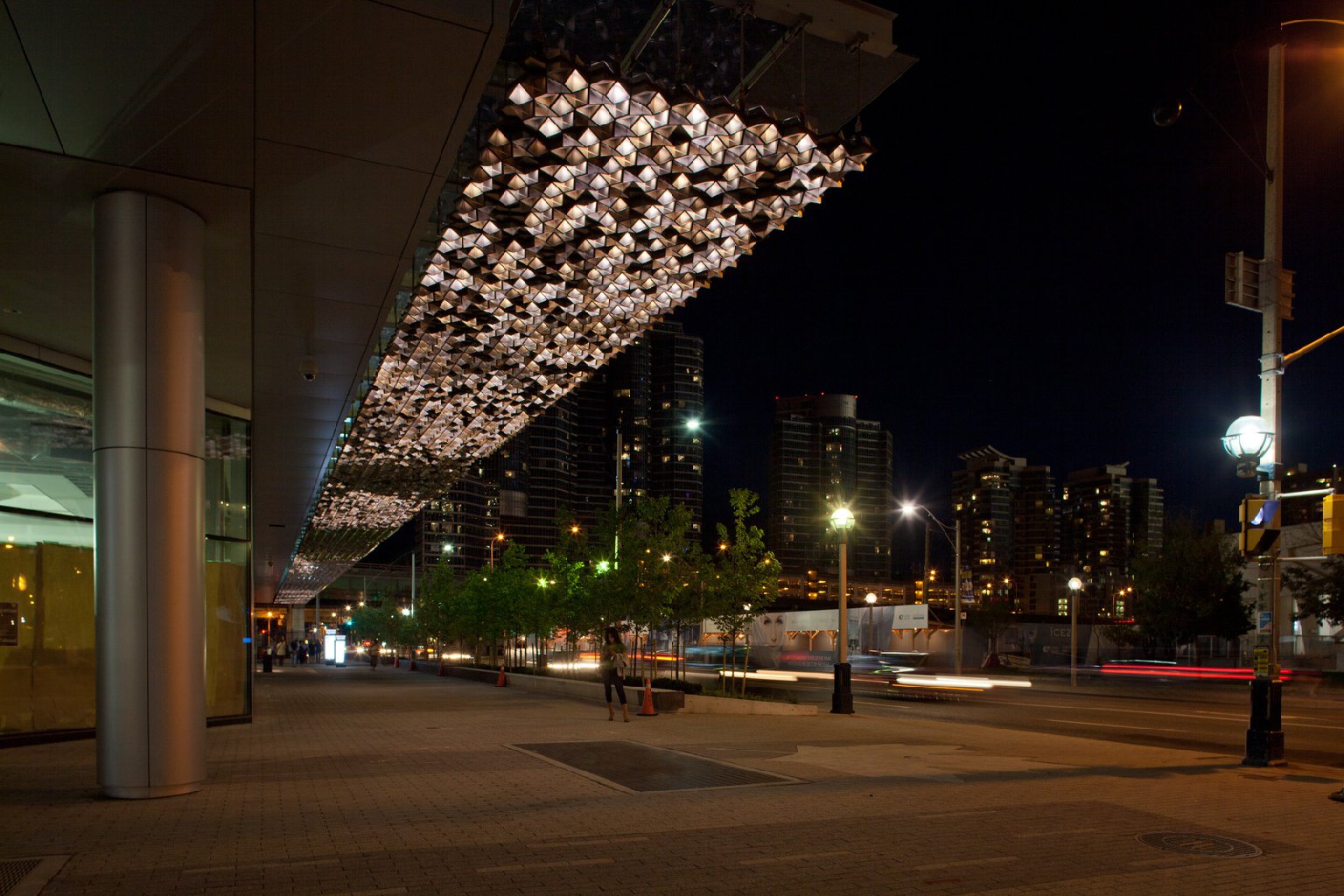
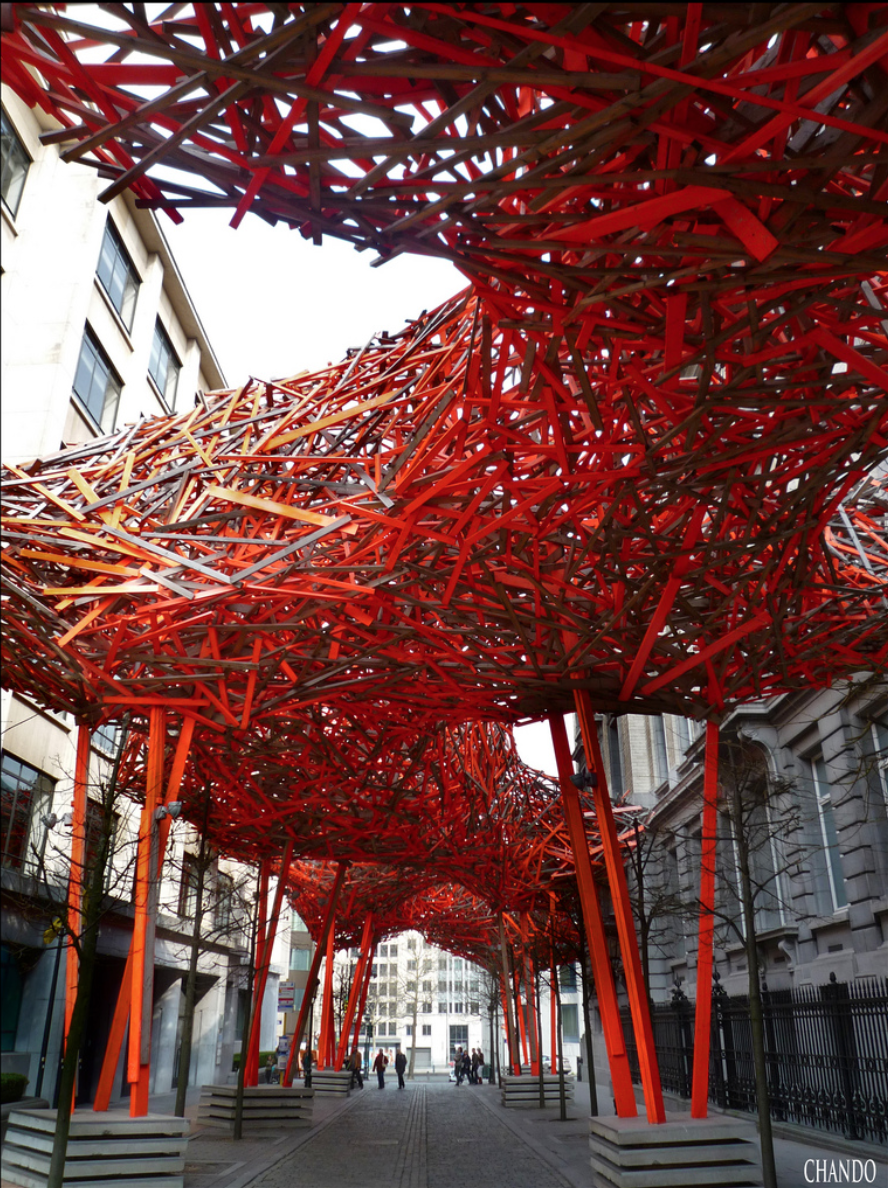
The Media Forest explores an autonomous medium of canopy that develops a new type of urban infrastructure connections and rethinks this connection that build characters into the urban context of Hong Kong. This canopy grows dense and sparse at moments as a medium which reacts to its surrounding urban context, giving protection to pedestrians and provide an luminance and information. The thesis aims to reinvent the canopy of connection and build character into the urban infrastructure giving a new perception to the urban context of Hong Kong. WHAT?
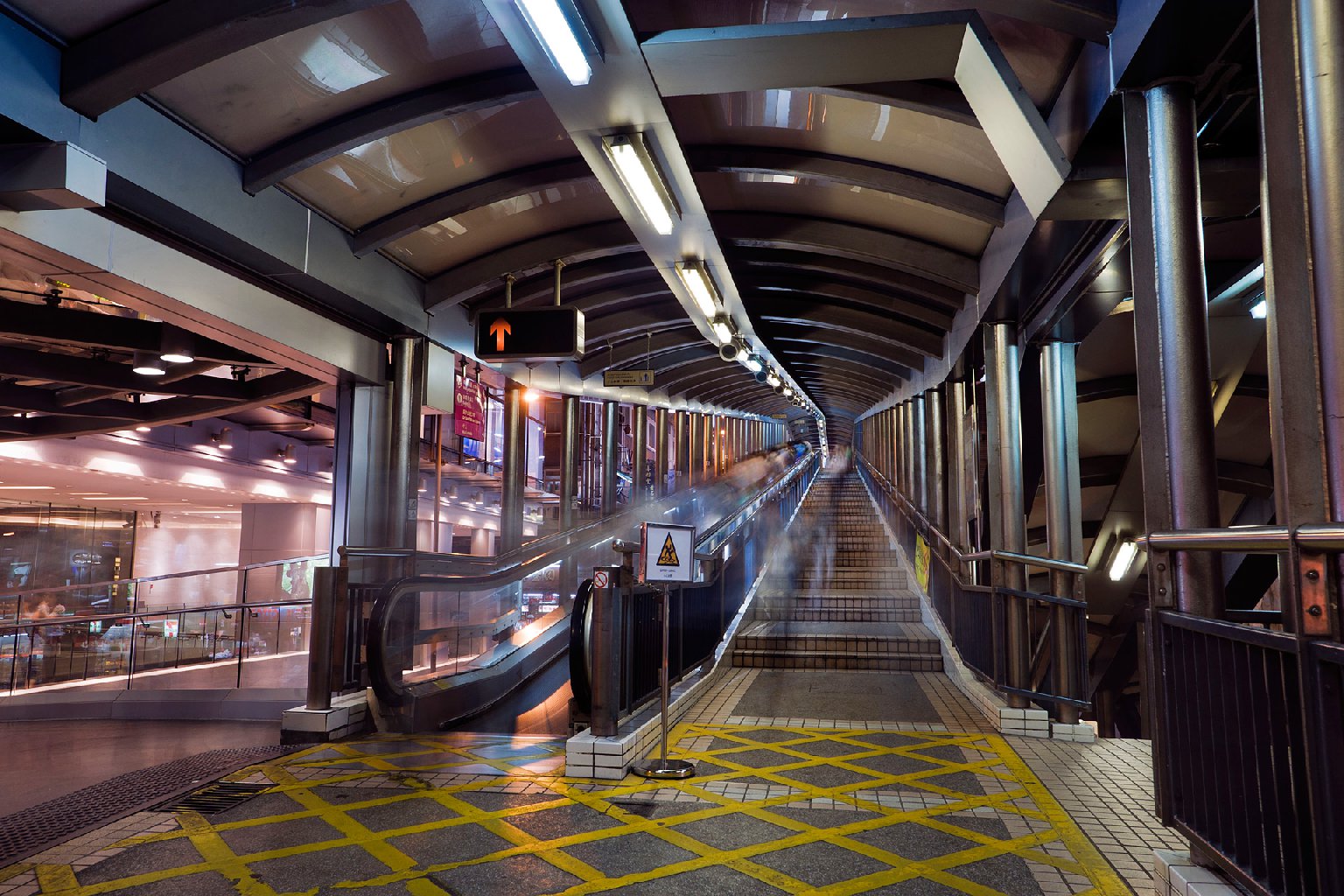
Canopies in Hong Kong are mostly connection that link urban infrastructures within the city, such as escalators and stairs that connect MTR exits. These canopies are mostly designed only for protection of escalators from rain and ease of maintenance. How are these canopies further exploited into building a new nature in Hong Kong? How is the media forest able to contribute in building character into the urban context of Hong Kong? This project will develop a new type of medium of canopy of different urban infrastructure connections and rethinks this connection that build characters into the urban context of Hong Kong. Through the exploration of the Media Forest, this canopy grows as a medium, a structure that grows dense and sparse at different moments; not only does it give protection to pedestrians from the environment but also creates a unique urban concept and give a new perception to the luminance and streetscape of Hong Kong. The outcome would be used as a prototype in urban infrastructure linkage for the reinvention of canopies with the aid of the technological advancement nowadays. WHY?
Even since the age of industrial revolution, architecture has been greatly improvised by inventions of different technologies of all aspects. Through this process, architecture produced subnatural nature simultaneously. HOW?
Site Research- Sites of existing connections of urban infrastructure such as Central- Mid levels escalator connection and the new MTR escalator connection in Center Street. Regulation Research- Existing regulations on canopies will be studied. Different regulatory diagrams will be drawn in order to study their application in different scenarios of urban infrastructures. These regulations are then filtered, those that are applicable to the design will be chosen and further developed. Precedent Studies- Research on precedents with canopy structure and roof that contain elements of mediation and interaction with pedestrians will be explored. Design Experiments- The design experiments will be carried out through 3 stages. By breaking a connection into 3 segments, the design will address the particular urban qualities of each section. In the final stage, all 3 experiments will combine to form the entire design for the canopy which acts as a prototype and will be tested in the urban context of similar urban infrastructures in Hong Kong. BIBLIOGRAPHY Robert Venturi, Steven Izenour, Denise Scott Brown, Learning from Las Vegas, The MIT Press, 1977 David Gissen, Subnature- Archtecture’s Other Environments, Princeton Architectural Press, 2009 David Gissen, Lisa Tilder, Beth Blostein, Design Ecologies- Essays on the nature of Design, Princeton Architectural Press, 2009 Toyo Ito, Architecture Words- Tarzans In the Media Forest, Architectural Association London,2011 |