Station Fortress’s Way Out
|
Ng Hin Lung Sa What?
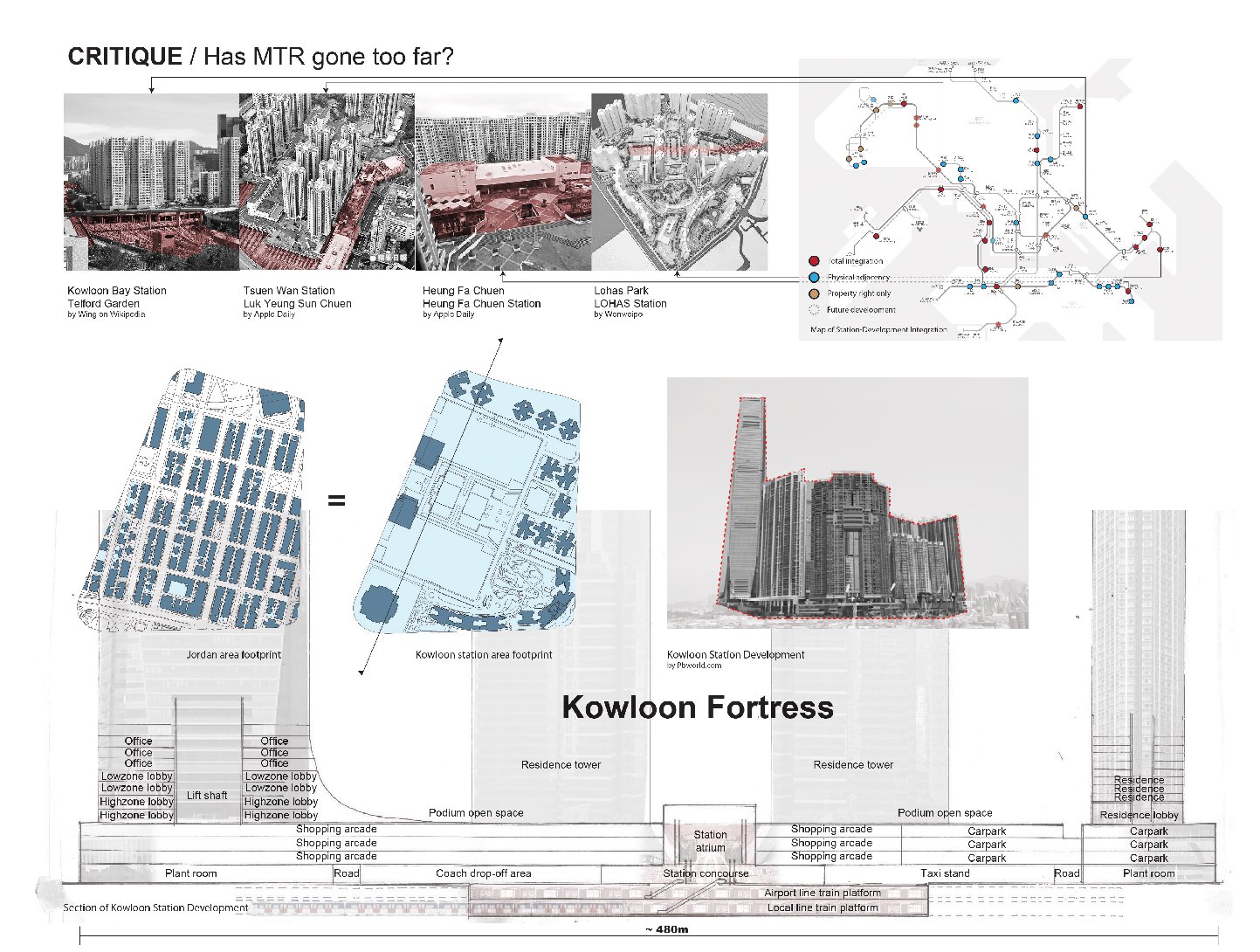
This thesis seeks alternatives of railway-integrated architecture which suits lower density context, in response to the current massive station area development model. Railway station is a large stretched piece of land for railway, which normally occupies the ground level. It has very good accessibility to anywhere. It brings in visitors and tourists. It is the thoroughfare of everyone in the district. It attracts public facilities such as market, library, post offices. Hong Kong, under the balance of several factors including limited buildable land, high property price, highly centralised business area and unfavourable conditions for owning private automobiles, high density development combining railway station becomes very favourable. Mixed development typologies such as “railway station + residential + community hall”, “railway station + shopping mall + office towers” emerge. They work very well in terms of convenience, energy-saving, better utilisation of space. However, the Hong Kong railway company (MTR) has become the largest developer in Hong Kong and duplicated this massive development model to everywhere the rail goes. The current model is excessive in scale, breaking visual continuity, ignoring site peculiarity and in lack of program fluidity. Are there way out from this trend? Why?
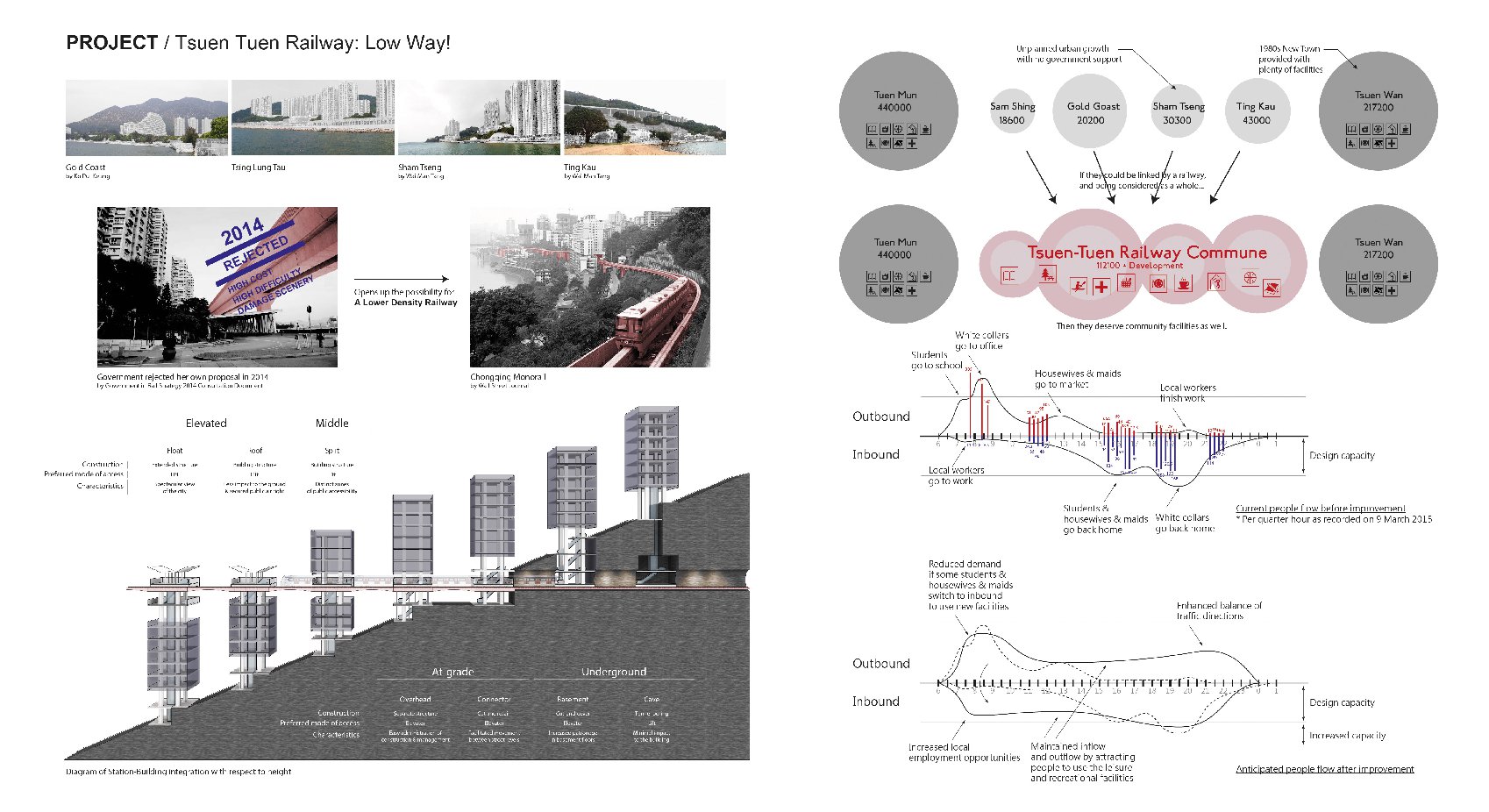
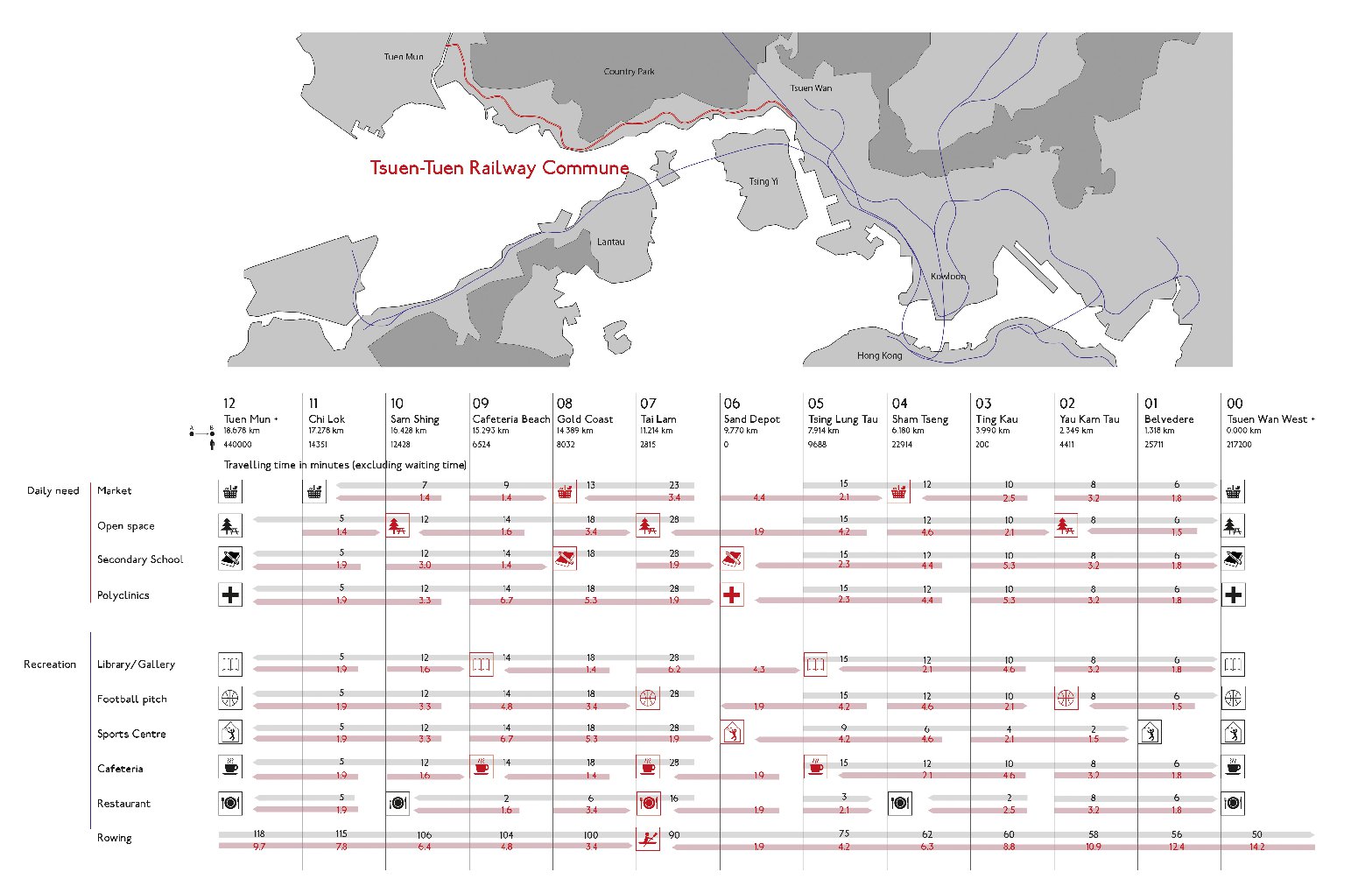
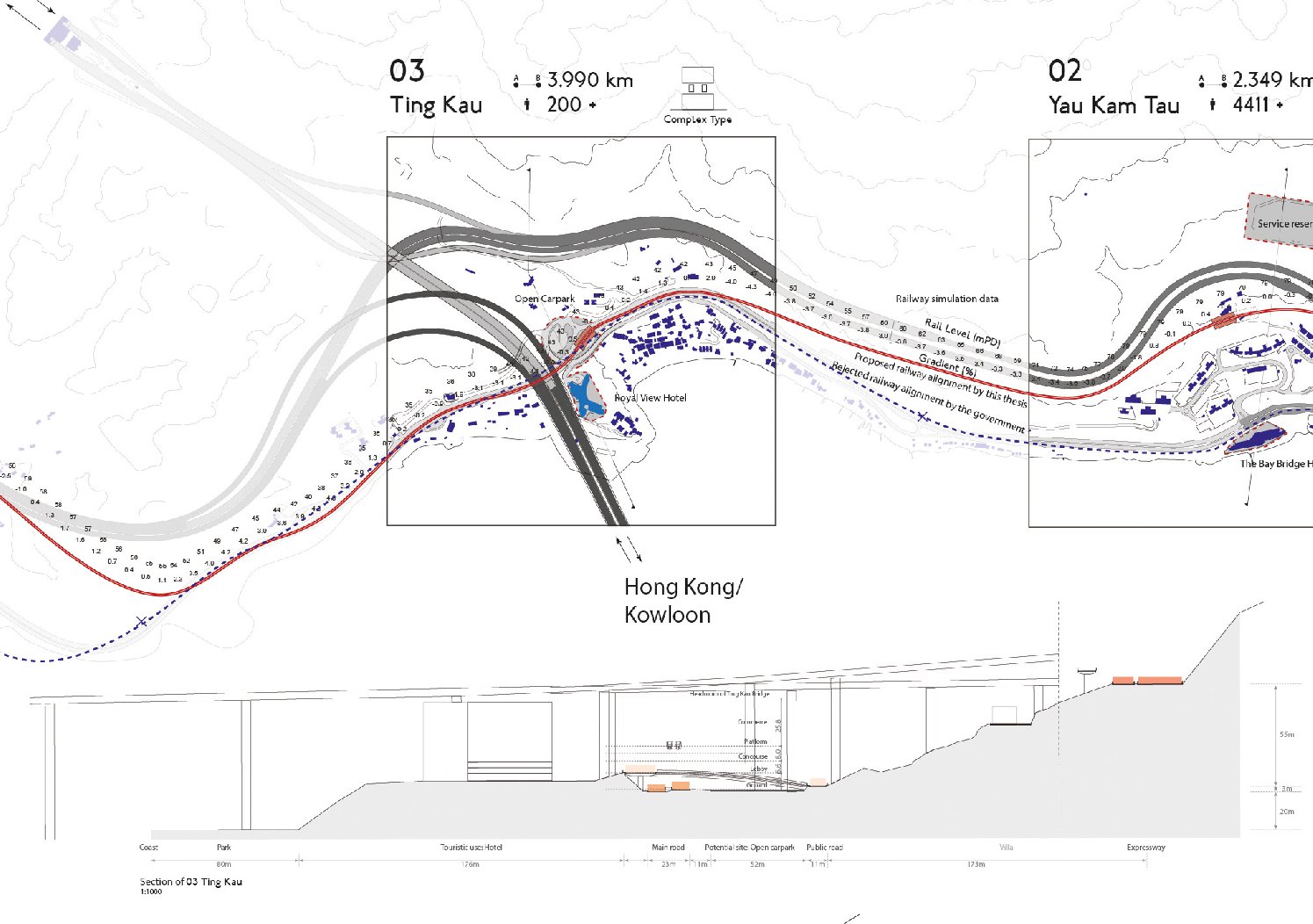
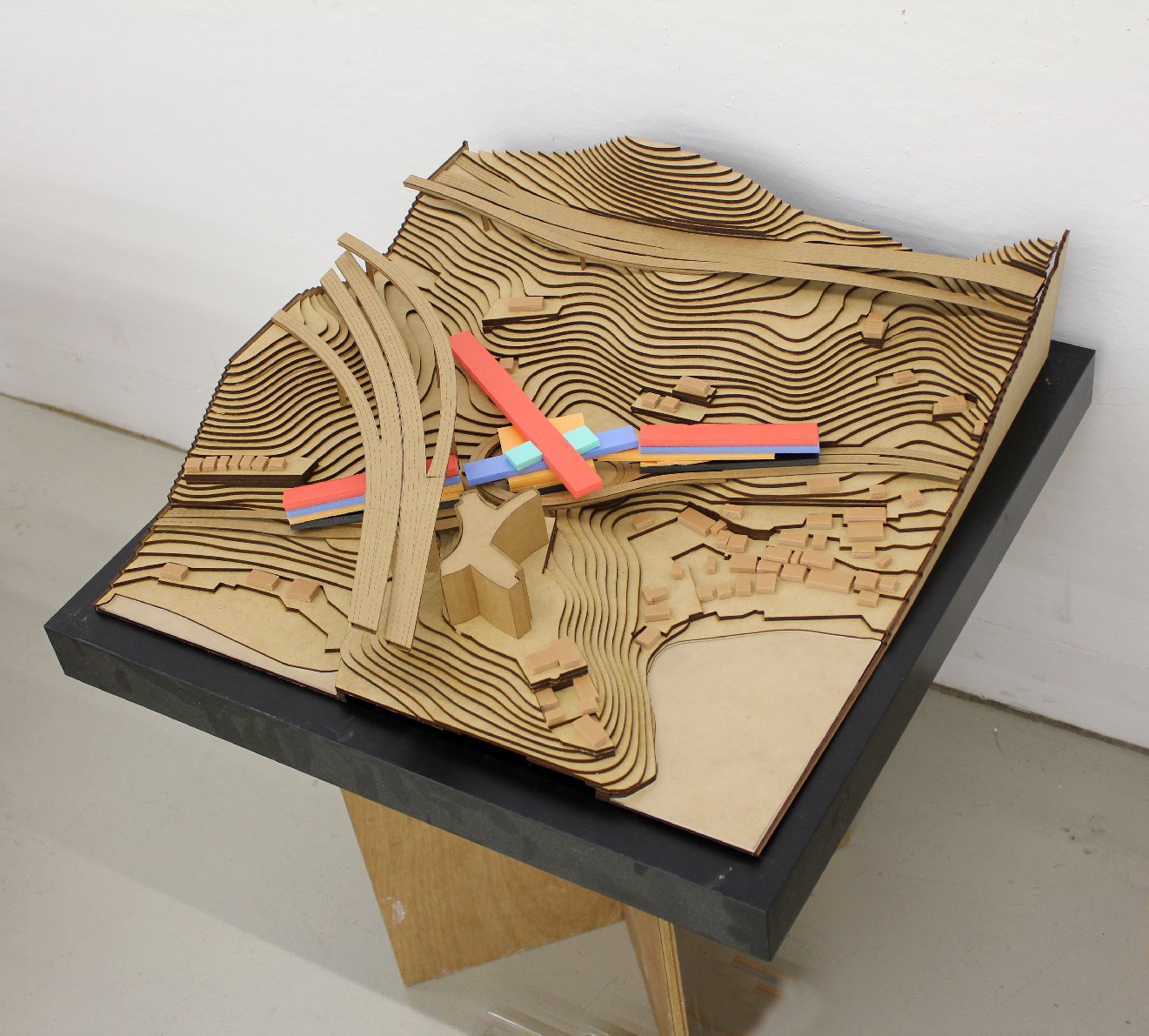
The thesis test case is along the proposed Tsuen Wan-Tuen Mun rail link in Hong Kong. Tsuen Wan and Tuen Mun are the first new towns developed for the refugee population boom after 1950, which are now very developed. Between these two new towns, there exist isolated medium density residential developments but meanwhile leave some gaps revealing mountains and coasts. I would call the alternating appearance between human artefact and natural landscape as “urban fringes”. Daily traffic congestion and commute pattern along the strip reflects the substantial demand to massive railway transport between the two towns. The government’s consultants studied the feasibility in 2012 using the conventional MTR development model to estimate. The conclusion was high technical difficulty, high cost, no foreseeable population increase to sustain and adverse effect on the pleasant rural environment. The proposal was rejected in 2014. The report ruled out the possibility of conventional railway, which makes the site more suitable for studying railway alternatives: Lighter train such as monorail is more flexible and capable of mitigating the rough topography. The substantial height variation along the site creates a great potential to sectionally re-design the circulation and urbanism of stations as well as embracing the natural landscape. This project will identify the characteristics along the site and design new typologies for railway-integrated architecture. How?
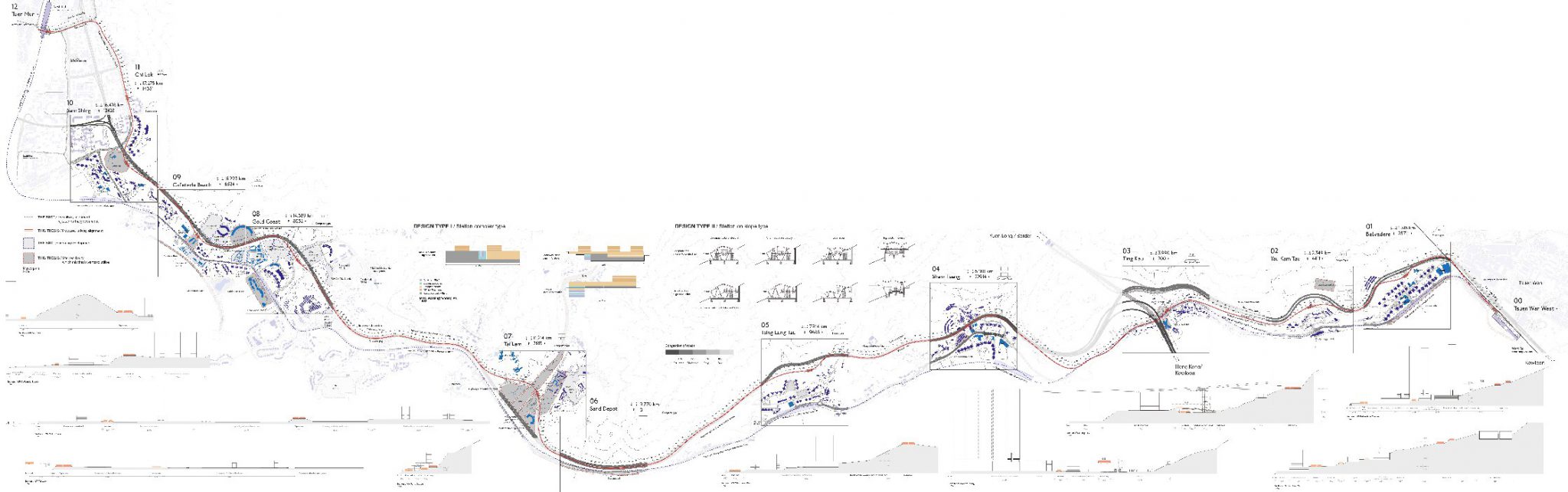
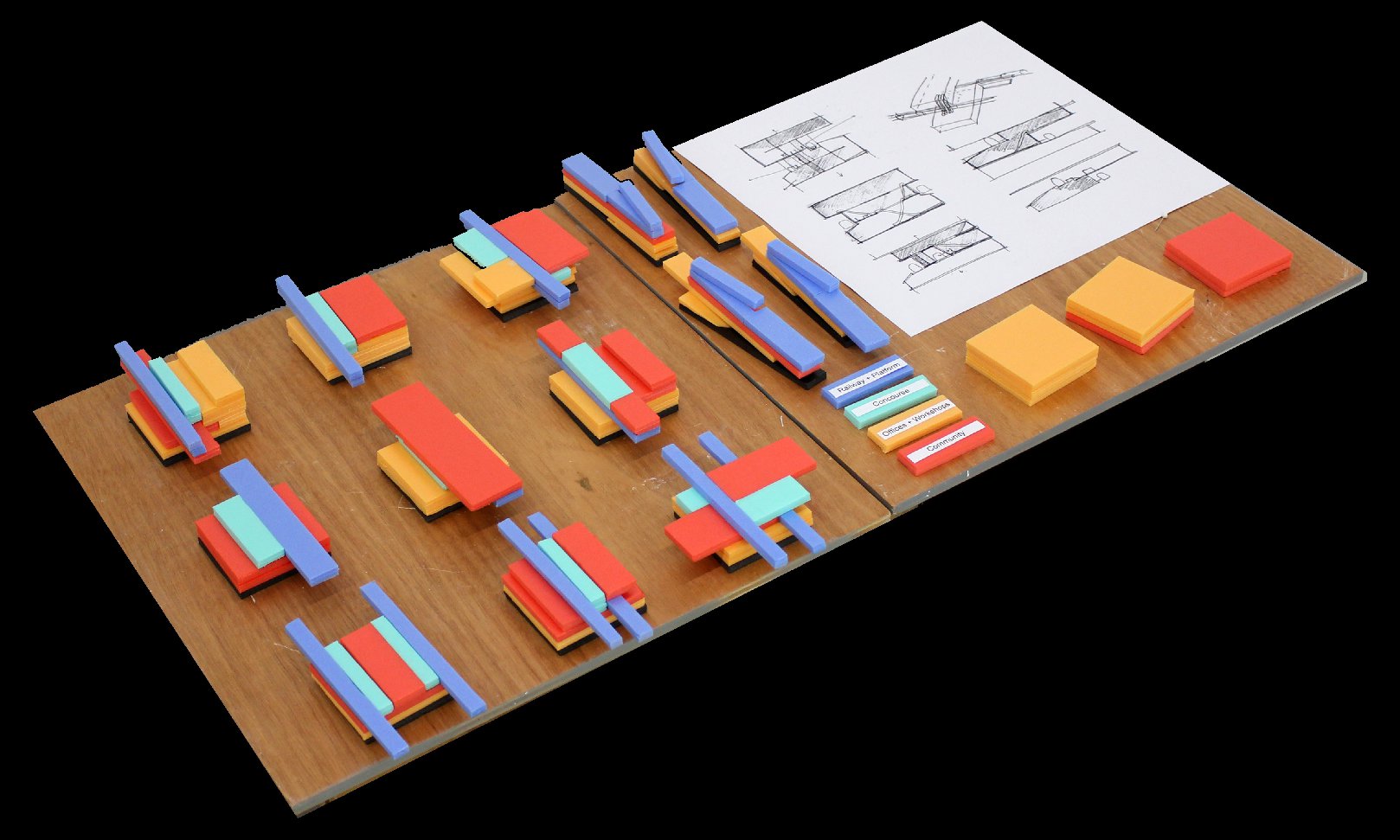
This methodology of this thesis is to make a series of sections along the whole line, which will reveal the site peculiarity in terms of topography and current land use, and to design the intervention of the new station. This series will hopefully become the master-section to demonstrate the concept of integration of railway into the site.
Bibliography Historical theories Transport Technical manuals Precedent projects |