The Informal City
|
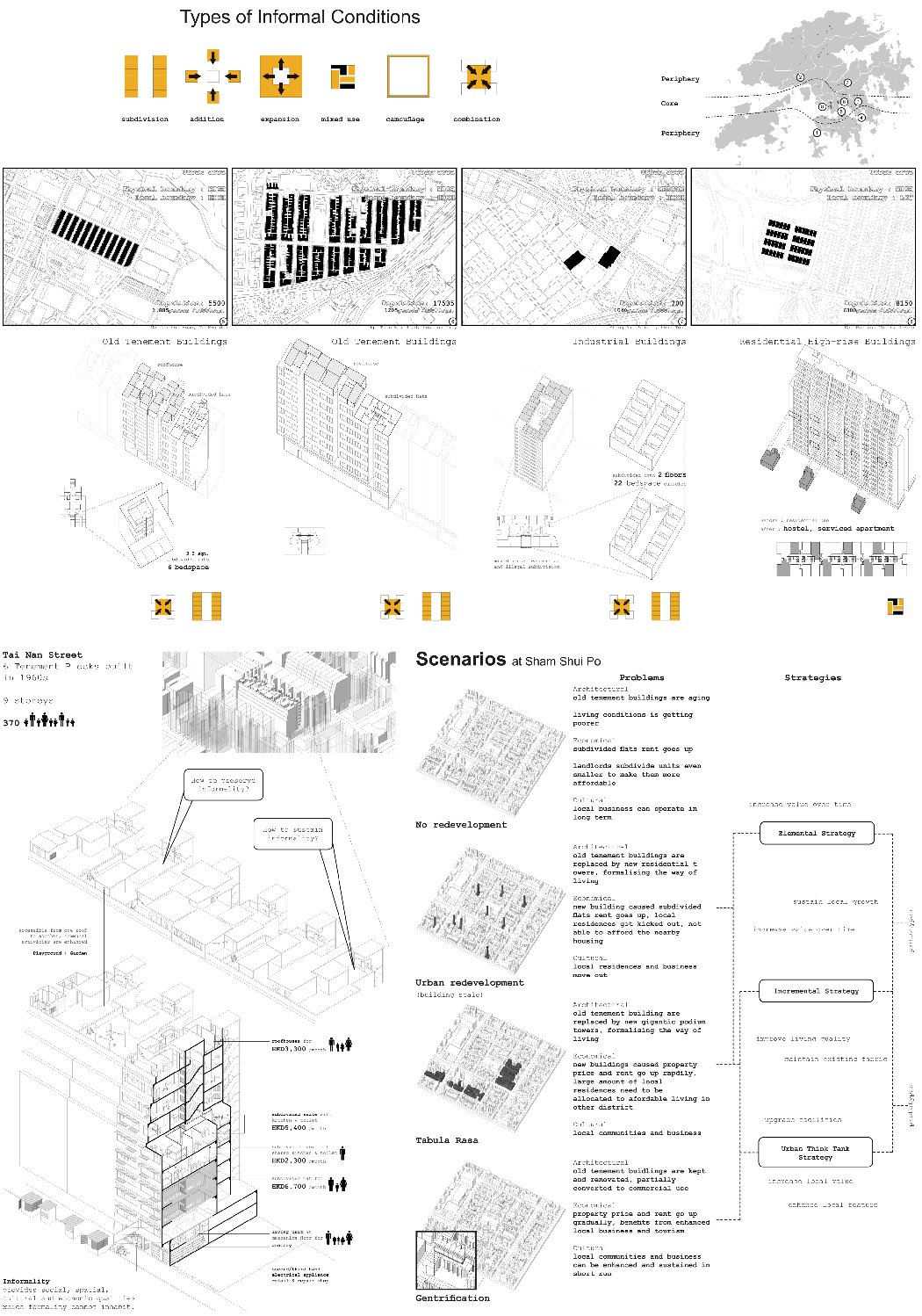
Since the rule of the British government, the population of Hong Kong has been increasing and high density living has become one of the iconic characteristics of Hong Kong. During late 1940s, there was a large influx of immigrants from mainland China to Hong Kong due to political turmoil, which resulted in the sprawling of squatter huts to accommodate the large group of immigrants. The fire at Shek Kip Mei squatter broke out in 1953 has urged the government to integrate public housing scheme to address the pressure on housing. However, the government could not cope with speed of population growth at that time so squatter settlements became a kind of informal living without physical and legal boundaries.
Since then squatters have been gradually demolished due to the implementation of government housing policy, but the public housing supply has never been sufficient. Since 1980s, informal living has been evolved drastically in urban area because of economic advantages, rooftop houses and subdivided units started to expand in post-war tenement buildings. This has created high dense living conditions resulted in lacking of sunlight and cross ventilation, which eventually brought up to a public concern about the poor living environment. Old tenement buildings have no corporate owner committee, no management office and no security. Landlords have been taking advantages by continually raising the rent of subdivided units. Although this is the case, such degree of informality provides social, spatial, cultural and economic qualities which formality cannot inhabit.
Informality in Hong Kong is socially constructed and is a pattern of behavior that the formal system defines as being somewhat different from its own ways. The argument here is criticizing whether the formality approach by itself is capable of reproducing a better way of living.
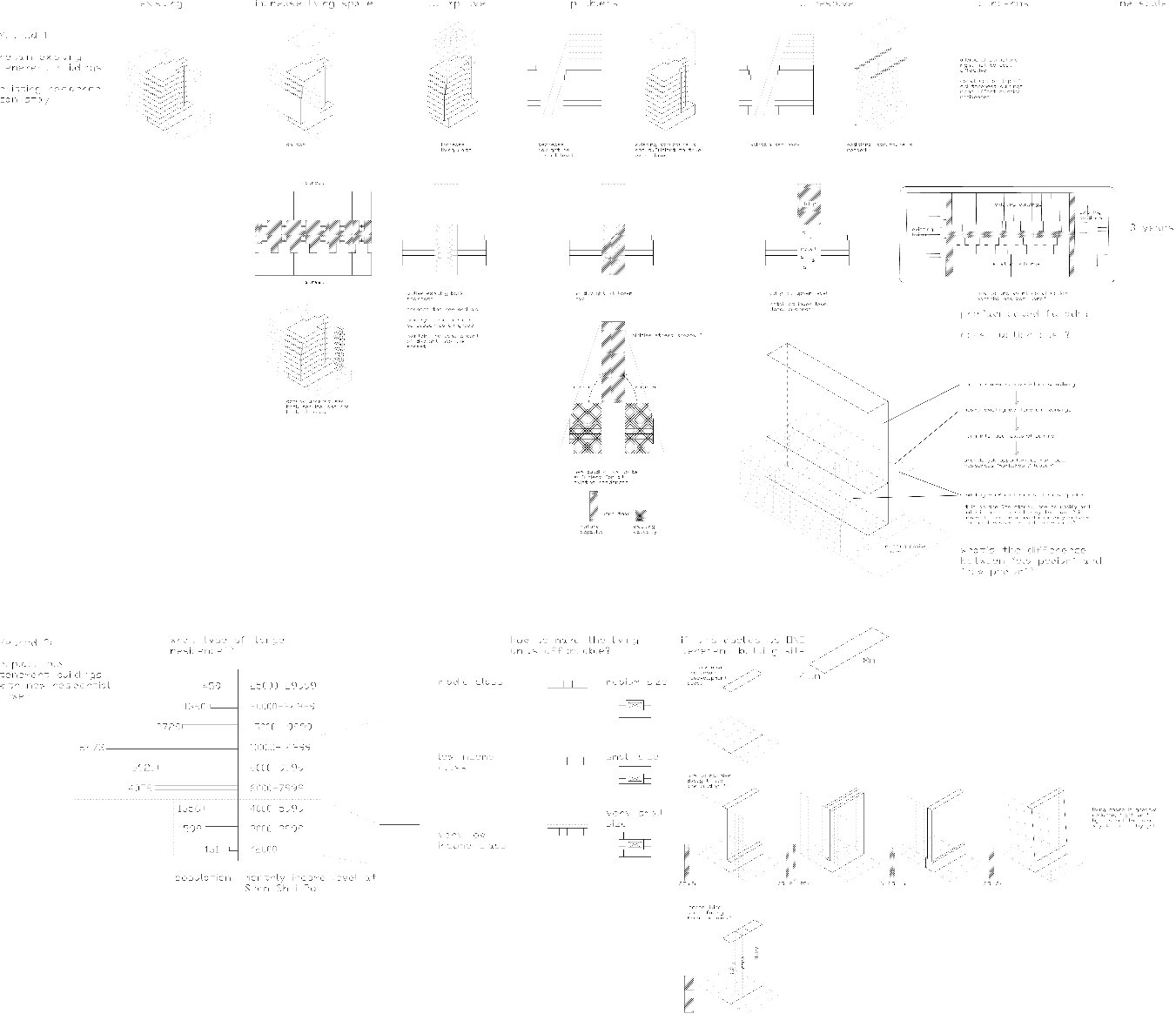
Test the limit of formality associated with certain class of informalities such that the essence of the varieties of habitations can be enhanced. |