|
CCHU 9023
SHAPING
THE LANDSCAPE A Quest for Harmony between
Nature and the City |



|
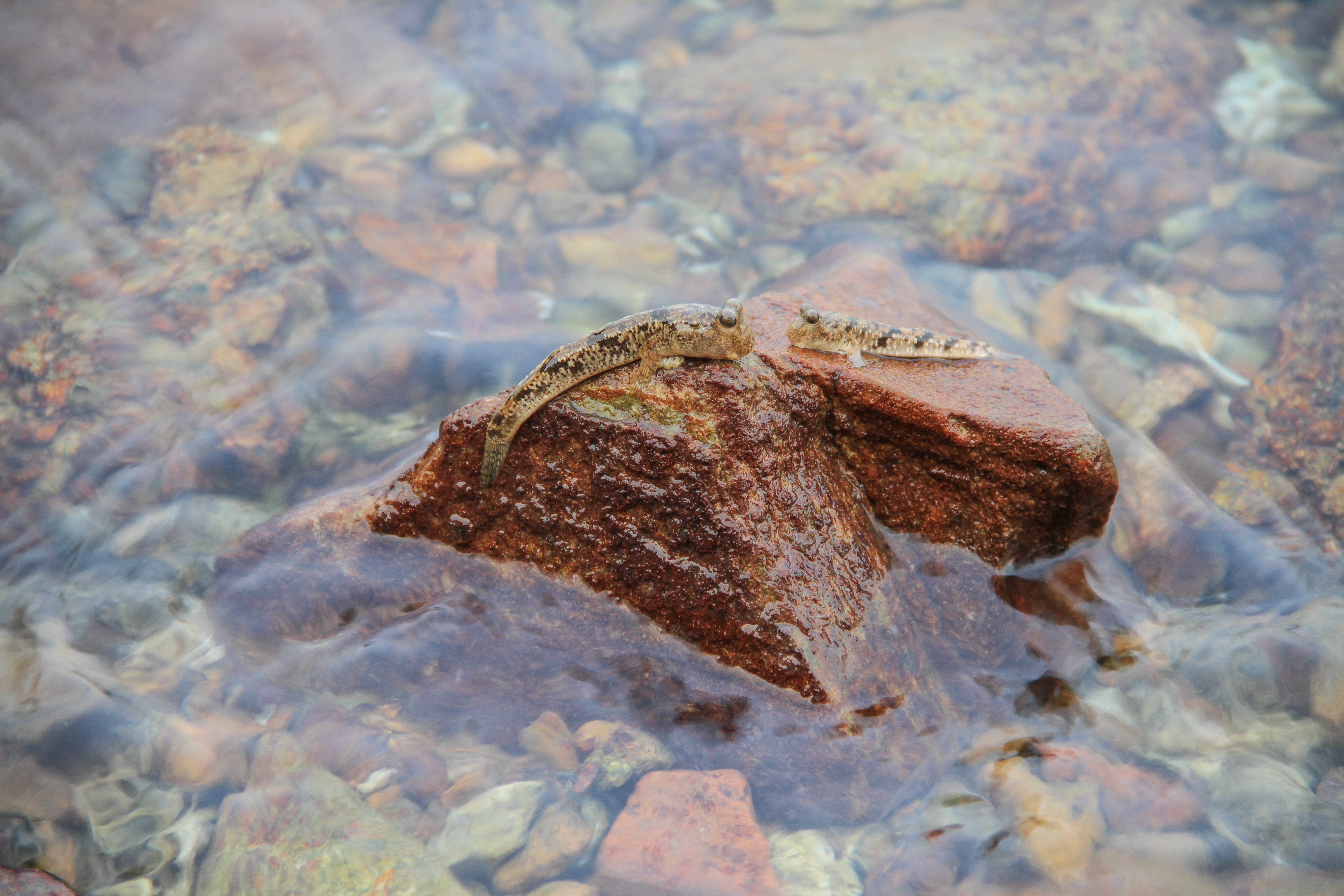

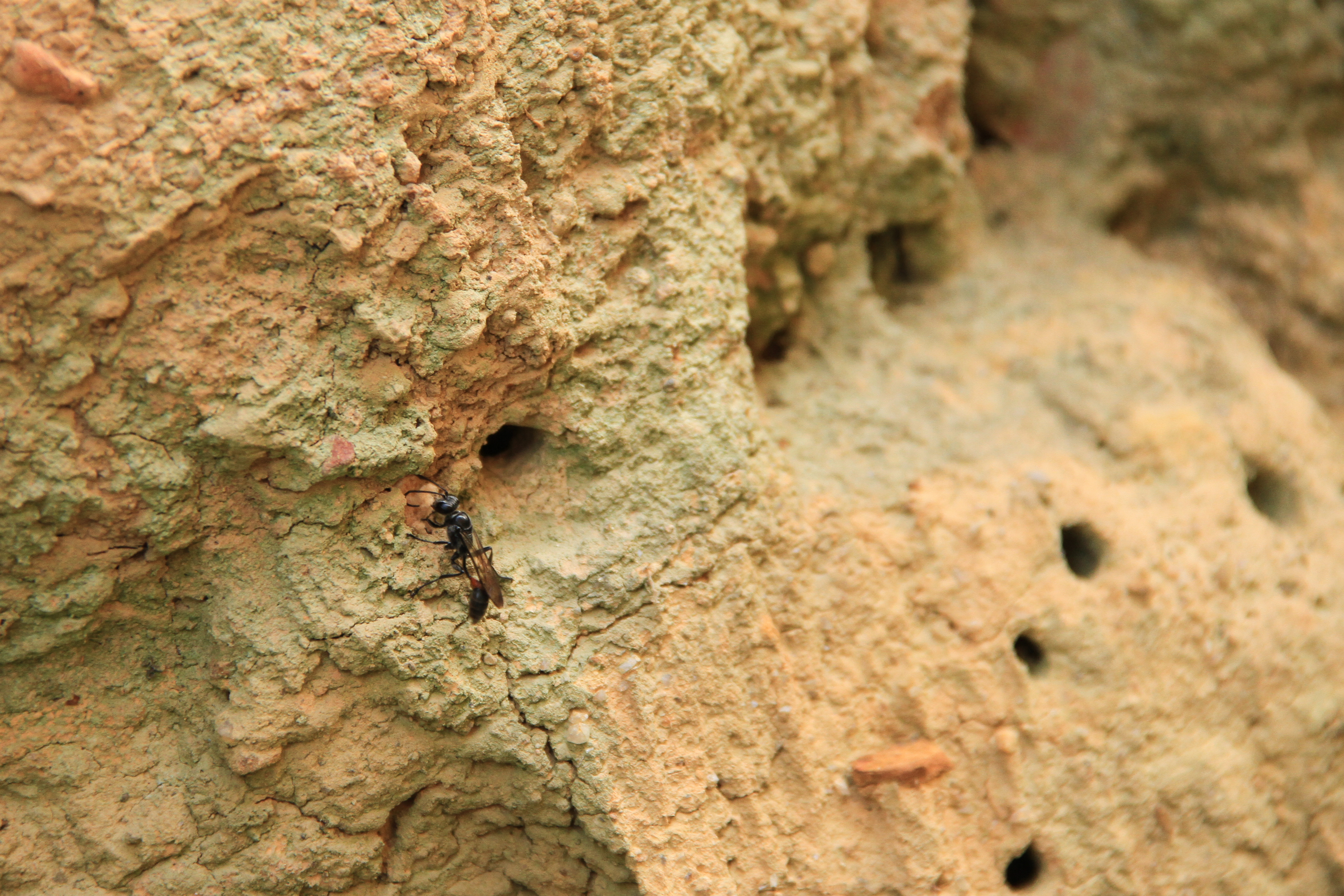
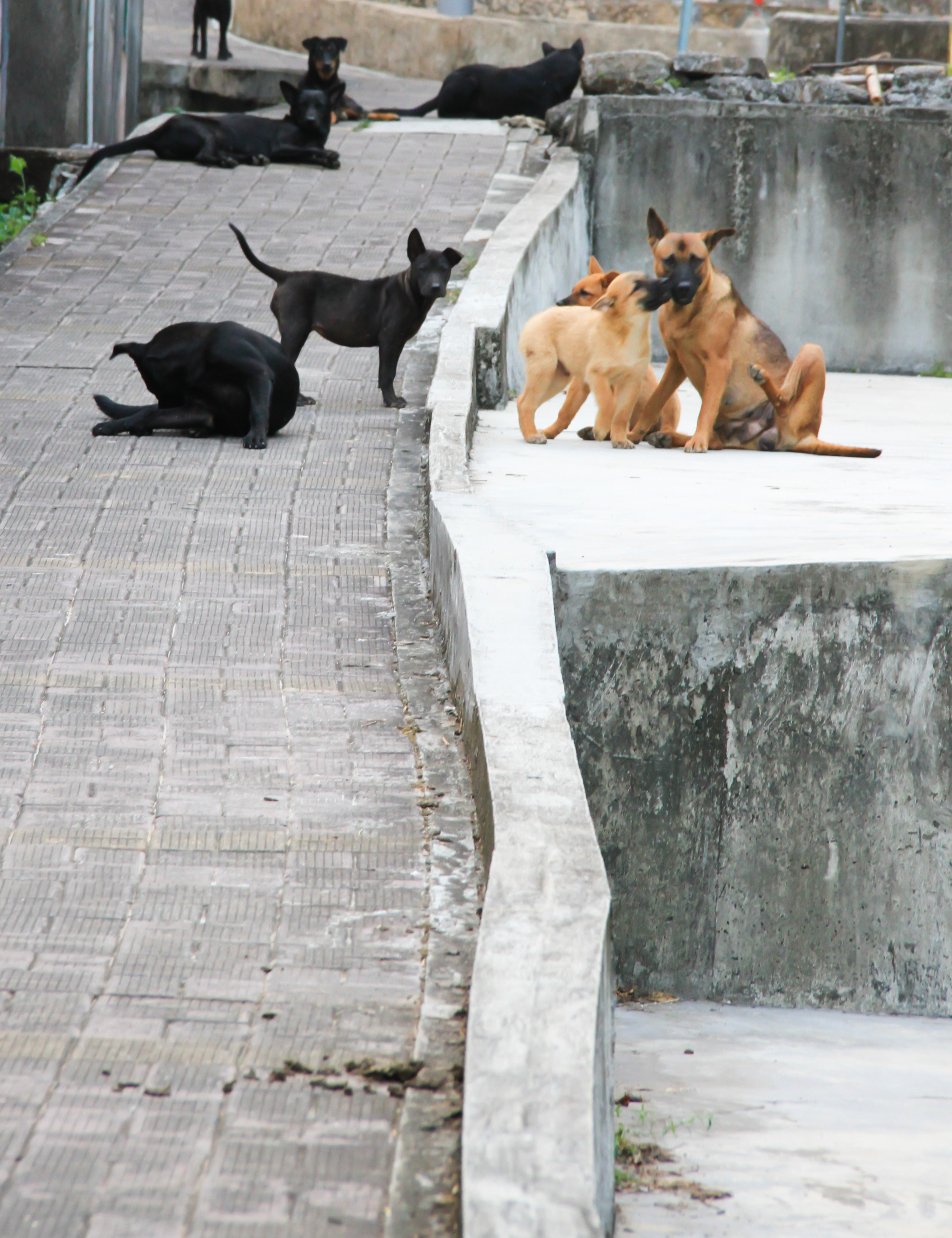
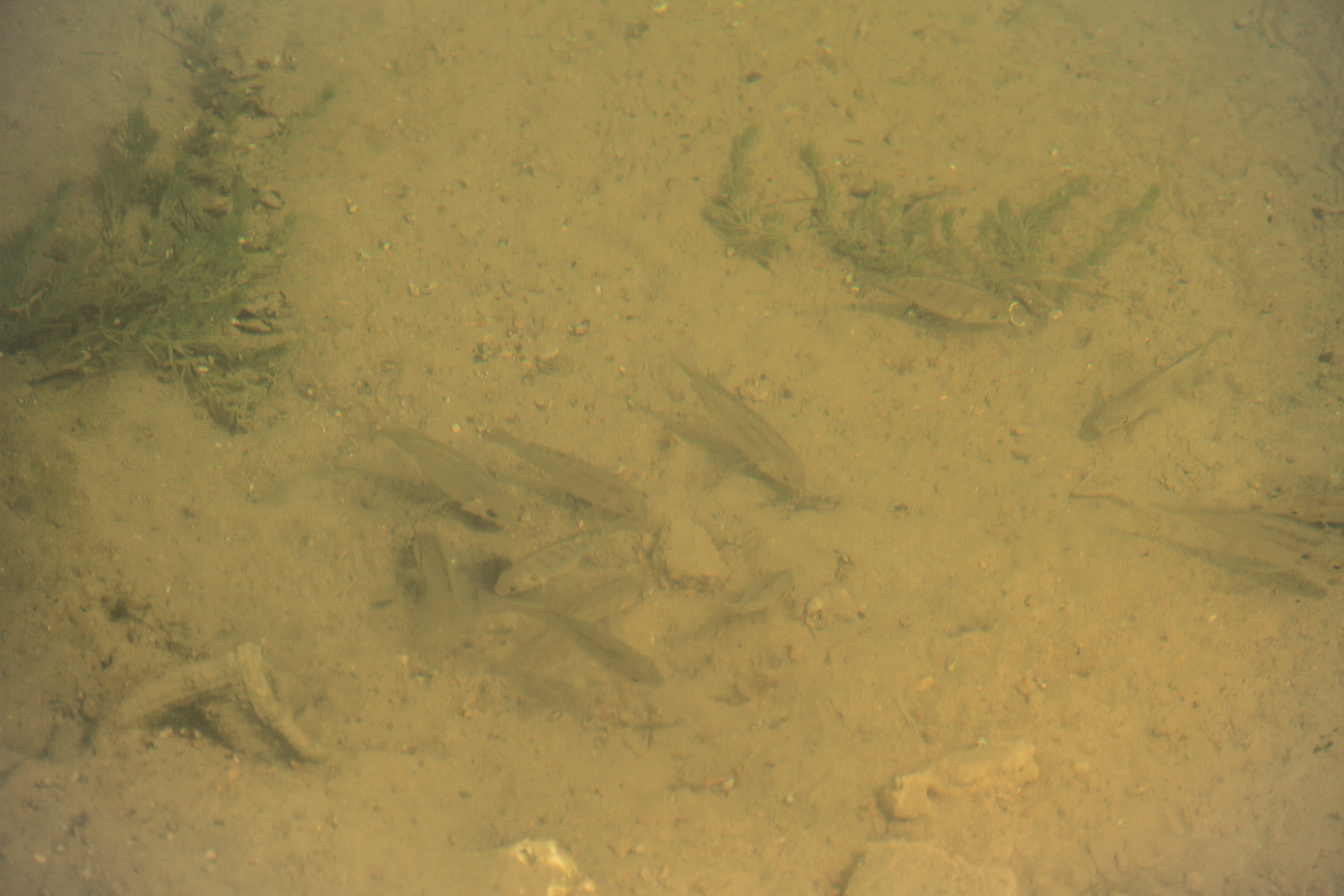
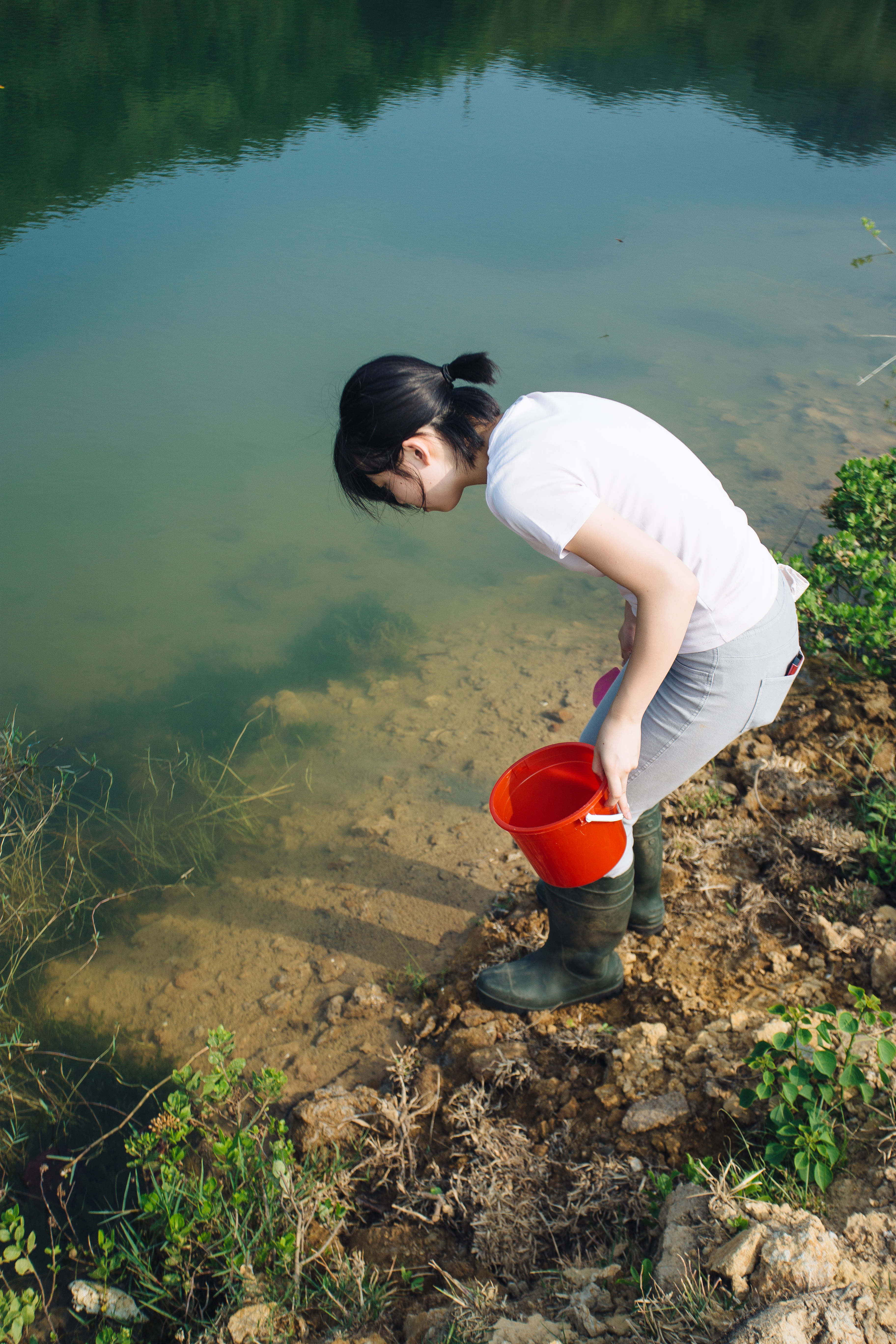
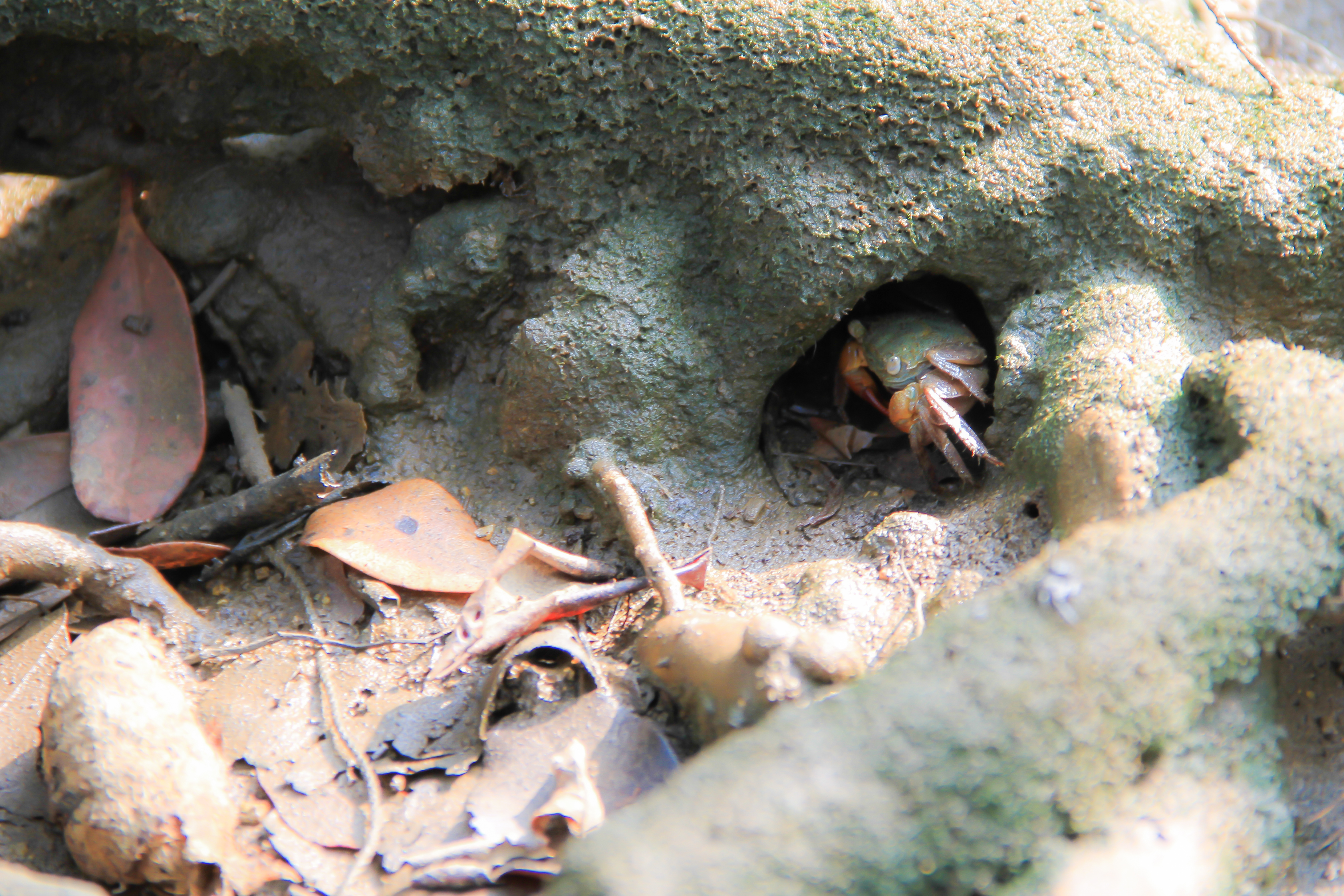
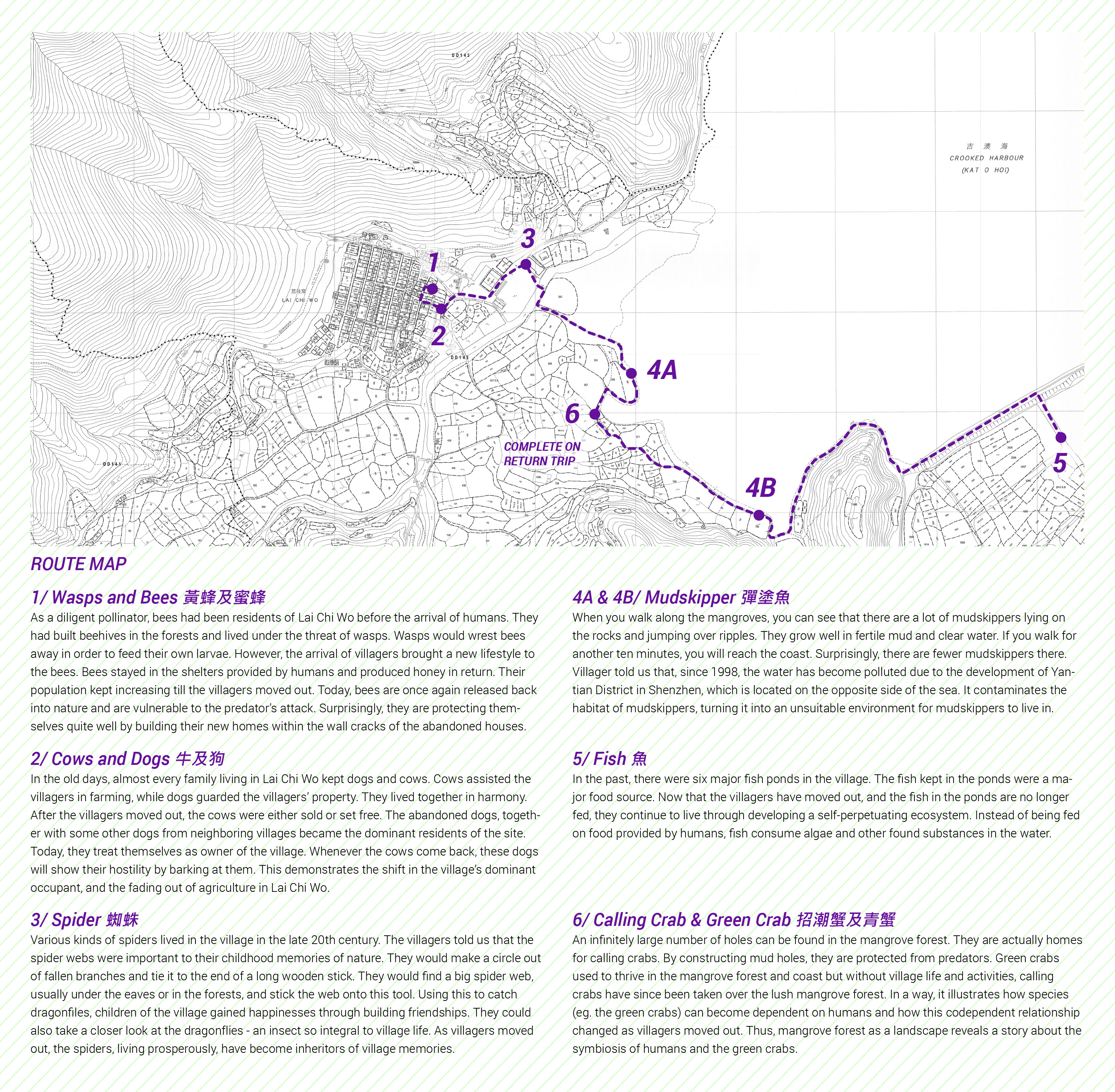
Animals can tell us a lot about a landscape. In one respect, animals make their impacts and physical markings as they roam around, eat, and rest. They are the actors that shape the landscape, and the landscape itself is the agent to reveal these processes For instance, footprints or patchy grasslands reveal cow’s grazing habits. In another respect, animals can be understood as indicators of the environment they inhabit. Certain conditions such as the presence of water or shelter attract specific kinds of animals to breed and feed there. For example, infestation of mosquitoes can indicate stagnant water, while presence of foxes and bugs can indicate agricultural fields at site.
Putting on the lens of a landscape observer, we begin to understand the stories that animals can tell about the land, the site and its qualities.
Animals are important to the landscape of Lai Chi Wo, not only because of their diversity and quantity, but also their indispensable roles in the ecosystem. Among the various animal species found in Lai Chi Wo, we chose to focus on nine of them (namely, wasps, bees, cows, dogs, spiders, mudskippers, fish, calling crabs, and green crabs) and learned six interesting stories. These stories have changed our understanding of how animals interact with their ecological environments and human society. Through presenting these stories, we attempt to illustrate such complex and dynamic relationships as well as otherwise untold narratives.
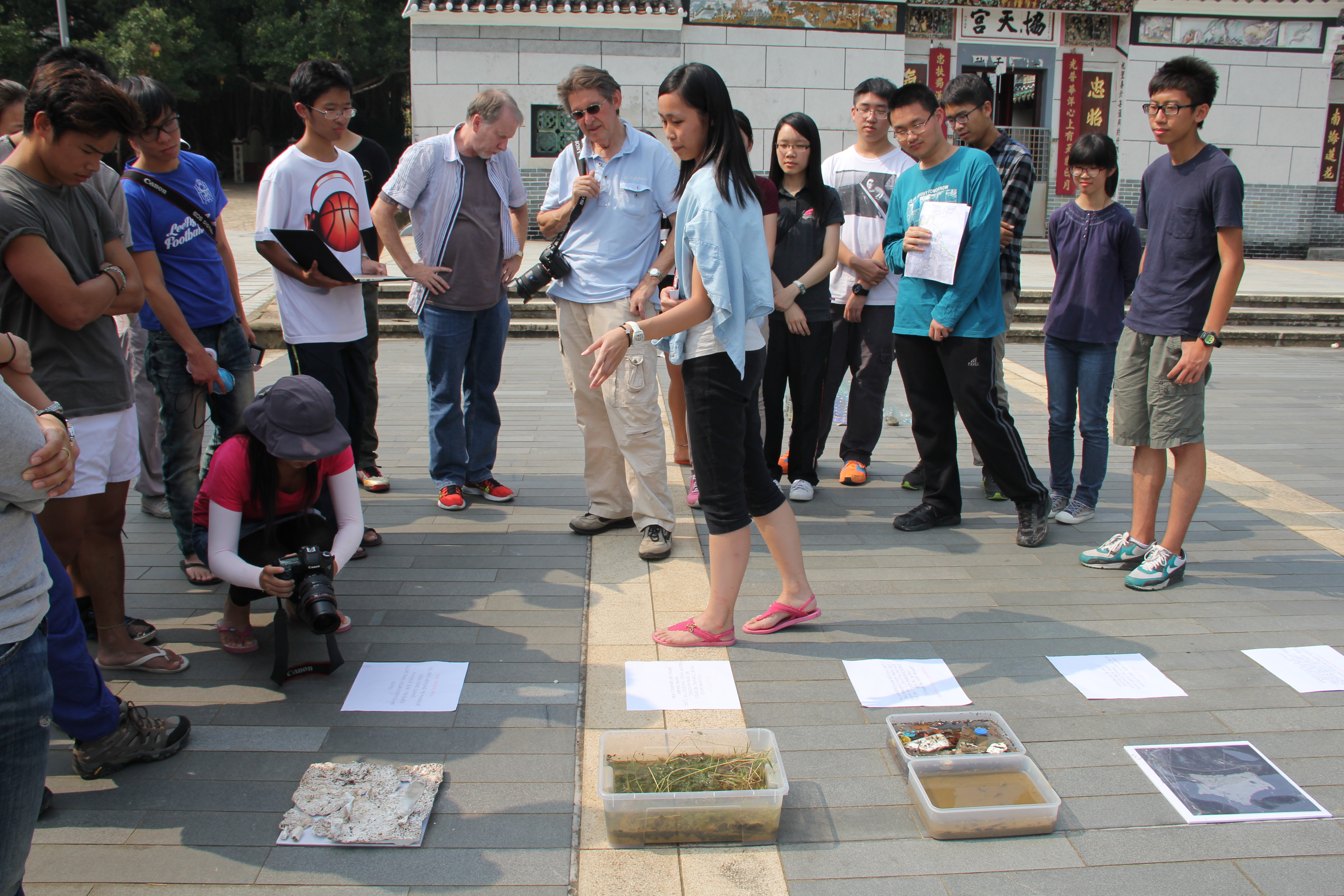
Tracing the stories of animals is the theme of our project. The art installation is based on the integration of the traces of these multiple stories. These stories form a three-way relationship among animals, human, and the landscape. This three-way relationship is metaphorically illustrated through combinations of three artistic elements and medium - physical, digital and literary materials. To coordinate the interconnection between stories and elements, the concepts of ‘transition’ and ‘contrast’ are adopted in our art installation.
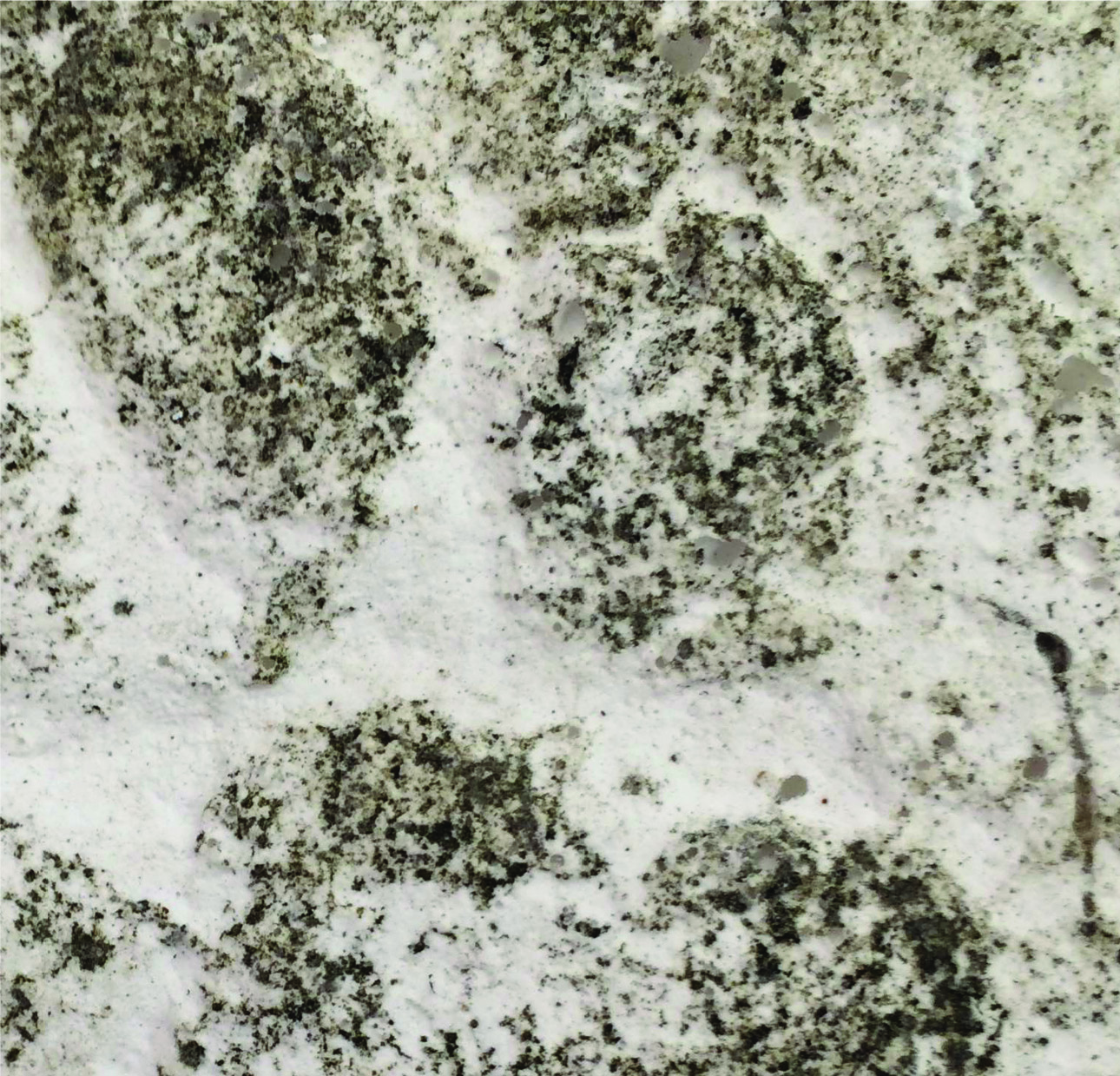
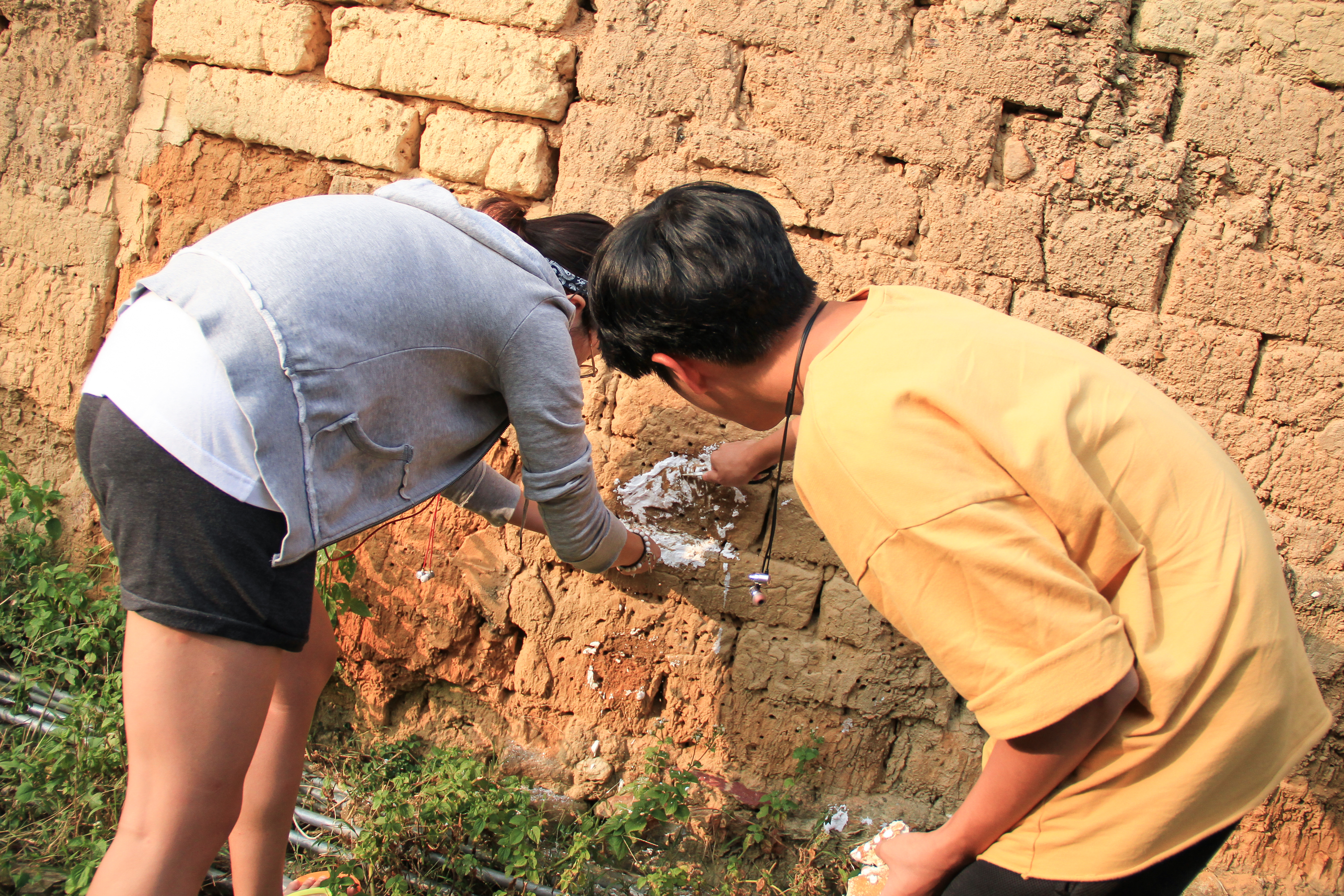
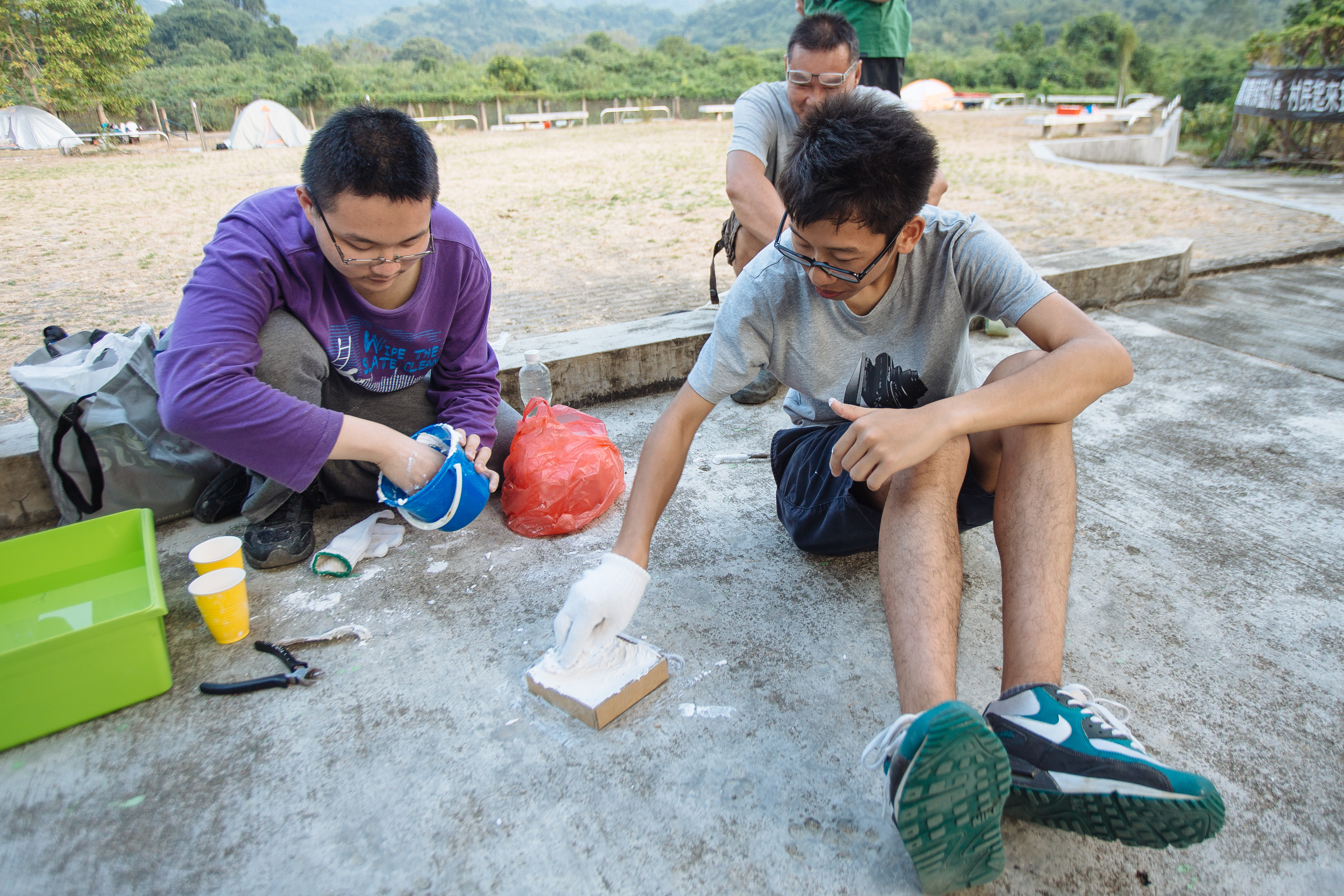
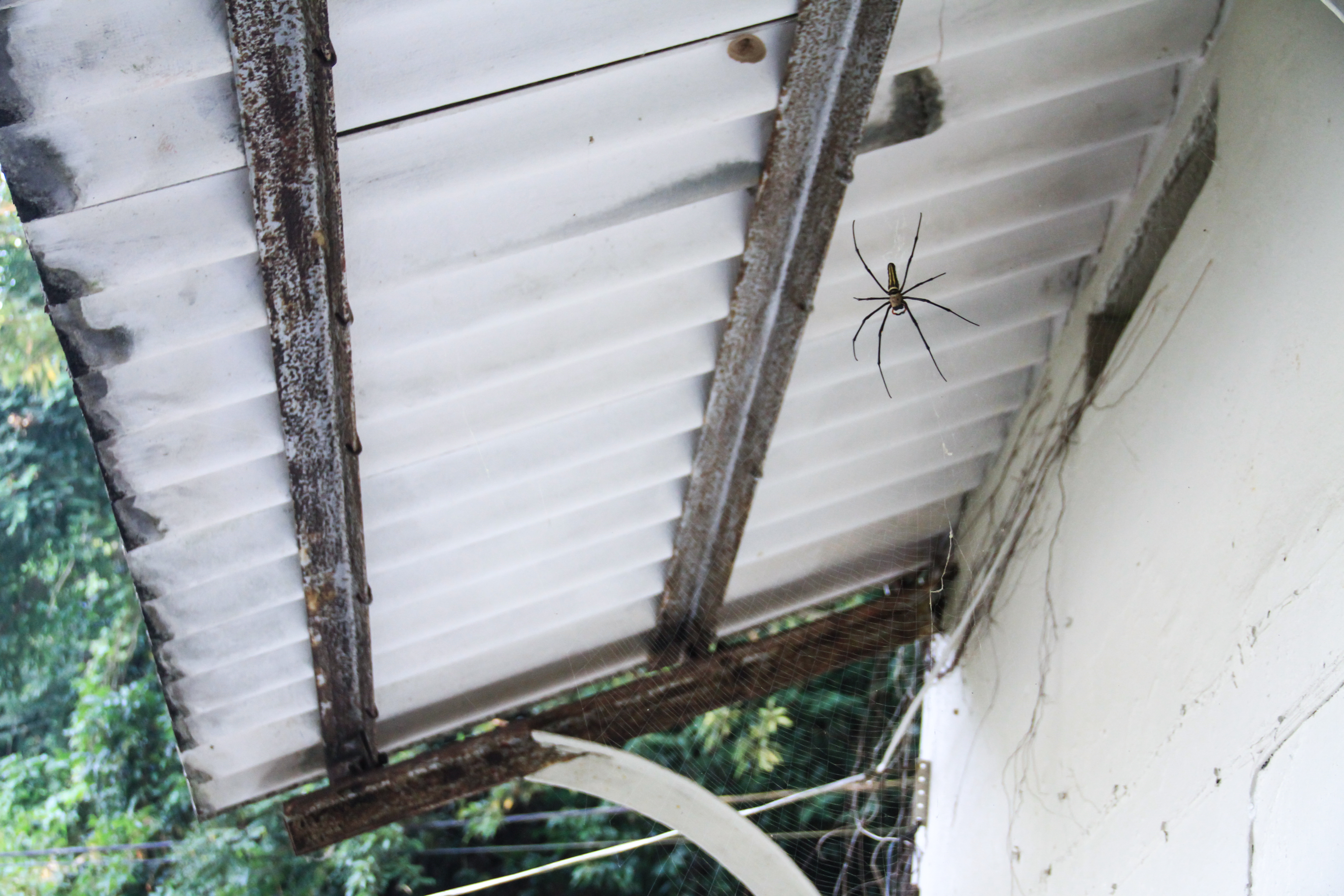
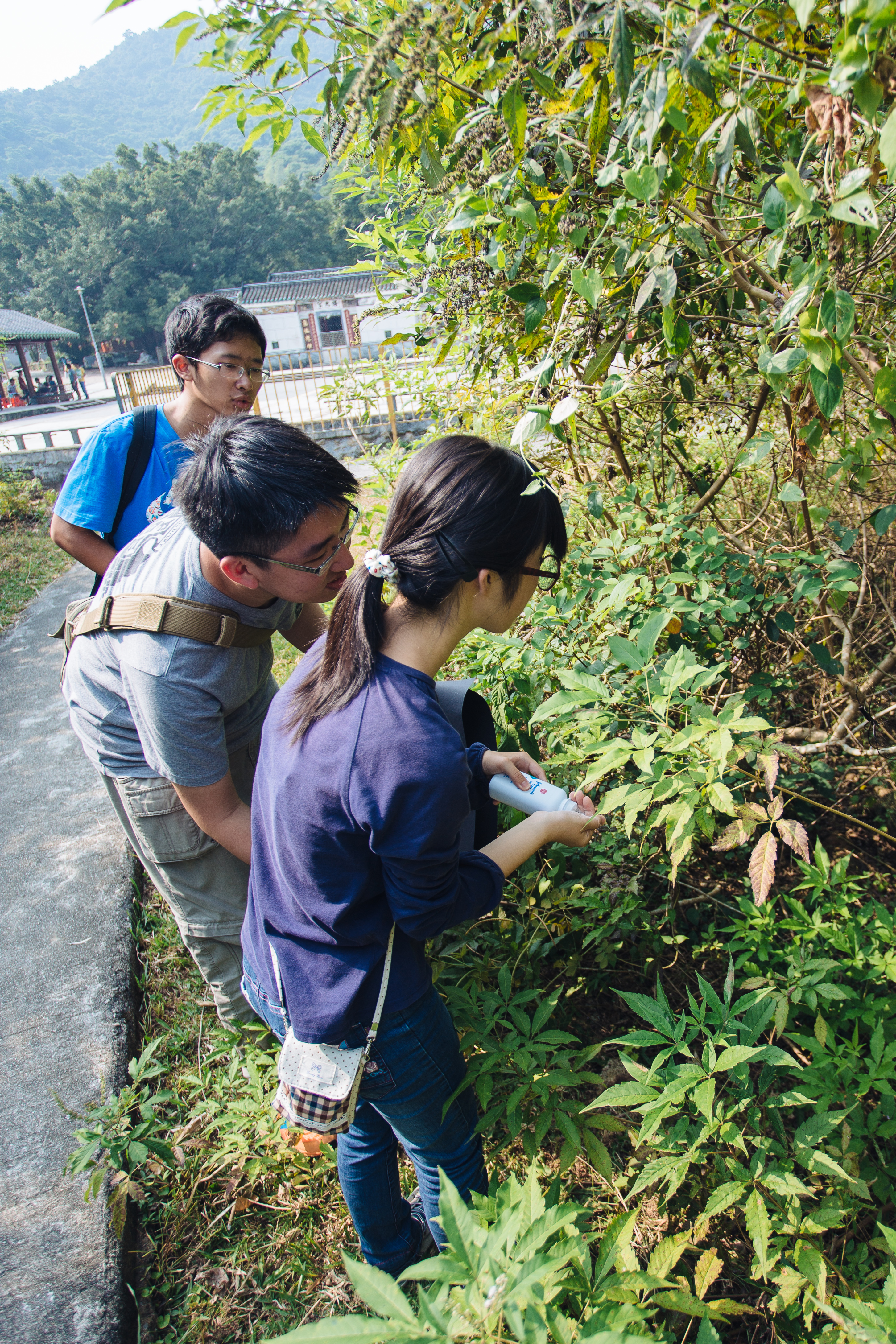
The physical materials offer opportunities for close-up examination of the animal traces. The main technique we used was plaster casting, through which the presence of the animals are vividly recorded. Cast can give us not only a direct evidence of their existence, but also a sense of tactility. Moreover, on-site sampling was also conducted. A spider web was included in the work to serve as a reminder of childhood memories.
The digital materials, including photos and videos, project a concise snapshot of the story. Land art is site-specific. Without the experience of being immersed in the site, digital media is the best media to portray the animals and their habitat. In addition, digital media also acts as an alternative to record the on-site sampling.
As animals cannot speak, literary materials are used to let the animal tell their own stories. Inspired by the poetic text of Richard Long, six connected stories are presented from the perspectives of the animals.

