|
CCHU 9023
SHAPING
THE LANDSCAPE A Quest for Harmony between
Nature and the City |



|

Water is the origin of life that nurtures all civilizations.
River meanders on land with power and energy, shapes the landscape, marks passage of time and change. Destructive power of flood, thunderstorm, and heavy rain show no mercy to human standing in awe. Water makes culture through practices of agriculture and cultivation. In social and cultural senses, water can be ‘sacred substance, life, refreshment, contaminant, grave’ (Helmreich 2011) depends on its state and scale.
Water is a living sculptor itself. It comes and goes. It slips through and has nothing to hold on to. But we always try to capture, visualize or solidify its elusiveness.
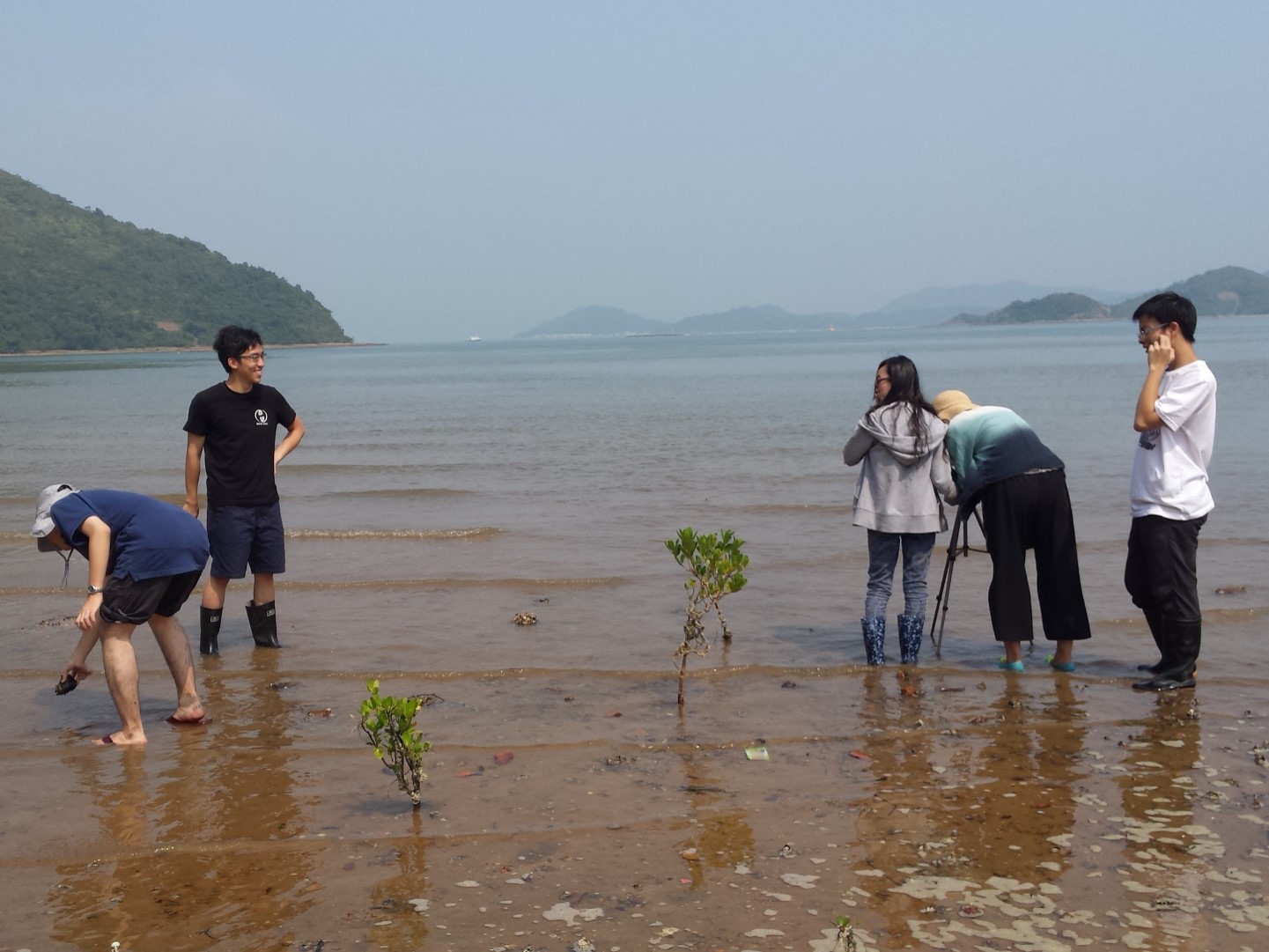
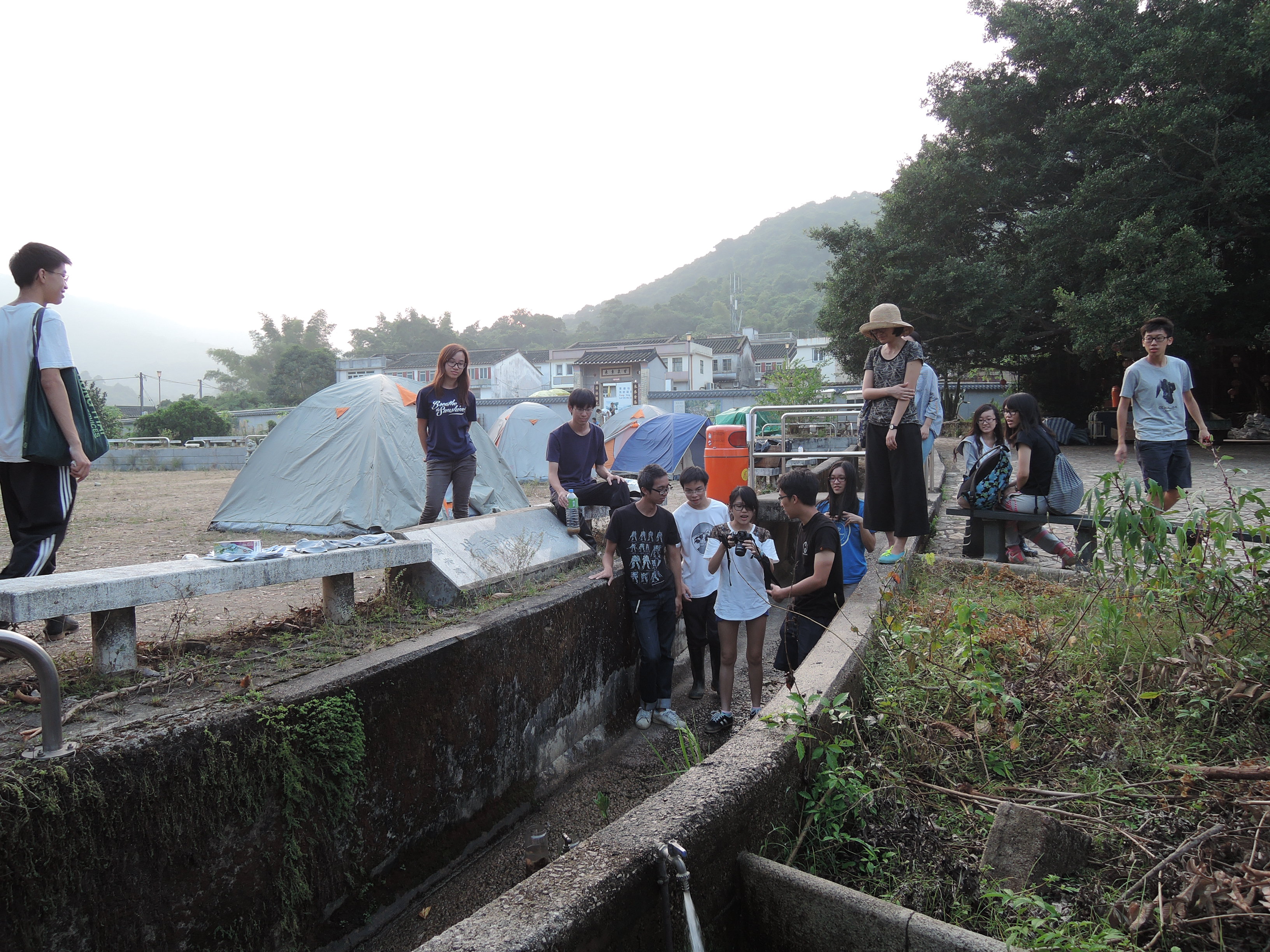
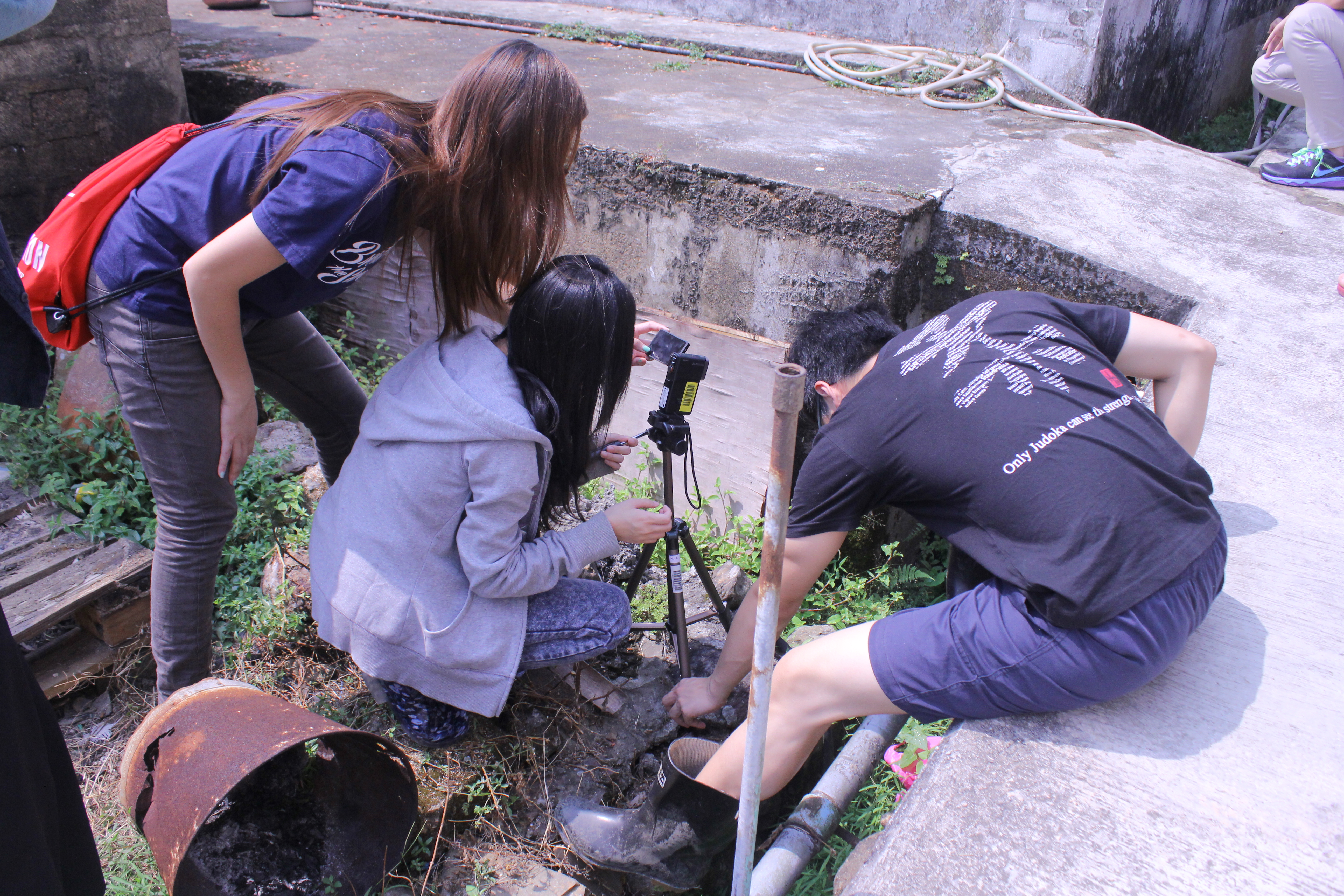
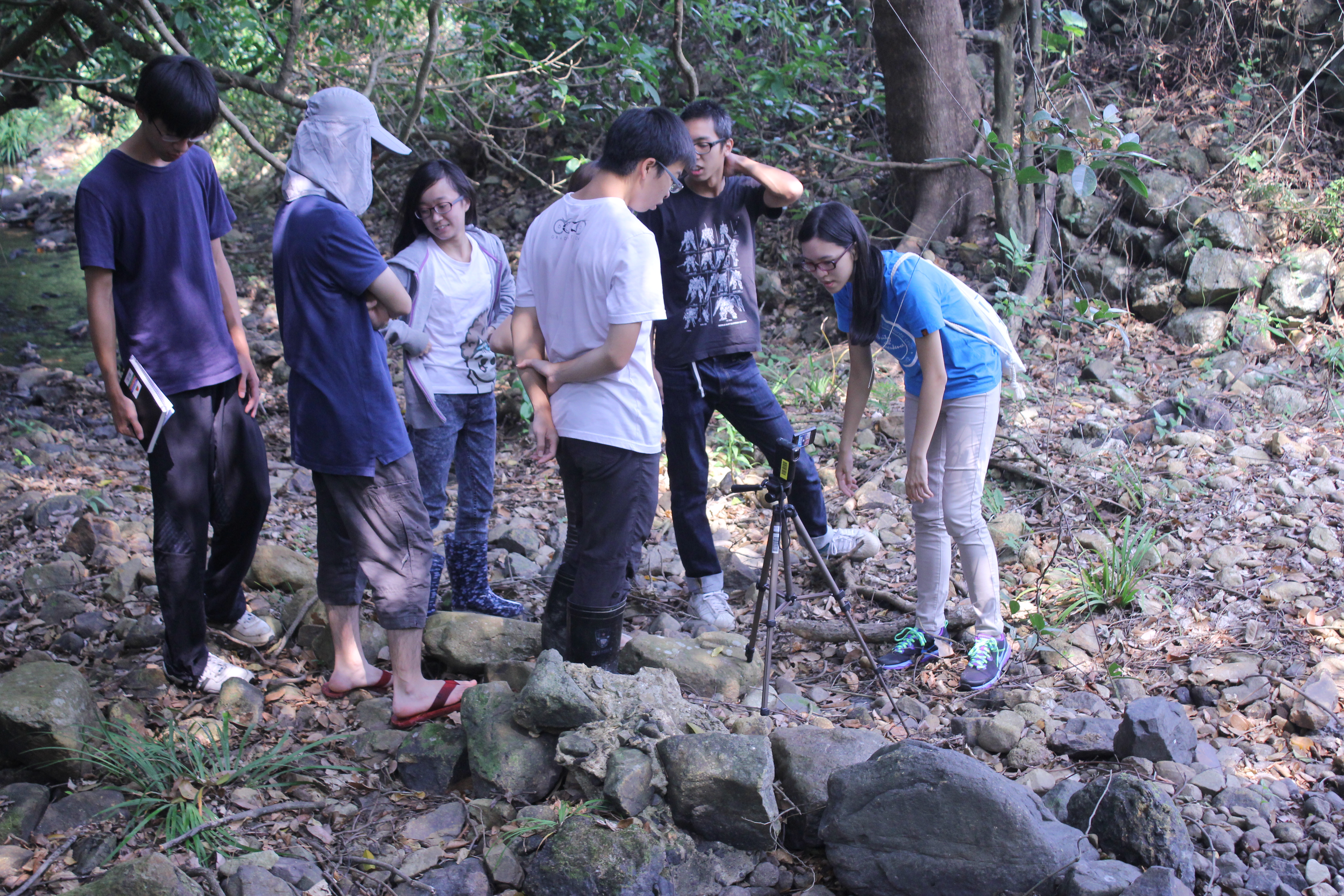
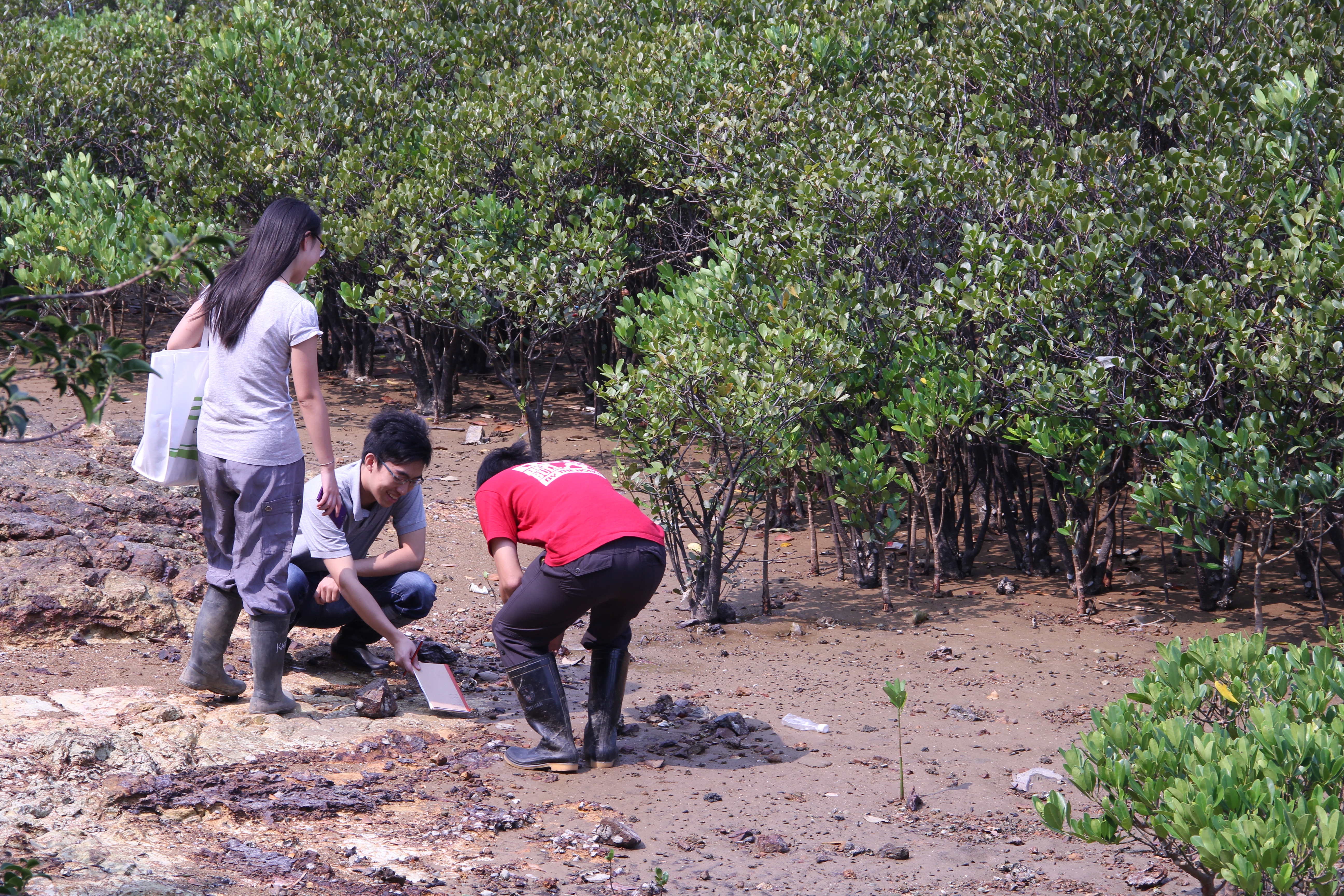
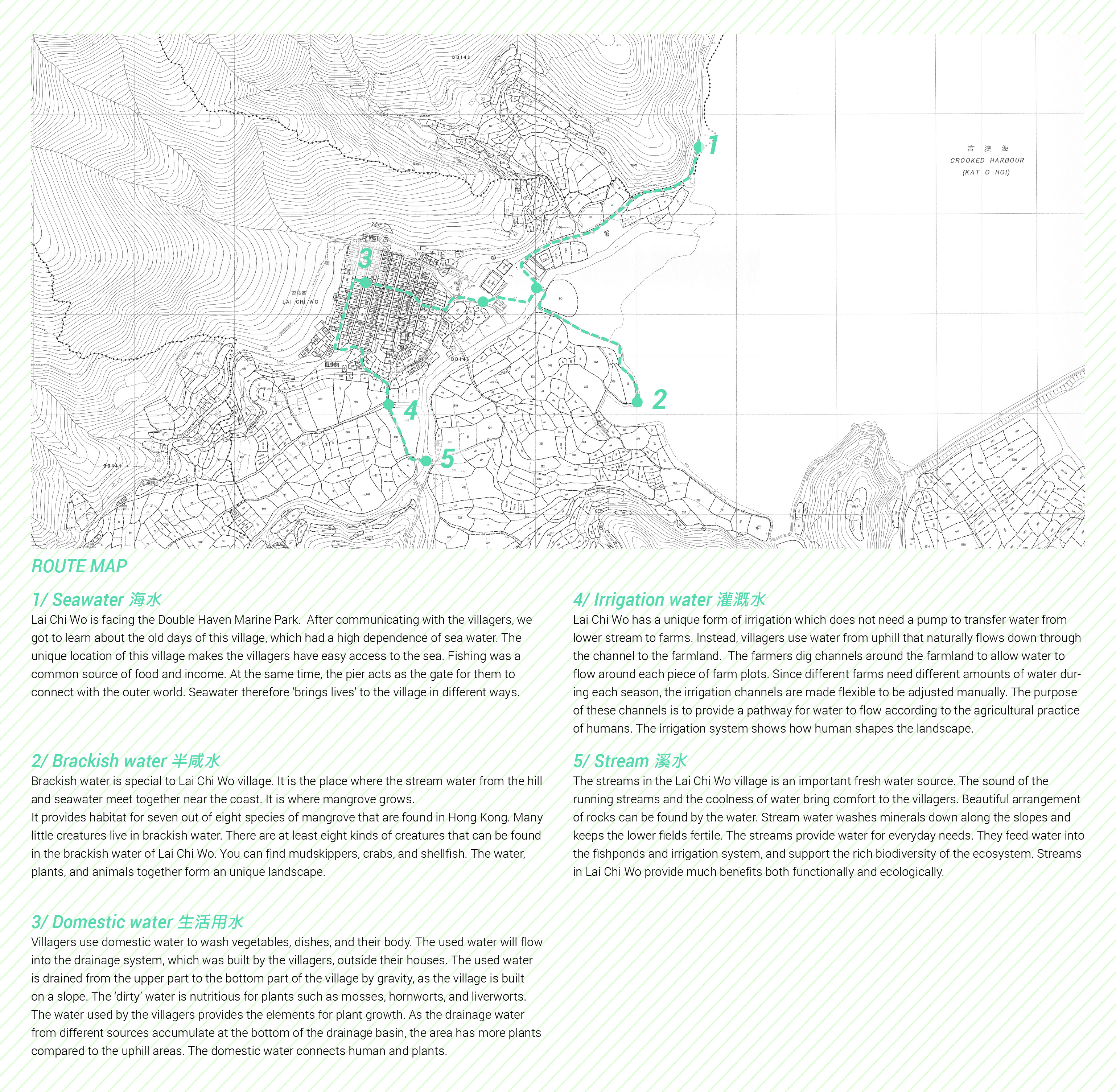
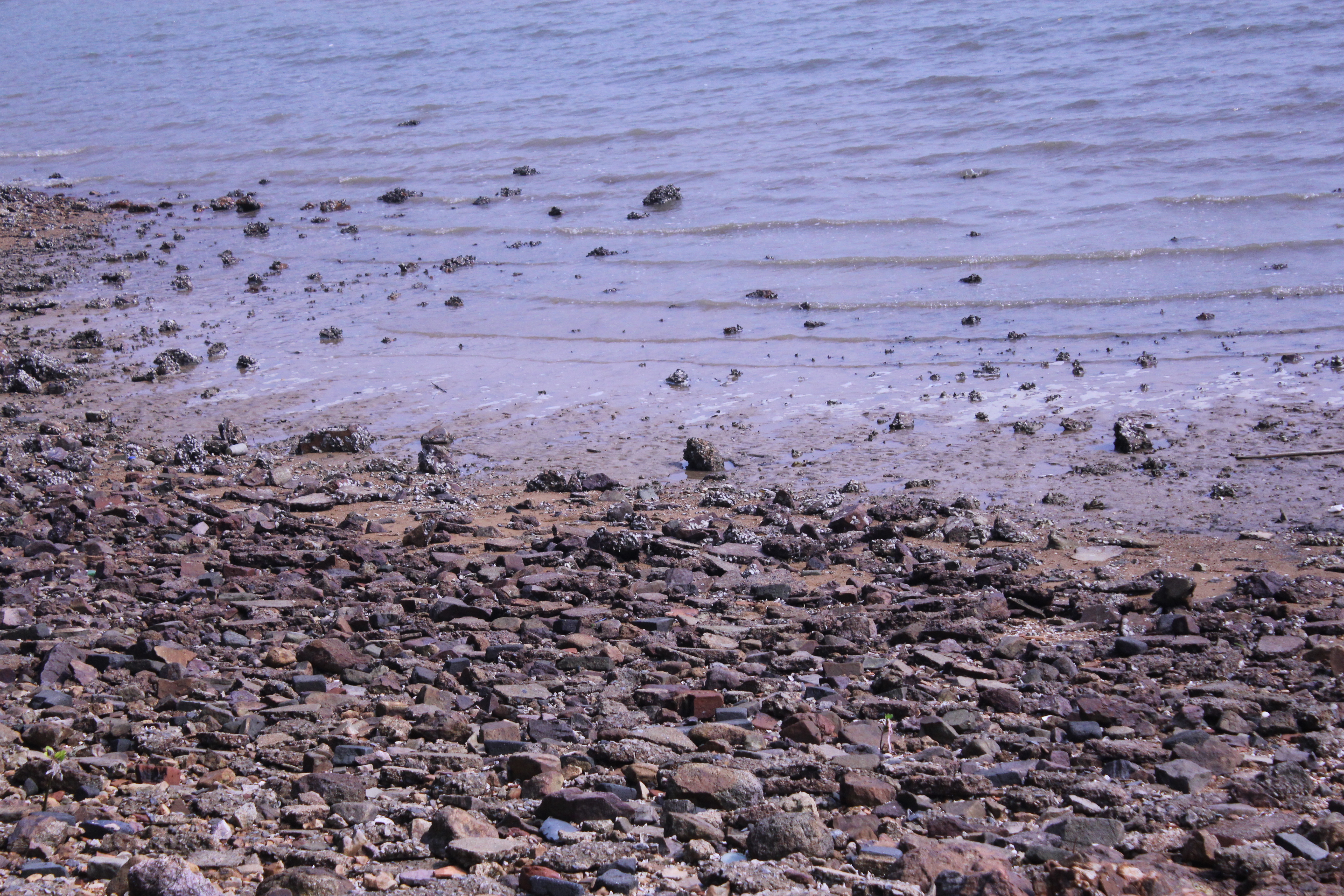
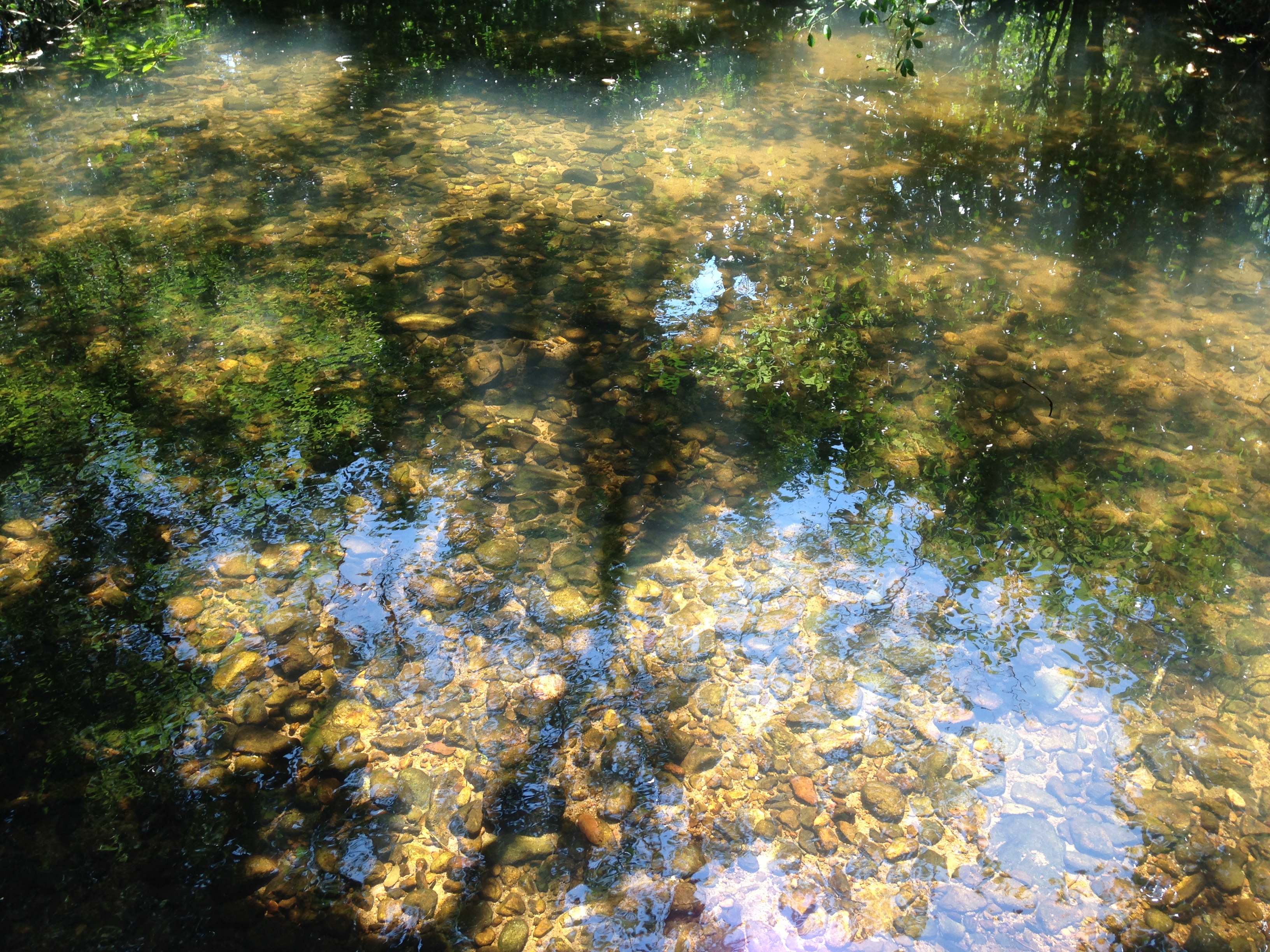
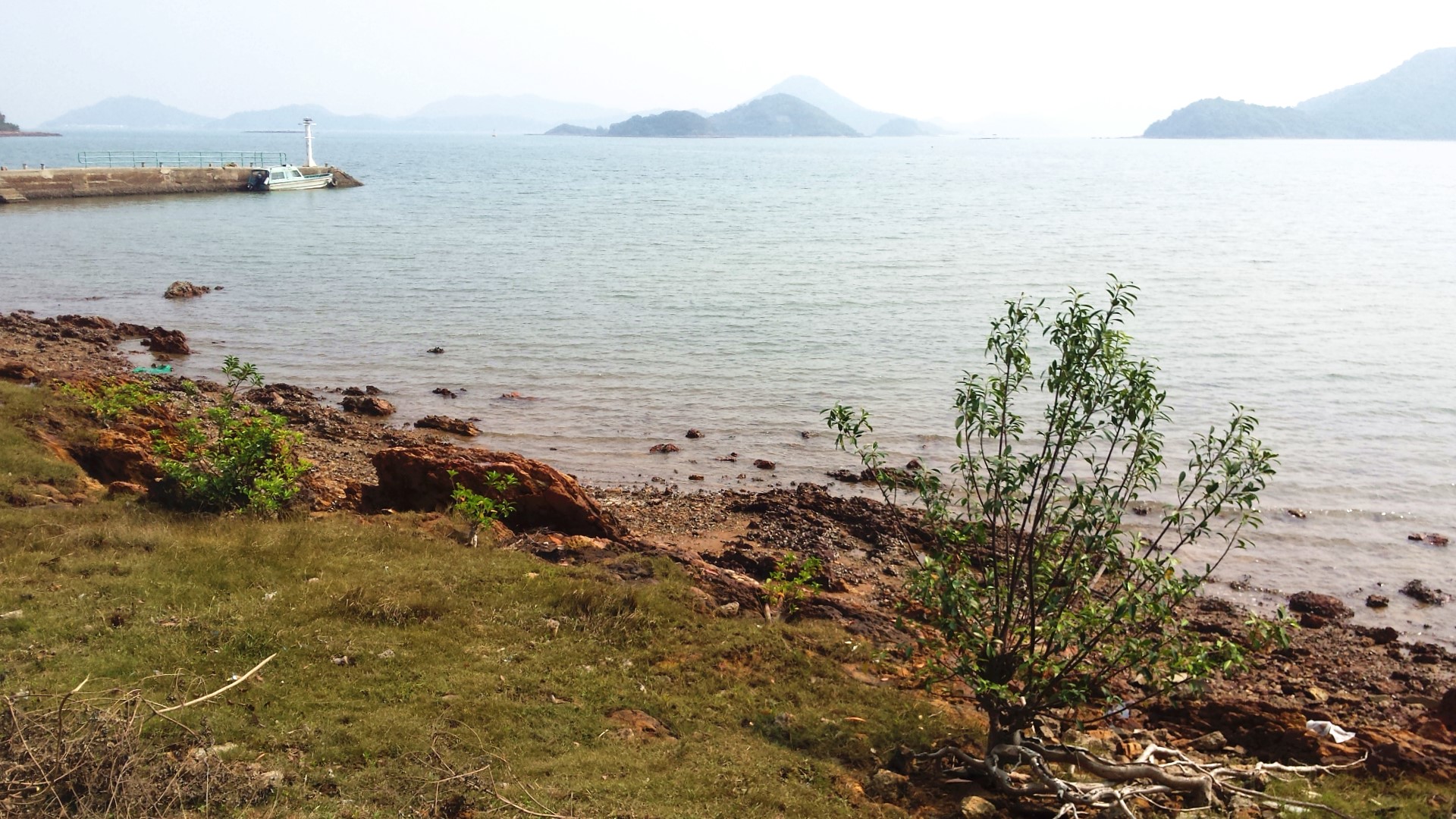
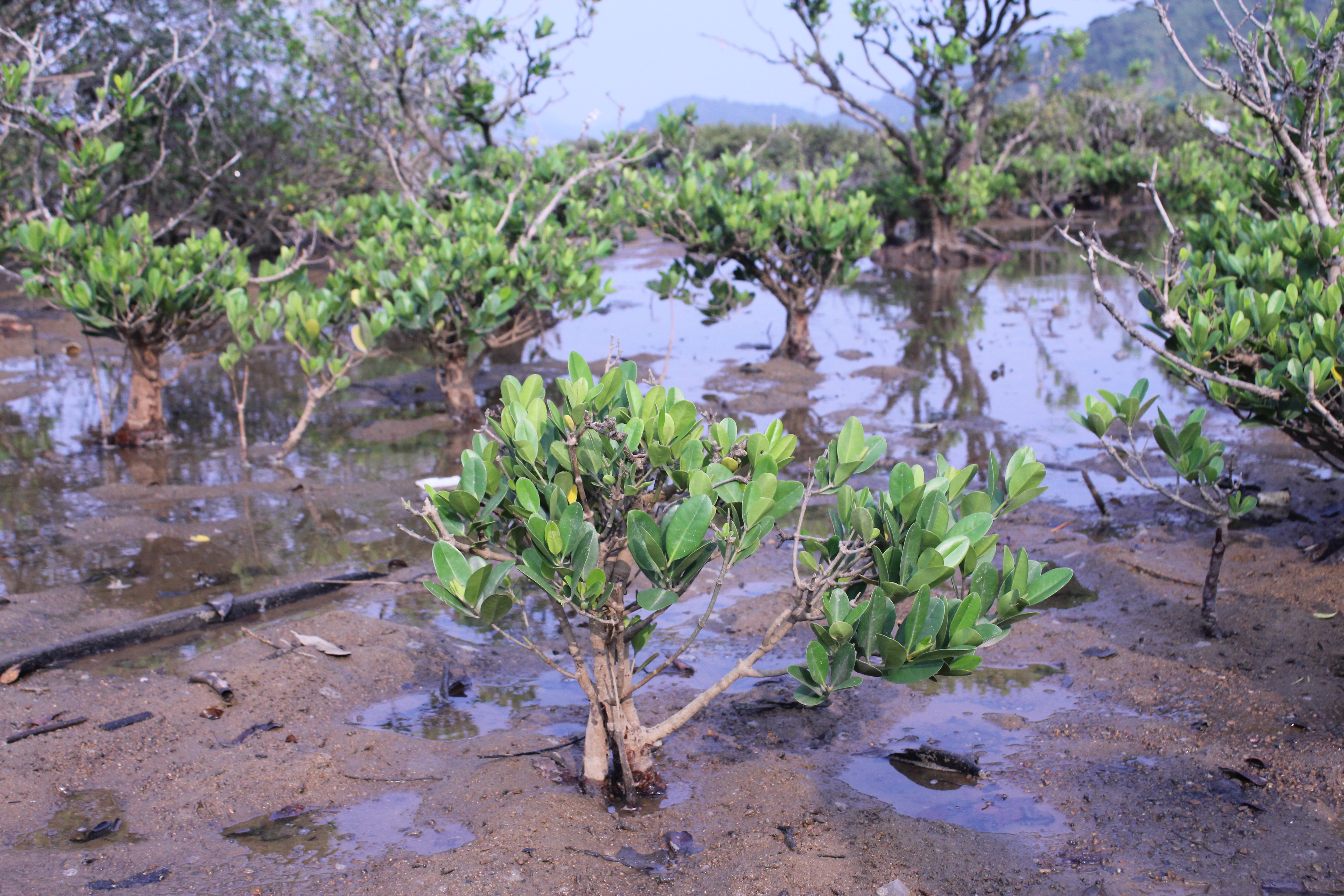
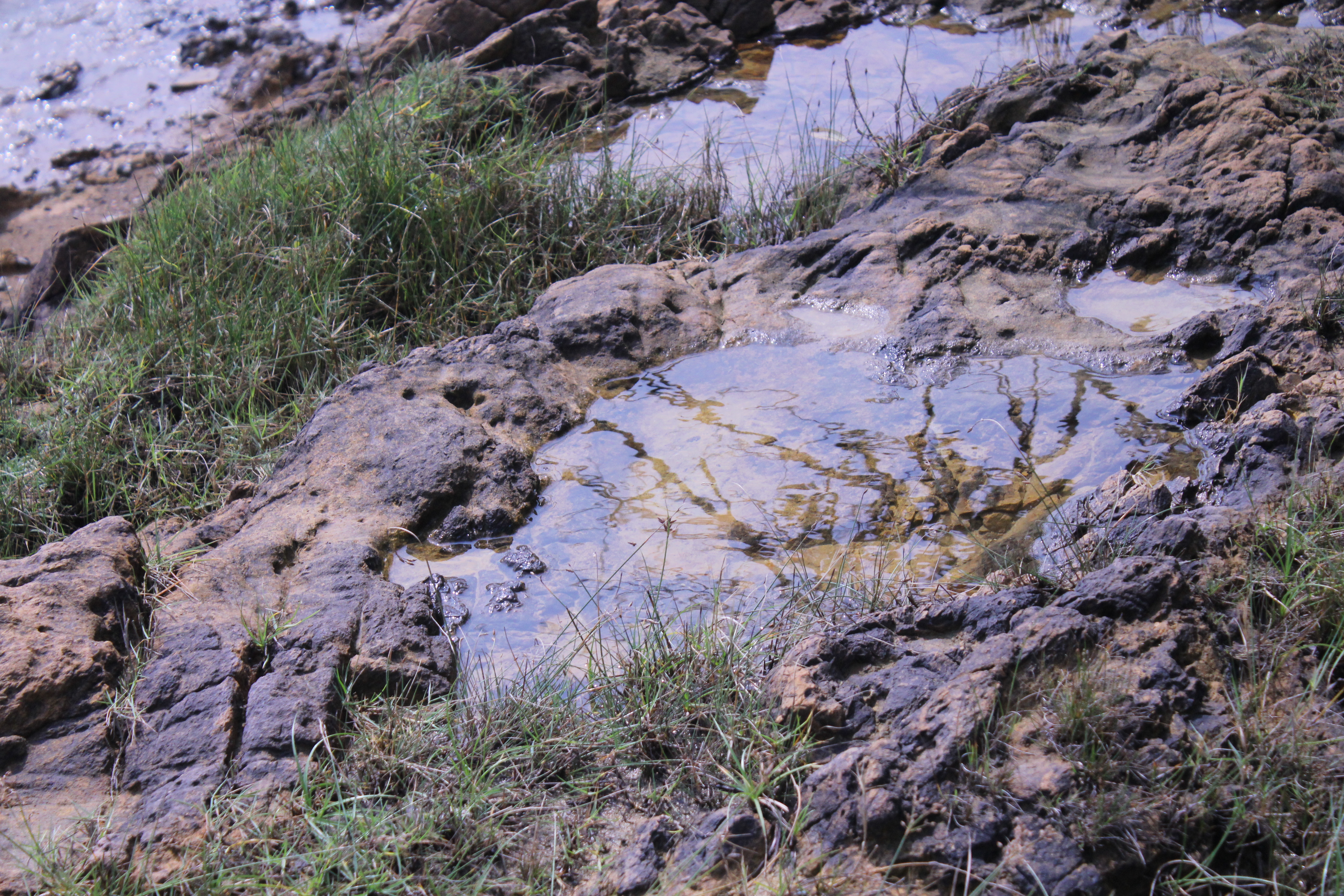
Lai Chi Wo is a classic Hakka village. The buildings are simple but solemn. The village is surrounded by a forest. When we walked around the village and the forest, we observed five different types of water: seawater, stream water, irrigation water, domestic water, and brackish water. Different water types have different importance to the villagers. We found that the different waters provide life to different species and play important roles in their respective ecosystems. All the waters here are as clear as crystal. They have not been polluted. We can clearly see what are under the waters. Furthermore, different waters have different sounds. When we are silent and intently listen to the sounds of the waters, we feel a strong sense of peacefulness. The elements in the village are so natural that you would not believe that it is in Hong Kong.
Helmreich, S. (2011) ‘Nature Culture Seawater’, American Anthropologist, Vol.113, Issue 1, pp. 132-144.
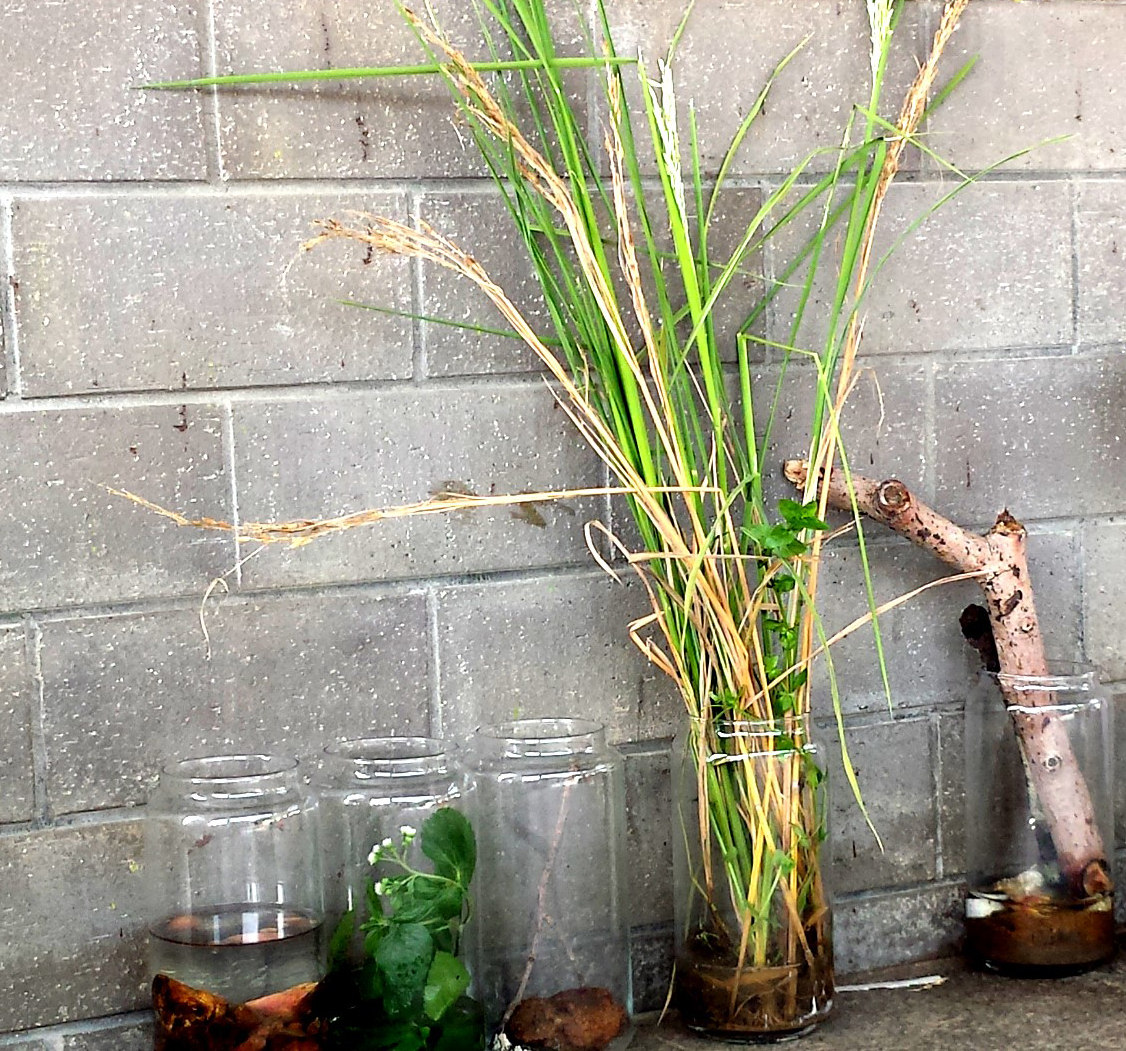
The concept of our project is to investigate whether transplantation in nature is acceptable. The answer is obtained by placing five glasses containing five different types of water from Lai Chi Wo, including seawater, brackish water, domestic water, stream water, and irrigation water. We chose particular elements to represent the five different types of habitat, such as plants, rocks, and crabs from those water sources, and placed them in glasses. In order to compare, we placed those five glasses into the five water sources one by one. The result was that only one of the five glasses suited all five environments, as the other four glasses appeared out of tune.
As part of an exhibition, the glasses are now placed in the art gallery but without collected samples. There are only notes inside reminding us what used to be in the bottles, that if they were to be separated from their original environment they may wither and die. This is a reminder that we should not easily manipulate nature and change its original form. On the five banners, each image shows soil/vegetation samples taken on its original landscape, but contained inside a man-made environment. This reflects the difficulty of transplanting life materials from their original contexts.

