|
CCHU 9023
SHAPING
THE LANDSCAPE A Quest for Harmony between
Nature and the City |



|
Natural elements often have multiple properties and attributes. The movements and interactions among them create unique sound.
The interest in the study of sound within the context of art comes, in large part, from the fact that sound is not merely a subject of art, but also that it has a second major identity in relation to art practice in its employment as a medium or material for art-making. An important value of land art consists in its blurred distinction between materials, collected items, and sites, as parts of the same making process and final result
Through the conceptual tool of the ‘metaphor’, this project explores the features and properties of natural elements and their roles in art. Originally from the ancient Greek, the term ‘metaphor’ refers to the transfer of a purely mental word or phrase, from its primary meaning, to a second meaning or figuratively one. The land art projects here use metaphors as presentations of conditions to reveal relationships between human and the landscape. Sound as a stimulus, can be detected and received. It is not simply about the factual intensity of frequencies and patterns we are able to distinguish, but also an acoustic expression that triggers our reflection on perception of nature through our own interpretation. Things can be extraordinarily interesting when attention is paid to the neglected, the unheard, and the undiscovered. It guides us to view and think from a brand new perspective and to draw connections. Without a receiver who pays attention to signals generated by an object, sound will neither be formed nor be conveyed as a message. Interactions between human and nature, landscape and art, with sound as a medium of expression are emphasised here. The three projects interpret the metaphor of sound from the perspectives of scale, time, and space. By going through the three projects, the details, histories, and properties of the waterworks landscape are revealed.
The three projects manifest the landscape using metaphors of sounds in different approaches. Each art work here demonstrates a specific understanding of ‘metaphor’ focusing on ‘scale’, ‘time’, and ‘space’.
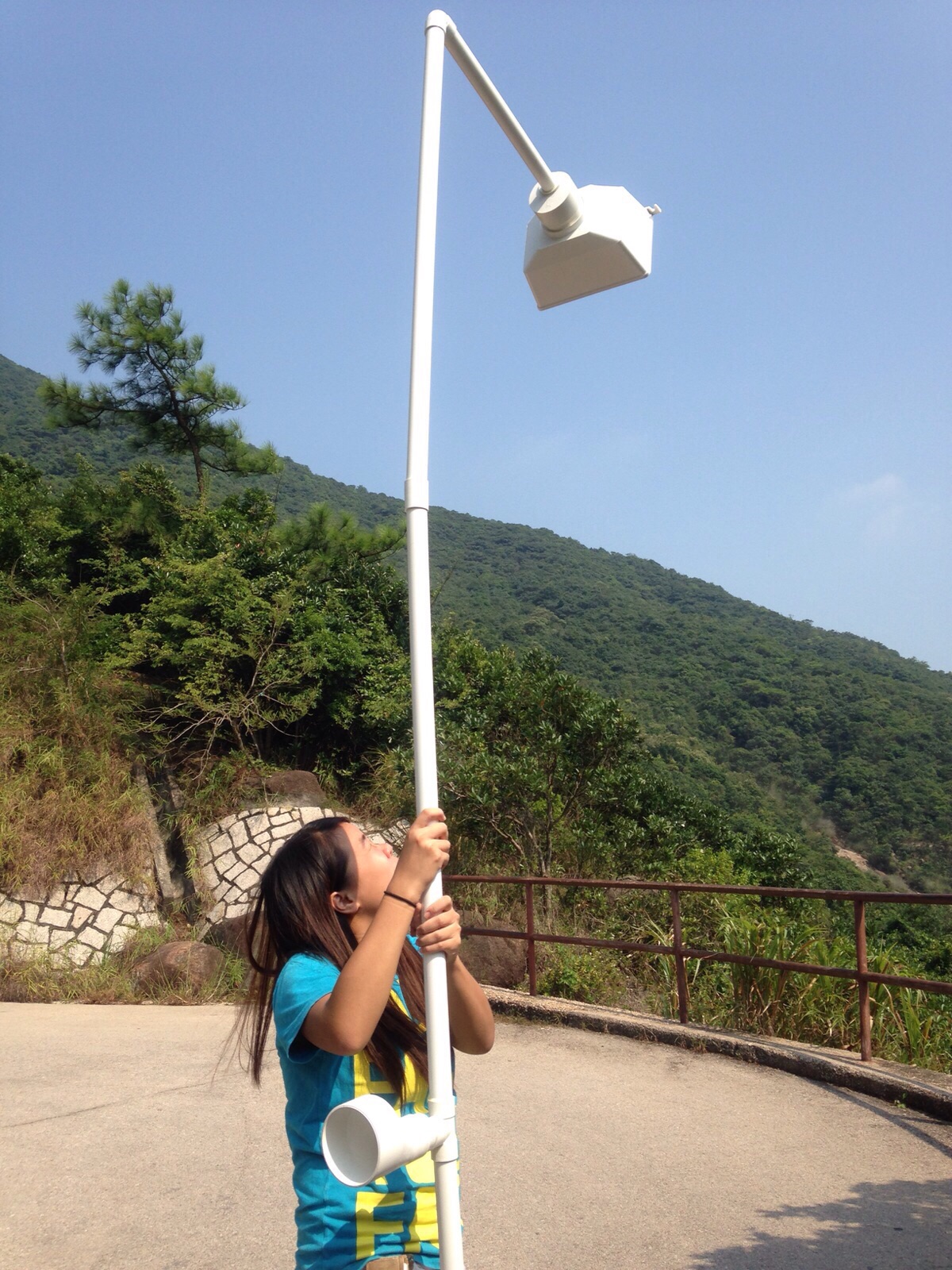
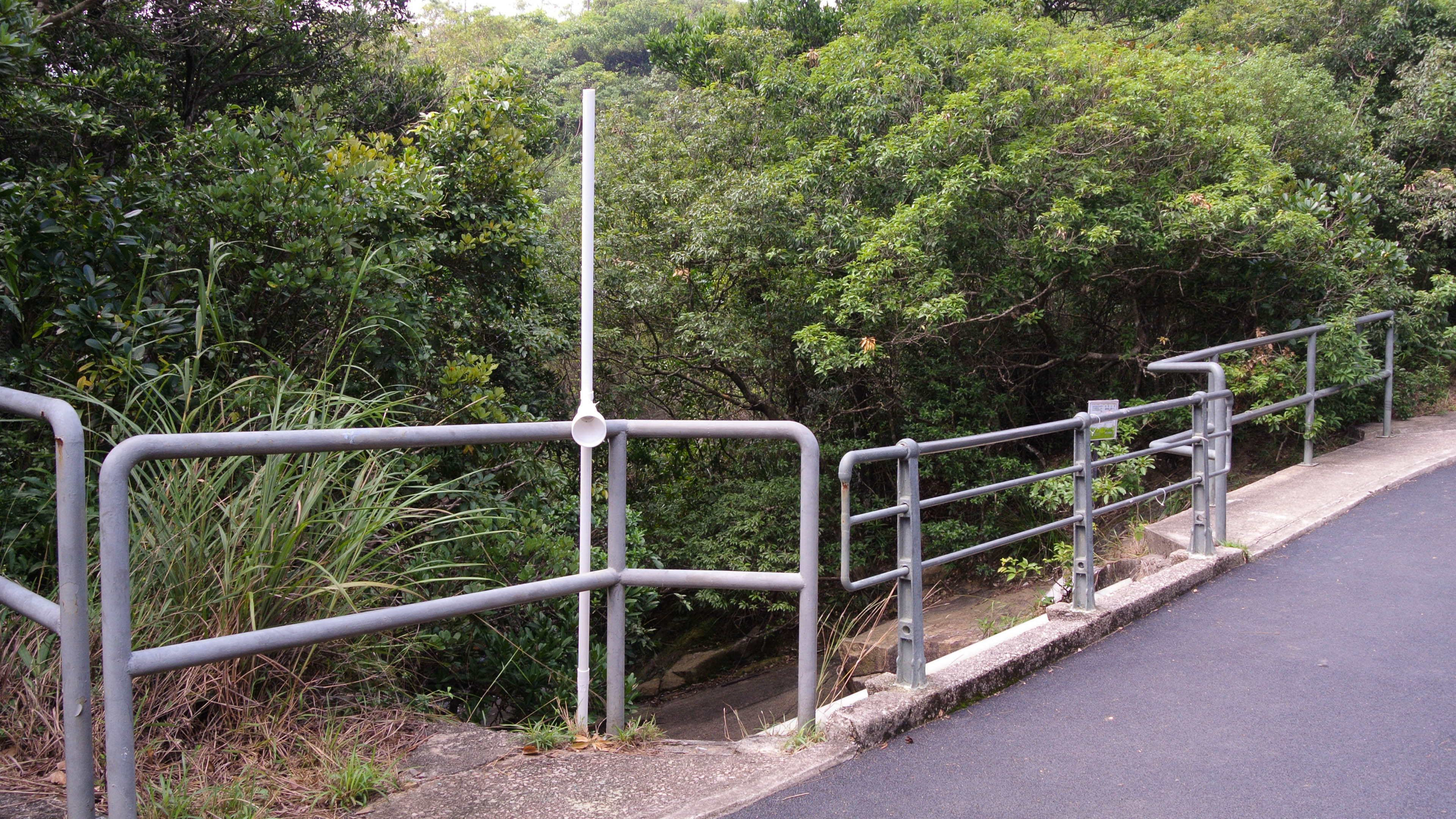
‘Piped Landscapes’ collects sounds deep underground to the land surface using pipes. It compares the sound in the pipes to the sound of the unseen landscape virtually amplified through the pipe-based passive amplifiers. The installation aims to strengthen people’s perception about relationship between of the naturalised man-made landscape of Tai Tam Reservoir, and the original purpose of the watermarks.
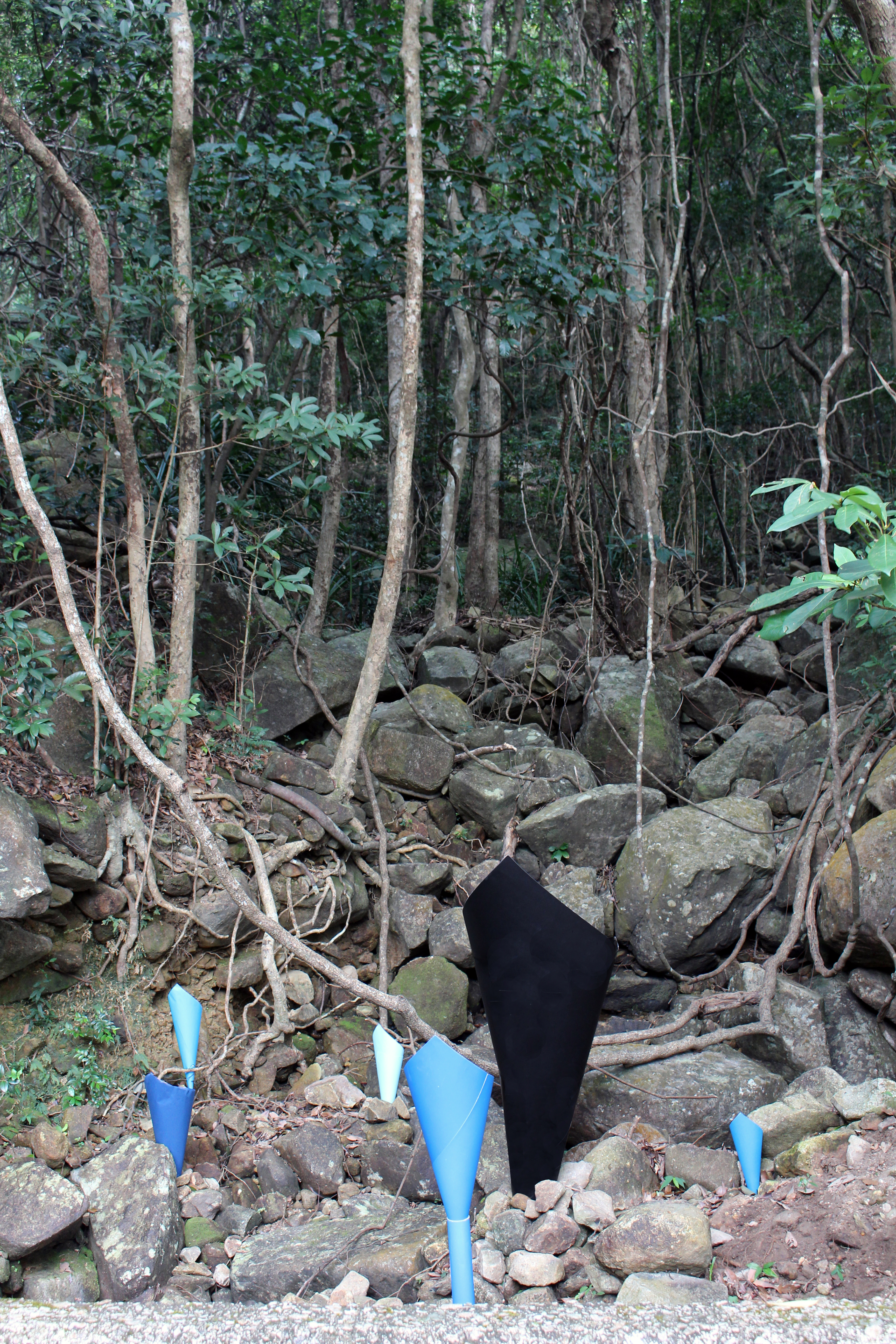
Small Voices, Loud Impact’ explores the dynamics of water sounds at the micro scale of nature. It compares the micro environments of our homes to those in the natural context of the reservoir. A series of cones dimensioned as a scaled model of the reservoir surface and altitude are used to bring the sound of tap water to the Tai Tam Reservoir. The passive amplification of the sound of the water found on-site will naturalize the recorded sound of the domestic water, metaphorically reminding us that both contexts are based on human intervention.
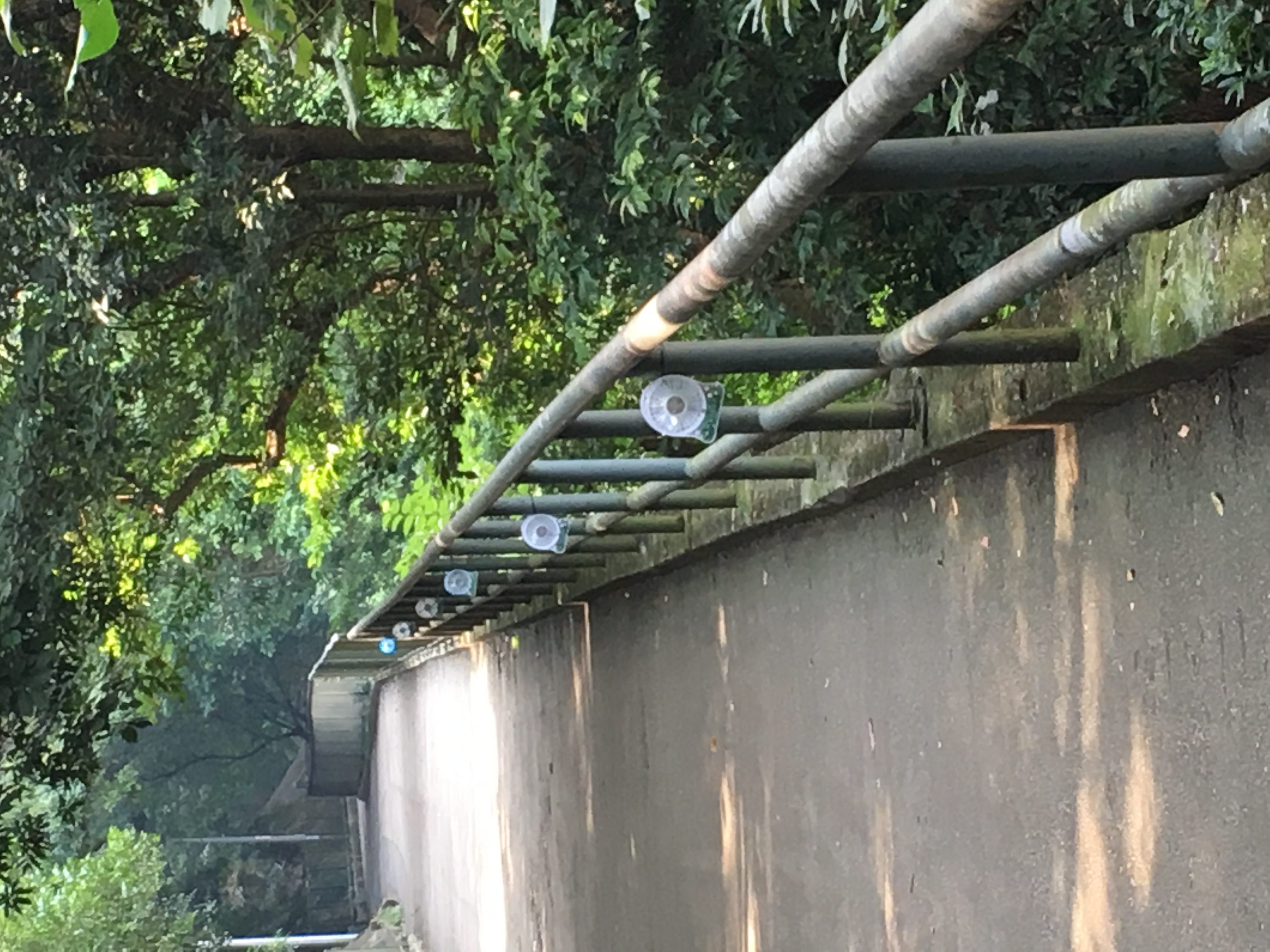
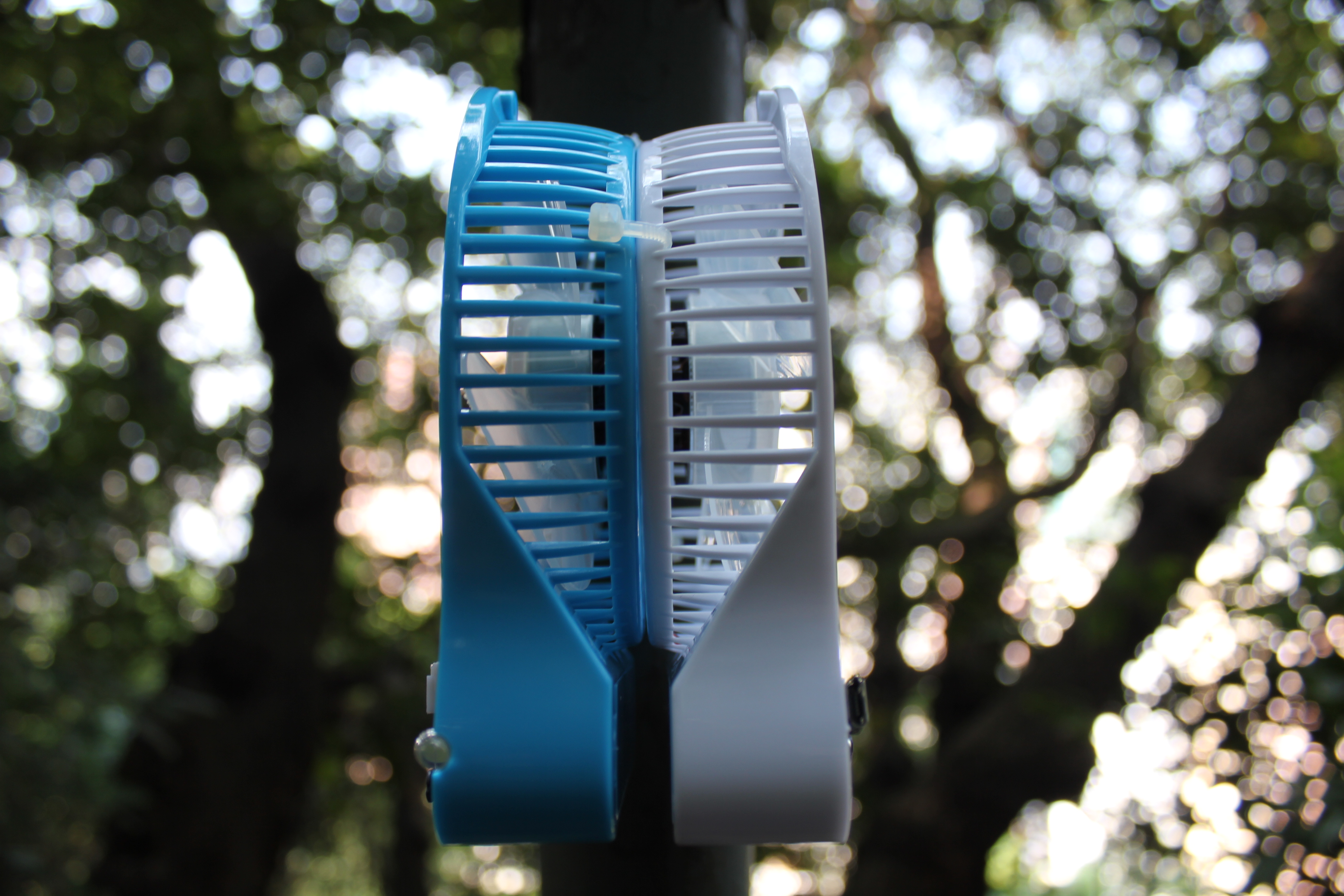
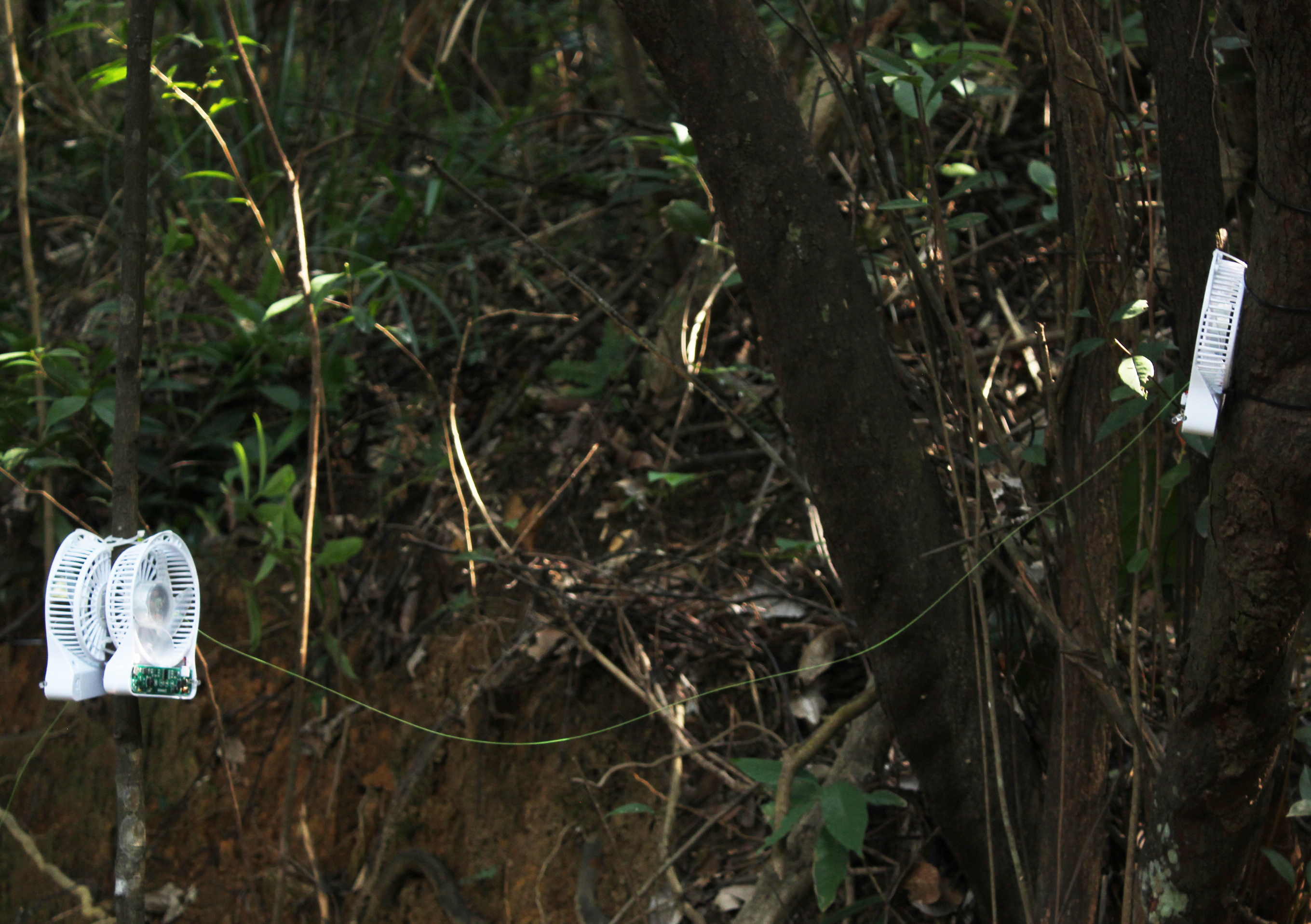
‘Walkable Waves’ re-creates water waves using electric fans. The installation was placed on Bowen Path, which was part of an aqueduct until not long ago. Through the visible features of airwaves, the installation suggests the moving of water as sound travels through time.
The idea of our project is to re-create an interpreted nature.
At gallery, we create an enclosed space, in which visitors can listen to sound tracks we produced from on-site recording using contact microphones. We start from creating a purely naturalistic sensation and slowly build up with the dynamics of nature in a small scale. Persistent artificial voices then emerge, eventually, the sounds of the city take over nature. The variety of sounds created in our acoustic production demonstrates that artistic articulation and interpretation of nature are based upon each individual’s experience and memory, and is unique for everyone. The enclosed space can be seen as a miniature nature because the enclosure allows sound to grow in space, and for imagination to take place.
The separation between the interior and exterior spaces does not imply that nature is isolated from human civilization and intervention. The three installations beside the enclosed space guide us through the process of exploration ‘Piped Landscape’, appreciation of waterworks ‘Small Voices, Loud Impact’, and inquiry about time and relics ‘Walkable Waves’.
Technically, sounds are vibrations that travel through one medium, and can be heard when they reach another medium with a receptor. What this actually implies is the interaction behind. Sound re-bounces and will eventually fade out in spatial boundaries but it conveys a particular message when heard. For us, it is the duality of nature and city, and that our lives are inseparable from nature.
A
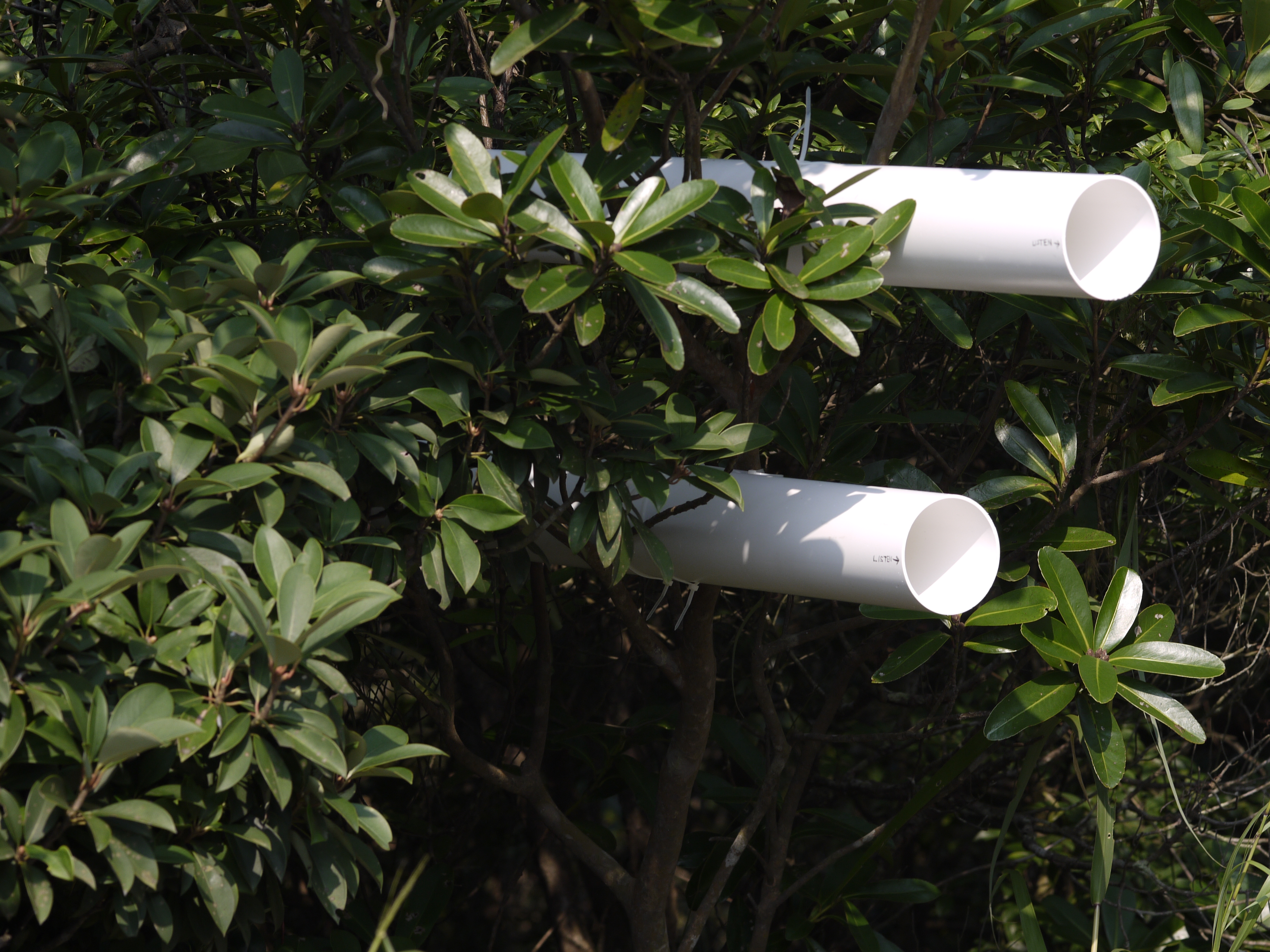
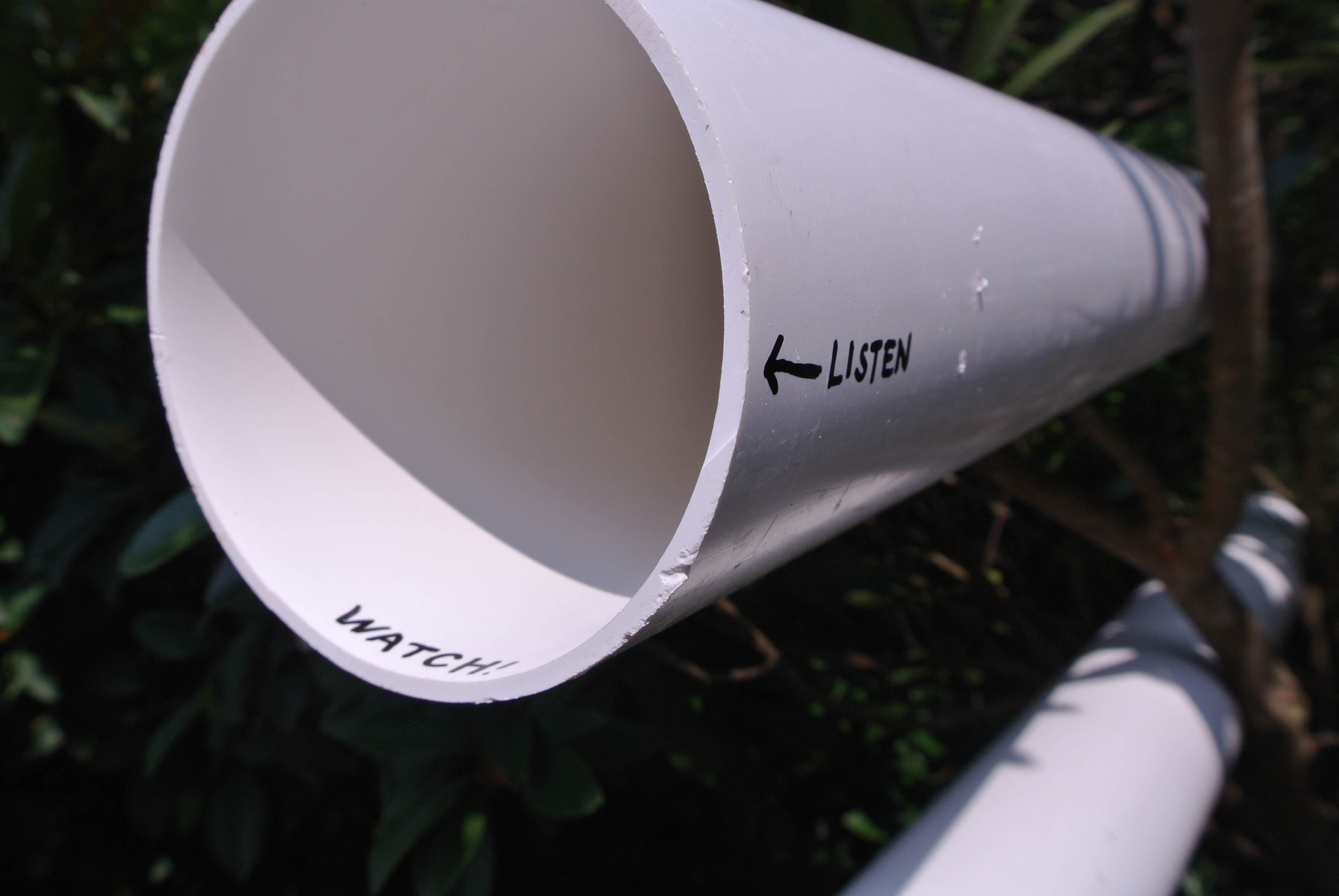
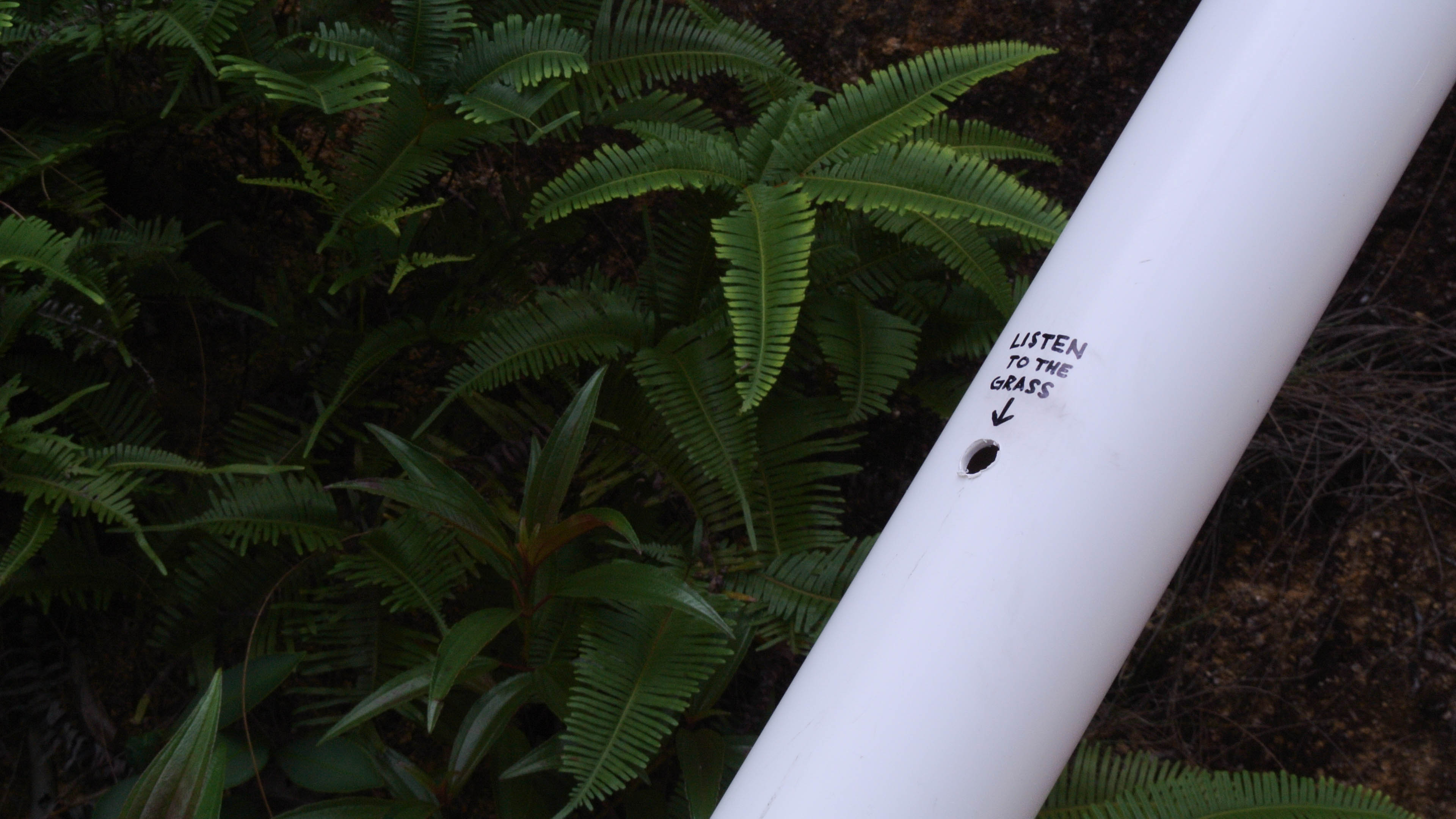
What can you think of when you see white pipes? They may be some essential elements in our surroundings in daily life such as drainage pipes in our toilets or kitchens. But have you ever wondered how magnificent these pipes could be? This time, we use the pipes not to collect or transport water, but sounds. These three installations are set up to collect the unnoticed sounds when water passes through the pipes and when wind blows on leaves. Usually, these sounds may seem to be disturbing noise that we ignore them. However, when we listen to them closely, they become fascinating music. We do not only collect, but also amplify. The echoing effect inside the long pipes transports the sounds to audience’s ears.
These temporary installations set up in the Tai Tam Reservoir tried to illustrate the sound inside usual pipes. When the sound of running water passes through the installation and gets to our ears, the echoes combine with the water to re-create the small sounds we could only record or realize with contact microphones. On the other hand, we applied this amplifying effect on the sound of wind as well. When we receive the sounds, we can also respond. One of the installations encouraged the audience to speak to nature. This is done by having the audience’s words also get amplified by the echoing effect of the pipes. This creates an interrelation between human and nature, telling us that humans are inseparable from nature.
1. “Listen! to the Water Stream” | 「聽!溪在流」
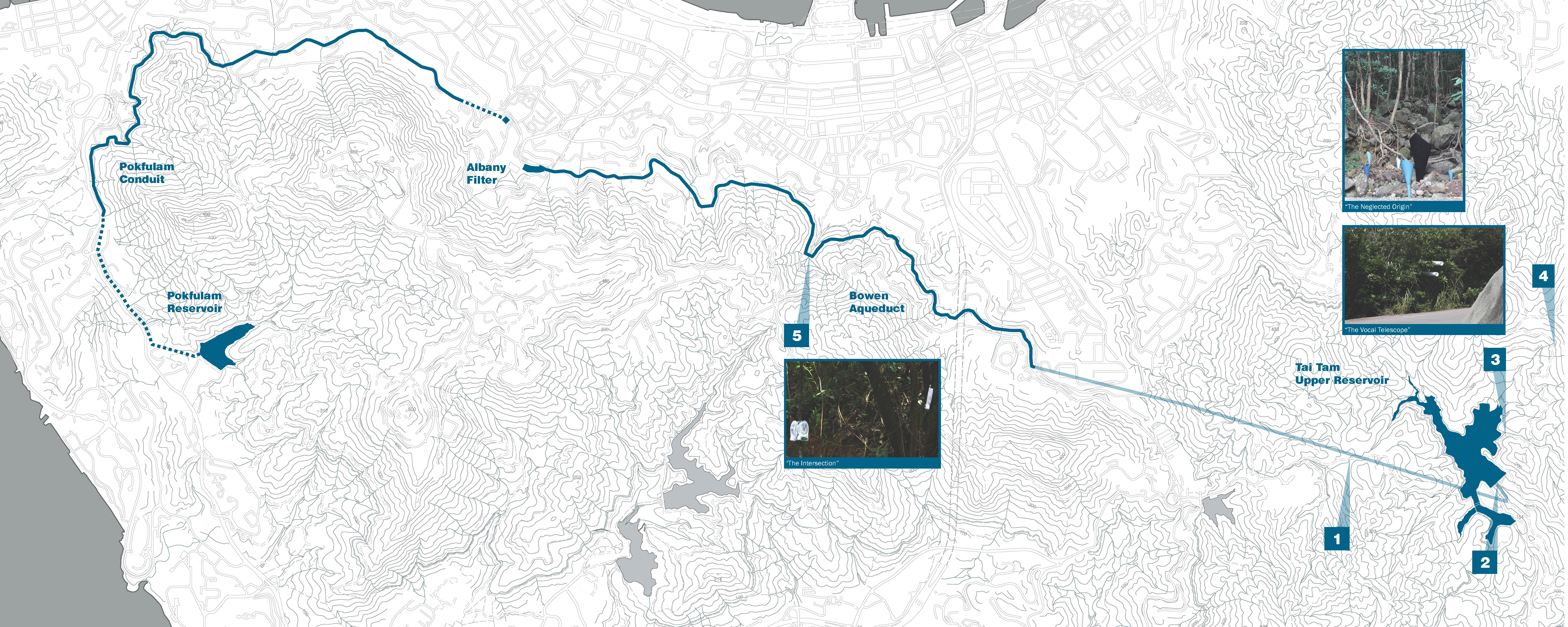
A long pipe has been installed perpendicularly to old metal water pipes, which were located above a water stream. The water stream is close to the starting point of Tai Tam Reservoir Road and is often neglected. Water flows from here to the lowers levels, then converges and becomes part of the water volume stored at the reservoir. Through the amplification of the pipes, people can hear the sounds of the water stream from over three meters below. Apart from listening to sound sources that one may hardly notice, they can also imagine how this sound integrates with the amplified sounds heard from the old metal pipes in front of them, creating another virtual sensation of water flowing inside the metal pipe.
2. “Listen to the Dam” | 「聆聽水壩」
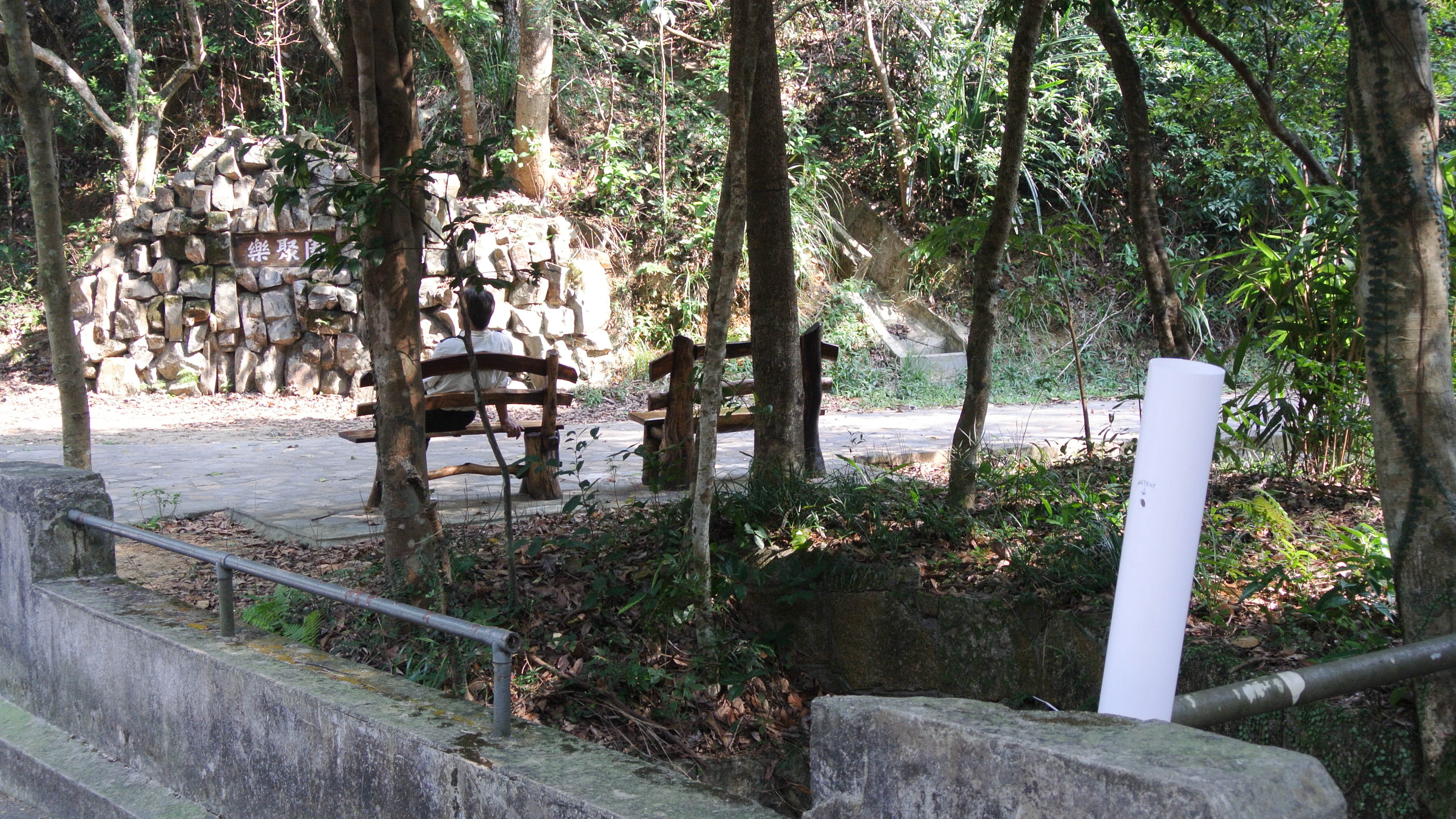
A vertical pipe was placed along the path near the Tai Tam Upper Reservoir Dam. People can hear amplified sounds of water flows around the dam, as well as the sounds of wind. The dam is undoubtedly one of the most attractive sceneries in Tai Tam, and is one of the photographers’ favourite spots. This installation aims to let people close their eyes, and feel the scenery from another dimension. Water flows at a level below the trail, while wind blows freely in the air. One can hardly observe both water flows and dynamics of wind at the same time. The installation draws the distance of these two elements of different levels closer together. The combined sound of water flow and wind acts as the metaphor of the combined presence of the source elements. As such, one may enjoy a macro view of the scenery of the dam.
3. “The Vocal Telescope” | 「聲音望遠鏡」
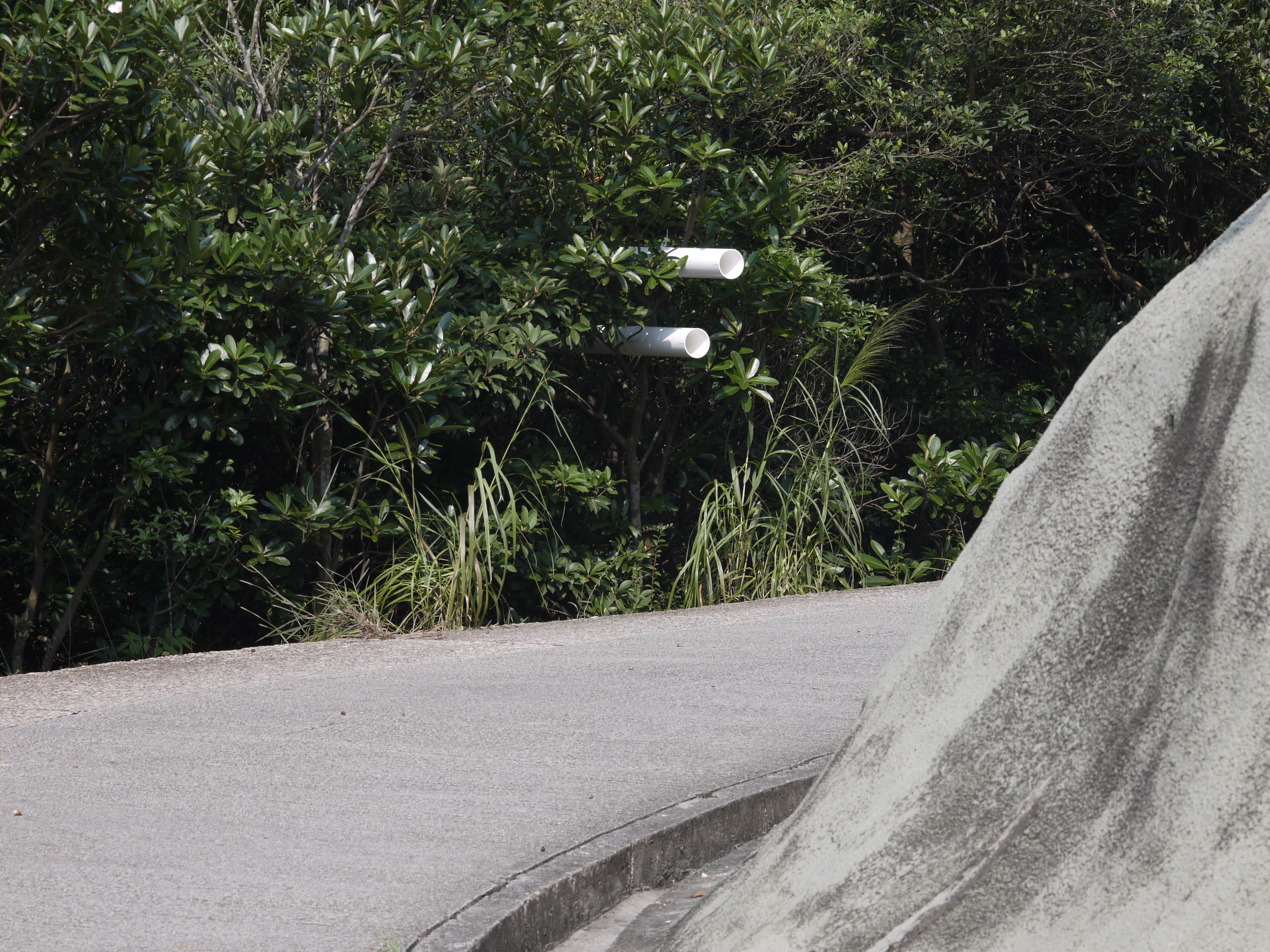
A set of two pipes with different lengths was set perpendicular to the trail. Using the two pipes, one may listen to the sounds of airflow and water source from far away. The two pipes have different levels of amplification, which allow people to listen to sources of different ranges simultaneously. Apart from acting as a passive sound amplifier, the twin pipes also help people to see further away. The bushes along the trail not only act as sound barriers, but they are also obstacles to the scenery. With the aid of the pipes, people will be able to see beyond this natural wall of vegetation. Through the sound amplification, one may create an imagination of how water is gathered from different sources, converges at the dam, and then travels through waterworks system, and finally reaches everyone’s home. The installation enriches visitors’ observation to nature along the trail.
A
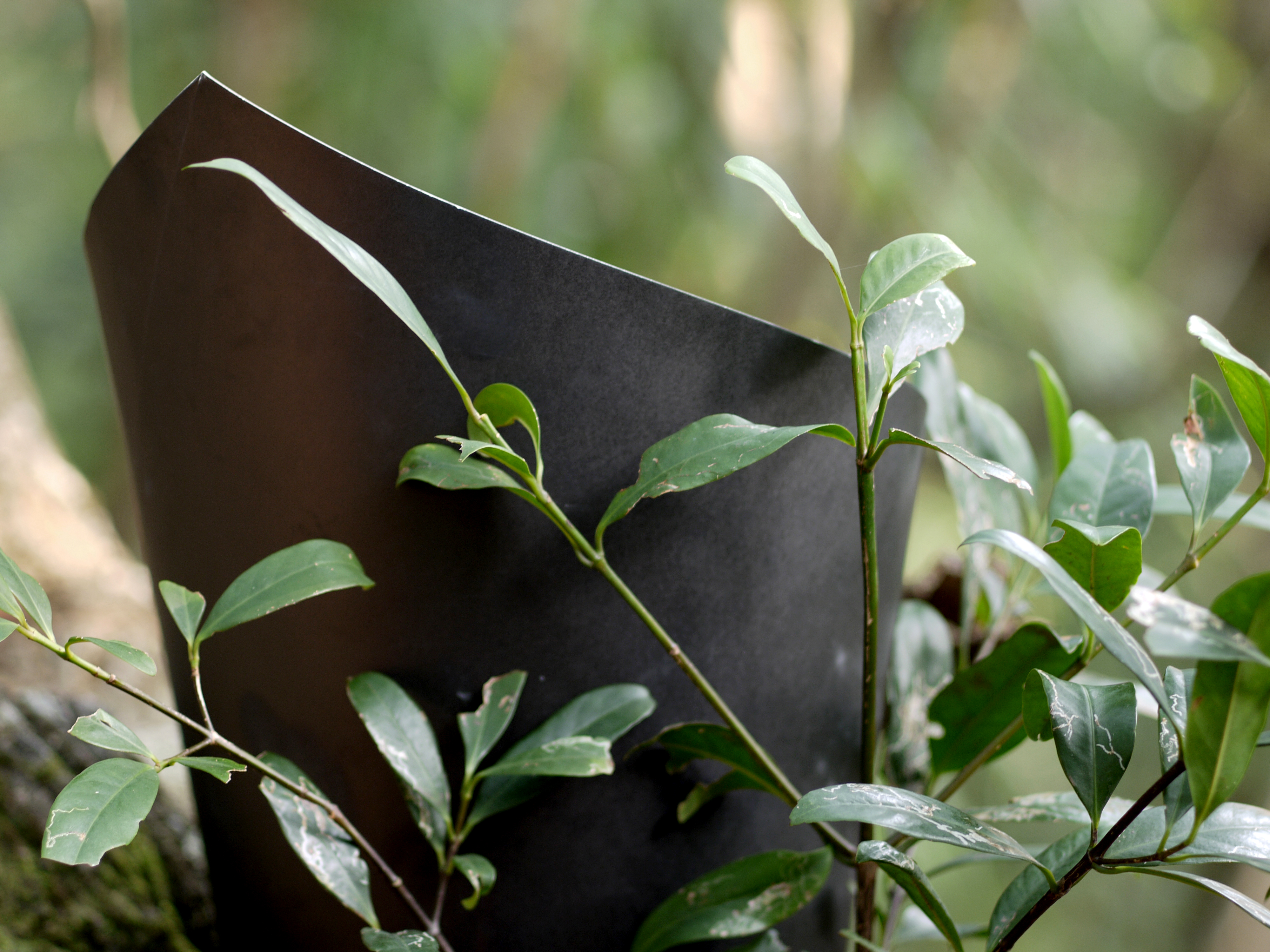
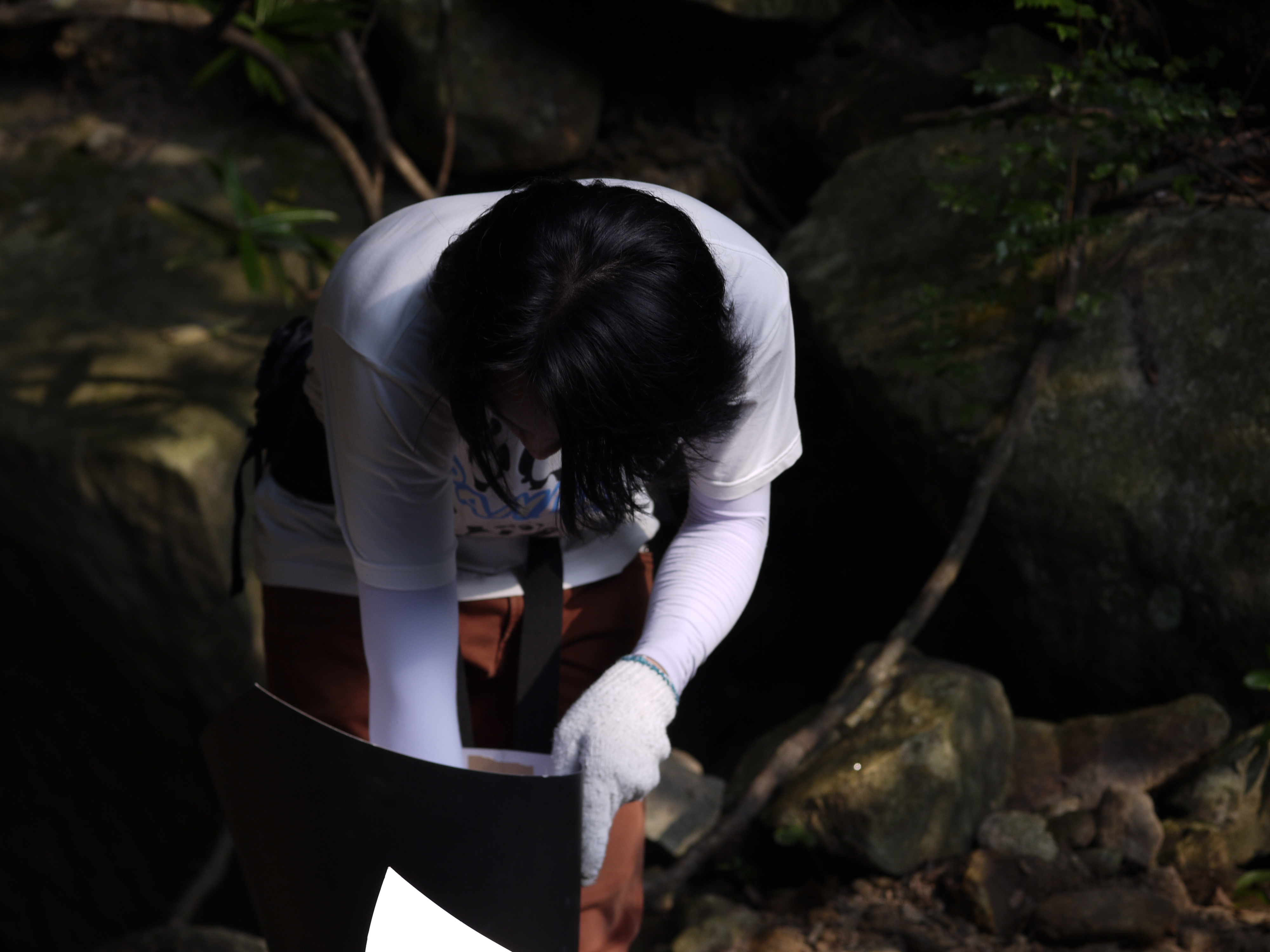
The waterworks infrastructure plays a vital role in the survival of Hongkongers, and our art installation project is set up to send this particular message across to the people. The major element of our installation art is a series of handmade cones; with its top circumference and height scaled down to the actual surface area and the elevation of the Tai Tam Upper Reservoir respectively, and its base tip replicating a household tap.
The audio recordings of stream and tap water flows are played in amplifiers inside the cones to mimic the cycle of water supply in our city. With the reservoir as the initiating source and the tap as the final consumption component, the installation intends to introduce a physical metaphor of the water supply route through the cones measured structures. The creation of a new landscape created by the construction of the reservoir is the inspiration for the idea of incorporating our art piece in natural surroundings. The amplified sound of the stream and tap water through the cones are successful in mesmerising and grabbing the attention of the passerbys, making many of them curious and stop by to ask questions. Grabbing hold of this opportunity, we are able to fulfil our aim, which is to promote the concept and the importance of the waterworks in Hong Kong for our present and future water consumption.
4. “The Neglected Origin” | 「被忽略的源頭 」
This installation is located at a rocky hillside along Hong Kong Trail Section 6 (Mount Parker Road), where the stream water flows to Tai Tam Reservoir due to gravity. It acts as one of the first points of fresh water collection. By listening to the familiar sound of tap water in an unfamiliar setting down the stream, together with the Tai Tam Reservoir element in the cone that has been created, they remind us where water comes from, where goes, and what it is for. We, as city dwellers, should recognize and appreciate the fascinating system of water collection, transport, storage, and distribution that have been incorporated into our landscape. The installation is placed among the rocks and bushes so as to maintain and emphasise the crucial relation between man-made infrastructure and nature, which co-exist with each other.
A
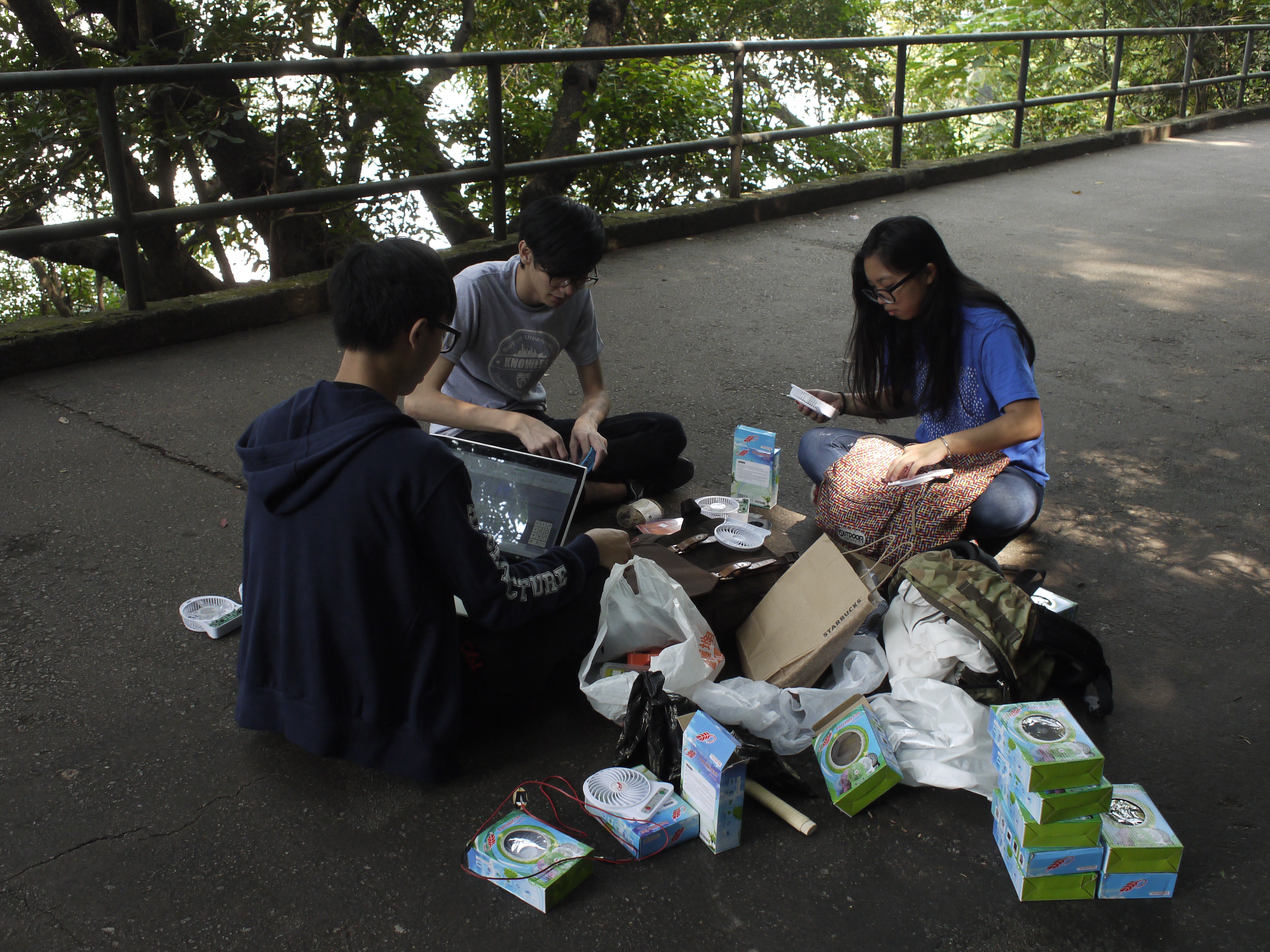
‘Walkable Waves’ is a land art installation using sound and technology as its media. It evokes the memories of the 127-year old aqueduct built under the Bowen Path. It visualises the sound and water waves flowing through the historic aqueduct. In ‘Walkable Waves’, fish lines were connected to a series of electric fans that are hung on trees along Bowen Path. The sound generated from the waves was similar to water flowing through the landscape. ‘Walkable Waves’ allows the audience to travel through space and time, through the sound it creates. This installation, with the use of new media and sound, re-creates the condition of the aqueducts when Hong Kong was still the City of Victoria. How important is the provocation of the history, the past memories, and the past feelings? The water supply of Hong Kong Island once relied on this infrastructure. It was the vessel of the city. Although it has changed since then, and the history is now buried deep, the memories of the path should not be forgotten.
5. “The Intersection” | 「交滙」
The installation is located near the intersecting point of Bowen path and Wan Chai Gap Road. It is parallel to Queen’s Road and Kennedy Road, which connect the eastern and western parts of Hong Kong Island. The location itself conveys a story about the past, and how they bridge the unconnected. The installation joins as an element on site, the waves travelling along the trees as if water travels from Tai Tam Reservoir to the Albany Filter in Central through Bowen Path. The re-created water sound brings back the old memory and reminds us of the contribution this infrastructure has made. Through this, the forgotten past is unveiled to the public.
a
- Dave CHAN
a
- Minia CHEUNG

