Spatial Narrative
|
Spatial Narrative
Novel, fiction and folktale can tell stories by texts. Comic, painting and photograph can tell stories by pictures. Movie, animation and cartoon can tell stories by dynamic picture and sounds. However, architecture tells the story without texts, but by space, form, and materials.
WHAT?
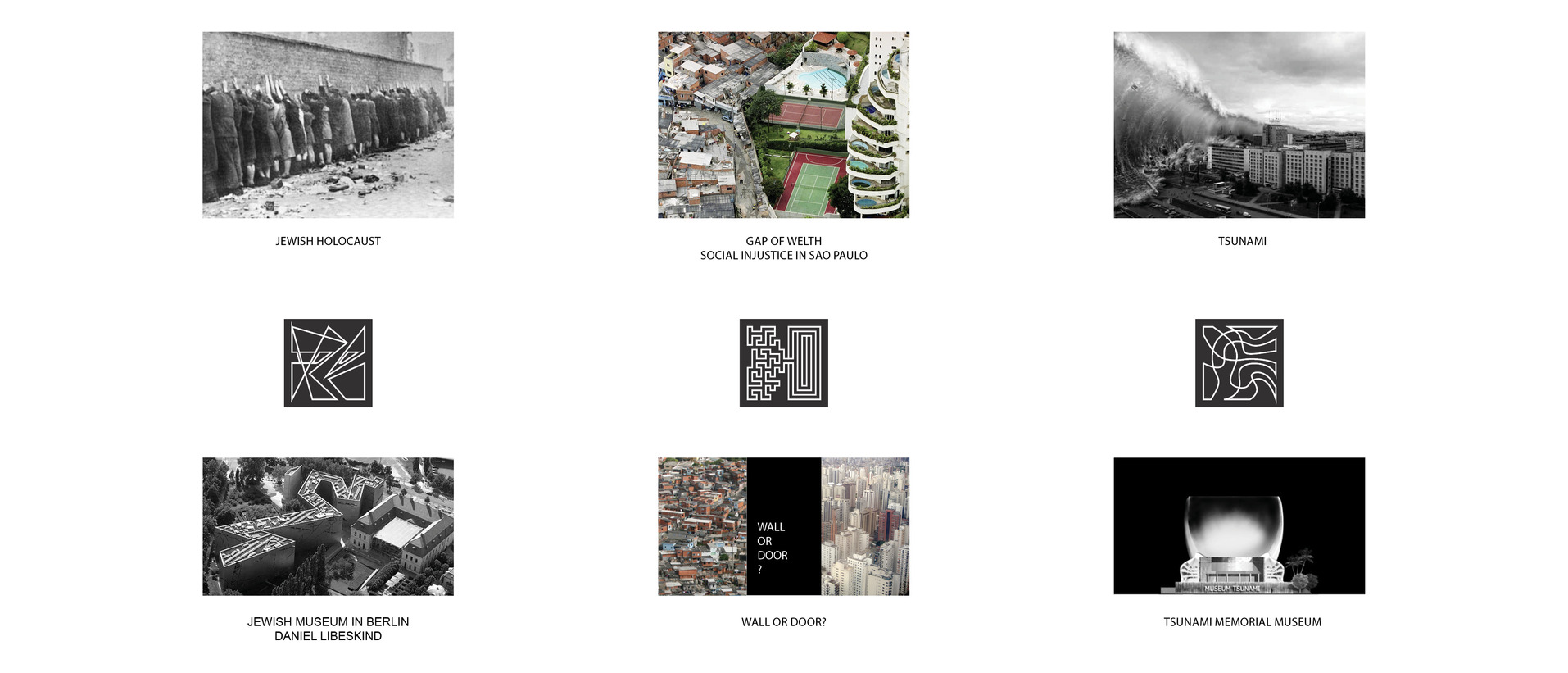
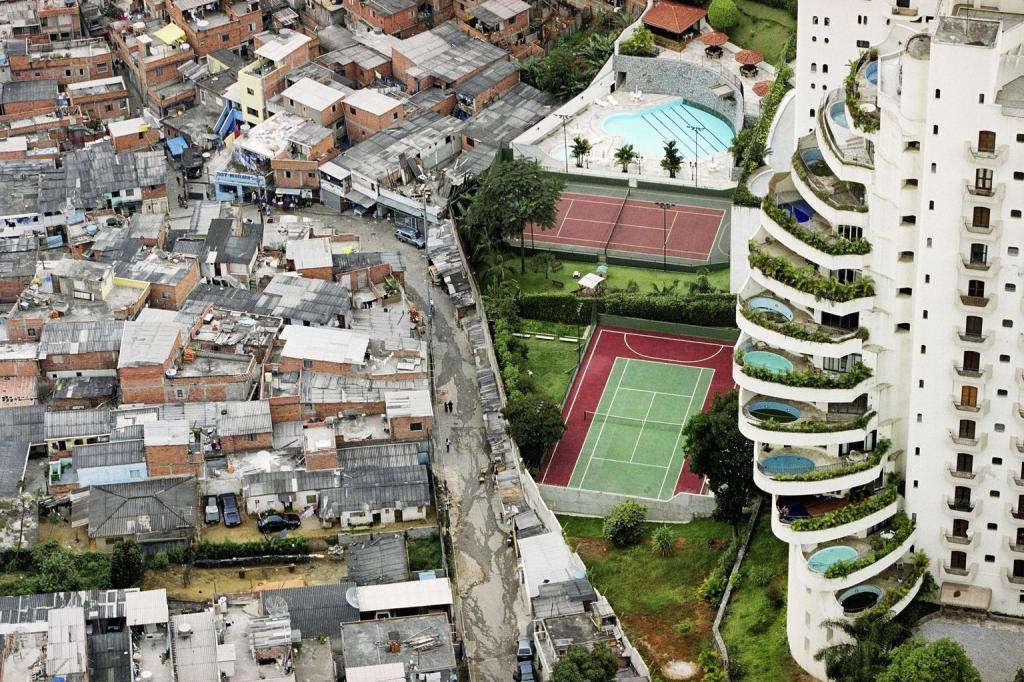
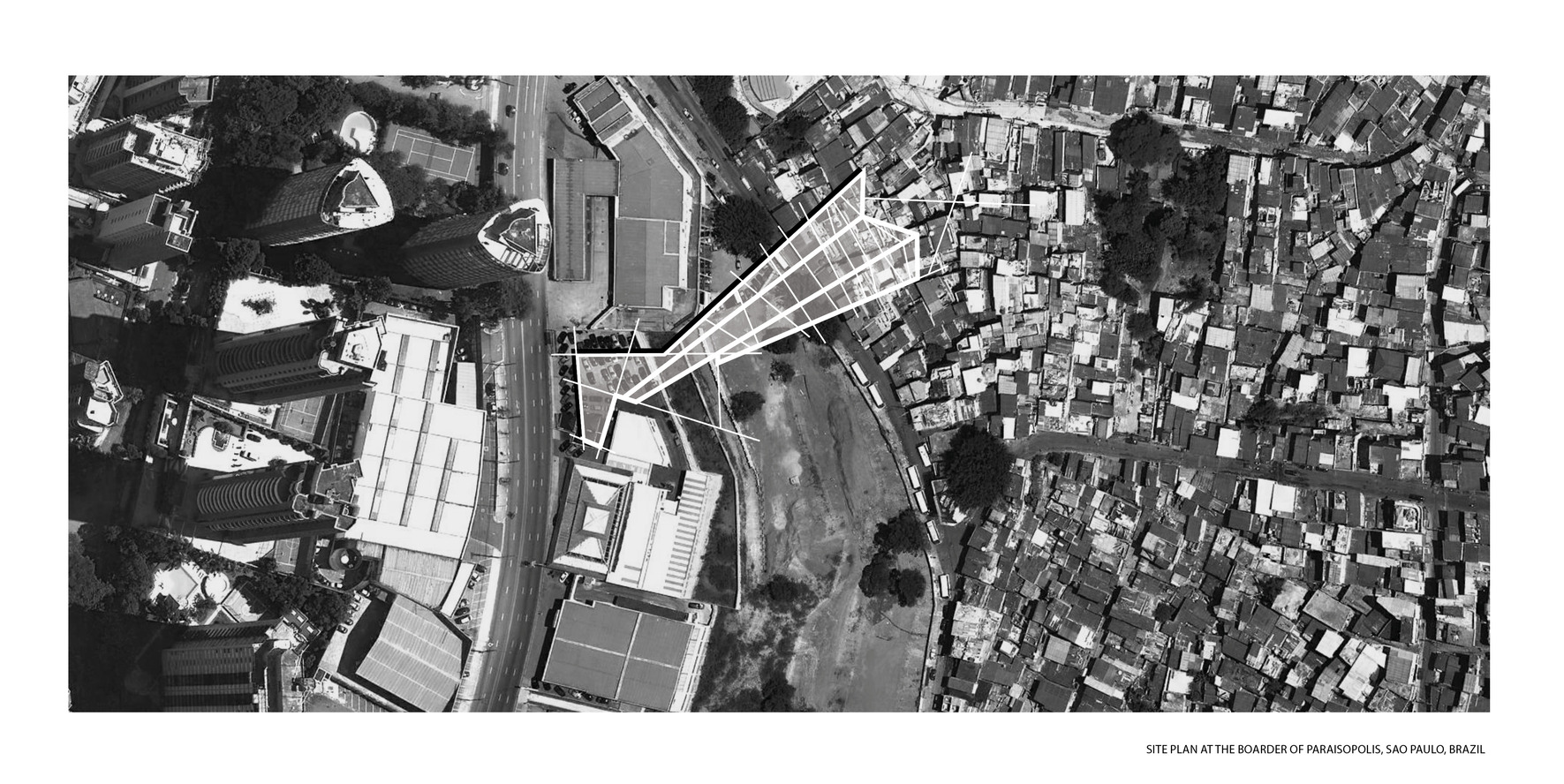
Novel, fiction and folktale can tell stories by texts. Comic, painting and photograph can tell stories by pictures. Movie, animation and cartoon can tell stories by dynamic picture and sounds. However, architecture tells the story without texts, but by space, form, and materials. So that space within architecture has potential to convey idea and attitude. And in my point of view, architecture should have some kind of dialogue with contemporary society, either by serving as a mirror or contribute to it. During the process of narrowing down, I have found a famous photo documenting an interesting phenomenon in Sao Paulo. Since we can find extreme poor and extreme rich living conditions right next to each other and that shows the unevenly distributed resources of the society. And start from this phenomenon I want to design a market at the border of poor and rich area in Sao Paulo. It is not only a building that could be used by people from both sides, but also a building that could serve as a gate for people from different classes to walk into and experience the others’ lives.
WHY?
Spatial narrative is never a new thing. The centripetal space of Pantheon is telling a story about “all the gods” lead you to heaven. The arrangement of buildings of the Forbidden City is telling a story about authority and hierarchy. However, spaces from modernism’ work is like neutral to everything, they just doing whatever they are supposed to do without any attitude. However, Architecture has the responsibility to convey contemporary social issues. And about the Sao Paulo market, there are some reasons for doing it. Since Brazil will host the 2016 Summer Olympics, and Sao Paulo is the biggest city in Brazil, there will be a lot of visitors at that moment. And at that time, Instead of put money into solving the problem of wealth gap, government would care more about sport facilities. The purpose of doing this market at the special site is serving as the very first step of tackle with the social injustice and draw the attention of government back to the real problem of Sao Paulo.
HOW?
The key of achieving narrative in architecture space is how to turn a story into a logical thinking by using architecture language that could bring people into the plot of a story and be the players by themselves. Spatial narrative could be translated into architectural form by materials, route, event, rooms, and also smell, sound and light effects. The story could be found beyond those all. Rooms will give spatial psychology that created the feel like they are entering into situation or a story. We can take the Jewish museum in Berlin by Daniel Libeskind as an example. Conceptually, Libeskind wanted to express feelings of absence, emptiness, and invisibility (expressions of disappearance of the Jewish Culture) by dead ends, sharp angles, small drop light in darkness. It was the act of using architecture as a means of narrative and emotion providing visitors with an experience of the effects of the Holocaust on both the Jewish culture and the city of Berlin. Return to the Sao Paulo market, we could take in the construction logic and some qualities of slums into space strategy, like flexibility, sustainability and sociability. So that we could narrative the story of Sao Paulo in this architecture.
BIBLIOGRAPHY
1,Edward Arens, “Behavior and Buildings”. Center for the Built Environment CBE, University of California, Berkeley.(Centerline,summer,2010) |