Emptiness in Urban Growth – Rediscovering its significance in redevelopment
|
Thesis Statement Emptiness in Urban Growth The initial essence of void, an empty space, which tightly links up with the word “possibilities”. It is a temporary suspension, a pause in the city, an intermediate space inside the urban fabric, confronting with the urban condition surrounding it. These ambiguous spaces lies in-between our city’s’ building environment and at the same time outside our daily urban conditions. It is undefined, underutilized and informal. These pocket spaces such as building gaps, narrow building back lanes, or waste land after building ruins are undetermined for its further growth . In old districts, we could easily find people giving temporary value and definition to these no man’s land for example storage, public gathering space or car parking space. It thus create human interaction reinforcing the vitality and vibrancy of the city. In the context of redevelopment, chances of further development by user participation are not encouraged. Current trend of redevelopment in Hong Kong is to demolish the blocks following by putting a new development on the site. By maximizing usage intended by the developer, new development leaves no rooms for further possibility for human interventions which may possibly lead to a continuous development of the space over time. The trace of memory and perception of space in the urban fabric are disconnected by the internalized layout of new developments. So are we over-planning the city? The perception of emptiness, absence, ambiguity, informality and uncertainty provokes human’s reinterpretation of space, by re-emphasis these space with the urban growth, it may result in a spontaneous mutation of urban environment, maintaining the dynamism of the city itself.
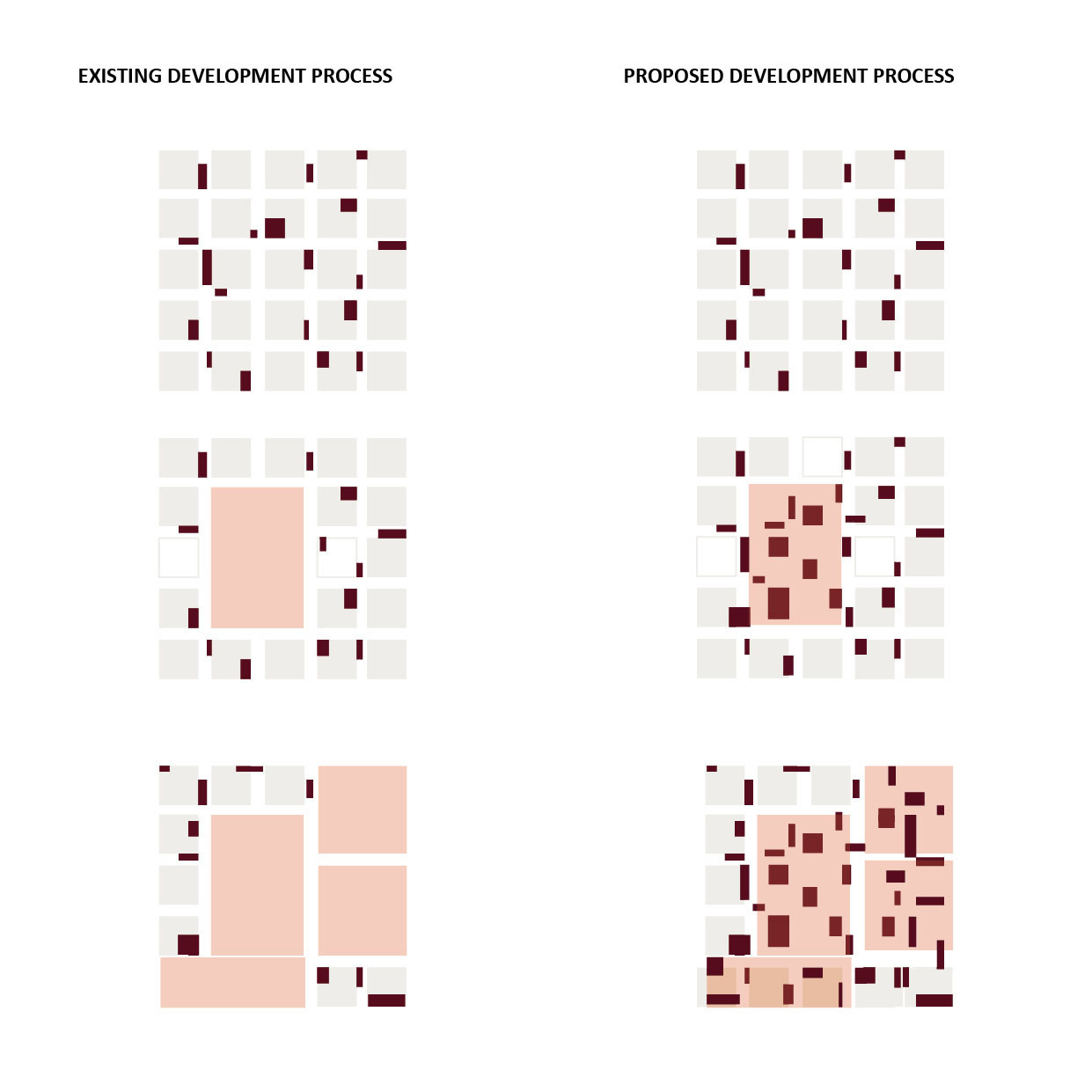
The Abstract During redevelopment, chances of user participation are not encouraged. As mentioned before, user participation is not encourage, refer to the diagram below, the new development will be isolated from the current district, it leaves no room for further continuous growth, years later it still remaining the same, silent and monotonous. Thus a question is raised, are we over-planning our city? Responding to that, the proposed development process is to put some emptiness and uncertainty in redevelopment, not by stopping the development process, but at the same time, not from point zero to fill up all the gaps as achieving usage maximization. After putting the emptiness in it, we may expect more changes in-between the continuous mutation of city.
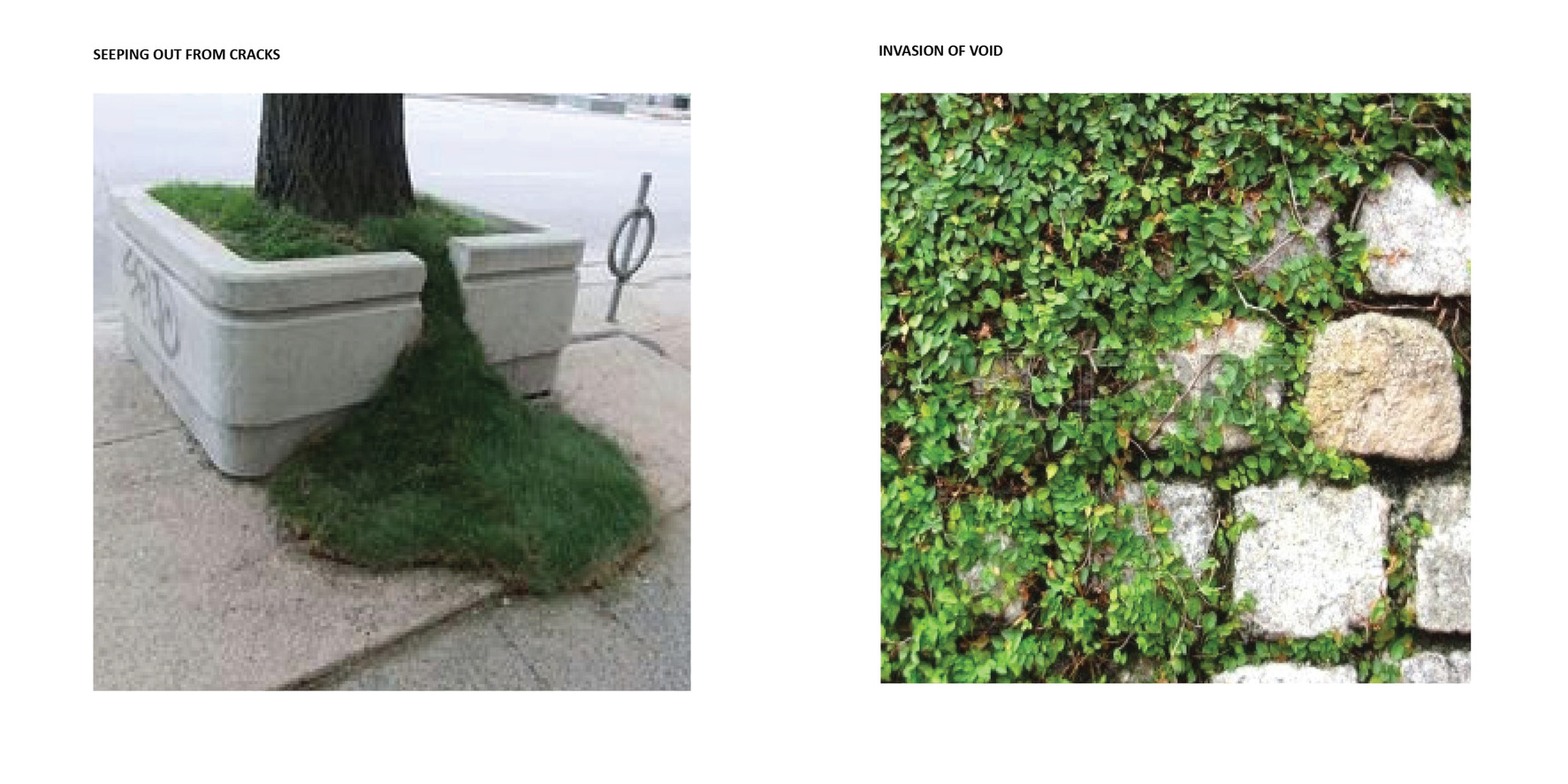
It is like the invasion of void, the climbing plant seeking the spaces leave between the rocks on walls, life expands and conquer the original context. Power also leak out from the cracks, encroaching the surrounding space. Finally they replace and cover all the space. At the end we cannot tell what is the original and what is the new, because they stay together and live by each other.
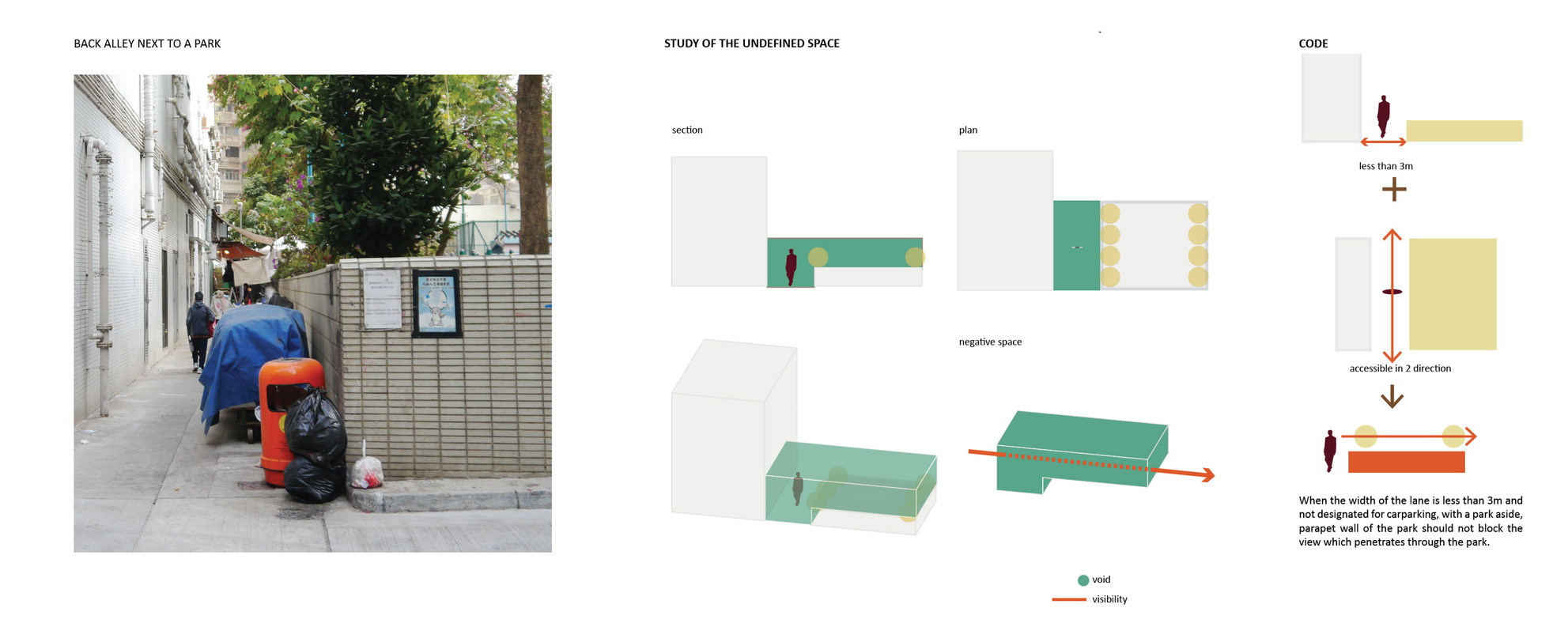
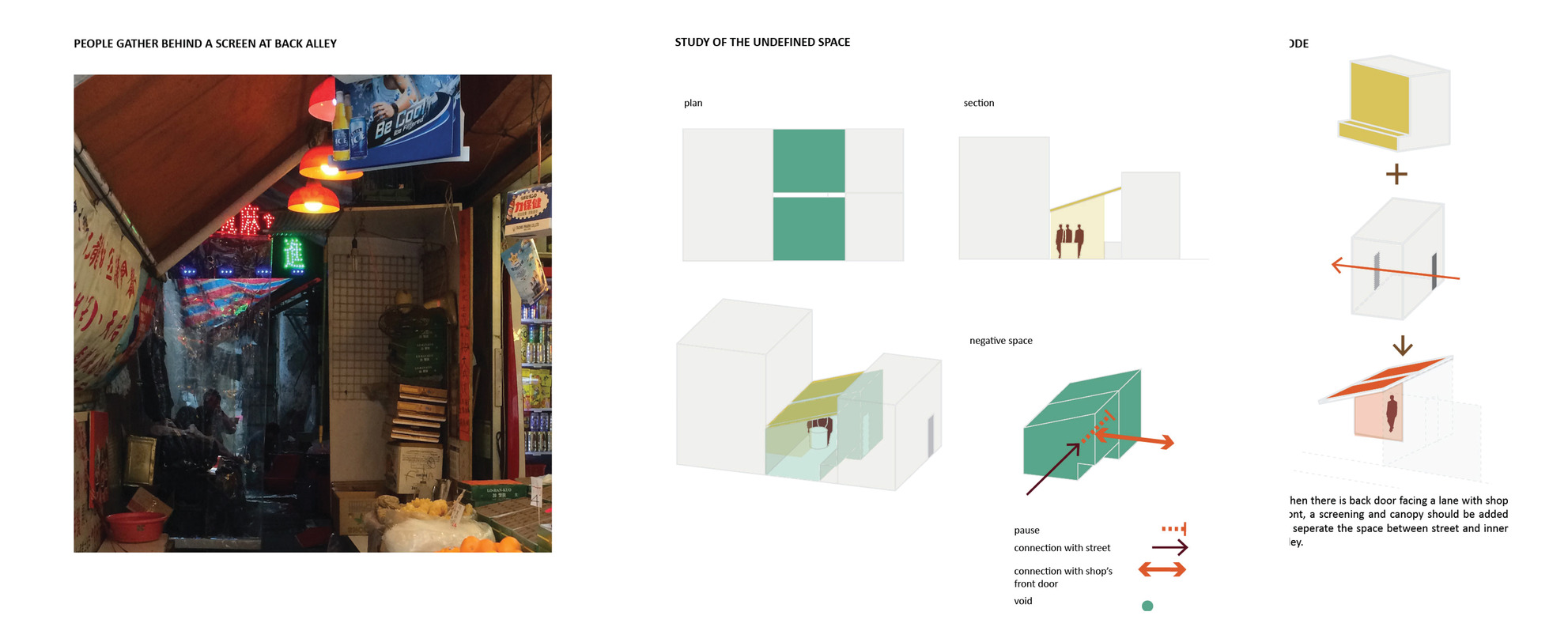
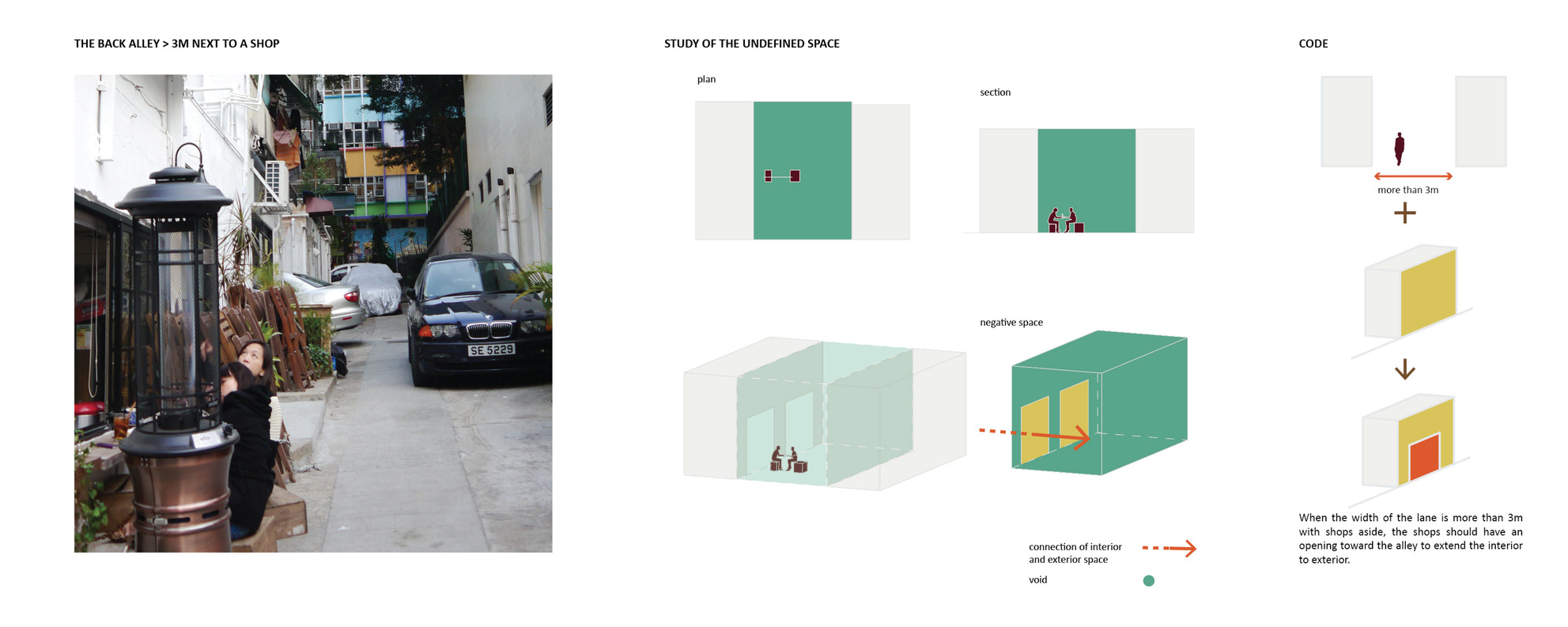
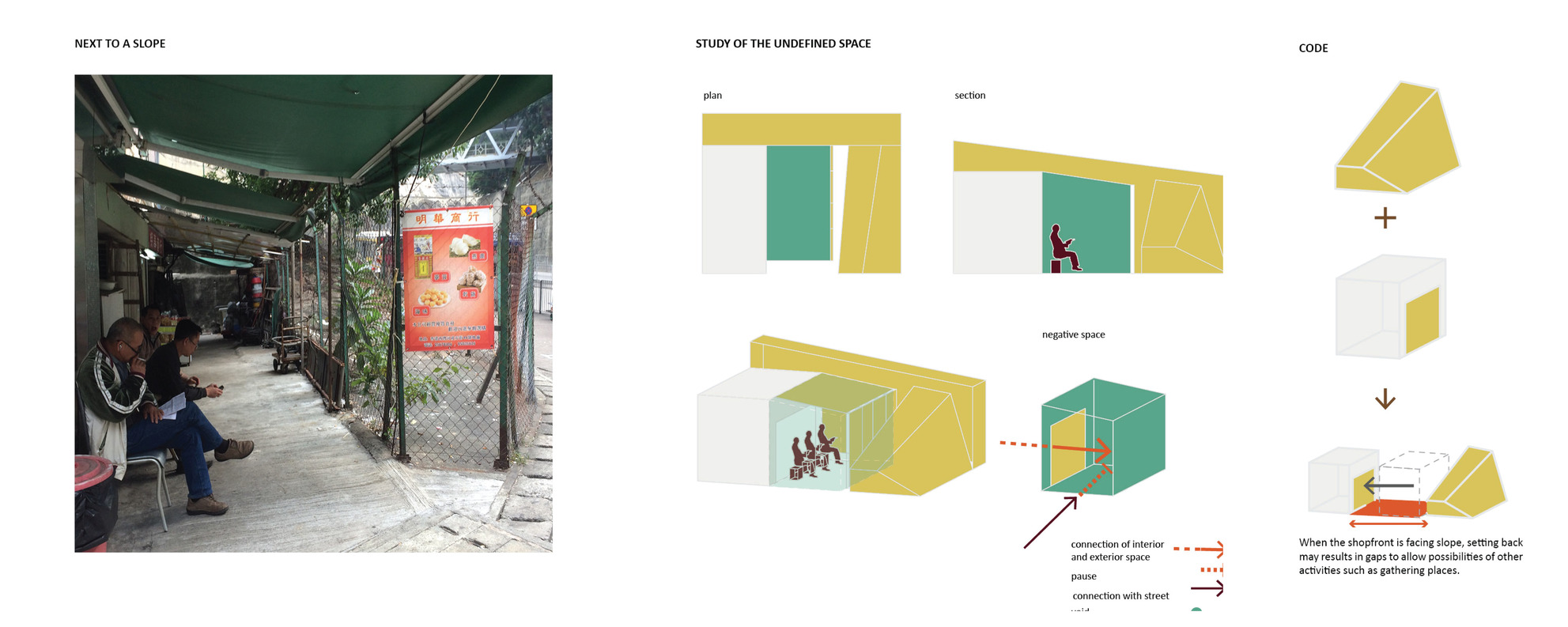
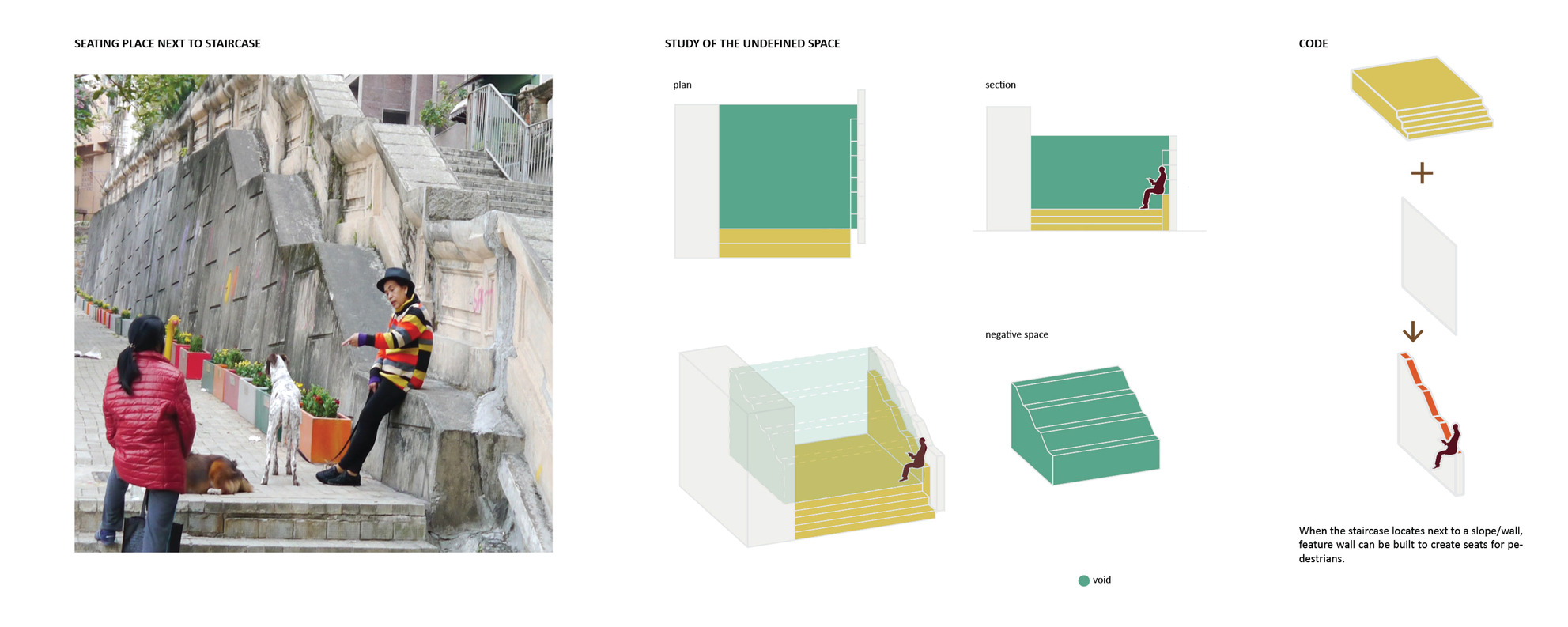
The research starts with travelling in the old districts in Hong Kong, as listed in the Urban Renewal Authority’s list, to find out the life and specialty of the undefined space generated through time. We interpret our belonging places by our daily life experience, thus analysis of the space about dimension, leading direction, pedestrian flow, surrounding building elements, connection to street, current participation of citizens took place. These fragmented space reinforce our perception of the district. After years of human intervention, it creates alternatives of urban growth which makes it unique. In the research such as Kowloon city, the width of the back alley is generally wider allowing plugging in of programs like little stores. Moreover, the height of the canopy, open up to the sky or not, affects the human activities in the alley too. Surround conditions such as located aside a park, a store or a staircase gernerate different options and spatial elements for human intervention. After reinterpreting the space, parameters is derived to be put in future development related to its spatial context. aiming to enhance chances to refine the ambiguity of the uncertain space.
In the new districts such as Tsueng Kwan O, podium walls runs along the street from block to block, the VOID space are defined and privatized. the perception of emptiness and informality provokes human’s interpretation of space, but we cannot find that in the new districts.
The Further research and design approach is to study on ways to manipulate emptiness in urban redevelopment, by interacting with the uncertain space, it may bring vitality to the new layer of city fabric.
First Review Panel
Bibliography i. Huber, A. (2008). New approaches to housing for the second half of life . Zürich : ETH: Basel ; Boston : Birkhäuser. -”to divide development to different phases, young old, middle old and old old age.” ii. Wan., T. K. (2001). Petto aakitekuchaa gaidobukku = Pet architecture guide book . Taokyao : Waarudo Foto Puresu, Heisei 13. – It shows how architecture appears in unexpecting site context, it is inspiring that there are rich possibilities on city’s undefined void. And it shows how the program and layout reacting to the highly attaching space. ” These unusual space are the byproducts of urban development and have been produced abundantly in Tokyo. this undefined space has come into existence in the marginal realm between the different city system, or it is imminent in the city system itself! …” iii. Juhani Pallasmaa, Polemics: Architecture and the Senses (Great Britain: Academy GroupLtd., 1996 iv. Panagiotis Hadjiphilippou , The contribution of the five human senses towards the perception of space , department of architecture , university of Nicosia <http://www.academia.edu/2460561/> v. Barron, Manuela Mariani and Patrick. Terrain vague : interstices at the edge of the pale. New York: Routledge, 2014.
|