Food As Part of the Community’s Infrastructural System
|
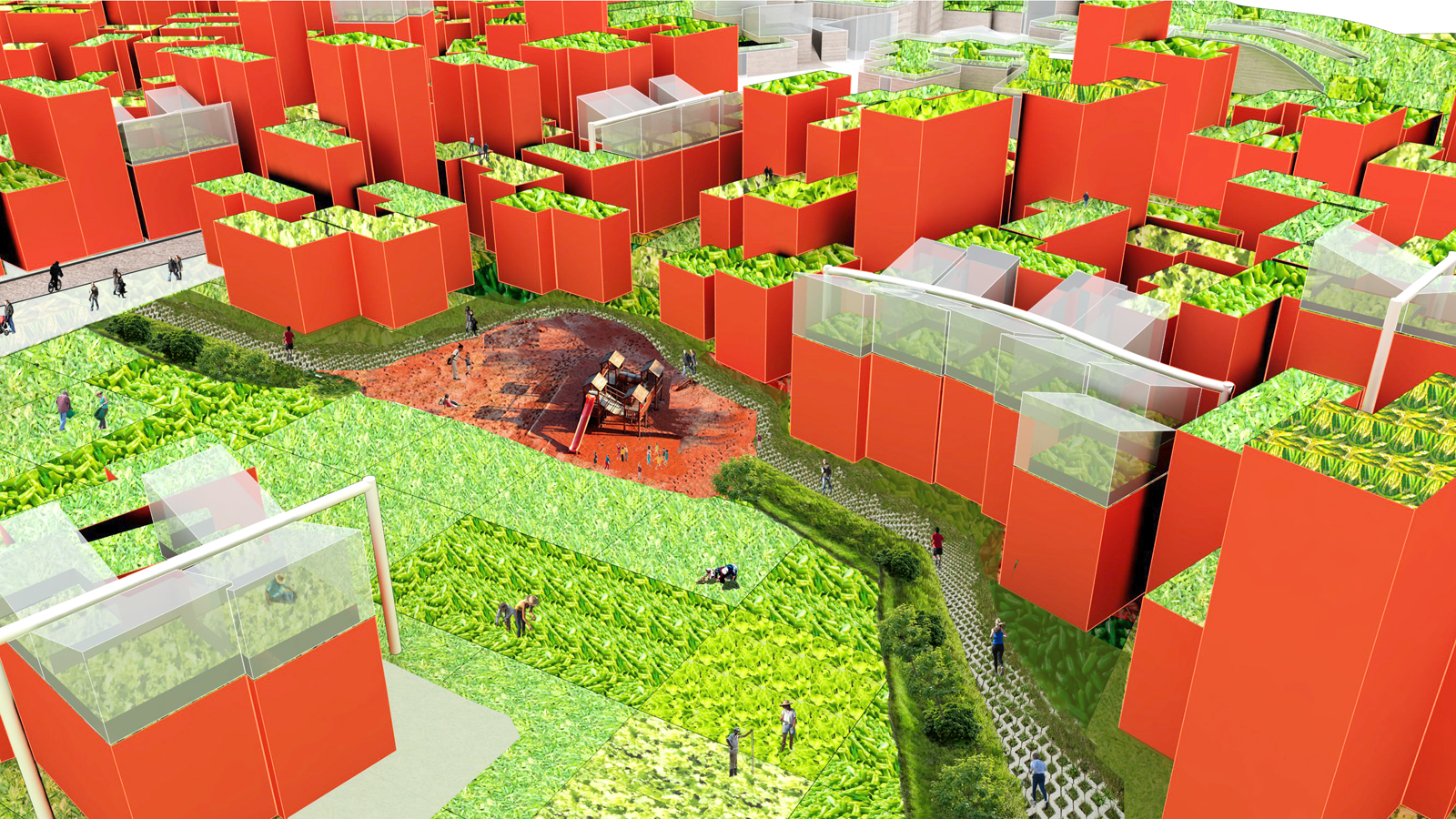
A. Thesis Statement Food has always been the keystone of community‐building. From farmlands to market places, and from kitchens to dining places, these spatial typologies are linked by intricate logistics and social interplay. Together they form the ‘food infrastructure’. The mechanism behind the ‘food infrastructure’ in many global cities has been highly dependent on food imports in the global market, creating a big gap between community and the food system, and also between producer and the consumer. To bridge this gap, the concept of ‘conviviality’ (celebration of food; joy of feasting) is introduced as the design intention of the ‘food infrastructure’. ‘Conviviality’ has long played an important role in fostering communities among different cultures cross the globe. In fact many food‐related spaces display a representation of this notion. However, ‘conviviality’ is often neglected in the urbanized city, where its ‘food infrastructure’ is overly developed in the consumption faculty and ‘fast food’ models are often adopted by consumers. The ultimate goal by re‐injecting conviviality is to maintain sustainability of existing communities, in social, economic and ecological terms. B. Description of Project Intended to Test the Thesis Statement ‐ Identify nodes and linkages from different models of infrastructural design that fosters a C. Outline of Research/ Design Methods Learn from existing models of urban farming and local food movements e.g. the ‘slow food’ movement in San Francisco, New York, London etc., consequently extract design methods that fits to the specified site. D. Annotated Bibliography/Precedents – Cities For A Small Planet, by Richard Rogers – Edible Infrastructure: Organizational Systems for Urban-Agricultural Landscapes, by Darrick Borowski and Jeroen Janssen
E. Supporting Visual Material
|
One Comment
Leave a Reply
You must be logged in to post a comment.
good abstract and project description. the title could be more interesting.