Made in Beijing 2.0: Transmigration of a Post-Industrial Landscape
|
1. Thesis Statement “…19th Century modernity and 20th Century modernism were driven by collective utopian wish-images: largely unconscious desires for social harmony and reconciliation.”(1) Architecture is always political and inseparable from the social pattern, as a social device, it is constantly reshaped by the emerging technology and ideology. Factory, once the pronoun stands for efficiency, power and productivity, the ultimate expression of functionalism, is undergoing a revolution. In mainland China, the realization of factory-town (2) which shaped by heavy-industry, is in fact a symbolic-utopian, it was mold by a top-down political agenda in the past; however the abandonment of these mega-structures is merely a result of urban gentrification. Discrepancy between ideology and reality has become the catalyst of “deindustrialization”. Total eradication of industry within city would weaken the urban structure and bring damage to the “social harmony”, therefore, transformation is essential. Yet, what should we envisage? Concept of city planning and place-making in China has to be changed.
Industry shall no longer be the symbol of slavery but the enjoyment of life; Let us forge a new chapter of manufacturing with the massive icons of industry in the past.
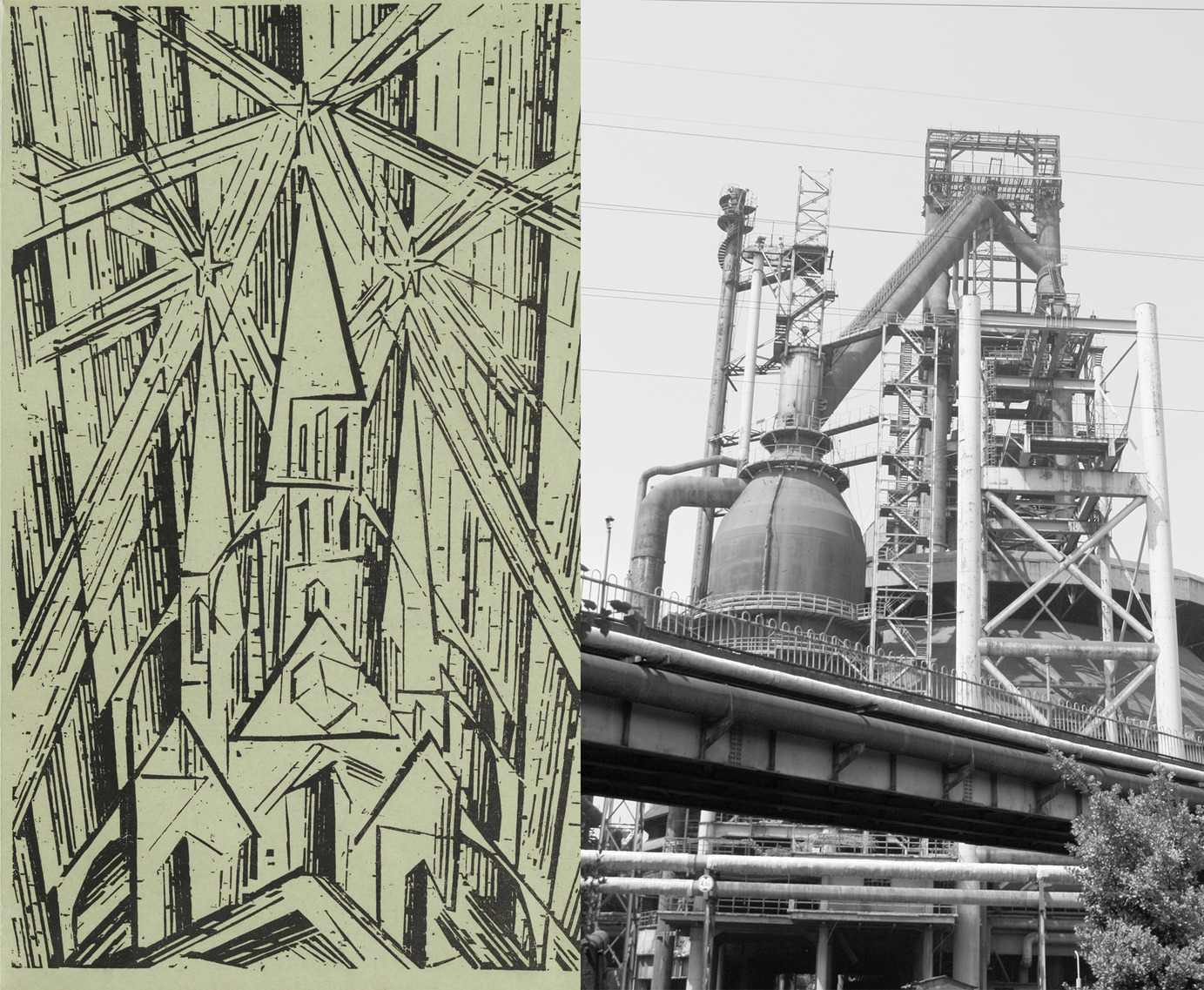
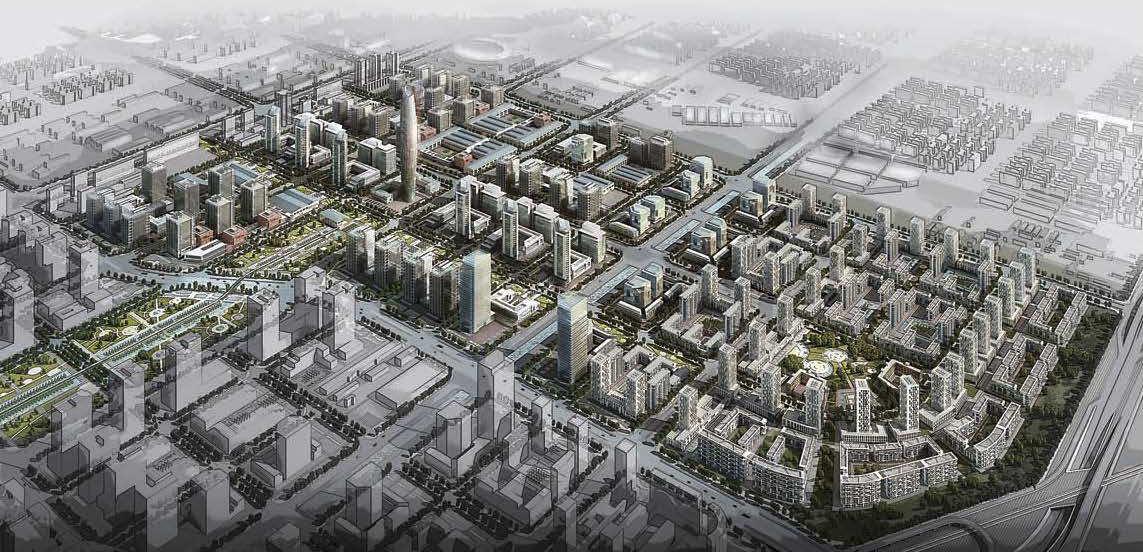
2. Project Description Through taking the abandoned factory-town: Capital Steel in Beijing (首鋼北京石景山鋼鐵廠) as the testing field, we are in search of a new paradigm for the mode of production of our epoch, furthermore achieving a balance between: preservation versus deconstruction; reoccupation versus reconstruction. Four main themes will be investigated throughout the thesis: – Preservation (the Making of a Monument): Citizens & worker’s memory; the nostalgic image of the old furnaces projected; importance valuation of the ruins; – Degradation: identify the redundant structure/architecture within the site; – Reoccupation: assigning a new program for the existing space/structure; – Reconstruction: juxtaposing new architecture/infrastructure with the existing context. Ultimately, this is a thesis about an alternated strategy to re-engage with the ruined industrial landscape, eliminate the threats, preserving our collective memory while reinventing the site as to adapt to the current demand and social behavior, integrating a state-owned factory town to its adjacent urban context through a series of spatial manipulations: a flexible, powerful spatial form will be developed and employed as the architectural intervention on site. 3. Outline of Research Research will begin with analyzing the architecture in relation to industry transfers in history; a study of the steel-making process in Capital Steel Factory will be carried out in parallel to give a better understanding of the existing site condition. Precedent case studies on Bilbao effect, Beijing 798, etc will identify the no-go-zone for this thesis project. 4. Design Methods Decompose the existing built-environment through selective elimination; analyze the spatial forms to cater the upcoming social phenomenon and tendency which the micro-industry derives. Design the new infrastructure to recompose the industrial landscape with the emergent urban context. 5. Annotated Bibliography/Image Credits (1) Brian Elliott, Thinkers for Architects: Benjamin for Architects (Routledge, Taylor & Francis Group, 2011) (2) Li Dan, Factory Town The Falling Community towards Socialization, Urban China Issue 59: From factory Town to Industry-City, Integration, an Evolution of Chinese Industry and Cities, P. 31-32 Fig. 1 (Left) Cathedral for Program of the State Bauhaus in Weimar, Woodcut by Lyonel Feininger, 1919; (Right) Photo of Capital Steel Factory, by Tim Tang Ho Yin, 2013 Fig. 2 Artist Impression of the urban planning of Capital Steel Factory, Shougang Industrial Area Transformation of the Promoter Region of Urban Planning and Design, China Academic Journal Electronic Publishing House, 2009
Other readings: 1. Anti-object: The Dissolution and Disintegration of Architecture, by Kengo Kuma, Architectural Words2, Architectural Association London 2. Architecture and Disjunction, by Bernard Tschumi, The MIT Press 3. Project Japan: Metabolism Talks…, by Rem Koolhaas & Hans Ulrich Obrist, Taschen 4. Towards An Architecture, by Le Corbusier 5. The Third Industrial Revolution: How Lateral Power is Transforming Energy, the Economy and the world, by Jeremy Rifkin, 2013
Project References: 1). Mercati Generali, Rome, Italy, OMA, 2004 (Competition Entry) 2). Zeche Zollverein, Essen, Germany, OMA, 2002 – 2006 (Completed) 3). Guggenheim Museum Bilbao, Spain, Frank Gehry, 1997 (Completed) 4). Tate Modern Museum, London, Herzog & de Meuron, 2000 (Completed) |
One Comment
Leave a Reply
You must be logged in to post a comment.
clear . good .