The slum, the city and the outsiders
|
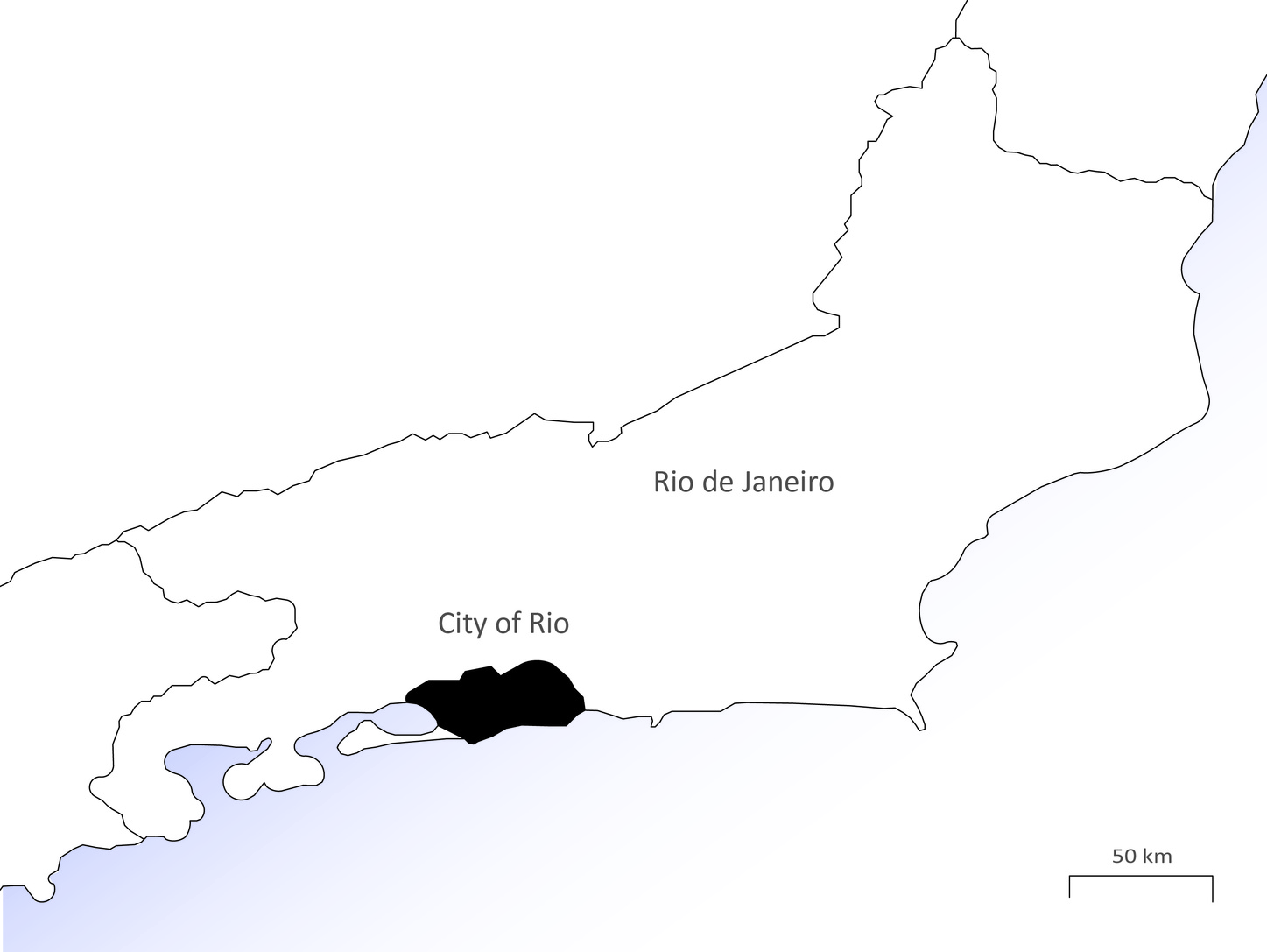
Favelas are not only a physical manifestation of the past urban development, or the social distribution of the city, but they are dynamic urban areas with its own qualities and necessities, which have been increasingly studied and observed by foreigners. Brazil’s slums may not be the largest in the world nor the poorest, but they are certainly one of the most well known. According to the Brazilian census (IBGE), Rio de Janeiro is the city with the largest population living in favelas (of over 20%), and it has higher percentages of urban inequality in comparison to the rest of the country. Rio is also the hosting city of next World Cup and Olympic games, which have been reshaping the city’s image and its urban life.
Due to these events, several mobility projects are being built, which will not only increase the connectivity in the city, but it is affecting its urbanscape by inserting new stations, parks and tourist centers while evicting communities that are “on the way”. In light of these evictions, a few housing projects were created to house some of those being evicted from the city while others were reimbursed with not enough money to buy any property within the city. Concomitantly, the government, some educational institutions and other entities have come together in an effort to improve and promote a new image of the large scale slums by creating a series of upgrades, which included paving streets, painting facades and inserting cable cars as a transportation system. These types of upgrades have not considered the real needs of the communities, generating a very rapid and aggressive process of gentrification due to the aestheticization of favelas. As a result of this phenomenon, a large number of tourists and tourism related business were attracted to favelas, changing the not only the activities of the area but also the prices. The real estate market rose significantly to similar prices that would have been found in well known neighborhoods of the city.
Within this context, a study site was chosen, which reflects the previously mentioned issues right next to each other. A new transportation system is going to be open by the main Stadium and as a consequence, more than two thousand people are being evicted. The favela next to this area is currently receiving partial upgrades and partial evictions, while the one across remains fairly untouched and forgotten.
The main idea is to reallocate the residents within the area they were previously living as to facilitate their own working and living conditions, thus increasing the density of the existing community and allowing for different programs and infrastructures to be inserted as a response to the new flow of people coming to the community.
The project The project would not be developed as an urban proposal, but it would consist of a series of small interventions that begin to create a more active participation of the residents in the development of these communities, minimizing the current disparities between the image portrayed and the experiential qualities existent.
The evolution of exchanges between current inhabitants and the outsiders (residents from other communities, visitors from the city and tourists) would begin to create new types of activities and new urban environments, breaching the physical boundaries of the favela.
Methodology To understand the areas where the project would fit, it is important to indentify the potentials of the site and conditions spatially. That will also clarify and create opportunity for more specific small interventions that can begin to change the current situation. After the site selection, a series of cluster patterns were observed from the favela, which gets repeated throughout the urban fabric of the community, thus becoming a prototype to be studied and developed for the rest of the site, and potentially for the rest of the city.
On the dense areas, paths and/or facades would be designed to provide a more active and distinctive space for both residents and outsiders to interact in a more effective way. It would be a hybrid of programs and infrastructure that would provide a more dynamic and effective usage of space.
Open areas would be essential for the creation of gathering spaces that could be used for several purposes, for both tourism and community activities. This exchange would serve not only to exchange goods and services, but it would also serve as a public area for other activities. By further analyzing these areas and discovering ways in which architecture can begin to intervene in these conditions would be the next step for this project. By understanding one site and its characteristics, the project has potential of developing methods in which similar systems could be adapted in other places.
Jury’s comments
References Perlman, Janice E. Favela. Oxford: Oxford University Press, 2010. Alexandrou, Georgios. Building Brazil! Berlin: Ruby Press, 2011. Herrle, Peter and Erik Wegerhoff. Architecture and identity. Berlin: Lit, 2008. Aquilino, Marie Jeannine. Beyond shelter. New York, NY: Metropolis Books, 2010. “Sao Paulo Calling.” Domus, 2012. Frenzel, Fabian, Malte Steinbrink and Ko Koens. Slum tourism. New York: Routledge, 2012. Pino, Julio César. Family and favela. Westport, Conn.: Greenwood Press, 1997. Davis, Mike. Planet of slums. London: Verso, 2006. KIMMELMAN, MICHAEL. “A Divided Rio de Janeiro, Overreaching for the World.” The New York Times, November 25th, 2013, http://www.nytimes.com/2013/11/26/world/americas/a-divided-rio-de-janeiro-overreaching-for-the-world.html?_r=1&adxnnl=1&pagewanted=1&adxnnlx=1386861814-4yaqhJRD4Y4RO/duq3VrSg (accessed 12 Dec 2013). Ucl.ac.uk. “home.” 2013. http://www.ucl.ac.uk/dpu-projects/Global_Report/home.htm (accessed 1 Nov 2013). “Mais da metade dos turistas quer conhecer favelas do Rio.” O Globo, 21st January, 2013, http://oglobo.globo.com/rio/mais-da-metade-dos-turistas-quer-conhecer-favelas-do-rio-7349831 (accessed 1 Nov 2013). Ipea.gov.br. “Cidade legal – As favelas cariocas estão sendo inseridas no mapa da urbanidade.” 2013. http://www.ipea.gov.br/desafios/index.php?option=com_content&view=article&id=1426:catid=28&Itemid=23 (accessed 1 Nov 2013).
|


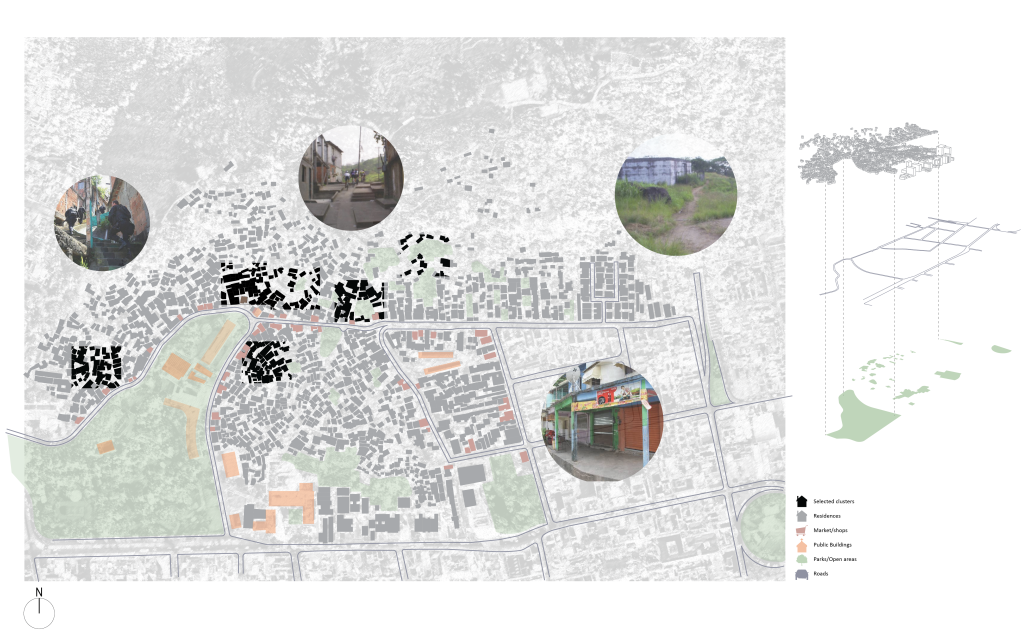 Three cases of a densely populated area and three cases of less built areas were analyzed according to their program, form and potentials. By designing small elements along corridors and open spaces, it would create opportunities to activate areas for new purposes, reinstating the juxtaposition of reality and image.
