Virtual and actual in media space
|
Thesis Statement Architecture and its environment can be considered as mass media spaces where historical and contemporary architectural layers co-exist ; where the architecture itself and the user communicate and exchange information. So how to create a architectural space for the new situation? Underlying these questions are two primary concerns: firstly, the changing nature of the material and technological layering of architectural space, and secondly, the evolving inter- relationship between architecture and the user. I would like to apply kinds of media method to explore architecture space and achive various of architectural space properties. Activities can be “real without being actual, and ideal without being abstract.” We define reality according to experience. The sense we make out of the world has little to do with actual objects and material attributes but rather how our abstract notions determine our sense and experience of them.
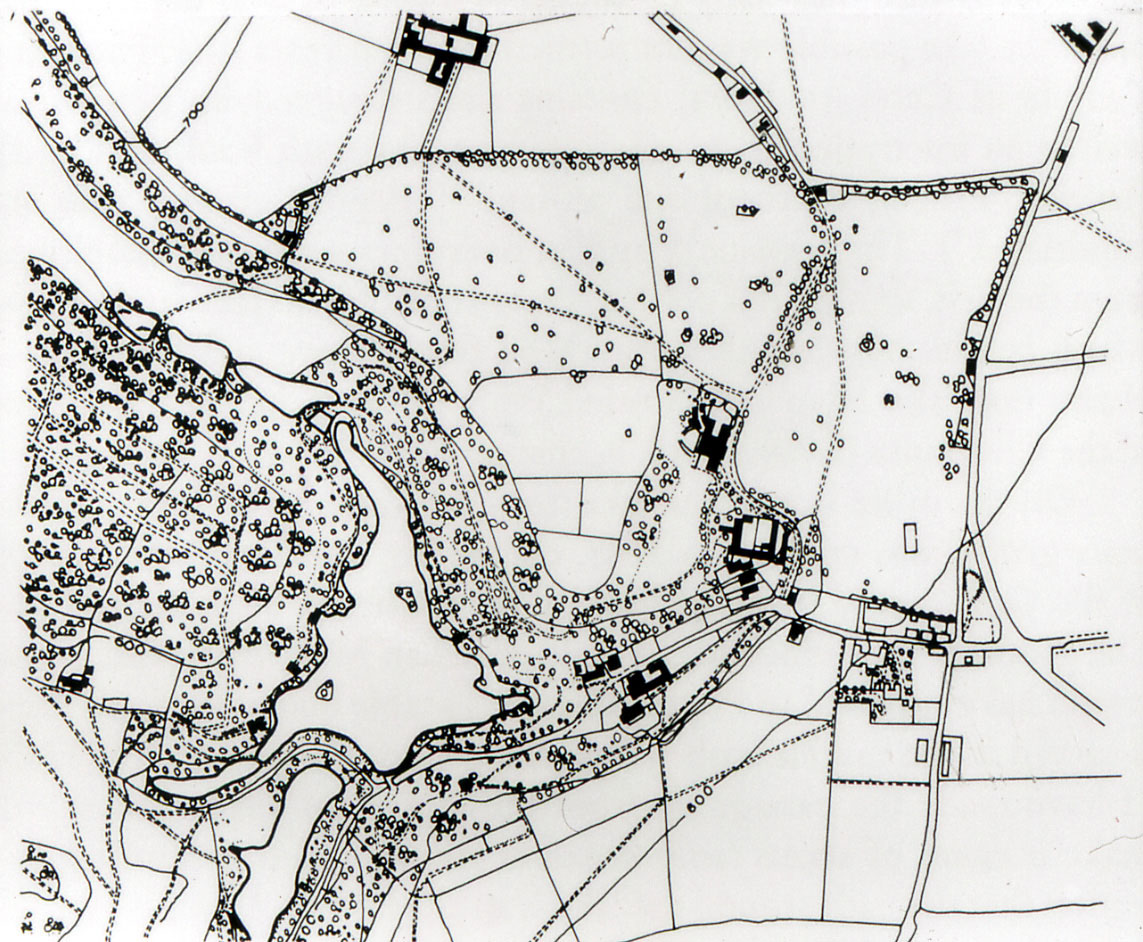
Description of Project Intended to Test the Thesis Statement The physical site I chose was on Xiangshan Park which is on the suburb of Beijing, based on its location being far enough away from the city not be noisy, but still accessible to the city. The fitness center needed to be in the staid community of an existing site. It also promotes views from the top of the hill that overlook the city of Syracuse that as an imaging device can depict certain calming and healing associations that also become imaged in the website. Precedents Plan: Stourhead Gardens, Wiltshire England.1775 by Henry Flit croft. The plan was designed continually evoke pleasurable experiences to enhance the inhabitation of the space.
Every view was constructed with precision to create points of interest that would immediatly draw attention and evoke sensations. The Naked City, Guy Dubord, 1959 Dubord’s idea of the derive had a approach to the ambiguity of experience. As a combination of chance and conscious choice, moving through a city would allow for many ways for experiencing a place. “The absence of joy is the biggest threat to our society.”
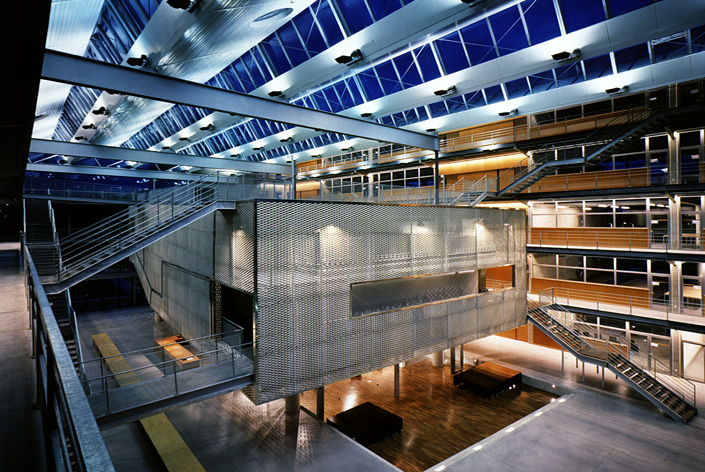
School of Architecture Marne La Vallee France is organized to generate activity and spontaneous conditions of interaction. All the rigorously programmed activities including studios, classrooms and offices are on the periphery. They surround an unprogrammed void. The void is meant to encourage unanticipated and spontaneous events since the circulation must pass through it. As a space of transparency the void acts to reveal various dynamics at work. The spatial potentials accelerate a cultural or social transformation already in progress. Outline of Research/Design Method 1. Sets up the distinction between the concepts of the virtual and actual and how they are intricately related to producing experiences that define our spaces. 2. Highlights important conditions of the performative qualities of virtual reality, such as how identity is shaped and transforms boundaries of public and private spaces 3. Examines the ambiguity and transformative condition of virtual reality. 4. Considers what it means to reemerge back into our physical environments 5. Culminates in this distinct relationship, and how it can be applied to design.
Annotated Bibliography 1.Beckmann, John. The Virtual Dimension: architecture, representation, and crash culture. Princton Architectural Press, 1998. 2.Mallgrave, Harry. Architectural Theory volumn 1. Blackwell Publishing 2006. 3.Messumi, 308 4.Tschumi, Bernard. Architecture and Disjuction. MIT Press, 1996. 5.Sadler, Simon. The Situationalist City. MIT Press, 1999. |


One Comment
Leave a Reply
You must be logged in to post a comment.
Please clarify and improve writing. Especially first part: “Architecture and its environment can be considered as mass media spaces where historical and contemporary architectural layers co-exist ; where the architecture itself and the user communicate and exchange information. So how to create a architectural space for the new situation?”