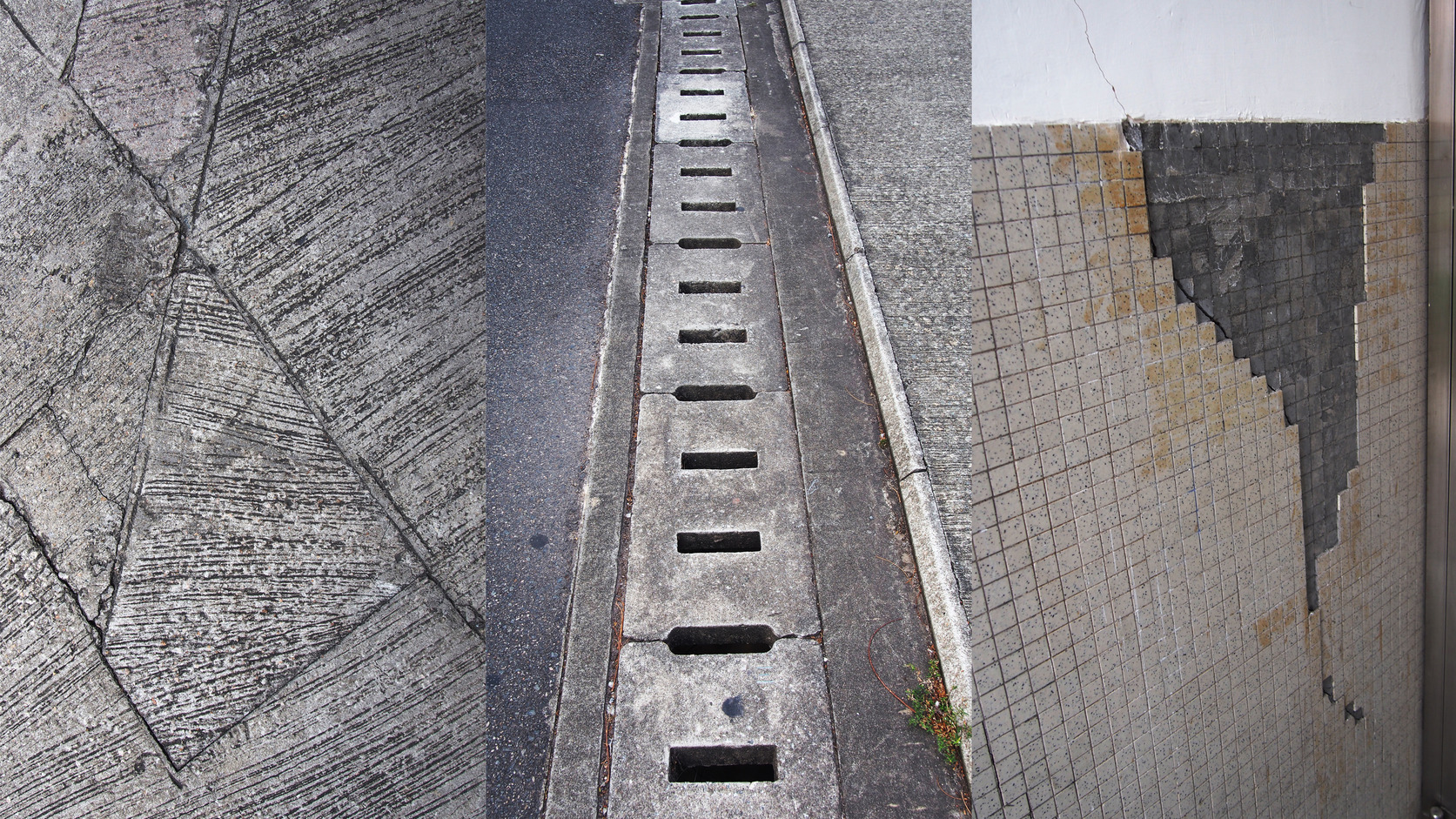
Snap Shots on Concrete in Hong Kong Observation
Dirty, unfinished and cheap are the impressions of Hong Kong people towards concrete. In fact, reinforced concrete is the major structural building material in our city and it supports the economic activities, culture and everyday lives of Hong Kong since 19th century. On the contrary, the status of concrete itself in this city is very low. The most observable phenomenon is that the impressionable surface quality of concrete is always hided by claddings in Hong Kong.
Thesis Statement
Architect and Building Material
“Concrete is a willing material while fresh, fragile when still young, stubborn when old.”
Frank Lloyd Wright,
In the cause of architecture VII. The meaning of materials – Concrete,
1928
“If you ask brick what it wants, it will say ‘Well, I like an arch……Do you realize you are talking about a being, and a being in brick is an arch?'”
Louis Kahn
I love beginnings
Speech given at the International Design Conference, Aspen, Colorado,
1972
Architects’ sensible, spiritual and poetic connection to building materials has long been essential in the making of architecture. Modernists have embraced the truth of building materials in terms of space and structure.
Le Corbusier proposed the influential concrete piloti and slab system in “Towards a new architecture” in 1927. Since then reinforced concrete became a ‘super-material’ and the piloti system prototype is still being used all over the world. However, it has also initialed the disconnection between building structure/space and the enclosure.

With the idealism carried within the super-material, structure is no longer considered a problem. Therefore the attention of architects towards building materials has gradually shifted to building envelope, leaving the structure to the engineers. Also, contemporary buildings are designed to impress more by instant impacts of images propagated through media rather than through actual physical encounter. Gradually architects have lost the sensitivity towards building materials in terms of space, form and structure but have shifted to the manipulation of building skin. The choice of building structure material is usually based merely on the economic value and capitalistic efficiency instead of spatial, tectonic qualities and material properties of a particular material, resulting in the disrespectful abuse of building materials.
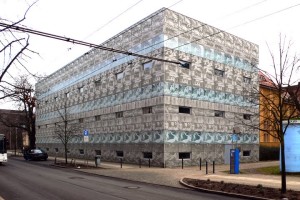 Eberswalde Technical School Library, Eberswalde, Germany
Herzog & De Meuron (1999)  Kunsthaus Bregenz, Bregenz, Austria
Peter Zumthor (1997)
At this point, to re-examine the meaning of building materials to the making of architecture is vital. Is it still relevant to ‘be honest’ to building materials nowadays? The project aims to investigate this question through rediscovering the materiality of concrete in the contemporary context.
Project Description
[Material] The Abuse of Concrete
Reinforced concrete is employed by architects in many facets as a matter of course, because of the low price, low reliance on technique (both engineering and construction) and the high speed of construction. Kengo Kuma said “Concrete makes us arrogant.” (1) Indeed, the distinctive qualities of concrete have also made it the most abused building material.
Concrete, being the core of the phenomena, is also the material that has suffered the most. The project, departing from concrete itself, aims to review the relationship between architects and building materials through a particular architecture that would expose this fundamental problem in reality. More aggressively, to recall the connection of space, structure, form and enclosure to building material with concrete. This must be achieved through mediation between modernist honesty to space/structure and contemporary emphasis on building envelope, which necessarily require an investigation into the holistic nature of structure and envelope.
Methodology
Research
01- Development of relationship between architects and building materials over time
-Modernist ‘true to material’ in relation to space and structure
-‘Swiss School’ promoting awareness of materials in late 1980s
-Contemporary fascination with building envelope
02- The materiality of concrete
03- Categorize the misuse of concrete (in HK)
Why is reinforced concrete structure used over steel or other structures in Hong Kong?
How concrete is being used in this city? Why is it being used in this way?
04- Development of modern concrete over time
To identify the present historical condition in terms of culture and technique in using concrete.
05- Structural Concrete vs Decorative Concrete
e.g. expressionism architecture
06- The geo-politics of concrete – Case Studies
The locality of reinforced concrete as a building material in Brazil and Japan will be studied, to find out the relationships between tradition/ culture and aesthetic/ construction/ engineering of concrete.
Brazil
Architects: Oscar Niemeyer, Vilanova Artigas
Example:
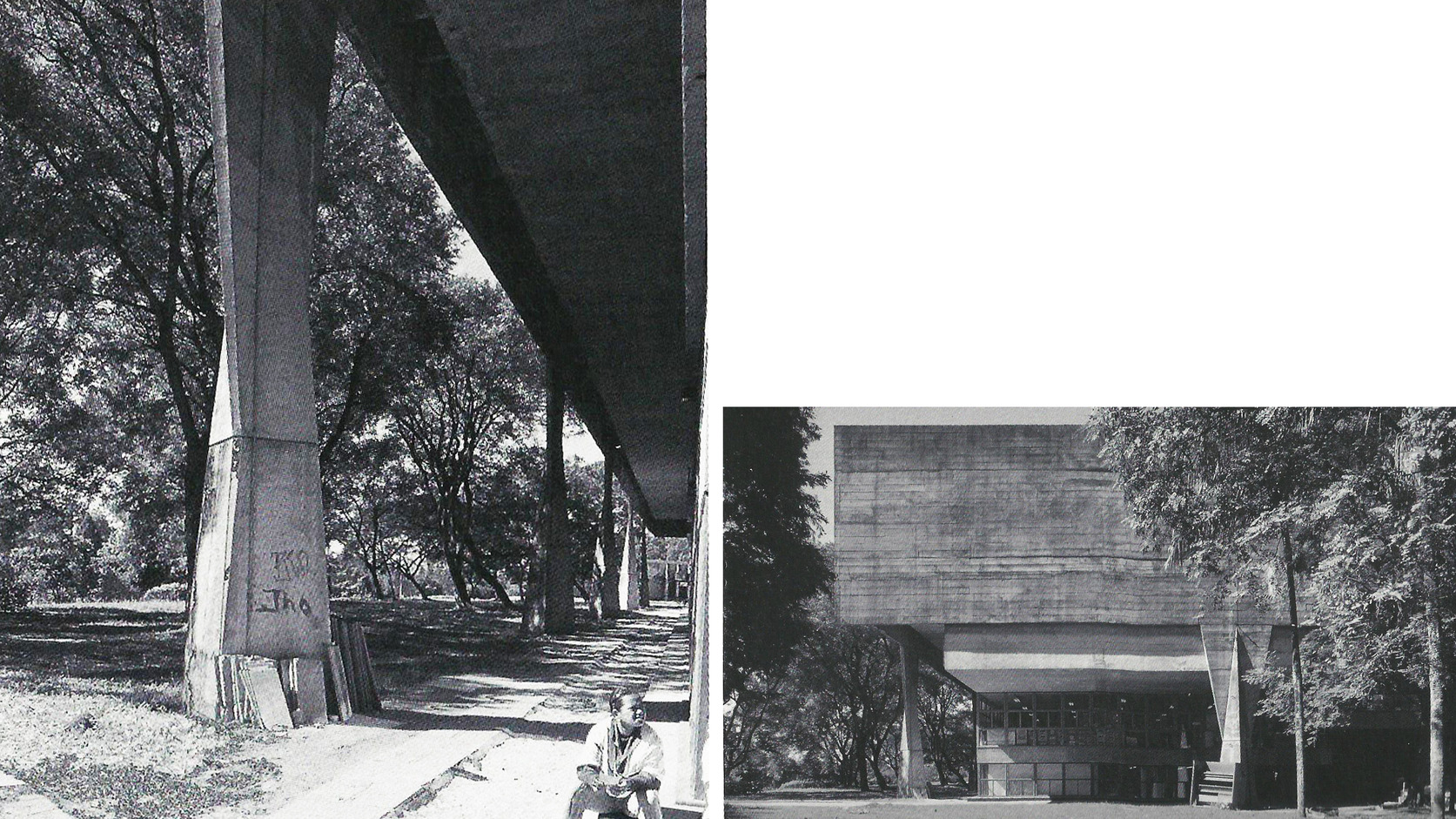
The Faculty of Architecture and Urbanism building, Sao Paulo
designed by Vilanova Artigas.
A massive block sits on twelve spindly legs which appear as slender pyramids diminishing to a point. It demonstrates the regional aesthetic value and exceptional engineering of concrete structure in Brazil.

Japan
Architects: Kenzo Tange, Taodo Ando, Sachio Otani, Toyo Ito
Example:
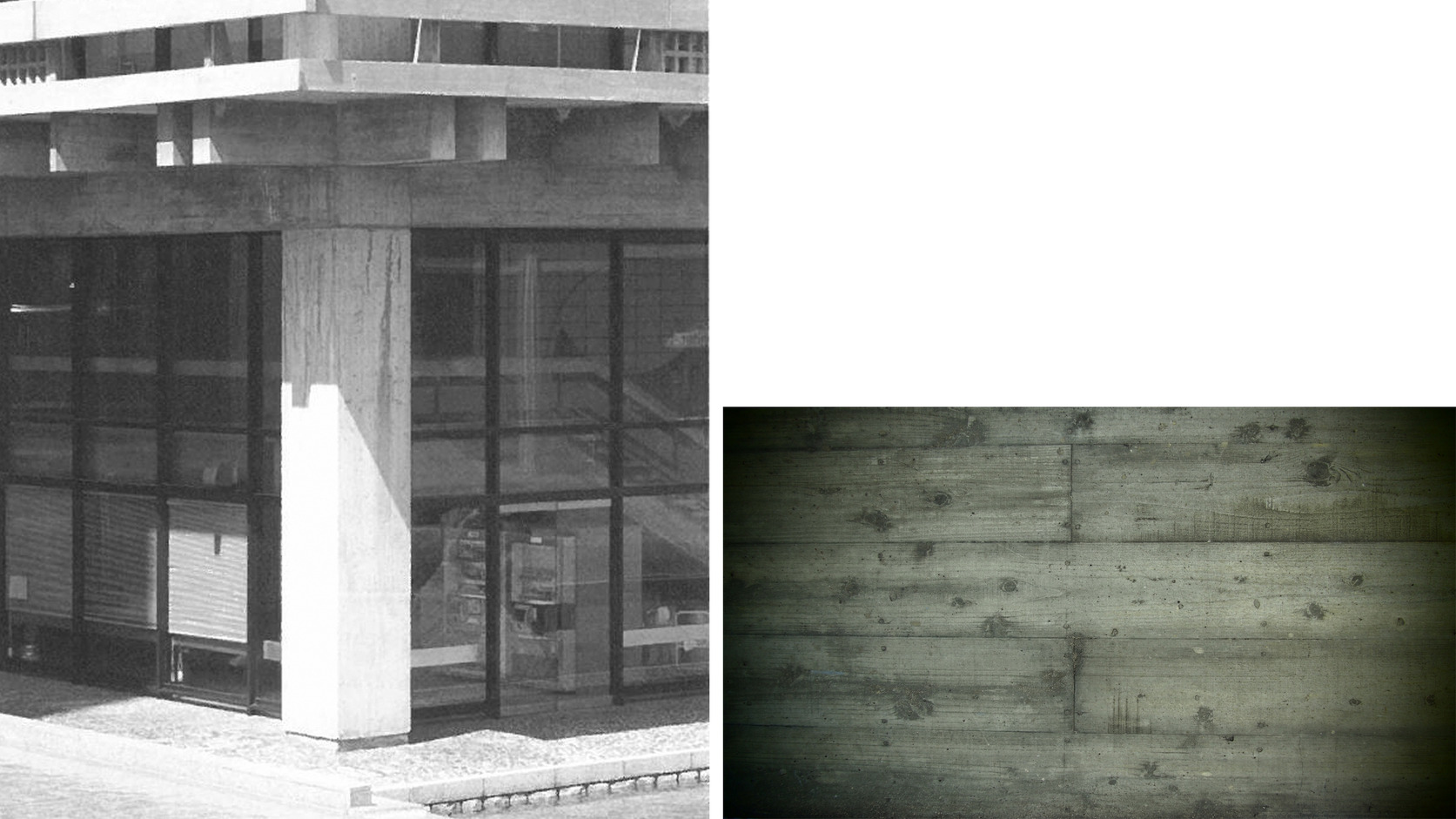
Kagawa Prefectural Government Office in Tskamatsu
designed by Kenzo Tange
Exposed concrete with texture of timber formwork is used to manifest the architect’s respect to traditional use of timber as building material in Japan. The board-marked concrete columns at ground level suggest that the columns are clad in timber.

Design
An architecture design that is driven by the materiality and tectonic of reinforced concrete.
Scale 01 – Surface
To develop a way of casting concrete that gives a particular texture/ form/ scale that relates to the context.
Roughness
Instead of fine and smooth surface that demand high precision of casting and high quality of craftsmanship, the beauty of roughness is fits better to rapidly developing Hong Kong and China.
Precedents:
 NingBo Museum by Wang Shu 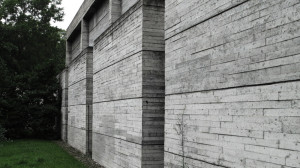 Mrgadava Museum of Stone Sculpture by Liu Jakun
Scale 02 – Building System
To develop a building system of that incorporate building structure, space, form and enclosure.
Scale 03 – Architecture
Site: on unique topography
Programme: to be developed
Reference:
(1) The Wisdom Tea House, Interview with Kengo Kuma, Domus, 2013/01/14
Bibliography:
– The Ferro-Concrete Style, Francis S. Onderdonk, 1928 – In the cause of architecture VII. The meaning of materials – Concrete, Frank Lloyd Wright, 1928 – Concrete: the vision of a new architecture, Peter Collins, 1959 – Prospects for a Critical Regionalism, Kenneth Frampton, 1983 – I Love Beginnings, Speech given at the International Design Conference, Aspen, Colorado, Louis Kahn, 1972 – Building: 3000 Years of Design Engineering and Construction, Bill Addis, 2007 – Materials, Form and Architecture, Richard Weston, 2003 – Studies in Tectonic Culture: The Poetics of Construction, Kenneth Frampton, 2001 – Concrete and culture: a material history by Adrian Forty, 2012 – The Semantics of Exposed Concrete – Rejean Legault
– The Wisdom Tea House, Interview with Kengo Kuma, Domus, 2013/01/14 http://www.domusweb.it/en/interviews/2013/01/14/the-wisdom-tea-house.html
|